
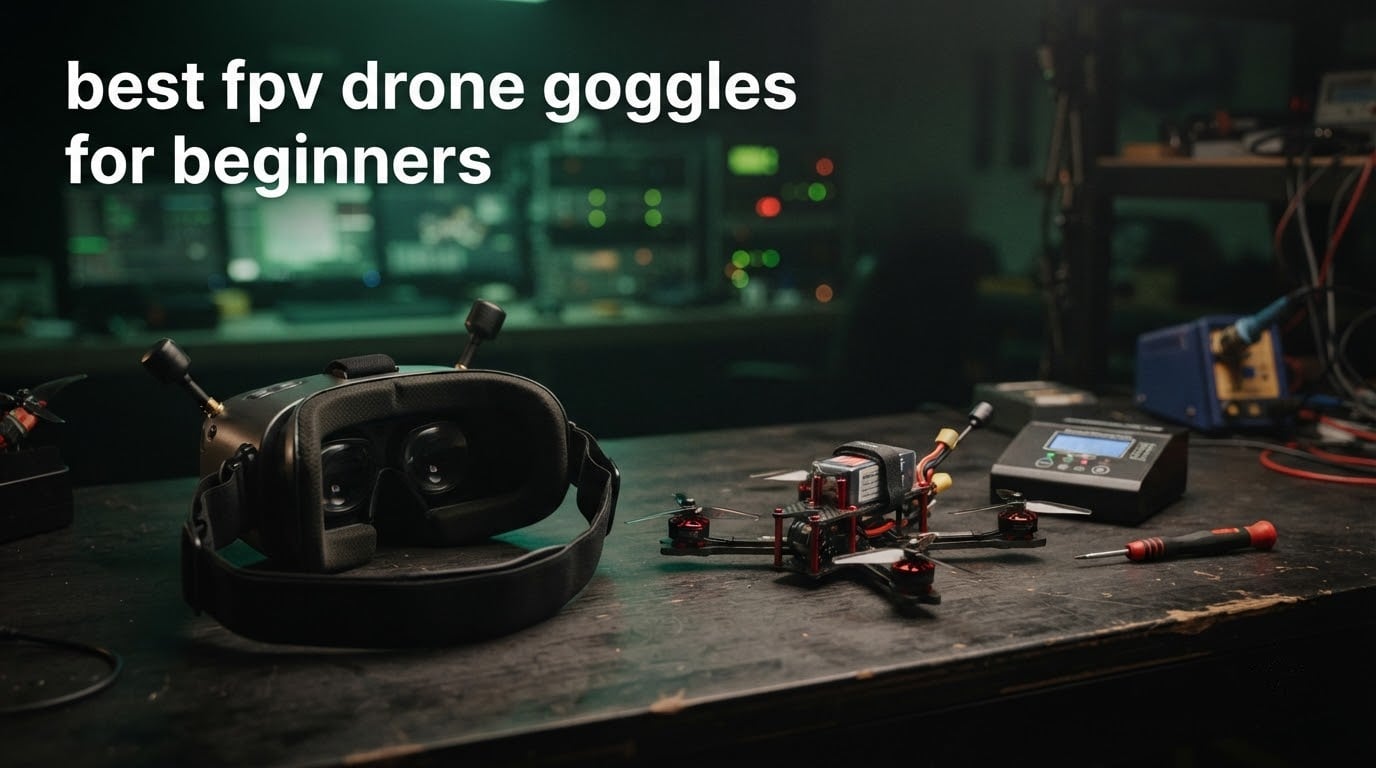
FPV goggles are the window into the aircraft, and the wrong pair turns a first flight into a frustrating one. The best FPV drone goggles for beginners are not simply the most expensive ones — they are the pair that matches the video system already bolted to your drone, fits your face, and records the mistakes you will definitely make. We spent this guide comparing ten of the most common starting points, from an all-in-one analog set to a phone-based mask for GPS camera drones, and ranking them on what a first-time pilot actually needs.
One thing to get straight before reading any list: goggles are the most ecosystem-locked purchase in the hobby. DJI goggles only talk to DJI air units, Walksnail goggles only talk to Walksnail VTXs, and the BETAFPV VR04 HD only pairs with the P1 Air Unit. Analog is the single exception, because any 5.8GHz video transmitter on any drone will feed it. That is why analog has stayed the recommended first step for years even as digital picture quality improved dramatically.
Everything below was last reviewed in 2026, and every specification quoted here comes from the manufacturer listing or from aggregated buyer reviews rather than from a spec sheet we wrote ourselves. If you are still building your first aircraft, start with our FPV drone kit roundup before you worry about optics. If you already own a pair you are unsure about, our FPV goggles guide covers the upgrade decision in more depth.
Table of Contents
Our Top 3 FPV Goggles for Beginners in 2026
Three picks cover the most common reader situations. The DJI Goggles 3 is the image-quality answer if you are already inside the DJI ecosystem, the EMAX Tiny Hawk RTF kit is the answer if you have nothing at all, and the EV800D is the answer if you want an inexpensive way to see analog FPV and record your flights.

DJI Goggles 3
- 1080p Micro-OLED at 100Hz
- O4 transmission at 24ms
- Diopter -6.0D to +2.0D
- Real View PiP

Best FPV Drone Goggles for Beginners (October 2026)
Every pick below appears with the system it belongs to, because that single column decides whether the goggles will work with your drone at all.
| Product | Specifications | Action |
|---|---|---|
| DJI Goggles 3 |
|
Check Latest Price |
| EMAX Tiny Hawk RTF Kit |
|
Check Latest Price |
| EV800D FPV Goggles |
|
Check Latest Price |
 DroneMask 2 DroneMask 2 |
|
Check Latest Price |
 DJI FPV Goggles V2 Renewed DJI FPV Goggles V2 Renewed |
|
Check Latest Price |
 Walksnail Goggles L Walksnail Goggles L |
|
Check Latest Price |
 BETAFPV VR04 HD BETAFPV VR04 HD |
|
Check Latest Price |
 Fat Shark Recon Echo Fat Shark Recon Echo |
|
Check Latest Price |
 RunCam FPV Camera and VTX RunCam FPV Camera and VTX |
|
Check Latest Price |
 EMAX Tiny Hawk EZ Pilot Pro EMAX Tiny Hawk EZ Pilot Pro |
|
Check Latest Price |
Pick Your Video System Before You Buy Goggles
Here is the decision sequence we use, and it takes about two minutes. Start by identifying what is already on your aircraft. If you bought a ready-to-fly kit, the goggles that came in the box are almost certainly the correct ones for it, and the video system is whatever that kit shipped with.
Second, if you are buying a drone at the same time, decide the video system first and let it drive everything else. Analog 5.8GHz is the universal fallback and the most flexible starting point. DJI O3 and O4 pair the sharpest picture in this list with the longest practical reach, at the cost of locking you into DJI. Walksnail Avatar HD sits between the two and is the usual choice for fixed-wing and long-range work.
Third, if you fly a GPS camera drone like a Mini or an Air with no FPV VTX at all, none of the above apply. In that case you want an HDMI headset that turns your phone into a screen, and that is a completely different category from a real FPV link.
Fourth, only after that should you compare resolution, field of view, diopter range and battery life. Doing it in the other order is how people end up with beautiful goggles that cannot receive the signal from their own drone.
1. DJI Goggles 3 — Best Overall for DJI Pilots
- Sharp 1080p Micro-OLED picture
- Exceptionally comfortable for long sessions
- Diopter range accommodates most glasses wearers
- O4 transmission reaches further than comparable links
- Real View PiP adds real situational awareness
- Only pairs with a limited set of DJI models
- No HDMI input on this generation
- Pairing instructions and firmware updates frustrate some owners
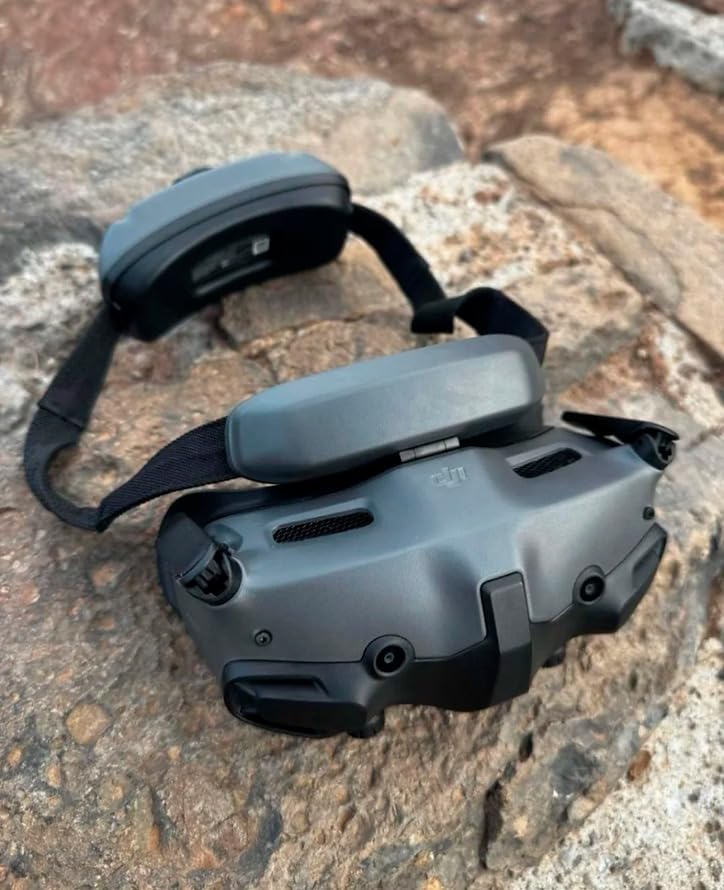
The DJI Goggles 3 are the best FPV goggles for beginners who are already flying DJI gear, and the reason is simple: the picture quality is the strongest available in this list and the 24ms O4 latency is low enough that you will stop thinking about latency entirely. The 1080p Micro-OLED screens run at up to 100Hz, and the difference between that and an analog feed is visible from the first minute of a flight.
Fit is the other story here. Owners describe these as the most comfortable DJI goggles they have used, and the diopter adjustment from -6.0D to +2.0D is wide enough that most people wearing prescription glasses can fly without contacts or inserts. If you have never flown FPV before, comfort matters more than most buyers expect, because a goggle that pinches after fifteen minutes ends your session early.
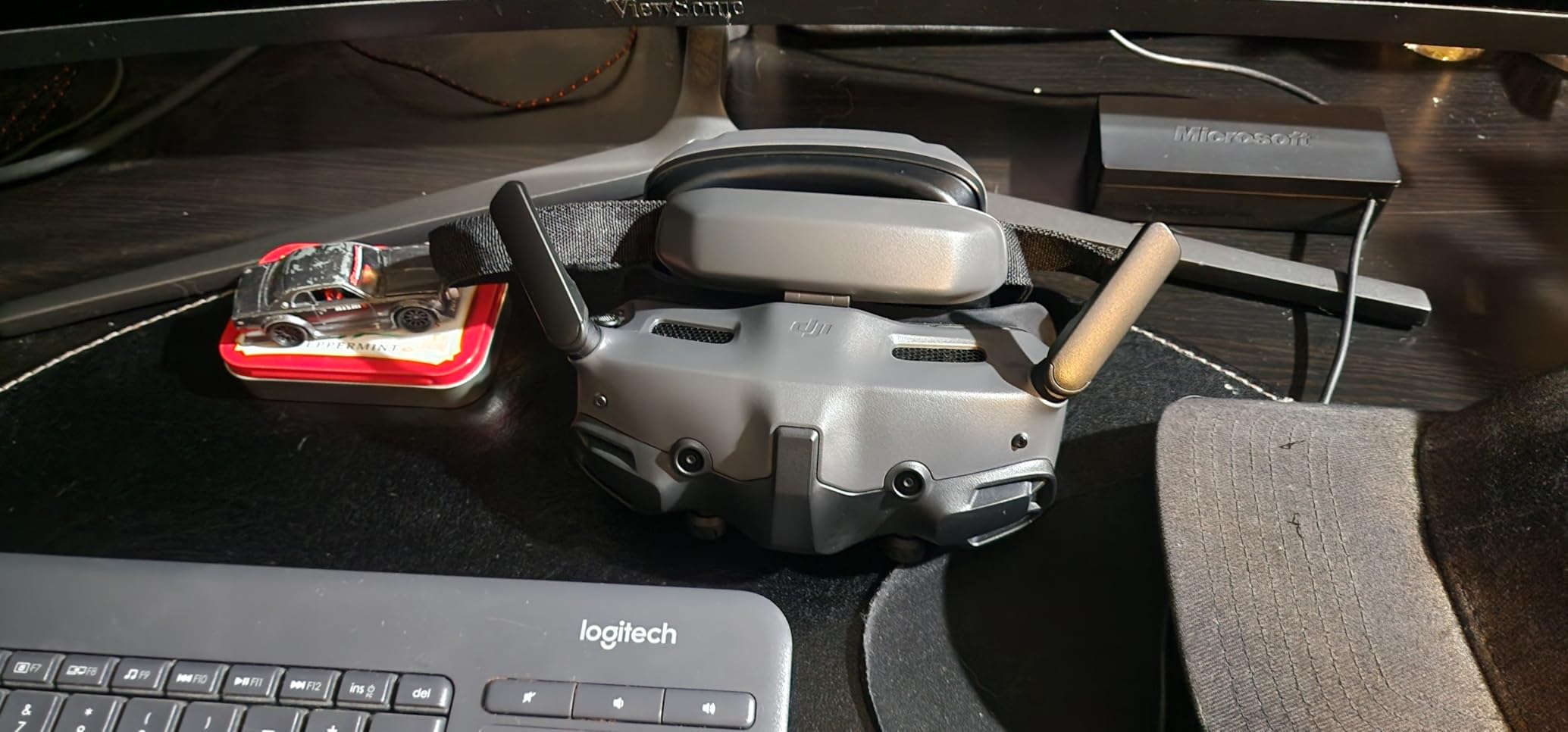
The 80% of ratings that sit at five stars is a strong signal for a first purchase, and the aggregate buyer feedback keeps pointing at the same two things: clarity and comfort. The integrated headband battery gives up to three hours of operating time, and there is a one-tap defogging function for indoor flying, which is where most beginners actually start.
Real View PiP is the sleeper feature. It puts a small forward-facing camera view in the corner of the screen so you can check where you are before committing to a flip, and for a new pilot that safety net is worth more than another increment of resolution.
What you need to know about compatibility
This is the only part of the goggles that can disqualify them. They are listed as compatible with the DJI Neo, Avata 2, Mini 4 Pro, Air 3, and the O3 and O4 Air Units, and the manufacturer explicitly notes they are not compatible with the RC Motion 2 or the FPV Remote Controller 2.
Wireless streaming to the DJI Fly app over Wi-Fi is also listed, and the screens carry Low Blue Light certification, which matters if you are putting a 4.5-inch display a few centimetres from your eyes several times a week.
When to skip these goggles
Skip them if you do not own DJI gear, because that is the dealbreaker and no other feature compensates. There is also no HDMI input on this generation, so they cannot double as a simulator monitor the way a box goggle or a headset with HDMI can.
Some owners report that the written pairing instructions are confusing and that firmware updates can be difficult, and there is no carrying case in the box. If you are someone who will fiddle with settings for an hour after unboxing, expect that hour to exist.
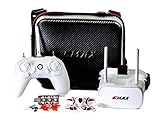
2. EMAX Tiny Hawk RTF Kit — Best Value for Starting From Nothing
Tiny Hawk RTF Micro Indoor Racing Drone with FPV Goggles and Controller for Beginners
- Complete ready-to-fly package
- Real FPV feed rather than WiFi streaming
- Lightweight and durable
- Large review base from other beginners
- Carry case included
- Micro indoor class limits outdoor flying options
- Entry-level build compared with digital systems
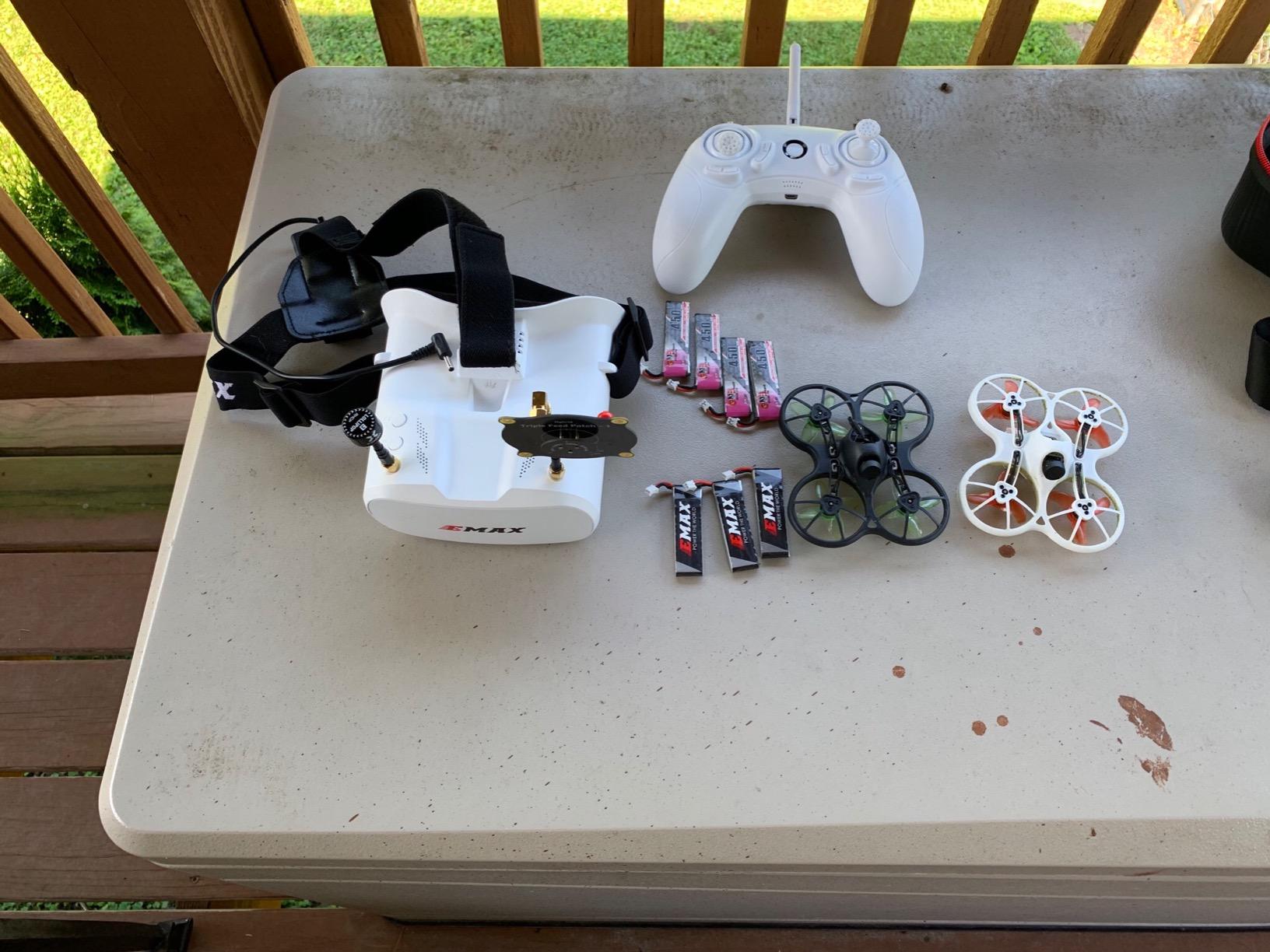
If the phrase best FPV drone goggles for beginners describes a person with no drone, this is the honest answer: the EMAX Tiny Hawk RTF kit includes the aircraft, the goggles and the controller, and it flies out of the box. There is no separate purchase to make and no video system to research, which removes the single biggest source of beginner confusion.
The feed is real FPV rather than WiFi streaming to a phone, which matters more than it sounds. WiFi-based viewfinders drift and drop frames; a genuine 5.8GHz analog link does not, so the picture you see matches what the drone sees. Range is listed at up to 200 feet and speed at up to 35mph, both of which are honest numbers for a micro indoor class.
With 508 ratings averaging 4.0 stars and 60% of those at five stars, this is one of the two most reviewed products in our list, and that volume matters for a first purchase. You are buying into a crowd that has already worked out which batteries fit and how the goggles strap on.
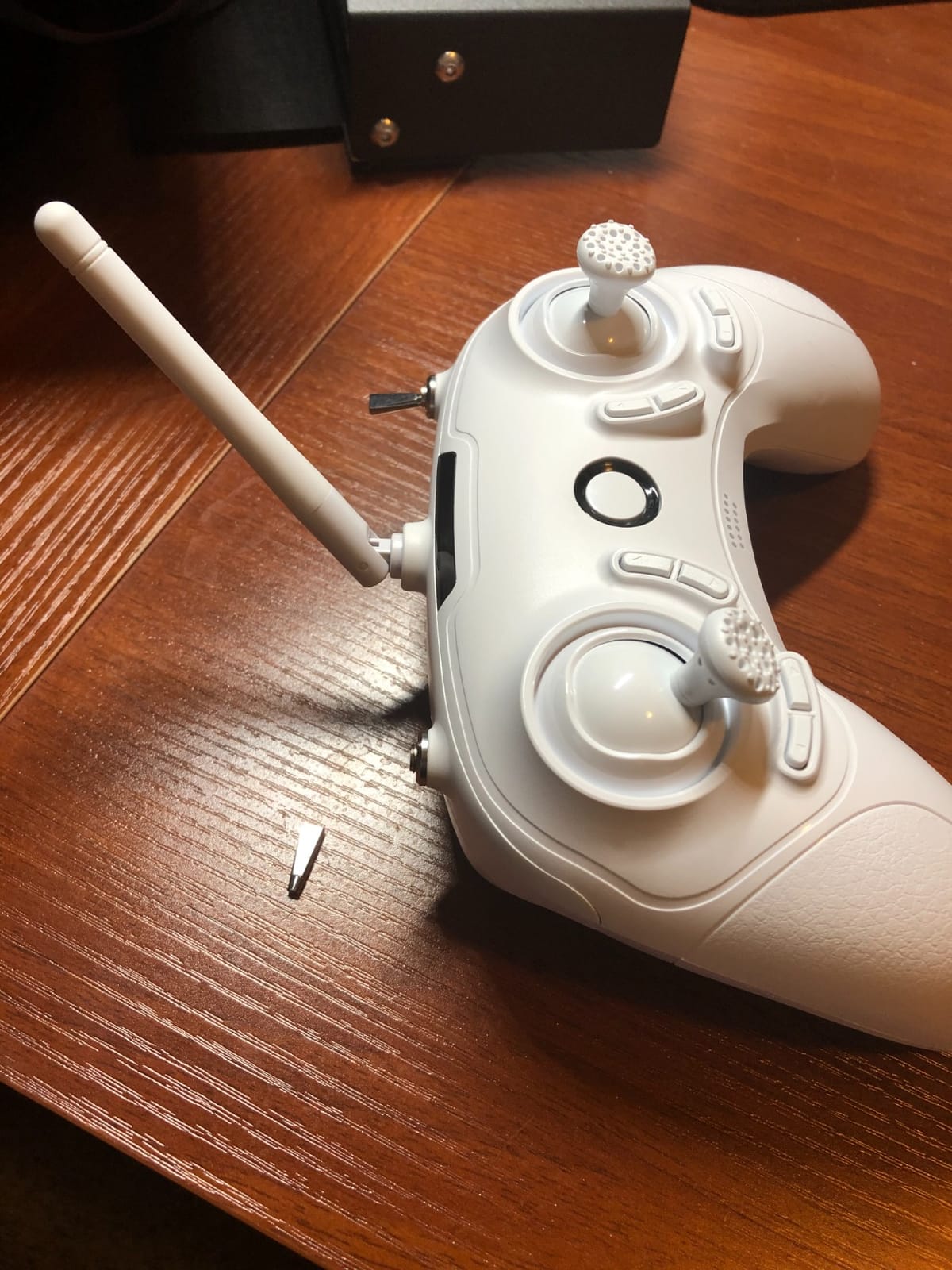
The 450mAh lithium polymer battery and the 2.7 pound weight make it genuinely portable, and the included case means you can throw the whole thing in a bag rather than building a backpack. For learning line-of-sight indoor and small outdoor field flying, that is a sensible place to spend your first hundred flights.
When the included goggles are the right answer
They are the right answer for the first month, full stop. The goggle, the drone and the radio are already matched, and the aircraft is forgiving enough that a beginner will not immediately destroy the setup.
A CMOS sensor and 720p video capture give you a decent recording of every flight, which matters because reviewing your crashes teaches you more than any amount of reading. The MP4 capture format means the files open on anything.
When you will outgrow it
The micro class format limits you to indoor flying and small outdoor practice areas, so this is a stepping stone rather than a destination. Buyers also note that the build and imaging are entry-level compared with digital FPV systems, so do not judge the entire hobby by this first experience.
The 15% of one-star ratings point at expectation mismatch, not a broken product. People expecting a 5-inch freestyle experience from a micro kit tend to leave one star behind.
3. EV800D FPV Goggles — Most Versatile for Analog
- Clear picture for an entry-level box goggle
- Screen detaches into a standalone monitor
- Built-in DVR records flights
- Comfortable strap with decent light blocking
- Many units ship with a single-receiver board rather than true diversity
- Range drops where other quads are flying
- Internal battery takes hours to charge and cannot be swapped
The EV800D is the classic starter box goggle, and it is the pick we recommend when someone asks which best FPV goggles for beginners are affordable but still record flights. The 5-inch 800×480 high-brightness LCD, an 82 degree field of view through a 92% transparent lens, and a built-in DVR are a genuinely useful combination at this level.
Automatic channel search is the feature that saves beginners the most frustration. Press the button, the working frequency appears on screen, and you are flying. Nobody should spend their first evening memorising RaceBand tables, and this goggle removes that chore entirely.
Two design choices make it more flexible than the name suggests. The screen detaches to work as a standalone monitor, which is how you can let a friend watch, and the DVR records up to 720×576 with separate display and record chipsets so recording does not degrade the live view.
In r/fpv threads the EV800D is still described as the long-recommended budget analog starter, and it turns up constantly in the same conversations where people ask whether entry-level goggles are worth it. The consensus there is that for learning, yes.
The counterfeit and clone problem you should know about
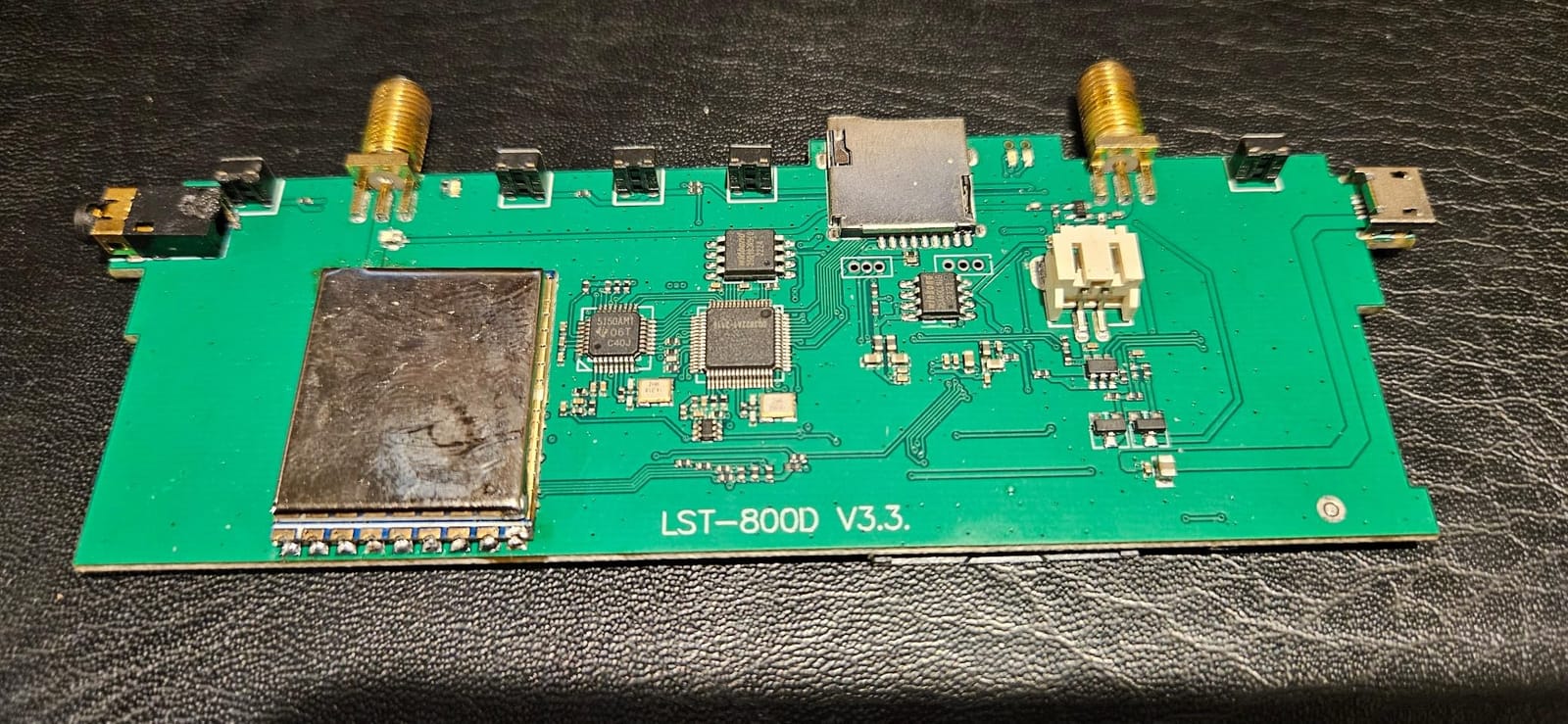
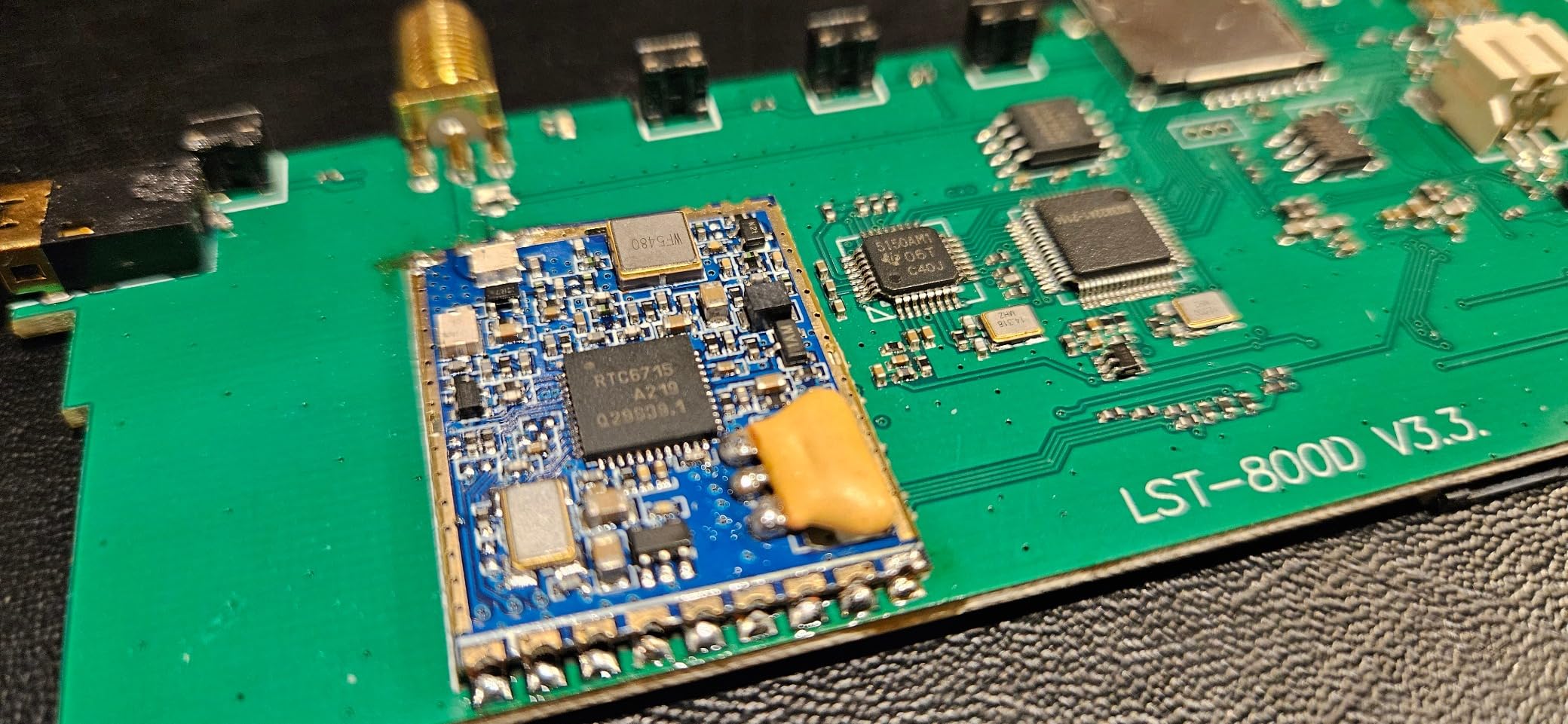
This is the most important thing in this section. The recurring theme across 161 buyer reviews is that many units are not a genuine EV800D board at all but an LST-800D single-core clone, which means the claimed diversity reception does not exist and both range and picture quality fall short of the branding implies.
The practical consequence is that if you fly anywhere busy with other quads up, this goggle will struggle where a true diversity unit would not. Expect picture breakup and reduced range in crowded RF environments, which is exactly where a beginner spends a lot of time at a club field.
What to plan around before you buy
The 2000mAh internal battery gives about two hours of flying, but it takes several hours to charge and cannot be swapped, so plan sessions around that cycle. Owners also report the goggles running warm during extended recording.
The row of closely spaced buttons is easy to press by accident, and the fixed focus means farsighted wearers may struggle. The 82 degree field of view is generous, which helps with spatial awareness but can feel wide and tiring in a first session.
4. DroneMask 2 — Best for GPS Camera Drone Pilots
- Works with nearly any camera drone and phone
- No third-party apps required
- Comfortable padding and breathable fabric
- Blocks sun and glare
- Also works as a cinema and gaming headset
- Phone screen resolution is the limiting factor
- Relies on phone battery and HDMI adapters
- Not a low-latency FPV system
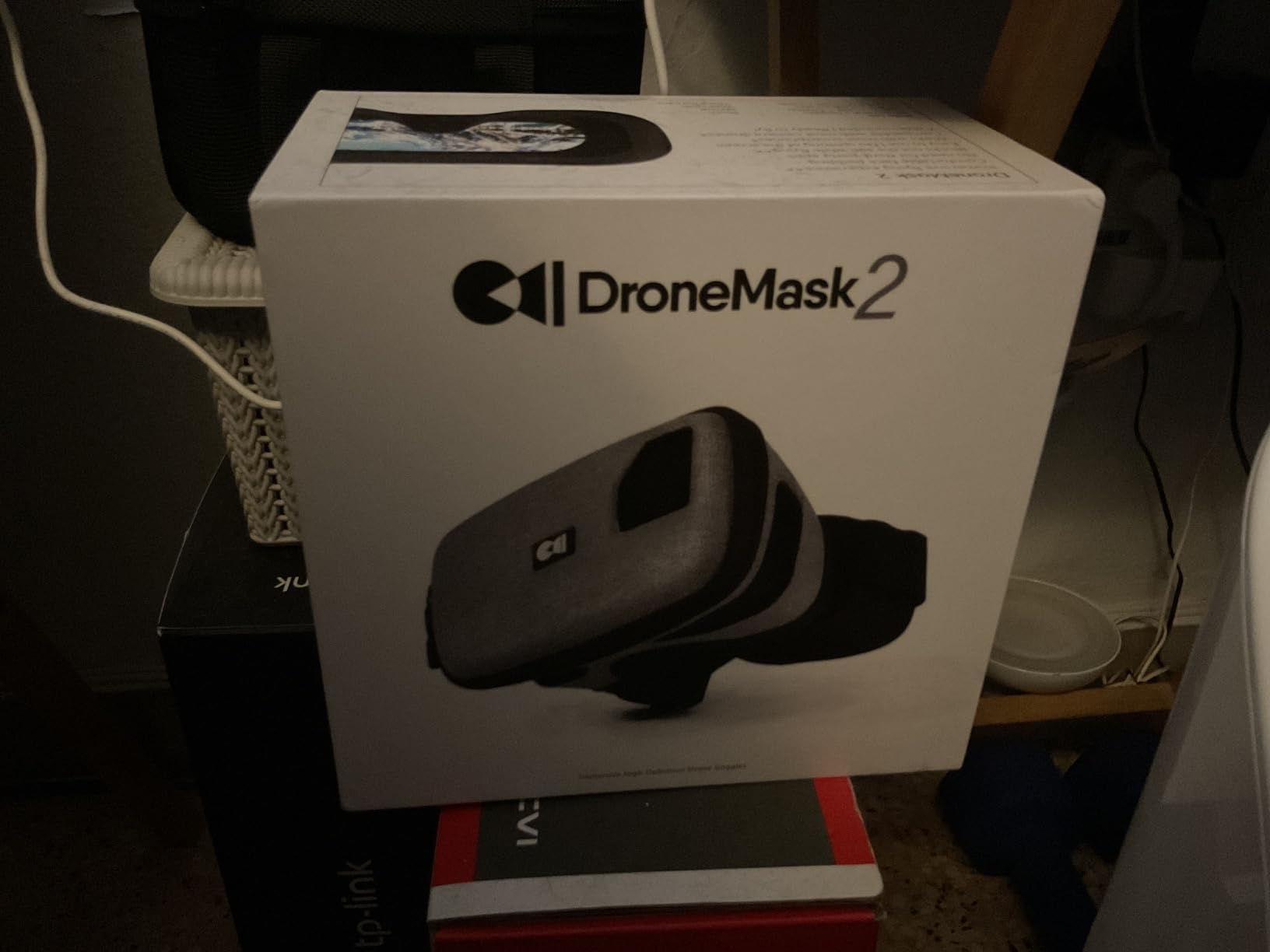
Let us be blunt about the category first. The DroneMask 2 does not receive analog or digital FPV video, which is the most common misunderstanding in this corner of the market. It is an HDMI headset that puts your phone screen behind a lens. If you fly a Mini, an Air or a Mavic and you want to sit inside the aircraft view rather than watch it from the ground, that is exactly what you need.
The patented unibody lens is the reason it looks different from a generic split-screen VR mask. The manufacturer claims four times the resolution of a standard split-screen headset, and the practical difference is a noticeably less smeared image with fewer visible seams.
Compatibility is the strong suit. The listing names the DJI Mini 2, Mini 2 SE, Mini 3, Mini 4, Air 2, Air 2S, Air 3, Mavic 3, Autel Evo Lite+, Potensic Atom and Fimi X8 among others, and no third-party app is required. You connect with the included USB-C adapter and the included lighting cable and fly.
Adjustable focal length is what makes it usable for a household rather than one person, and it is listed as working with eyeglasses. The soft breathable face padding and the screen-access holes that block sun and glare make long outdoor sessions bearable.
Why the phone is both the strength and the limit
You are getting a display you already own, which is why the total outlay is so low. The 224 ratings average 4.0 stars with 59% at five stars, and buyers consistently point at comfort and broad compatibility as the reasons.
The same reviews point out that the phone screen resolution is the limiting factor, not the lens. A modern phone panel viewed through a 1.3 kg headset at close range will not give you the pixel density of a Micro-OLED panel, so do not expect digital FPV crispness.
When this is the wrong tool
It is the wrong tool for acro flying, racing or anything where latency matters, because the pipeline runs through the phone rather than a purpose-built receiver.
It is also dependent on phone battery life and adapter compatibility, both of which add friction to a session. The upside is that it doubles as an HDMI cinema and gaming headset, which is how most owners justify the second device in the household.
5. DJI FPV Goggles V2 Renewed — Best for Secondhand DJI Pilots
DJI (Refurbished) FPV Goggles V2 for Drone Racing Immersive Experience, Supports up to 110 minutes of flight Black (Renewed)
- Arrives in original factory packaging with accessories
- 71% of ratings at five stars
- Binds quickly for most owners
- Comfortable enough to wear with glasses
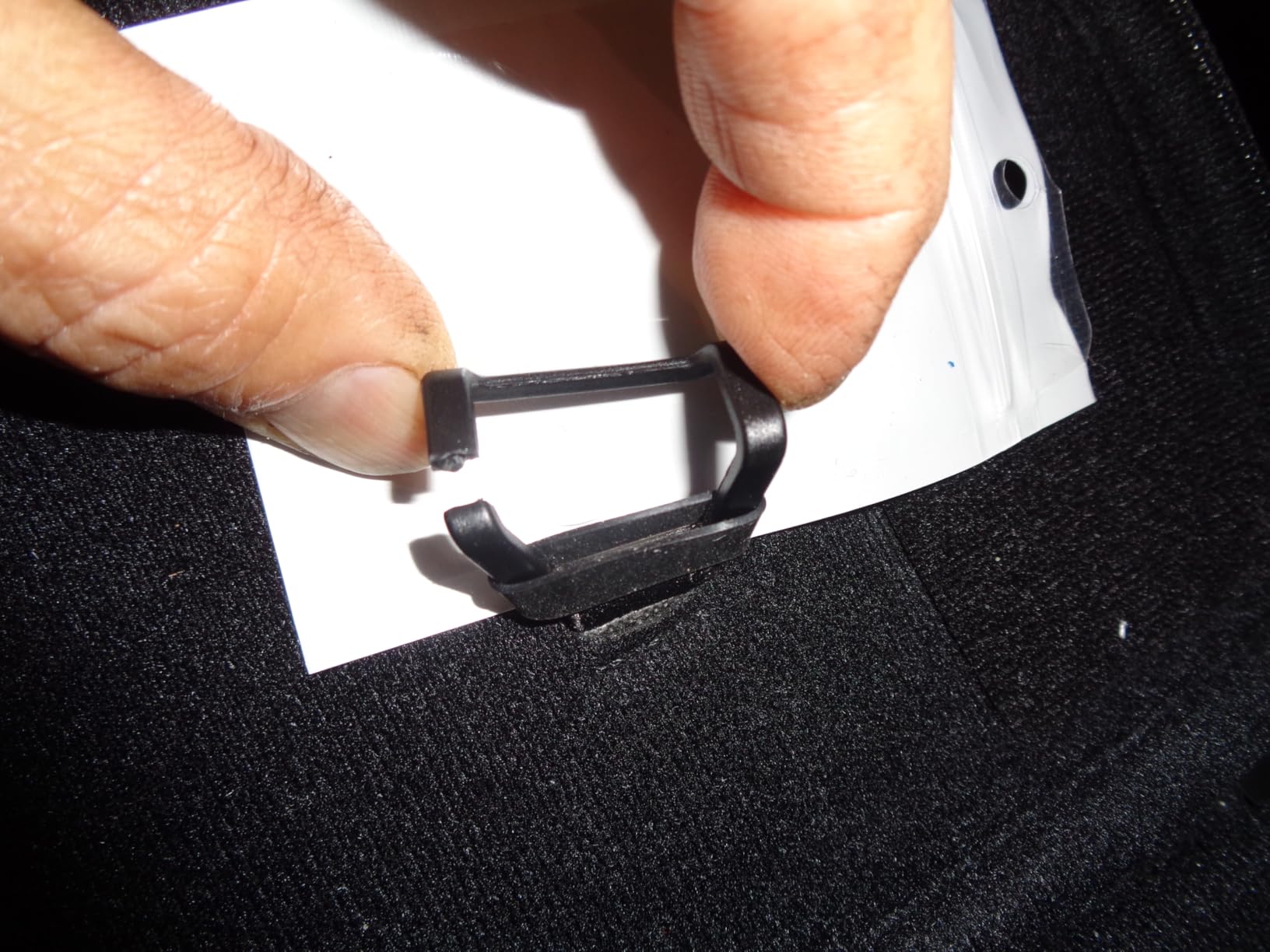
- Some refurbished units have power jack or linking issues
- Supplied foam does not seal every face shape
- Needs a DJI FPV drone or O3 Air Unit to be useful
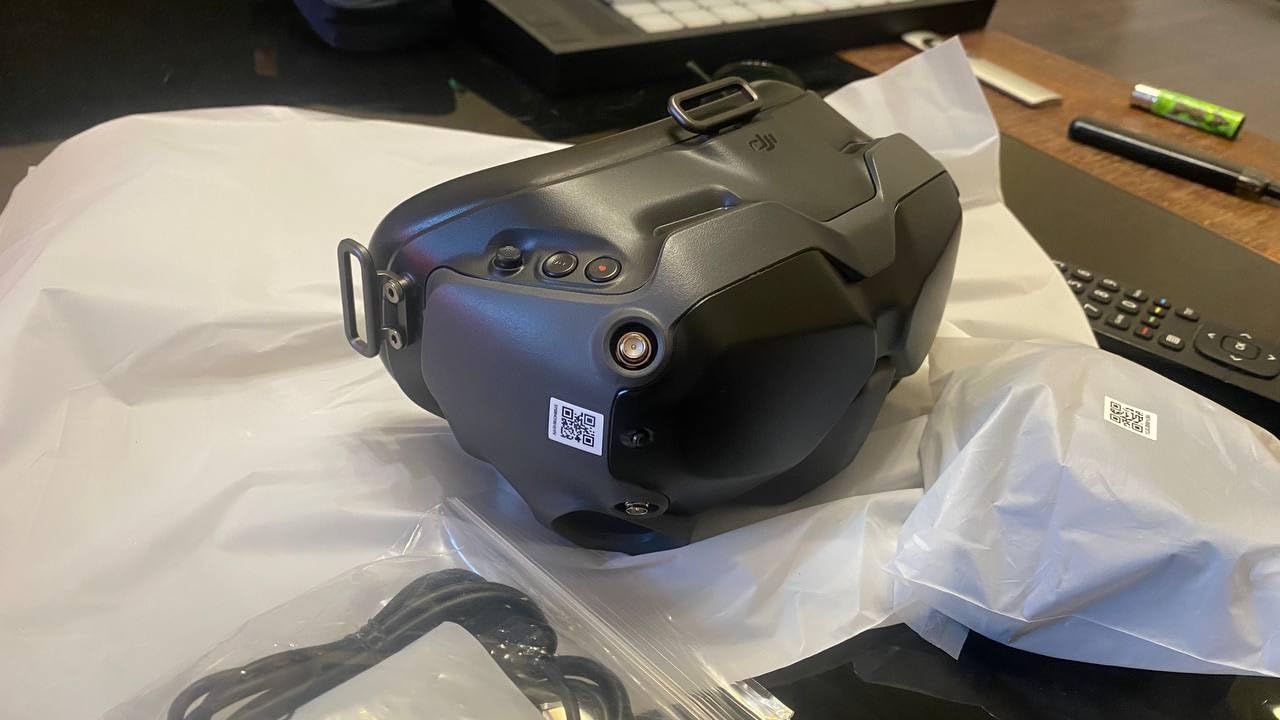
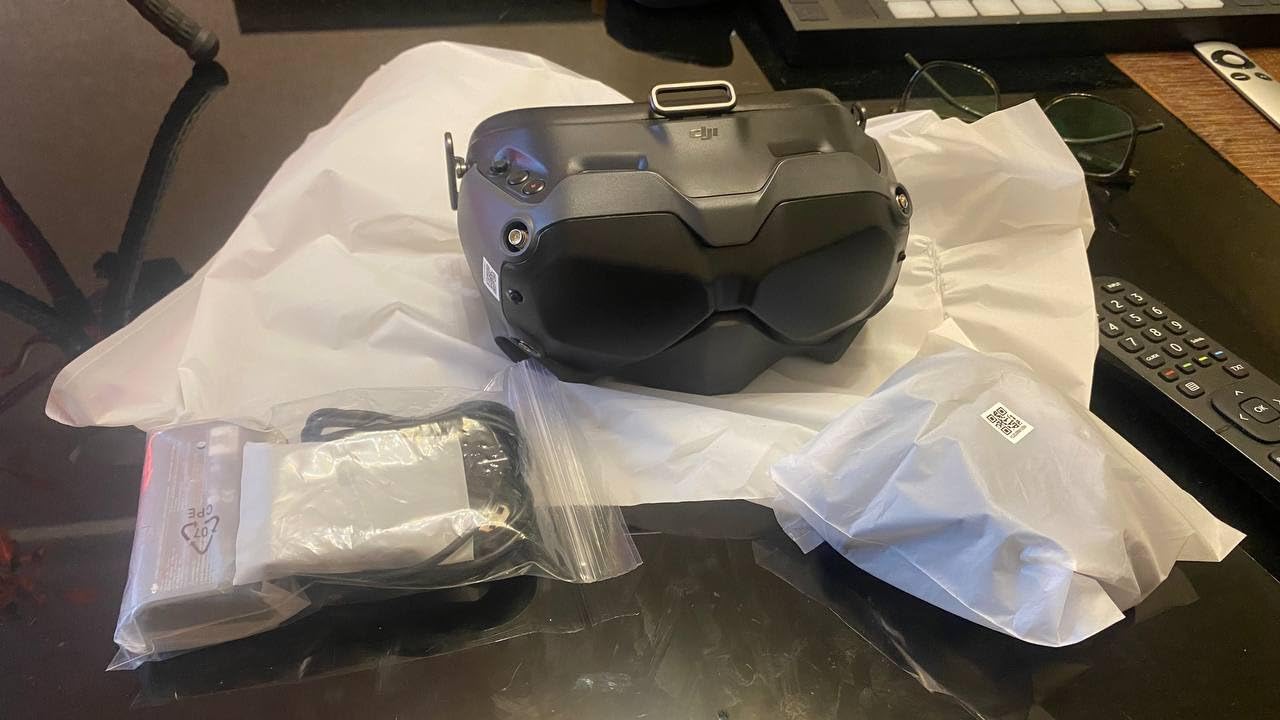
The renewed DJI FPV Goggles V2 make sense in one specific situation: you have a DJI FPV drone or a DJI O3 Air Unit already, and you want goggles that will link to it. The 144Hz screen refresh rate, adjustable image size and 1080p digital video are still a big step up from analog, and microSD recording means you can review every flight afterwards.
These are Amazon Renewed units, and that is the whole deal. Buyers consistently report the units arriving in original factory packaging with all original accessories and looking new, backed by a 90-day limited warranty through the Renewed program.
Dual-frequency support is worth understanding. The goggles handle both 2.4GHz and 5.8GHz, but the 5.8GHz band only works with a DJI FPV Air Unit, and the manufacturer notes that 5.8GHz is unavailable in some countries, meaning those regions run on 2.4GHz alone.
Recording matters on a pair like this, because it is how a new pilot reviews a crash. The 114 ratings average 4.2 stars with 71% at five stars, so the refurbishment process is generally delivering what it promises.
What renewed hardware can cost you
The negative reviews cluster on two things. Some owners report finicky power jacks, and some report units that would not register or link to their aircraft even after updates — which for a goggle means it is a very expensive paperweight until the problem is resolved.
Fit is the other theme. The supplied foam fitting does not seal every face shape, and light gaps ruin the immersion that makes digital FPV worth the money. If you have a narrow or wide face, check whether a replacement face plate is available before committing.
Who should look elsewhere
If you do not already own a DJI FPV aircraft or an O3 Air Unit, these goggles are very hard to justify. The compatibility list is narrow and there is no HDMI input to make them useful for simulator training.
Refurbished is a value play, not a risk-free one. Buy from a seller with a clear return path and test the link with your aircraft the moment it arrives.
6. CADDXFPV Walksnail Goggles L — Best for Head Tracking and Fixed-Wing
CADDXFPV Walksnail Goggles L, 1080p 4.5-Inch FPV Goggles, Head Tracking
- Sharp 1080p 60fps image
- Low latency and long range for open-field flying
- Head tracking adds real value for fixed-wing and RC vehicles
- Flexible 2S-6S battery input
- Onboard DVR with microSD replay
- Walksnail Avatar HD VTX systems only
- No HDMI input
- External battery and microSD card not included
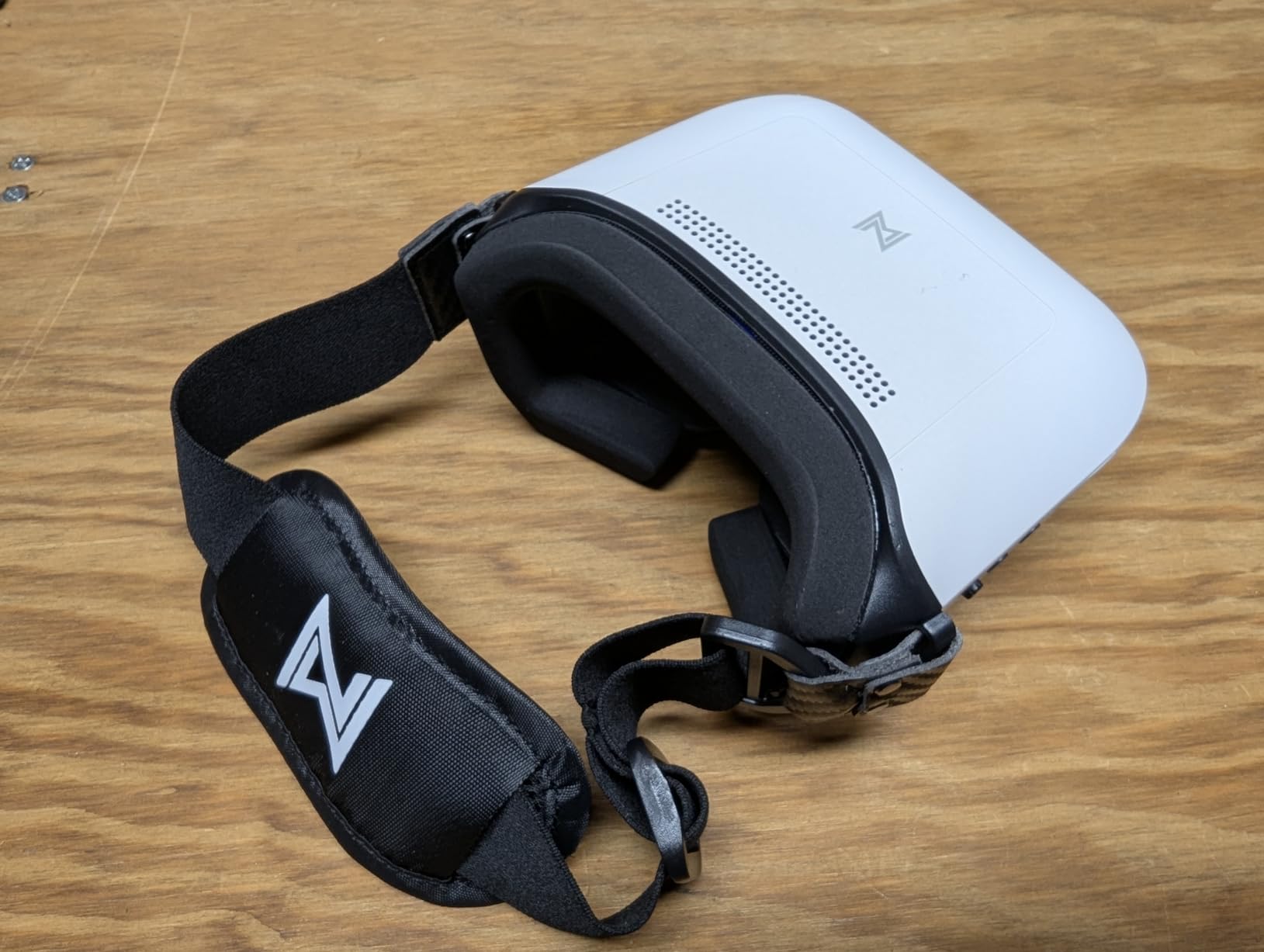
The Walksnail Goggles L is the pick for anyone whose flying involves long open fields, fixed-wing aircraft or RC vehicles, because head tracking is the feature nobody else in this list has. The nine-axis gyro with PPM output can drive a gimbal or a controller head angle, which turns a normal FPV view into a cockpit you can look around.
Image quality is a clear step up from an analog feed. You get a 4.5-inch 1920×1080 LCD running at 60fps, a bitrate up to 50Mbps, and latency averaging as low as 32ms with a rated range beyond 4km under suitable conditions.
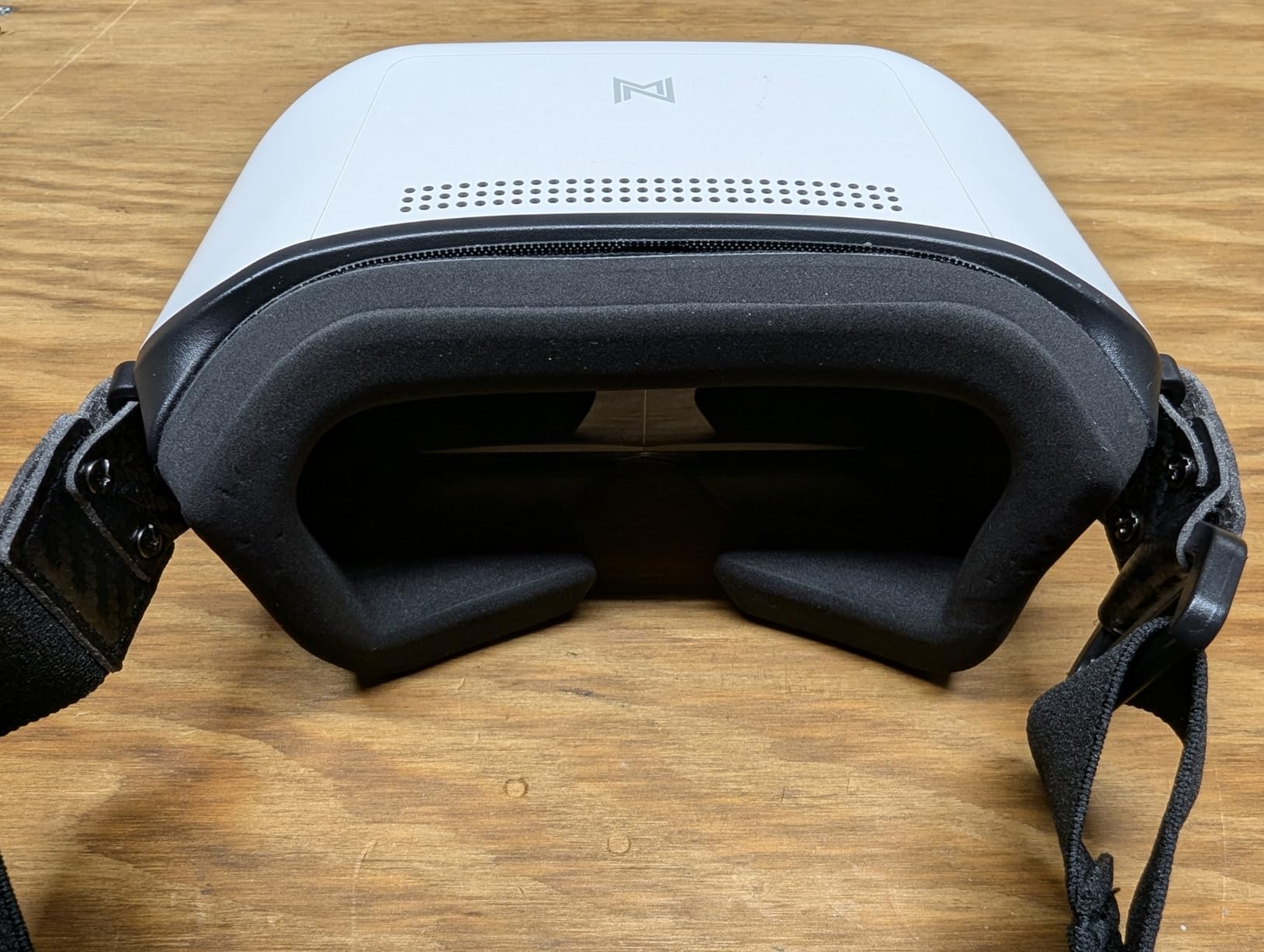
The power input is unusually flexible. It accepts 6V to 25.2V, meaning any 2S to 6S battery can power it directly, with low-voltage screen and buzzer alerts so you are not surprised by a dead pack mid-flight. For a pilot who already owns a stack of whoop batteries, that removes a charging problem entirely.
Recording handles microSD cards up to 256GB with replay, so you can review sessions without a separate cable. The 54 ratings average 4.4 stars with 79% at five stars, which is a strong signal despite the small sample.
The ecosystem question decides this purchase
These goggles work only with Walksnail Avatar HD system air units. They cannot receive analog video at all, and there is no HDMI input, so there is no fallback if the air unit is a different brand or if you want to use them with a simulator.
Neither the external battery nor the microSD card is included. Budget for both on day one, because recording to an internal buffer you cannot review afterwards defeats the point.
Skill level note
The manufacturer lists this as an advanced skill level product, so treat it as a second or third purchase rather than a first. It is a good destination once you know which air unit you are committed to.
Buyers with a small sample size report consistency rather than excitement, with picture clarity, head tracking and flexible power the recurring positives and the Walksnail-only lock-in the standing limitation.
7. BETAFPV VR04 HD — Best for P1 Air Unit Pilots
BETAFPV VR04 HD FPV Goggles with 1080P 4.5″ Screen LCD for P1 Air Unit VTX
- Much clearer than entry-level analog box goggles
- Comfortable extended-wear fit with PU padding
- Two 2600mAh batteries give about 3 hours
- Direct 2S-6S whoop battery input
- Record and replay up to 1TB
- Only 18 reviews so long-term reliability is unproven
- P1 Air Unit VTX system only
- microSD card not included
The BETAFPV VR04 HD is the value path into digital HD FPV, and the 4.5-inch 1920×1080 LCD at 60fps is the reason. Anyone moving up from an entry-level analog box goggle will notice the difference immediately, and the glasses-friendly interior with PU face padding and a silicone nose bridge is designed for long sessions rather than five-minute flights.
Battery provision is unusually generous. Two 2600mAh batteries are included for about three hours of use per charge, and the goggle also accepts direct 2S to 6S whoop battery input, so you can hot-swap with the packs you already own.
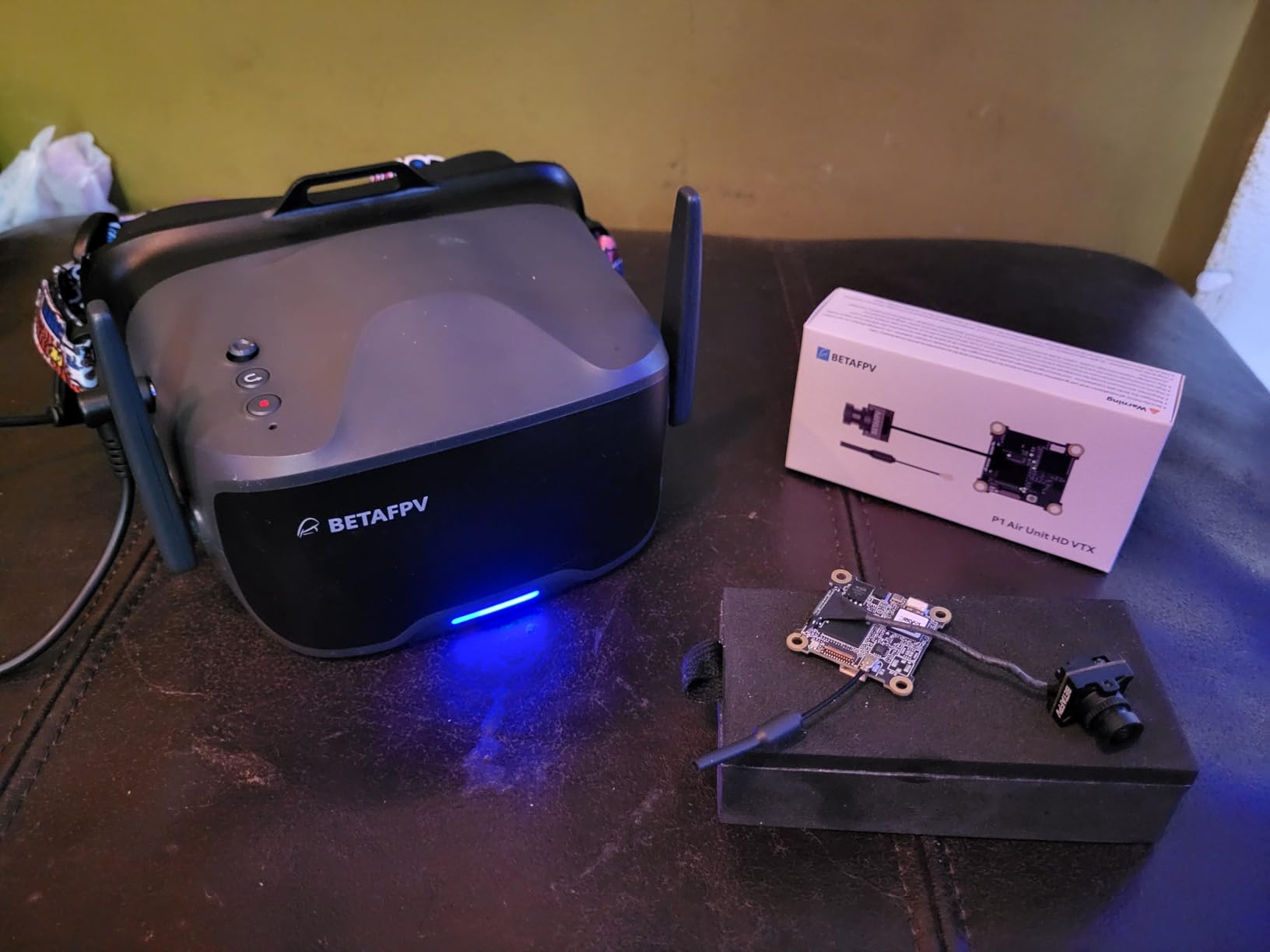
Recording is the standout specification: 1080P at 60fps written to microSD with a capacity of up to 1TB, with replay on the device. That is a lot of headroom for a goggle DVR, and it means you can keep months of flight recordings on one card.
It also bind-and-flys with the Meteor75 Pro P1, which removes setup friction if that is the aircraft you own. An adjustable headband is included in the package.
Read the review count before you buy
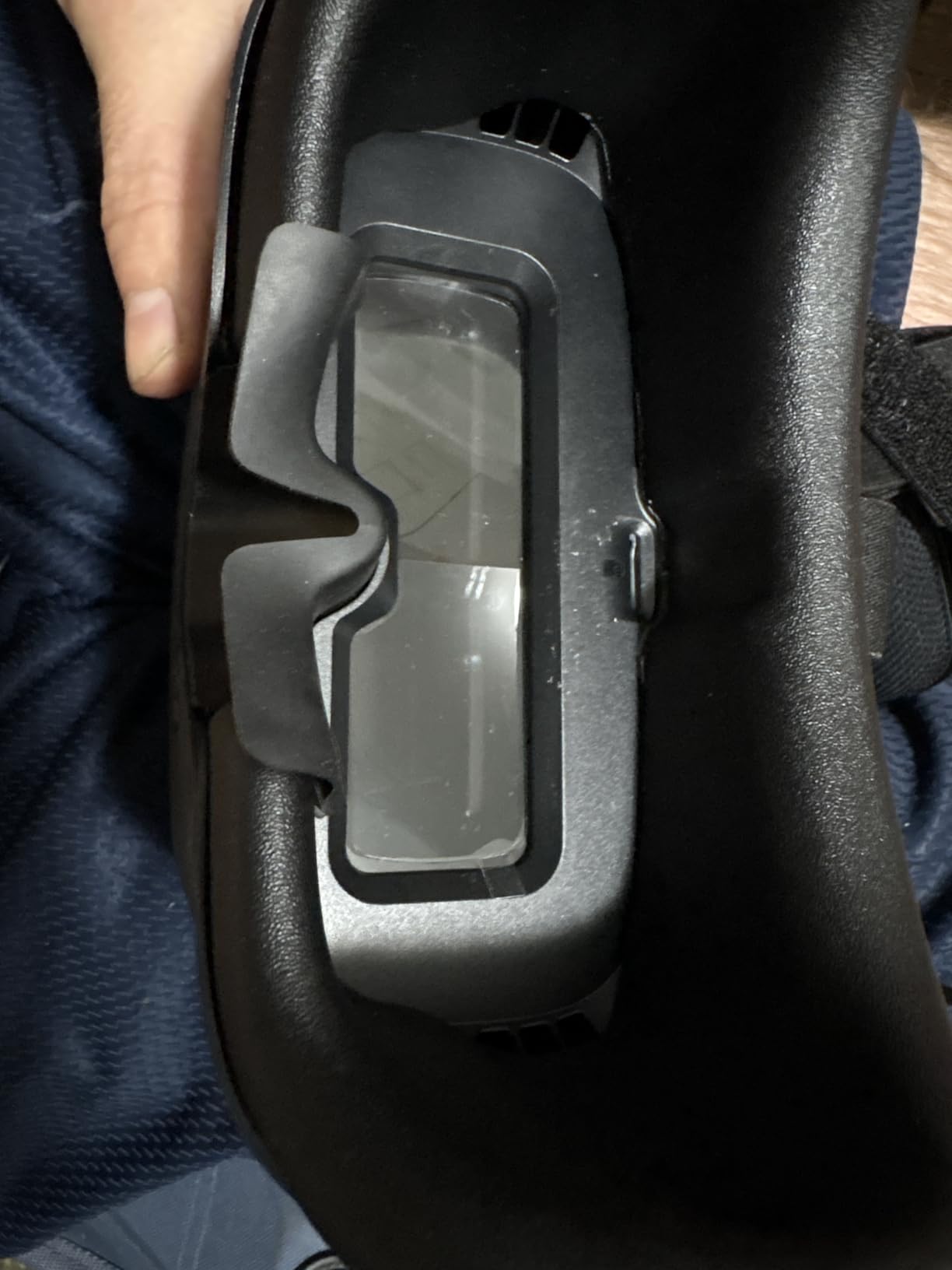
We want to be straight about this one. At 18 ratings and 3.7 stars, it has the thinnest review base in our list, and a 22% share of two-star ratings points to early units that disappointed buyers rather than a broad consensus against the product.
A small review base means long-term reliability is simply not established. There is not enough history here to tell you whether the fit or firmware issues reported by some buyers were early-production problems or permanent traits.
What to watch out for
It pairs with the BETAFPV P1 Air Unit VTX only, so verify what is on your aircraft before buying. The microSD card is not included, and you will need one to use the DVR at all.
Given the specification sheet and the comfort design, this remains a reasonable pick for a pilot already committed to the P1 platform. For everyone else, the thinner review history is a reason to slow down rather than speed up.
8. Fat Shark Recon Echo — Best All-in-One Analog Set
Fat Shark Recon Echo DVR FPV Goggles and Camera & Transmitter Combo – Fixed-Focus Prime Lens, B3 Mount, White
- Complete set with headset plus camera and VTX
- Ready to fly out of the box
- Onboard DVR for reviewing flights
- Established FPV brand name
- Fixed focus lens offers no adjustment
- microSD card not included despite the DVR
- Small review base of 35 ratings
The Fat Shark Recon Echo is the analog answer for a beginner who wants one box to open rather than a shopping list. The package includes the headset, an FSV1225 micro FPV camera, the 5.8GHz video transmitter, a linear antenna, a cleaning cloth and a headband, and it is ready to fly for FPV helicopters or quadcopters straight out of the box.
Fat Shark is a recognised name in FPV rather than an anonymous box brand, and that matters in a category where clone hardware is common. The headset weighs 0.5 kg, which sits between a compact low-profile goggle and a full box goggle.
Onboard DVR is the feature that lifts it above a basic analog set. Being able to review a crash immediately is worth more to a new pilot than any resolution increase, and it turns each session into a teaching session instead of a guess.
With 35 ratings averaging 4.1 stars, buyers describe it as generally positive, with the combination package as the main draw. The product sits at number 27 in Video Display Glasses, which is a modest but real sales signal in this niche.
The focus problem is the one to understand
This is a fixed-focus design with a 2.5mm prime lens on a B3 mount. That means there is no focus adjustment at all, and a fixed-focus goggle is the single most common reason a beginner concludes that something is wrong with their eyes.
If you are farsighted, you will need reading glasses under the goggles, contact lenses, or a prescription insert. If you can wear glasses comfortably under a low-profile headset, you will be fine; if not, the fixed focus is a hard limit rather than an inconvenience.
When to choose it instead
Choose it over a bare camera and transmitter when you want one purchase that includes a headset, because the RunCam set in this list ships the transmitter rather than a full viewing solution. Choose it over the EV800D when you want a headset from an established analog brand and a lower 0.5 kg weight.
Do not buy it expecting digital clarity. The microSD card is not included despite the DVR, and a review base of 35 ratings is thin enough that you should expect less long-term feedback than the 508-review products in this list.
9. RunCam FPV Goggles and Camera and Transmitter — Best for a First Build
- All-in-one camera and transmitter simplifies a first build
- Very wide 170 degree field of view
- Adjustable transmit power for different ranges
- Integrated microphone and OSD for flight data
- Dual antenna reception
- 700TVL analog image is soft next to digital
- Small review base of 23 ratings
- Some listings include only the transmitter
Strictly speaking this entry is a camera and transmitter rather than a goggle, which is why it earns a place in a goggles guide: it is the part of the system that decides what your future goggles need to receive. The Spotter V2 pairs a CMOS sensor with an integrated 5.8GHz 40-channel transmitter, so there is no separate VTX to solder or configure.
The 170 degree field of view is the headline number. That is dramatically wider than a typical FPV camera, which gives a whoop or a micro quad a genuine sense of surrounding space and makes close indoor flying far easier to learn than a narrow view.
Adjustable transmit power from 20mW to 200mW is a practical feature that most beginners never discover exists. Start low indoors, increase it for outdoor line-of-sight work, and you avoid both interference problems and unnecessary range.
The integrated microphone and on-screen display add audio and flight telemetry to the feed, and dual antennas improve reception stability in areas with other pilots.
Read the listing carefully
This is the one product in our list where the contents genuinely vary. The included components field lists the transmitter, and some listings include only that component rather than the full camera and transmitter set. Verify what is in the box before you order, because the difference decides whether you can fly at all.
It is also worth noting this product suits FPV RC cars, boats, drones and planes, so if your interest extends past quads the same hardware covers it.
What the reviews tell you
At 23 ratings averaging 3.9 stars, this is the second thinnest review base here, so the feedback is useful but not conclusive. Reviewers value the wide field of view and the adjustable power, and the shared limitation they name is the 700TVL analog resolution, which looks soft beside any digital system.
Our take is that this is a good first build component, not a good first viewing solution. Pair it with an entry-level analog goggle from our list and you have a complete, capable beginner setup without reaching for a headset outside your comfort zone.
10. EMAX Tiny Hawk EZ Pilot Pro — Best for Indoor Whoop Practice
EMAX EZ Pilot Pro FPV Drone Set for Kids and Adult Beginners with Real 5.8g Goggles and Controller Easy to Fly Quadcopter
- Durable frame that survives many hard crashes
- Betaflight tunability lets you progress to acro mode
- Screen detaches and works as a controller monitor
- Controller works with other future quads
- Fast reported learning curve
- Short flight time from the included battery
- Included goggles have no DVR function
- Display can be hard to focus for farsighted users
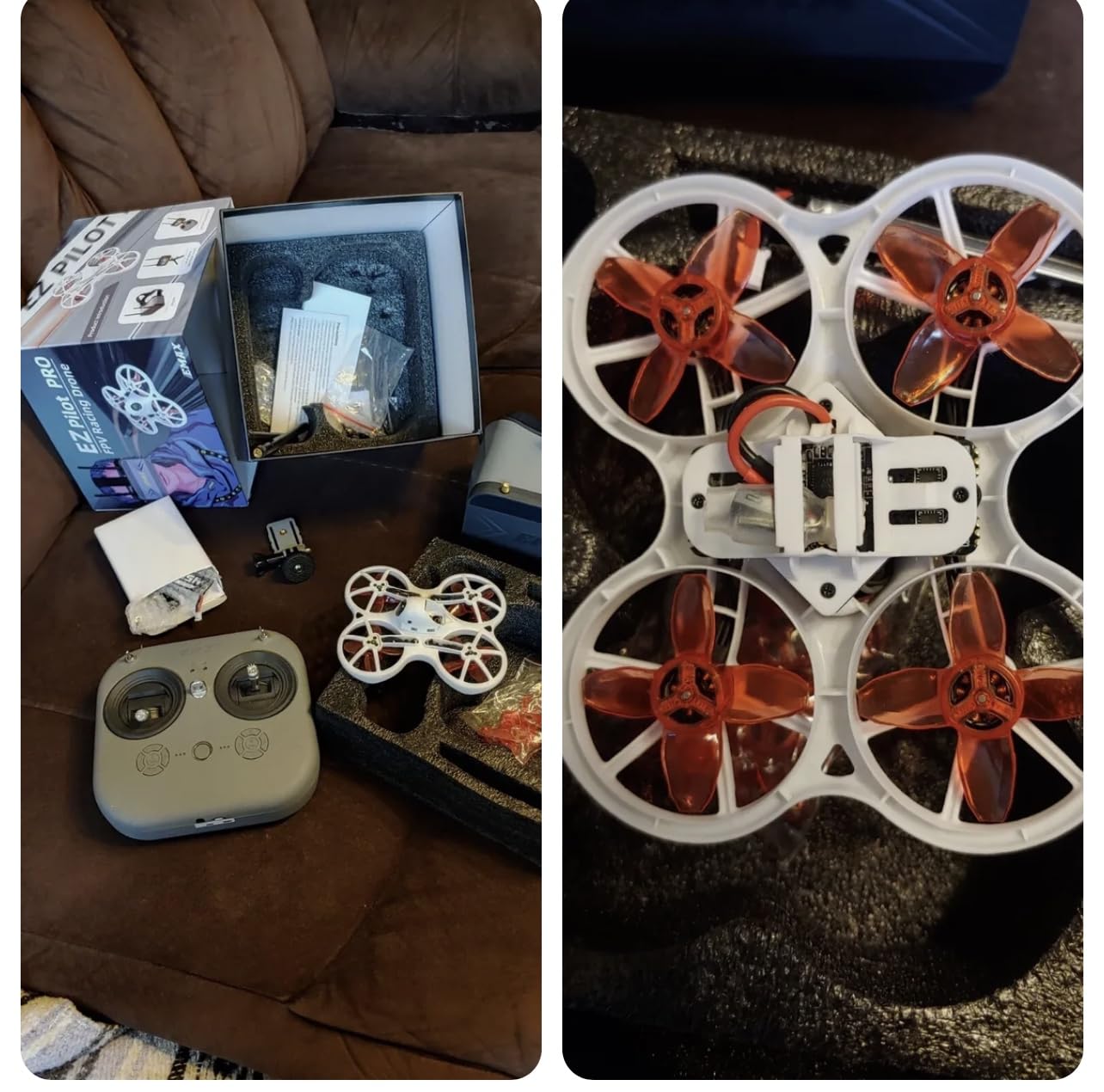
The Tiny Hawk EZ Pilot Pro is the pick for a beginner who wants to grow into acro mode rather than stay at beginner mode, and the Betaflight configurability is why. Three flight modes let you start in Angle, move to Horizon, and then work up to full Acro with custom rates, which is a progression path most ready-to-fly kits do not offer.
The goggle screen detaches and works as a standalone monitor or can be worn for the FPV view, and the controller is a FrSky D8 and D16 unit that will control other quads you build later. That controller longevity is a real, if unglamorous, advantage.
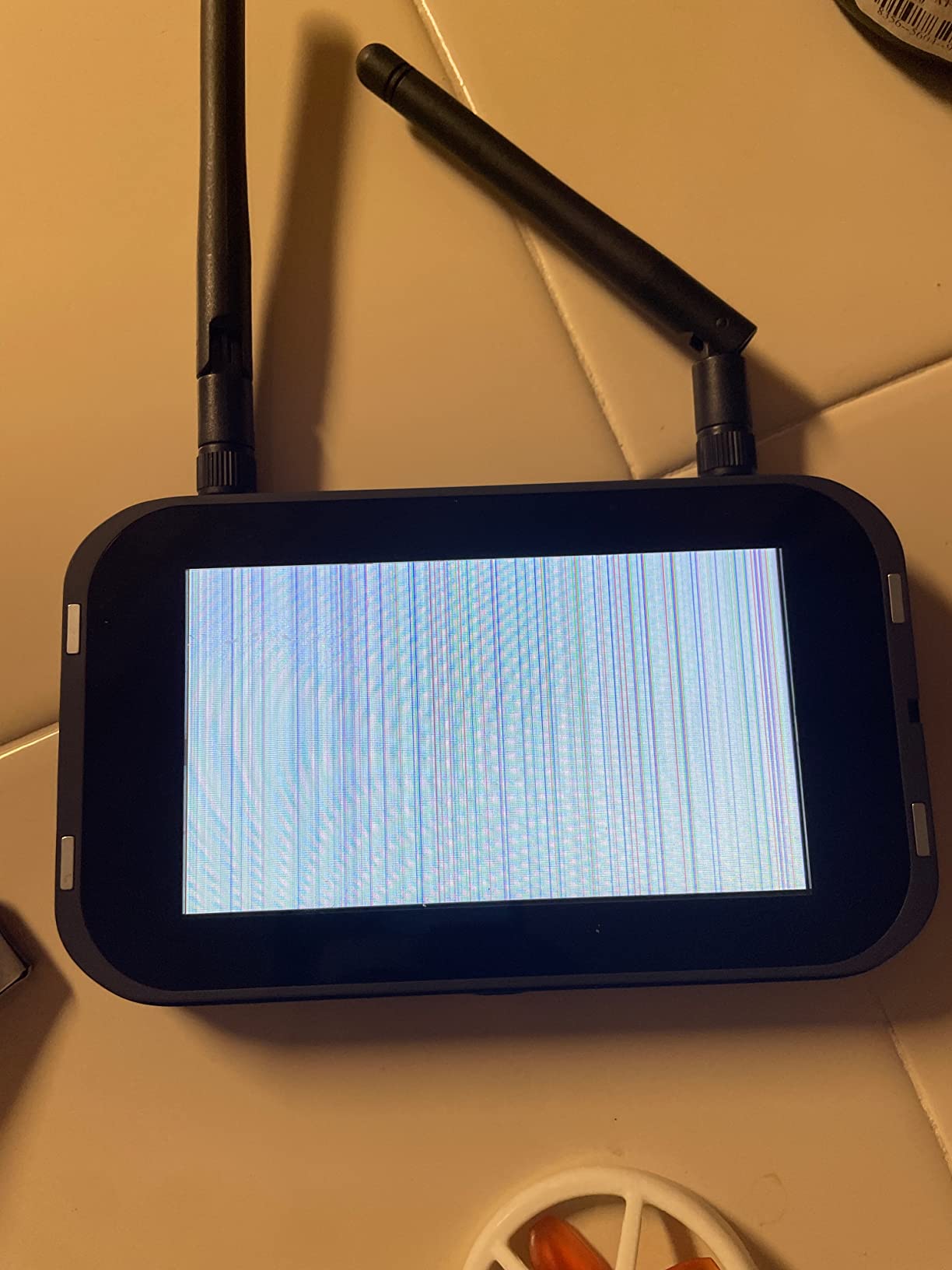
Durability is the other selling point in buyer feedback. Owners report the flexible frame surviving many hard crashes, which is exactly the property you want from a first aircraft that will be flown into walls for the first month.
Several new pilots report a fast learning curve, and the JST PH2.0 battery connector is a widely supported standard, so finding compatible batteries is straightforward rather than a specialist purchase.
The DVR omission is the biggest practical gap
The included goggles have no DVR or recording function at all, and for a beginner that is a real loss. Reviewing your own footage is one of the fastest ways to learn, and this kit removes the option entirely, which is why we place the analog box goggle with DVR higher up the list.
The 450mAh battery gives short sessions, and owners recommend moving to aftermarket 550mAh or 650mAh packs. Budget for that from the start, because repeatedly flying on a tired pack teaches bad habits.
Fit and reliability caveats
The goggle display can be difficult to focus for older or farsighted users, which is the same fixed-focus limitation that affects most kit-supplied goggles. If you need prescription correction, plan for contacts or an insert.
There are also occasional reports of controller link and reliability problems, and the 3.5-star average across 119 ratings with 27% at one star reflects that spread. The value and tunability keep it on this list, but it is a kit to grow out of rather than stay with.
Analog vs Digital FPV: What Actually Changes for a Beginner
The loudest argument in the FPV community is whether a new pilot should start analog or digital, and it is largely a false choice if you frame it correctly. Analog wins on latency, outlay and compatibility. Digital wins on image quality and range. Neither matters as much as matching your goggles to the air unit you already own.
For learning, the practical latency difference is small. The DJI Goggles 3 operate at 24ms with O4 and the Walksnail Goggles L average as low as 32ms, while analog transmission is effectively instant. In a calm hover or a slow orbit, a new pilot will not perceive the difference. In a fast race line, a racer absolutely will.
Image quality is where digital changes everything. A 800×480 LCD showing a soft analog feed, or a 700TVL analog camera, is a world away from a 1080p Micro-OLED panel. That difference is what keeps beginners engaged, and engagement is what decides whether someone is still flying in six months.
Outlay runs the other way. Analog box goggles remain among the most affordable ways to see a live FPV feed, and any 5.8GHz VTX will drive them, which makes analog the only sensible default when you are undecided. Our FPV tool kit roundup covers the soldering iron, smoke stopper and charge gear you will need either way.
Glasses, Face Shape and Diopter Fitment
Fit is the most underrated buying criterion, and it is the one that ends sessions. The two numbers that matter are diopter range, which is the prescription correction the goggles can dial in, and IPD adjustment, which is how far the optics slide apart to match the distance between your eyes.
The DJI Goggles 3 offer a -6.0D to +2.0D diopter range with adjustable diopter dials, and that is why they are our top pick for anyone who wears glasses. The DJI FPV Goggles V2 are reported by users to work with eyeglasses, though the supplied foam on a renewed unit does not seal every face shape.
The DroneMask 2 uses adjustable focal length rather than a diopter dial and is listed as working with eyeglasses, which makes it a practical choice for a household with two different prescriptions. The BETAFPV VR04 HD advertises a glasses-friendly interior with PU face padding and a silicone nose bridge.
Avoid goggles with no focus adjustment if you are farsighted. The Fat Shark Recon Echo and the Tiny Hawk kit goggles both use fixed-focus lenses, and buyer reviews specifically flag them as hard to focus. Contacts or a prescription insert solve this, but only if you know before you buy.
A very wide field of view can also cause discomfort and motion sickness in first-time pilots. The EV800D offers 82 degrees, which is generous and helps with awareness, but take your first few flights slowly and build up.
What Else You Need on Day One
Goggles are one part of a stack. A radio transmitter, spare batteries, a proper charger, a spare prop set and basic tools are what turn a box of components into something you can actually fly.
Start with the radio. If your kit did not include one, buy a matched transmitter before anything else, because without it you cannot change rates, arm the quad or recover from a mistake. If you are buying a complete aircraft instead, our beginner FPV drone kit guide covers which bundles include a radio.
Then batteries and charging. Lithium polymer packs need a proper balance charger and safe storage voltage, and running a small pack flat repeatedly is the fastest way to end a session early. Tools and LiPo safety gear are covered in our FPV tool kit reviews.
Finally, practise in a simulator. Our FPV drone simulator guide covers the main options, and a goggle with HDMI input lets you use them. Ten hours in a simulator saves you ten crashed aircraft.
Frequently Asked Questions
Which FPV goggles are best for beginners?
The best FPV goggles for beginners are the DJI Goggles 3 if you already fly DJI gear, the EMAX Tiny Hawk RTF kit if you own nothing at all, and the EV800D if you want an inexpensive way to see analog FPV and record flights. Analog is the universal first step because any 5.8GHz VTX will feed it.
Should beginners start with analog or digital FPV?
Match your goggles to the video system you already own. Analog is the only universal option and the least expensive, while digital gives far better image quality. Latency differences below about 30ms are hard for a new pilot to perceive, so picture clarity and outlay matter more than milliseconds on your first build.
Can you wear glasses with FPV goggles?
Often yes. The DJI Goggles 3 offer diopter adjustment from -6.0D to +2.0D, the DroneMask 2 uses adjustable focal length and is listed as glasses compatible, and the BETAFPV VR04 HD advertises a glasses-friendly interior. Fixed-focus models such as the Fat Shark Recon Echo require contacts or a prescription insert instead.
Are cheap FPV goggles worth it for beginners?
Yes. Goggles outlast several drones, beginners crash often so lower financial risk matters, and simulator time improves your flying more than goggle tier does. The main caveat in the entry-level tier is hardware variance, so check whether the receiver board is genuine before relying on it in busy RF environments.
Do FPV goggles need to be registered or broadcast Remote ID?
No. Registration and Remote ID apply to the aircraft, not the goggles. Most beginner FPV builds fall under the 250g threshold, and standard FPV flight controllers do not broadcast Remote ID natively, so a broadcast module or a recognised identification area is what you would need above that weight.
Do I need expensive goggles to start flying FPV?
No. A kit with included goggles is enough for your first month, and analog box goggles with a built-in DVR teach you more than an expensive headset without recording. Upgrade when your air unit changes or when you want DVR footage, since goggles typically outlast several aircraft.
Final Verdict: Which FPV Goggles Should You Buy in 2026
The best FPV drone goggles for beginners depend on one question: what is already on your drone. Own DJI gear and the DJI Goggles 3 are the strongest choice in 2026. Own nothing and the Tiny Hawk RTF kit gets you flying today. Want an affordable analog path with recording and still not sure which drone you will end up flying, and the EV800D remains the answer that community forums keep recommending.
Whatever you pick, buy the DVR version, practise in a simulator, and spend what you saved on batteries and a spare prop set. Those upgrades improve your flying far more than another step up the goggle ladder.