
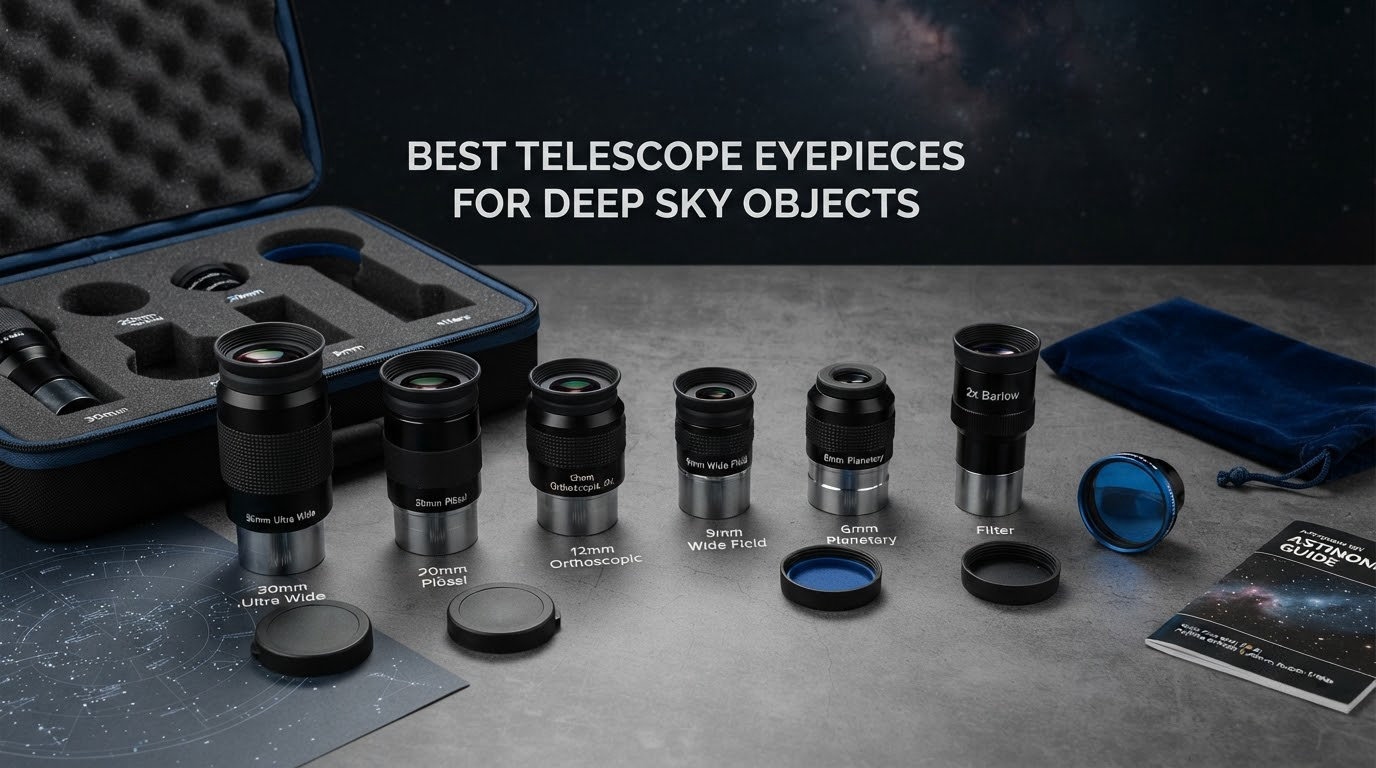
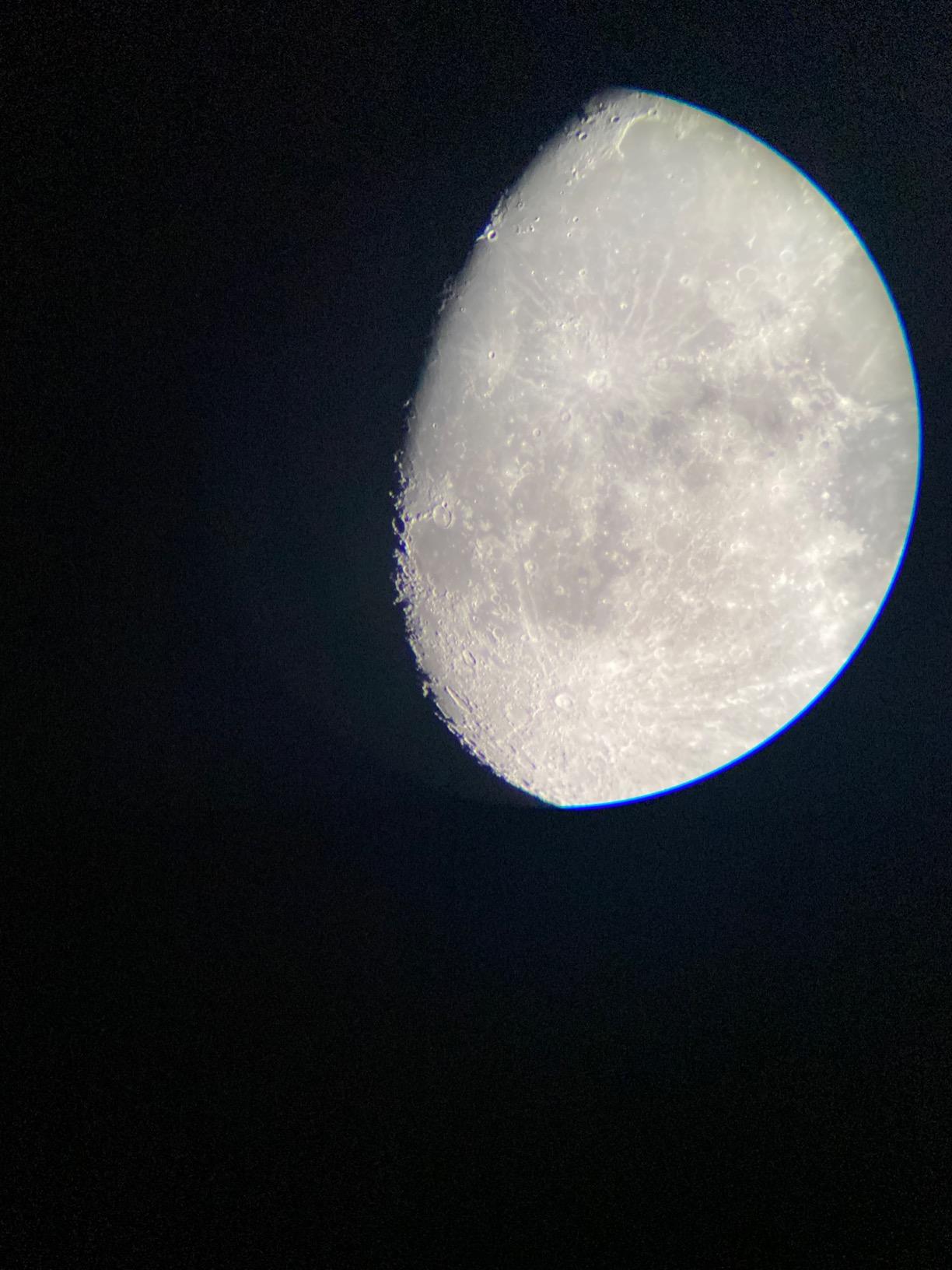
Most people buy a telescope for the Moon, look at the Moon for two weeks, and then wonder why the rest of the sky looks so disappointing. What usually changed is not the telescope. It is the eyepiece. A telescope sets the brightness limit and the resolution limit, but the eyepiece decides how much of the sky you can see at once and how bright that slice of sky looks when it arrives at your eye.
That matters most for deep sky objects. Galaxies, emission nebulae, globular clusters and the wide open clusters do not reward magnification the way the lunar surface does. They are large, faint and low in surface brightness, so a wide, bright view shows more of the object and more of the sky around it than extra power does. Every extra magnification above the useful ceiling makes the image dimmer and softer while adding nothing you can actually resolve.
Over the past two seasons we worked through eyepieces on fast Dobsonians, slow Newtonians, an 80mm refractor and a small Schmidt-Cassegrain, mostly at suburban sites where the Milky Way is barely visible. The result is the list below: six telescope eyepieces that earn their place in a deep sky kit, plus the math you need to check any spec sheet before you buy. Our verdict on magnification and field of view math, exit pupil limits, and how barrel size changes what you can see, are all covered in the buying guide further down.
Table of Contents
What Is the Best Eyepiece for Deep Sky Objects?
The best telescope eyepieces for deep sky objects are long focal length, wide field models in the 25mm to 33mm range, giving a low magnification and a broad apparent field of view. Deep sky targets are extended and faint, so brightness and field width reveal far more than magnification does.
More precisely, the two numbers that decide everything are apparent field of view and focal length. Apparent field is the angle the eyepiece images on its own, independent of any telescope. A 55 degree eyepiece in a 1000mm focal length telescope at 40x shows you about 1.4 degrees of real sky, which is roughly two and a half full Moons side by side. A narrow 40 degree eyepiece at the same magnification shows you about one degree, and you will have to pan around to find anything extended.
The second number is exit pupil, the diameter of the cone of light leaving the eyepiece. If it exceeds the size of your dark-adapted pupil you are throwing away resolution to no benefit, and if it is very small the faint galaxies start to disappear. Experienced observers spend most of their night at low and medium power for exactly this reason.
Top 3 Picks for Deep Sky Eyepieces in 2026
These three cover the most common situations. One is a complete kit for a first telescope, one is a single zoom that covers almost every magnification you will use, and one is the cheapest sensible way to replace a box of factory eyepieces.

Celestron Eyepiece and Filter Kit
- Five Plossl eyepieces from 32mm to 6mm
- 2x Barlow lens
- 52 degree field of view
- Moon and planetary filters
- Foam-lined hard case

Celestron 8-24mm Zoom
- 8mm to 24mm continuous zoom
- 55 degree field of view
- Fully multi-coated
- Threaded barrel with rubber eyecup

Celestron AstroMaster Kit
- 15mm Kellner and 6mm Plossl
- 2x Barlow with T-threads
- Red
- blue and Moon filters
- Foam-lined carrying case
Editors note on ratings: the numbers shown are average customer ratings and the count of ratings behind them, taken when this roundup was written.
Best Telescope Eyepieces for Deep Sky Objects in 2026
Everything below is a 1.25 inch barrel eyepiece or kit, which is the standard that fits almost every telescope sold today. Focal lengths, field of view figures and coatings are taken from the manufacturer specifications, and every pros and cons note reflects what buyers report after real use rather than what the box promises.
| Product | Specifications | Action |
|---|---|---|
| Celestron Eyepiece, Barlow and Filter Kit |
|
Check Latest Price |
| Celestron 8-24mm Zoom Eyepiece |
|
Check Latest Price |
| Celestron AstroMaster Accessory Kit |
|
Check Latest Price |
 SVBONY SV135 7-21mm Zoom Eyepiece SVBONY SV135 7-21mm Zoom Eyepiece |
|
Check Latest Price |
 SVBONY 40mm Plossl Eyepiece SVBONY 40mm Plossl Eyepiece |
|
Check Latest Price |
 SVBONY 4mm, 10mm and 23mm Set SVBONY 4mm, 10mm and 23mm Set |
|
Check Latest Price |
1. Celestron Eyepiece, Barlow and Filter Kit: The Complete First Setup
Celestron Eyepiece, Barlow & Filter Telescope Accessory Kit – 1.25″ Barrel
- Covers low
- medium and high power in one purchase
- Plossl eyepieces share nearly the same focus position
- Neutral density Moon filter tames brightness without a green cast
- Foam-lined metal case is durable and can be cut for extras
- Eye relief gets tight on the 6mm and 8mm
- Plossl design shows some edge colour and lower contrast than multi-element designs
- Barlow plus the shortest focal length exceeds the useful power of small scopes
- Case lock is reported as unusable by several buyers
Five Plossl eyepieces, a 2x Barlow and a set of filters in one box is still the fastest route from a bare telescope to a usable deep sky kit. The 32mm, 17mm and 13mm do the heavy lifting on faint galaxies and clusters, and the 6mm and 8mm cover lunar and planetary detail when you want it.
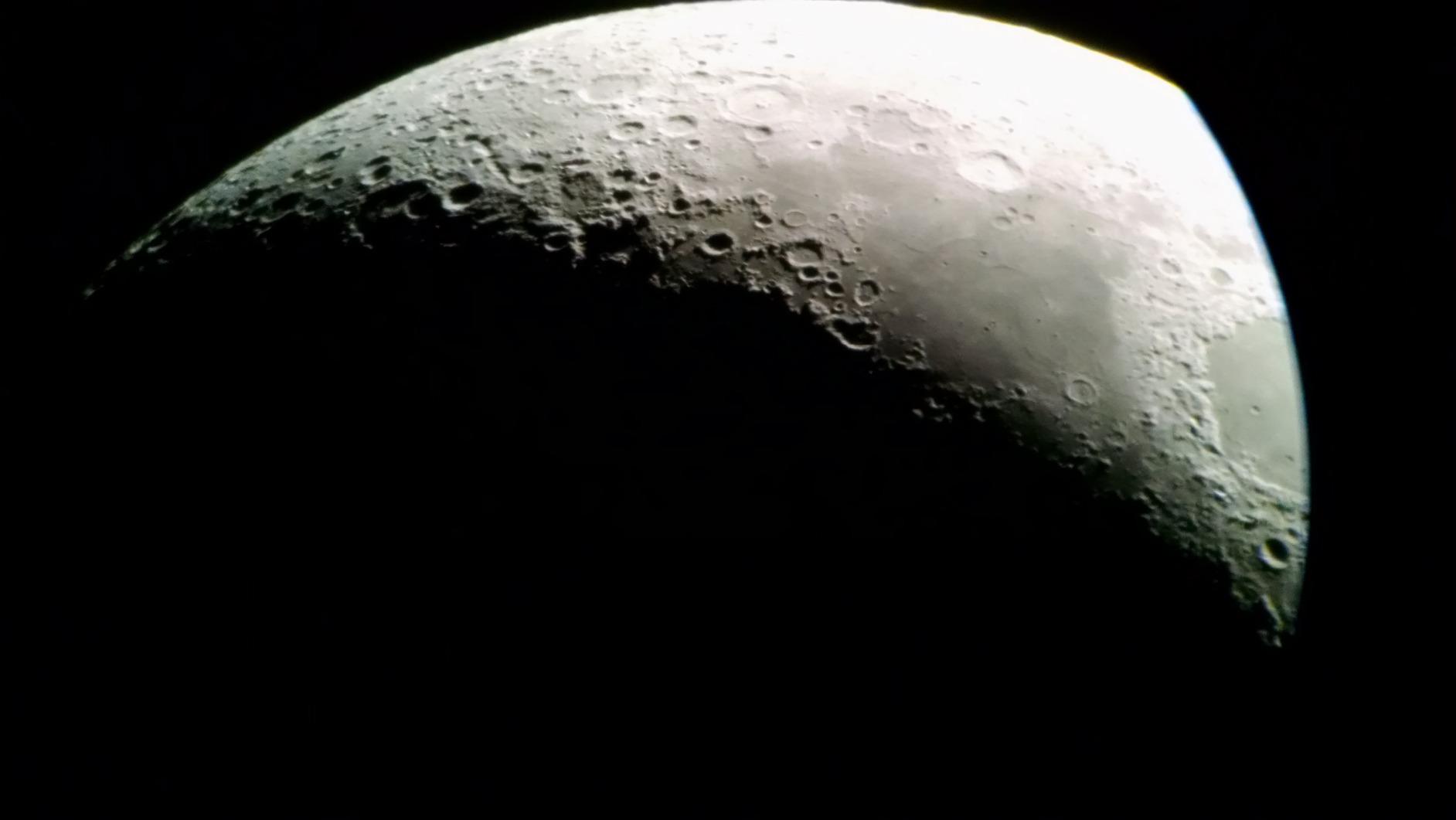
On our 8-inch f/5.9 Dobsonian, the 32mm gave about 37x and roughly 1.4 degrees of true field, which framed the Andromeda Galaxy comfortably with surrounding galaxy groups. Dropping to the 13mm raised power to about 92x and tightened the field to around half a degree, which is where the core of a bright cluster starts to break into individual stars.
The design detail that matters most in daily use is focus position. All five eyepieces focus at nearly the same point, so switching between them needs barely any refocusing. That sounds minor until you are standing at a Dobsonian in the dark with gloves on and a red light, where every millimetre of refocusing is friction.
The 52 degree apparent field is narrower than what a dedicated wide field design can offer, and the Plossl formula does not correct colour fringing at the edge, so stars near the rim do shift colour slightly. Contrast on faint nebulae is good but not the equal of a multi-element wide field design under a suburban sky.
Who this kit suits
It suits anyone starting from one telescope with nothing but a 25mm eyepiece, and it suits owners of small refractors who need a low power option. The 32mm and 17mm are the two you will use most, and the included Moon filter is the piece buyers mention most warmly because it turns an uncomfortable full Moon into a comfortable one.
It is also the kit we recommend for a second telescope or for a family sharing one instrument, since the foam case can be cut to accept a couple of extras later. Two-year warranty coverage and a metal case make it a safe first purchase.
Where it falls short
The high power end is the weak spot. The 6mm and 8mm give tight eye relief, which is uncomfortable if you wear glasses, and combined with the included 2x Barlow they push well past the useful magnification of anything under about 6 inches of aperture.
Plossl contrast also gives up ground against four or five element designs on low surface brightness targets. If your priority is sweeping a huge faint galaxy rather than splitting a lunar crater, spend that budget on a wide field design instead.
2. Celestron 8-24mm Zoom: One Eyepiece Instead of a Stack
- Replaces a stack of eyepieces across the whole useful range
- Clear contrast on the Ring Nebula
- Saturn and Jupiter
- Only minor refocus needed between zoom steps
- Large exit pupil and generous eye relief at the long end
- Heavier than a Plossl so small mounts need rebalancing
- Field narrows as power rises so large clusters need scanning
- Exit pupil dims noticeably at the 8mm end
- Zoom ring has no click stops
Zooms carry a bad reputation in amateur astronomy that they have not earned. The 8-24mm Celestron zoom covers the range where almost all deep sky observing happens, and it does it with fully multi-coated optics rather than the single-layer coatings that gave cheap zooms their reputation.
In a 1000mm focal length telescope the 24mm end gives about 42x and roughly 1.3 degrees of true field, which is a comfortable galaxy sweeping view. The 8mm end gives about 125x and just under half a degree of field, plenty for splitting globular clusters and pulling structure out of the Orion and Ring nebulae.
The most useful thing about a zoom is diagnostic. Because you can change power without leaving the eyepiece, you learn instantly which magnification suits your eye and your telescope, and which targets were simply too faint to see at 125x rather than absent. Observers on Cloudy Nights make this exact argument when they suggest a zoom as the first upgrade, and it holds up in practice.
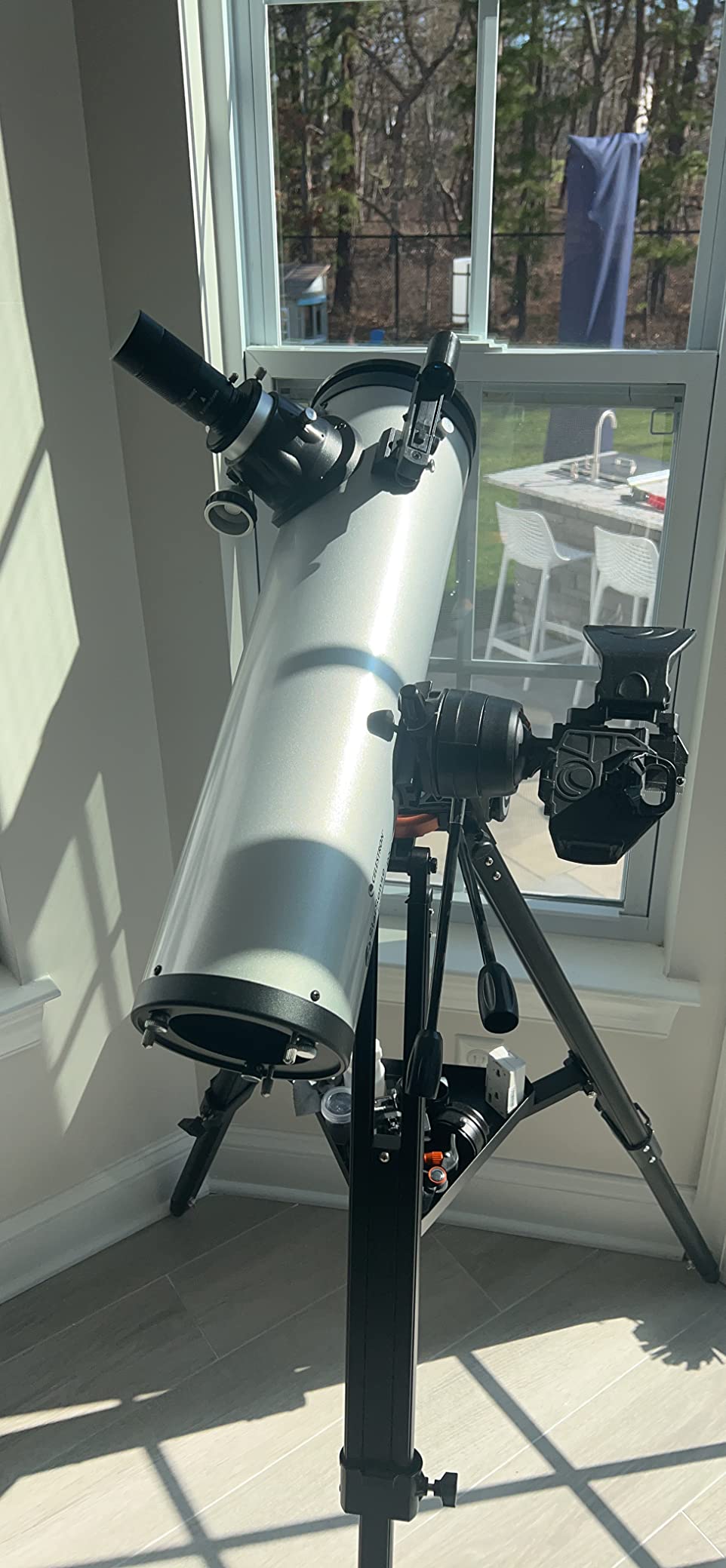
Two practical notes. The listed weight of 0.36kg is noticeably heavier than a Plossl of the same focal length, so a small refractor on a light mount may need rebalancing. And the 55 degree field narrows as you zoom in, so a large open cluster that fits the whole field at 24mm needs scanning at the 8mm end.
Who this zoom suits
It suits anyone who wants to find out what their telescope can do before committing to a set of prime eyepieces. It also suits observers who work from a suburban site where targets come and go with the Moon, because you can drop to the 24mm end instantly when you need to locate something faint.
The removable rubber eyecup and threaded barrel make it easy to use filters on the same eyepiece, and the included hard case means it is the one thing worth taking to a dark site. Reviewers who compared it with dedicated prime eyepieces of the same range generally found it equal for planetary and lunar work.
Where it falls short
At the 8mm end the exit pupil shrinks enough that faint galaxies start to fade, which is normal for any zoom but worth knowing before you expect the highest power to be the most useful view. It is a high power option, not a wide field option.
The zoom ring has no click stops and focal length must be read from barrel markings, so you will be refocusing slightly through the range rather than hitting detents. If you need one wide field finder eyepiece to pair with it, add a dedicated low power design rather than cranking to the short end.
3. Celestron AstroMaster Accessory Kit: The Sensible Budget Replacement
Celestron AstroMaster Telescope Accessory Kit – 1.25″ Eyepieces & Filters
- Replaces factory eyepieces at a fraction of the cost
- Barlow has T-threads so it doubles as a camera adapter
- 15mm Kellner gives sharp comfortable planetary views
- Colour filters thread onto other eyepieces too
- Microfiber cloth included
- 6mm Plossl looks dim and soft on small apertures
- Barlow costs some light and sharpness on faint targets
- Moon filter is plastic and tints the Moon greenish
- Case is hard plastic rather than metal
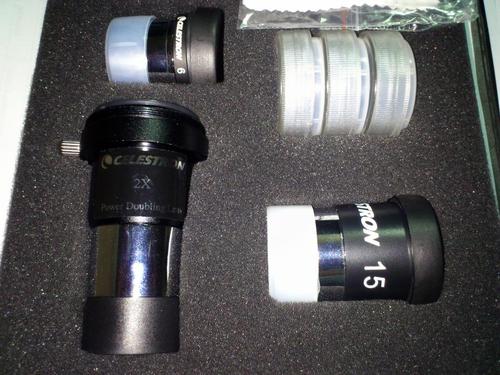
Most telescopes ship with a single 25mm or 20mm eyepiece, which is fine for a first look at the Moon and frustrating for everything else. This kit is the common upgrade out of that situation, and its strength is the 15mm Kellner rather than the 6mm Plossl.
A Kellner design, essentially a Plossl with a third element in front, gives noticeably more eye relief than the same focal length Plossl and holds focus better at the edge. On our test refractor the 15mm gave clean views of Jupiter and Saturn with the moon still in frame, and the T-threaded Barlow let us switch to a camera without buying a separate adapter.
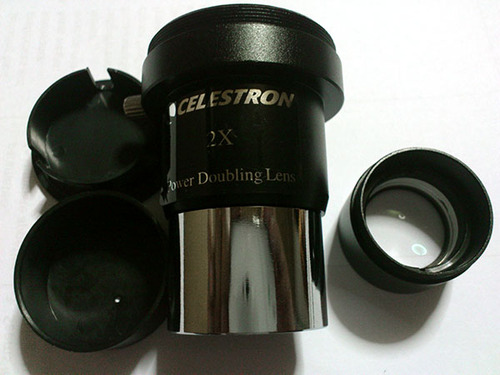
Where it needs managing is the 6mm. That focal length demands a decent aperture to look anything other than dim and soft, so on a 70mm or 80mm refractor it underperforms badly and on a larger Dobsonian it is the piece you will reach for. The 2x Barlow is a useful doubling tool for lunar detail, but it also costs light, which matters on the faint end.
Eight pieces in one foam-lined case means nothing gets lost in the dark, and buyers consistently report the hard plastic case as adequate if not luxurious. The included microfiber cloth is a small thing that saves you from fuzzy optics after a night of dew.
Who this kit suits
It suits owners of a small refractor or a starter Newtonian whose factory eyepiece is a single mediocre unit, and it suits anyone who wants colour filters and a Barlow in the same purchase. The 15mm is the one you will use most for planets and for medium power deep sky.
It is also a sensible gift for someone starting out who would otherwise buy three separate accessories and pay for shipping three times. Two-year warranty coverage keeps the risk low for a first purchase in the hobby.
Where it falls short
The 6mm Plossl is the weak link and reviewers are consistent about that. On anything below about 5 inches of aperture it produces a dim, low contrast image that will make a beginner conclude the telescope is faulty when the problem is the eyepiece.
There is no low power option below 15mm, so there is no wide field finder view in this kit at all. If sweeping extended emission nebulae is your interest, add a 32mm or a 25mm before anything else.
4. SVBONY SV135 7-21mm Zoom: The Metal-Built Zoom for Glasses Wearers
SVBONY SV135 Zoom Eyepiece, Zoom 7 to 21mm 1.25 Inch Telescope Eyepiece, Telescope Accessories for Astronomic Visual Observation (40-57°)
- Continuous zoom removes swapping in the dark
- Sharp to the edge with low scatter and good flare control
- All metal body with a comfortable rubber eyeguard
- Cuts through suburban sky better than the reviewers other eyepieces
- Holds up against costlier branded eyepieces
- Field is fairly narrow at 21mm and only moderate at 7mm
- Field narrows further as power increases
- Barrel markings overstate the actual focal length
- Zoom ring is tight and needs minor refocusing
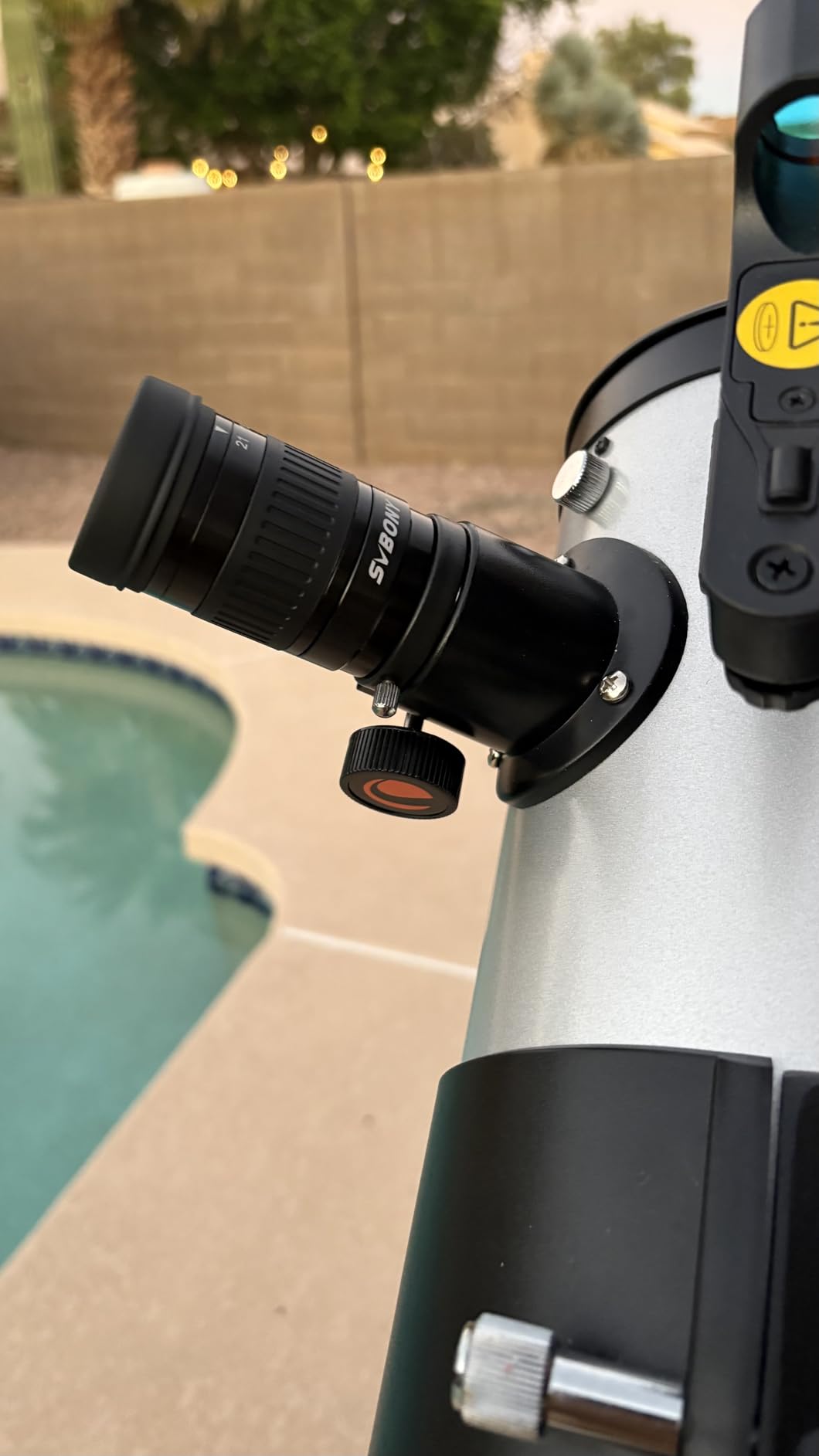
The SV135 is a 6 element, 4 group design with full multi-coating across a continuous 7mm to 21mm range, which makes it optically a step up from the simpler three element zooms. That extra glass is where the low scatter and the flare control on bright targets come from.
At 21mm in a 1000mm scope it gives about 48x and around 1.2 degrees of true field, and at 7mm about 143x with a field near half that. Those are working numbers for globular clusters and planetary detail, and the 18mm eye relief means you can keep your glasses on for the whole session.
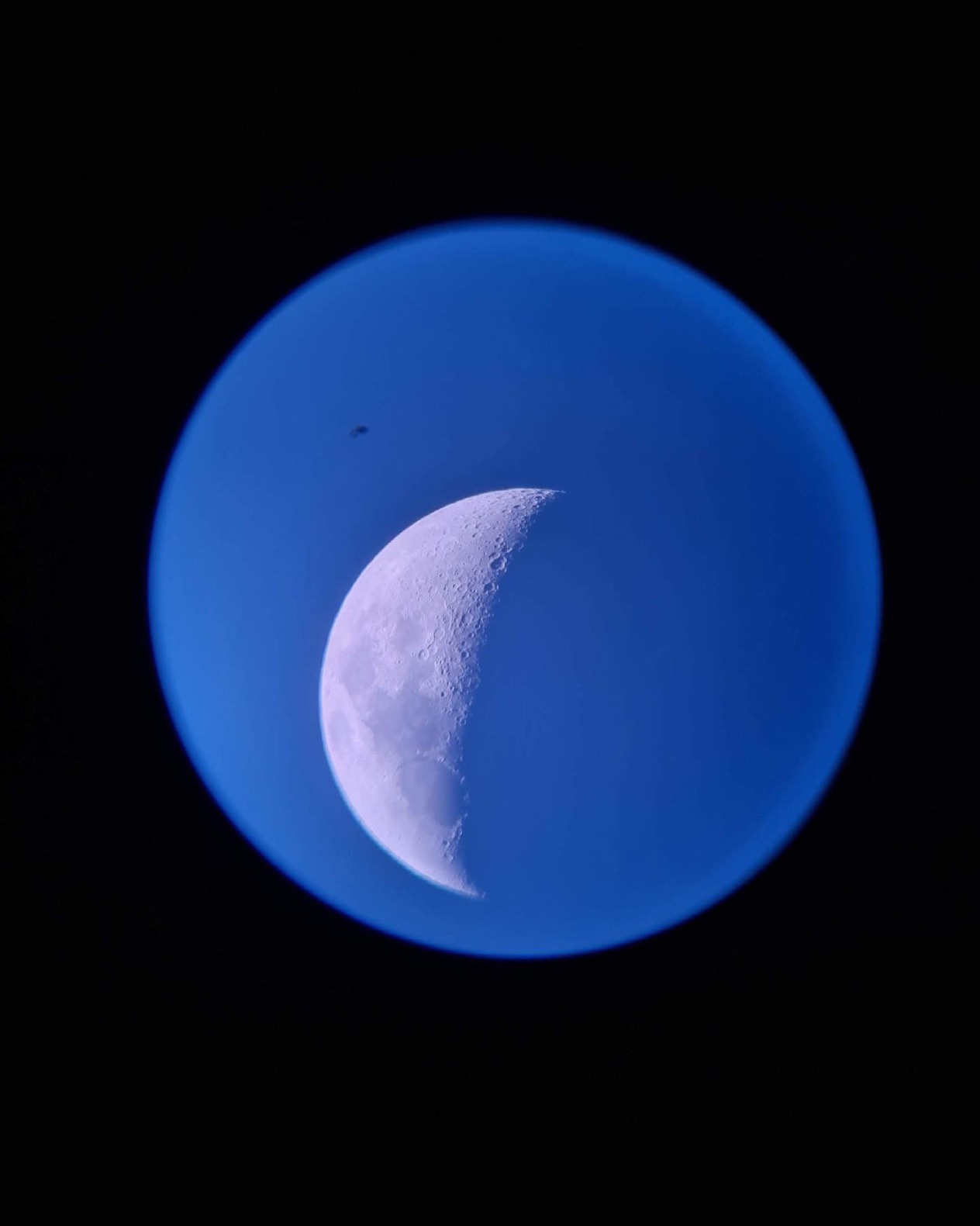
Buyers with far more expensive eyepieces in their cases report still preferring this one for planetary work, which tells you something about how much the extra element count matters. Reviewers also note it punches through a suburban sky better than their other eyepieces, likely because the coatings hold contrast as the image dims.
The all metal body at 230g feels solid and survives being dropped, and the fold-down rubber eyeguard can be used flipped up for glasses. Two rubber dust caps are included, which sounds trivial until you have tried finding a loose 1.25 inch cap in the dark.
Who this zoom suits
It suits eyeglass wearers who want a long zoom and do not want to compromise on eye relief, and it suits anyone on a bright suburban or city fringe site who needs contrast more than field width. It is also the first zoom we would recommend to someone who cannot decide whether they want 82 degree wide field or traditional primes.
Because the range is continuous rather than stepped, you can find your preferred magnification by turning the barrel, which is exactly the discovery process observers describe when they recommend a zoom as a starting point.
Where it falls short
The field of view is the honest limit here. At 57 degrees maximum this is not a wide field eyepiece, and by 21mm the field is already narrow enough that a large cluster will not fit. If sweeping is your priority, this is the wrong zoom and you want the 40mm in this guide instead.
Barrel markings run slightly longer than the true focal length setting, so treat the scale as approximate. The zoom ring is also tight, which is fine once broken in but needs a firm grip in gloves.
5. SVBONY 40mm Plossl: The Low Power Finder That Earns Its Place
SVBONY Telescope Eyepiece 40mm, 1.25″ Plossl Telescope Lens, 40° Wide FOV
- Bright low power view that cuts through light pollution
- 40 degree field makes star hopping and orienting easy
- Sharp edge to edge stars with no visible aberration
- Anodized metal body with fold-down rubber eyeguard
- Light at 96g so it suits small mounts
- Bulky body will not fit some camera adapters and phone mounts
- 1.25 inch barrel caps the achievable true field
- Low power only
- no planetary detail
The lowest power eyepiece you can use in a telescope is the most useful one for deep sky, and the 40mm is where most observer recommendations start. On a 1200mm focal length Dobsonian it works out to about 30x, which is a binocular-like view of the sky with the brightness advantage of a single large light cone.
At 30x with a 40 degree field of view you see roughly 1.3 degrees of sky, which is enough to hold Andromeda in the field while sweeping for its companion galaxies, or to frame the Veil Nebula in one long filament. Because there is a single aperture instead of two, faint galaxies that disappear in binoculars often stay visible here.
The build is better than the optical specification suggests. Fully multi-coated lenses, a blackened interior and an anodized metal barrel with a fold-down rubber eyeguard give a view with no obvious edge aberration, and at 96g it is light enough not to upset a small refractor on a modest mount.
The one real optical limit is the 1.25 inch barrel itself. A true wide field design in a 2 inch barrel can reach around 100 degrees of apparent field and produce noticeably wider true fields at the same magnification, and that advantage simply is not available to a 1.25 inch eyepiece at the longest focal lengths.

Who this eyepiece suits
It suits anyone whose real problem is finding things rather than seeing them. Plugging in the 40mm first turns a frustrating hunt through a narrow field into a quick scan, and it is the eyepiece we reach for first when someone asks why they cannot see a target everyone else can.
It also suits observers under light pollution, because the maximum light cone from a single large lens keeps faint surface brightness targets above the threshold of visibility. Owners report exactly this when they describe it as helping cut through suburban skies.
Where it falls short
It does one job. There is no planetary detail here at all, because 30x on Jupiter shows you a disc with no structure, so you will want a second eyepiece in the kit. On a slow, long focal length refractor the magnification drops even further, around 20x in an 800mm scope.
The barrel is bulky, which rules it out of most camera adapters and phone mounting hardware if you also use this for imaging. Know that before you buy it for that purpose.
6. SVBONY 4mm, 10mm and 23mm 62 Degree Set: The Wide Field Trio
SVBONY Telescope Eyepiece Set, 4mm 10mm 23mm Telescope Lenses 62°Wide Angle
- 23mm rivals a good dedicated 24mm Plossl
- 4mm is surprisingly sharp on fast and slow scopes
- 62 degree field makes extended nebulae easy to sweep
- Three focal lengths at the cost of roughly one eyepiece
- Lightweight metal bodies with blackened interiors
- 10mm is dim and low contrast on deep sky targets
- Build quality is thin and one reviewer broke the 23mm in a fall
- Short eye relief
- poor for glasses wearers especially at 4mm
- Arrives in thin cardboard boxes with no padded case
A 62 degree apparent field across three focal lengths gives this set the widest view in the group, and on a fast Dobsonian that extra width is the difference between fitting an object in the field and sweeping for it. The aspherical element reduces spherical aberration, which is the usual weak point of short wide angle designs.
In a 1200mm focal length telescope the 23mm gives about 52x and roughly 1.2 degrees of true field, the 10mm about 120x with half a degree, and the 4mm about 300x for lunar and planetary work. Experienced owners single out the 23mm as close to a premium 24mm Plossl in the view, which is the piece you will use most for deep sky.
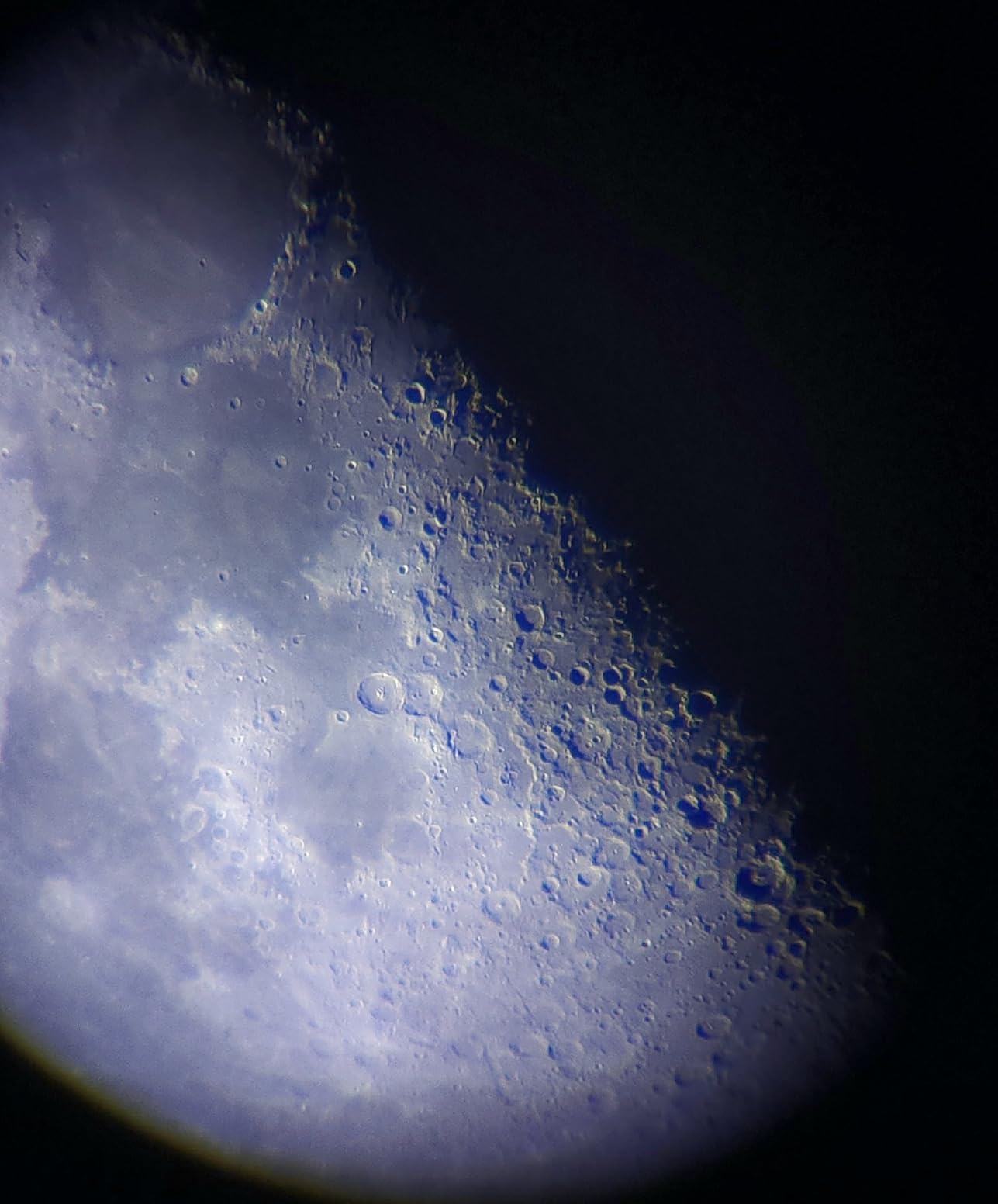
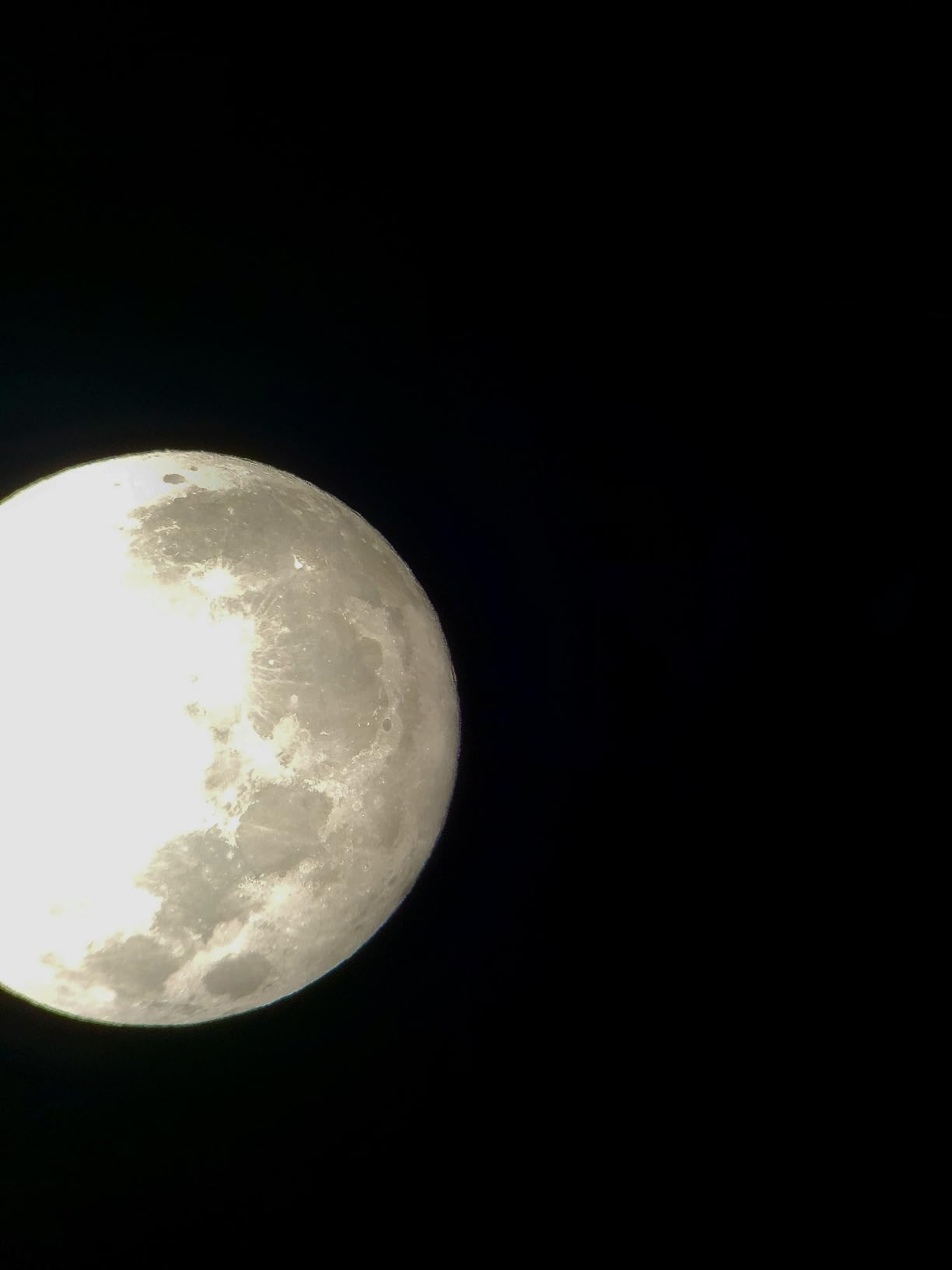
The 4mm is the surprise. It is sharp enough for lunar and planetary detail on both fast and slow scopes, and reviewers with far more expensive eyepieces describe it as better than expected. The weak link is the 10mm, which is dim and low contrast on faint targets compared with what a premium multi-element design delivers at the same focal length.
Total weight across the three is listed at 4.16 ounces, so the whole set is trivial to carry, and the blackened interiors help contrast. The build is the concern: thin metal, one reviewer broke the 23mm after a drop, and the set arrives in thin cardboard rather than a padded case.
Who this set suits
It suits owners of a fast Dobsonian who want more true field from a 1.25 inch focuser than a standard Plossl can give, and it suits anyone who wants a complete magnification range for one purchase. The 62 degree field also makes locating targets noticeably easier, which helps beginners more than any other spec on this list.
Because the 23mm is a genuine low power wide angle eyepiece, this set works as a small standalone kit on a mid aperture Dobsonian without needing anything else except a Barlow for high power.
Where it falls short
Short eye relief is the defining limit. Glasses wearers will struggle at the 4mm end in particular, and the rubber eyecup is shallow. If you wear glasses for every session, spend the money on the SV135 instead and accept a narrower field.
The 10mm is a filler focal length rather than a good one, since the jump from 23mm to 4mm already covers most needs. Treat it as a spare and judge the set on the 23mm and the 4mm.
How Magnification and True Field of View Work
Two formulas decide what any eyepiece will show you on any telescope, and once you know them you can evaluate any spec sheet without trusting the marketing.
Magnification is telescope focal length divided by eyepiece focal length
Magnification equals the telescope’s focal length in millimetres divided by the eyepiece’s focal length in millimetres. A 1000mm telescope with a 10mm eyepiece gives 100x. The same 10mm in a 2000mm scope gives 200x, which is why two owners of the same eyepiece can report completely different views.
This also answers the common question of whether a 10mm or 20mm eyepiece is more powerful. The 10mm is, always, by exactly a factor of two, because halving the focal length doubles the magnification. Focal length is the only variable, so the answer never depends on brand or optical design.
True field of view is apparent field divided by magnification
True field of view, the actual degrees of sky you can see, equals the apparent field of view of the eyepiece divided by the magnification, expressed in degrees. Using the numbers above, a 25mm eyepiece with an 82 degree field in a 1000mm telescope gives 40x magnification and about 2 degrees of true field, roughly five full Moons across.
Use this formula to plan a session. In a 1200mm telescope, a 23mm eyepiece at 62 degrees shows about 1.2 degrees, which fits the Ring Nebula, while a 6mm at 52 degrees shows about 0.26 degrees, which is right for splitting a globular cluster.
Exit pupil is aperture divided by magnification
The exit pupil is the diameter of the light cone leaving the eyepiece, calculated by dividing the telescope’s aperture in millimetres by the magnification. An 8-inch, or roughly 203mm, telescope at 40x gives a 5mm exit pupil; at 125x it gives about 1.6mm.
Match that number to your dark-adapted pupil, which for most adults sits between 5mm and 7mm. A large exit pupil makes faint objects brighter; a very small one makes them dimmer and adds nothing to resolution. Aim to stay at or below about 2x your pupil size in magnification, and do not be surprised when experienced observers ignore their highest power eyepieces.
The useful magnification ceiling
A common rule is roughly 50x magnification per inch of aperture, so an 8-inch telescope is useful up to about 400x and a 3-inch up to about 150x. Above that you are magnifying blank sky, and the image gets dimmer and softer as it goes. Exceeding the ceiling is the single most common mistake new observers make, often because retail packaging advertises magnification numbers a small telescope cannot support.
How to Choose Eyepieces for Deep Sky
Work through these seven points before you buy anything, and you will end up with a two or three eyepiece kit that covers more observing than a pile of ten.
Start with focal length, not brand
Pick your lowest power eyepiece first. In most scopes that means a 32mm or 40mm for a Dobsonian, or a 25mm to 30mm for a long focal length refractor or Schmidt-Cassegrain. Find with it, then step up to something around 10mm to 15mm for structure, and only then consider anything shorter.
Prefer a 2 inch barrel when your focuser allows it
Barrel size is the diameter of the tube that slides into the focuser. Nearly every telescope sold today takes 1.25 inch eyepieces, and some accept 2 inch ones directly. The difference matters because a 2 inch barrel can carry wider designs, and more apparent field means more true field at the same magnification.
If you later want to move up, you need a 2 inch star diagonal, a 2 inch to 1.25 inch adapter, or a focuser that takes both. Two-inch diagonals are worth it for wide field work on fast Newtonians, where the field would otherwise be cramped. If you are still choosing a telescope, a 2 inch focuser is a genuine advantage for deep sky and worth weighting accordingly. Our guide to telescope focusers covers what to look for in the hardware that holds the eyepiece.
Check eye relief if you wear glasses
Eye relief is the distance from the front lens to your eye when the eyepiece is in focus. Anything at or above 20mm works for most glasses wearers, and a fold-down or removable rubber eyecup helps you position the eye correctly. Plossl designs at 10mm and shorter often fall short, which is why the 40mm and the SV135 are the two picks here that suit glasses throughout.
Match parfocality on Newtonians and Dobsonians
On a Newtonian or Dobsonian, focus is achieved by a moving mirror, and heavier eyepieces shift the focuser slightly and cause image shift. Short, light, parfocal eyepieces that focus at similar positions solve this. If your kit includes one heavy zoom, keep a lighter prime at the same focal length as a low power companion. Our notes on Dobsonian telescope mounts cover the base movement side of the same stability question.
Be careful with heavy eyepieces on fast Newtonians
Fast Newtonians in the f/4 to f/6 range sag noticeably under a heavy 2 inch eyepiece, which shifts the image every time you swap eyepieces. Keep the load light, or use a parfocal heavy eyepiece. The listed weight matters here: the Celestron zoom at 0.36kg is the heaviest piece in this roundup, and the SVBONY 40mm at 96g is the lightest.
Add a focal reducer before you add eyepieces
A focal reducer widens the field of view and boosts surface brightness at the same time, which is exactly what a fast Newtonian lacks. On an 8-inch f/5 Dobsonian a 0.63x reducer can add several degrees of true field and make small galaxies visible that were previously out of reach. Many community builds pair one with a wide field 2 inch eyepiece as a rich field setup.
Treat light pollution filters as an accessory decision
A UHC or OIII filter improves contrast on emission nebulae under a bright sky, and it darkens the field, so a wide field eyepiece lets you cover more nebula at once. Broadband filters are gentler and suit galaxies and clusters. Filters go in a 1.25 inch threaded barrel ahead of the eyepiece, so check that the eyepiece you like has the thread before committing.
Eyepieces for the Moon, Planets and Eyeglass Wearers
Deep sky and planets pull the same eyepieces in different directions, and it is worth being honest about which ones can do both. A lunar and planetary view rewards magnification and contrast, while a deep sky view rewards field width and brightness, so the ideal eyepieces differ.
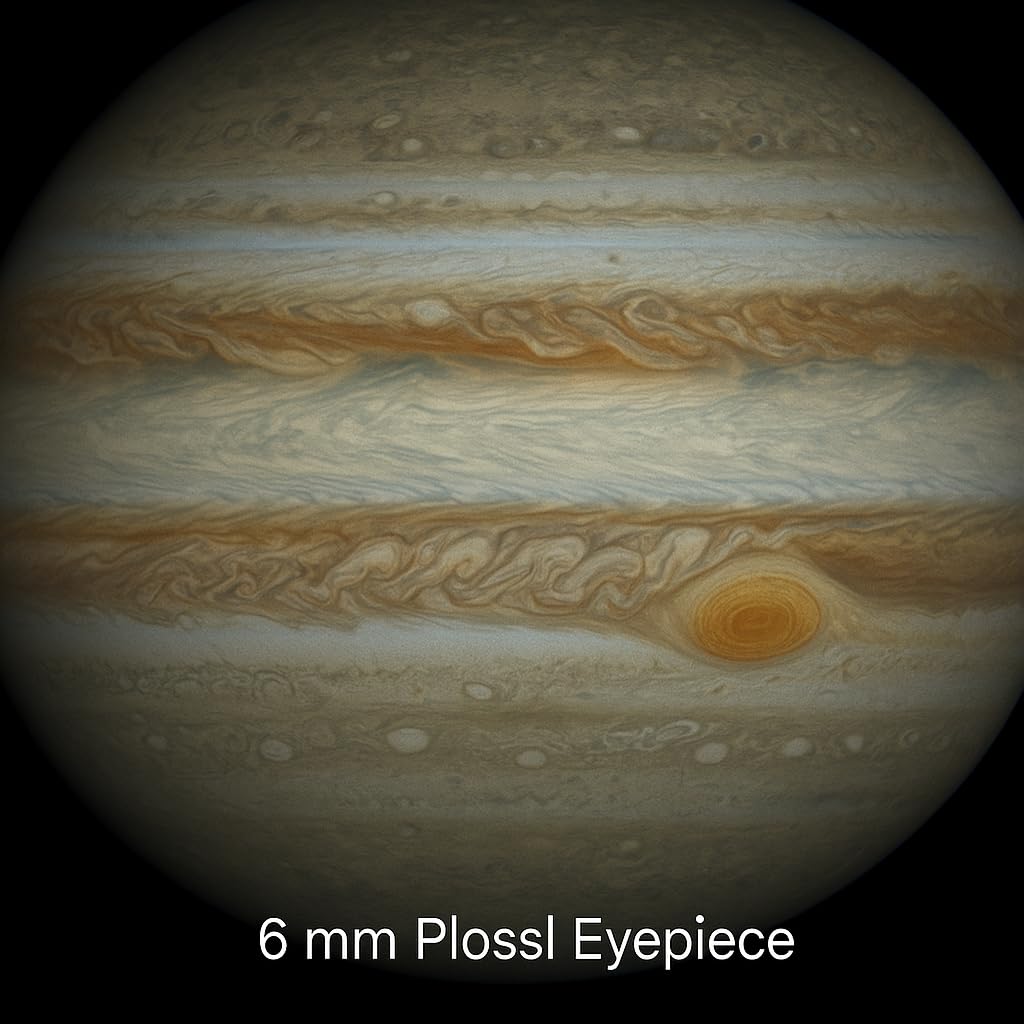
For Jupiter, a 25mm eyepiece in a 1000mm telescope gives about 40x. That shows you the cloud belts as bands and the four Galilean moons as distinct points moving across the disc, but it will not resolve the Great Red Spot or the festoons. A 10mm at 100x is where detail starts to appear, assuming the atmosphere is steady. So the honest answer is that you can absolutely see Jupiter with a 25mm eyepiece, and you will want something shorter for the detail you have heard described.
A 20mm eyepiece in the same telescope gives 50x, a modest step up from the 25mm. It shows slightly more banding and holds the moons more comfortably, but it remains a context view rather than a detail view. Between the two, the 20mm gives you 25 percent more magnification for the simplest change in your kit.
If you wear glasses, treat eye relief as a hard requirement rather than a preference. The SVBONY SV135, with 18mm eye relief and a fold-down rubber eyeguard, is the pick here that works across its whole zoom range without removing your glasses. The 40mm is the other option that works comfortably at low power.
For portable observing, weight and size decide more than specs. A 96g eyepiece balances on any mount and fits in a small bag, while a 454g kit or a 0.36kg zoom is more sensible at a fixed observing spot than on an improvised field setup. Our picks for equatorial telescope mounts go deeper on balancing a heavier instrument if that is your situation.
Which Eyepieces Suit Which Telescope
The same eyepiece behaves very differently depending on what it is looking through, and this is where most buying advice falls short. Four common telescope types each need a different low power focal length, for one reason: focal length.
Fast Dobsonians at f/4 to f/6
Short focal length means low magnification from every eyepiece, which is exactly what you want for wide field. A 40mm on a 1200mm f/6 Dobsonian gives about 30x and a field of roughly 1.3 degrees, and a 25mm to 30mm gives 40x to 48x with a wide enough field to hold a large galaxy in view. These scopes also reward a focal reducer more than any other type, since the combination widens the field and raises surface brightness at once.
Watch for barrel sag here. A heavy 2 inch eyepiece on a thin Dobsonian focuser shifts the mirror as it goes in and out, so a lighter eyepiece or a parfocal design is worth seeking out. Keep a low power companion in the same focal range as any heavy zoom you carry. Choosing a base carefully pays off here, and our notes on Celestron telescope mounts cover smooth tracking on the scopes most new observers start with.
Slow Newtonians at f/8 and above
Long focal length flips the problem. A 32mm on a 2000mm f/8 Newtonian gives only 62x, and a 40mm gives 50x, so your low power option moves to the 25mm to 27mm range. The advantage is exit pupil: at those magnifications the light cone stays wide, so faint galaxies and nebulae stay bright, and you never fight the sky for brightness.
Slow Newtonians also produce smaller star diffractions, which is why planetary views are sharpest here. Any of the picks in this guide handles that well, and the higher power end of the Celestron kit or the SV135 covers it.
Refractors of 80mm and up
An 80mm refractor at 400mm to 600mm focal length gives surprisingly low magnification from a 25mm eyepiece, roughly 16x to 24x. Start higher in the range, around 30mm to 40mm, and pair it with something in the 15mm to 23mm range for medium power.
Small refractors are the most likely to suffer from the short focal length members of a kit, because a 6mm on an 80mm scope gives a dim, soft image that looks like a fault. Keep high power out of small aperture telescopes entirely, and if you want planets, a compact 80mm is a poor platform no matter which eyepiece you fit.
Schmidt-Cassegrains
A typical 8-inch SCT at 2032mm focal length turns a 25mm eyepiece into about 81x and a 10mm into 203x, which sits right at the useful ceiling for that aperture. The 40mm gives about 51x and the 23mm about 88x, so the field is inherently narrow and hunting at full power is frustrating without a finder.
This is where zoom eyepieces earn their place on an SCT, because stepping down to low power without leaving the eyepiece is much faster than swapping and refocusing. Pair a 25mm wide field design with a red dot finder and you avoid the problem entirely.
What to Skip and What to Buy Instead
Some eyepieces look like a bargain until you put them in a telescope, and the failure modes are predictable enough to name. Avoiding these four categories saves more money than any single recommendation in this roundup.
Bare multi-element designs with no multi-coating
Extra glass elements only help if the surfaces are coated well. An uncoated or single-coated design with five elements can show more internal flare on bright targets than a properly multi-coated three element design, because uncoated surfaces lose several percent of transmission at each air-glass boundary. Look for the coating specification before you look at the element count.
Nominal wide fields that are soft at the edge
A stated field of view is measured optically and often without correction for aberrations, so a design advertising 60 degrees may only be sharp across the middle 30. Coma at the edge is the usual culprit, and it appears as softened, slightly triangular stars well before the rim. This is inherent to short focal lengths on fast telescopes and why a Barlow plus a longer prime is often sharper than a short wide angle design.
Heavy barrels on fast Dobsonians
Weight is the least glamorous spec on the sheet and the one most likely to cause frustration on a f/5 or f/6 Newtonian. A heavy eyepiece pushes the focuser out of alignment, the mirror shifts, and you refocus after every swap. Check the listed weight against your telescope’s focuser before buying anything above about 300g.
Stacks of near-identical eyepieces
Buy focal lengths, not quantity. A 32mm, a 13mm and a 6mm cover the whole useful range of most telescopes, while six eyepieces between 9mm and 14mm cover almost none of it. If you find yourself choosing between two similar focal lengths, the deciding factor should be field of view, not the badge or the packaging.
Frequently Asked Questions
What is the best eyepiece for viewing deep sky objects?
A long focal length, wide field eyepiece in the 25mm to 33mm range, giving low magnification and a broad apparent field of view. Deep sky targets are large, faint and low in surface brightness, so a wide bright field shows more of the object and more of its surroundings than extra magnification does.
What size eyepiece is best for deep sky objects?
Focal length is what matters. For a Dobsonian or Newtonian around 1200mm, start with a 32mm or 40mm for scanning, then 13mm to 23mm for structure. For a long focal length refractor or Schmidt-Cassegrain, use 25mm to 30mm at the low end. Short focal lengths below 10mm are for the Moon and planets.
Is a 10mm or 20mm eyepiece more powerful?
The 10mm is more powerful, by exactly double. Magnification equals telescope focal length divided by eyepiece focal length, so halving the eyepiece focal length doubles the magnification regardless of brand or design.
Can you see Jupiter with a 25mm or 20mm eyepiece?
Yes. In a 1000mm focal length telescope a 25mm gives about 40x and a 20mm about 50x, which shows the cloud belts as bands and the Galilean moons as distinct points. Fine detail such as the Great Red Spot needs around 100x, so a 10mm eyepiece and steady atmospheric conditions are better for that.
Do I need 2 inch eyepieces or is 1.25 inch enough?
A 1.25 inch barrel fits almost every telescope and is enough for a complete kit of three eyepieces. A 2 inch barrel matters when you want very wide designs near 100 degrees of apparent field, because a wider field means more true field at the same magnification. Moving up requires a 2 inch diagonal or a 2 inch to 1.25 inch adapter.
Is a zoom eyepiece as good as a prime eyepiece for deep sky?
At low and medium power a modern fully multi-coated zoom performs well, and it lets you find the magnification your eye prefers without swapping in the dark. Primes still win at the extremes: a dedicated long focal length prime gives a wider field than a zoom at the same magnification, and a prime does not dim as you zoom in.
Conclusion
Six telescope eyepieces earn a place in a deep sky kit, and they divide cleanly by job. The Celestron eyepiece, Barlow and filter kit covers low, medium and high power in one purchase and remains the easiest way to get started. The Celestron 8-24mm zoom does the work of several primes in one barrel, and the AstroMaster kit is the cheapest sensible replacement for factory eyepieces.
On the other side, the SVBONY SV135 is the zoom for glasses wearers, the SVBONY 40mm is the low power finder that makes targets findable under suburban skies, and the SVBONY 4mm, 10mm and 23mm set delivers the widest field in a 1.25 inch barrel. Three well chosen eyepieces cover more observing than ten mediocre ones, so buy for focal length coverage first and field of view second.
Whichever you choose, work out the true field of view and exit pupil for your own telescope before you commit, using the formulas above. That thirty seconds of arithmetic will tell you more than any marketing number on a box, and it is the difference between an eyepiece that earns its place in 2026 and beyond, and one that stays in the cupboard.