

Most people asking about the best wifi routers for fiber internet plans are stuck on one wrong assumption: that fiber needs some special box you cannot buy off a shelf. It does not. Your provider already hands you the piece that matters, the optical network terminal, or ONT, which turns the light signal in the fiber strand into ordinary Ethernet. Everything after that point is a standard Ethernet router, and the only real decision is whether its WAN port can feed your plan speed.
That single question decides everything else. A gigabit WAN port tops out near 940 Mbps once you account for protocol overhead, so it silently wastes most of a 2.5 Gbps plan. A 2.5GbE port caps around 2.35 Gbps, and a 10GbE port around 9.4 Gbps. Buy the wrong tier and no amount of Wi-Fi speed will recover the gap.
We went through twelve current-generation fiber-ready routers, grouped them by the plan speed they can actually feed, and flagged the features that sit behind a paid subscription. We also cover bridge mode, ONT placement, and the questions that show up in every r/HomeNetworking thread about replacing ISP gear. If you also want the short list, our WiFi 7 router picks for gigabit internet covers the generation side in more depth.
Table of Contents
- Do I Even Need a Special Router for Fiber?
- Top 3 Best Wifi Routers for Fiber Internet Plans in October
- All 12 Fiber-Ready Routers at a Glance in 2026
- 1. GL.iNet Flint 2 Review: Best Router for Fiber Overall
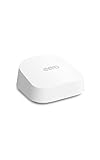
- 2. eero 7 Review: Best Value for Simple Fiber Setup
- 3. TP-Link Archer BE400 Review: Best for Apartments and Single-Floor Homes
- 4. TP-Link Archer BE230 Review: Most Versatile for Gigabit Fiber
- 5. TP-Link Archer BE550 Review: Best for Wired-First Homes
- 6. eero Pro 7 Review: Best for 5 Gbps Fiber Plans
- 7. GL.iNet Flint 3 Review: Best for OpenWrt and Multi-Gig Flexibility
- 8. NETGEAR Nighthawk RS700S Review: Best for 10 Gbps Fiber Plans
- 9. NETGEAR Nighthawk R6700AX Review: Best for Small Apartments
- 10. ASUS RT-BE88U Review: Best for Subscription-Free Features
- 11. GL.iNet Flint 3e Review: Best for Fast VPN Throughput
- 12. NETGEAR Nighthawk RS600 Review: Best for Large Homes on Fiber
- How to Choose a Router for Your Fiber Plan Speed
- Frequently Asked Questions
- Which Fiber Router Should You Buy?
Do I Even Need a Special Router for Fiber?
No. Fiber internet needs a router with an Ethernet WAN port that is fast enough for your plan, and that is the whole requirement. The ONT your provider installs does the fiber-to-Ethernet conversion, so a router that would work on cable works identically on fiber.
Three things actually matter: the WAN port speed has to match your plan, the router needs a bridge mode or DMZ option if you want your own device doing the routing, and the Wi-Fi coverage has to suit your home. Everything else on the spec sheet is preference.
The confusion is understandable because people call the ONT a modem. Fiber providers do not ship a cable modem, and asking your ISP for a cable modem will get you nowhere. The terms you actually need are ONT (the provider box), WAN port (where the ONT cable plugs in), and bridge mode (where the ONT stops routing and hands your router a clean Ethernet line).
Top 3 Best Wifi Routers for Fiber Internet Plans in October
Our top three cover the widest range of real fiber installs: one that saturates 2.5 Gbps with software most enthusiasts actually want, one that is the easiest setup in the group, and one that pairs Wi-Fi 7 with dual 2.5 Gbps ports at a midrange tier.

GL.iNet Flint 2
- Dual 2.5G WAN and LAN ports
- OpenWrt preinstalled
- WireGuard up to 900 Mbps
- Wi-Fi 6 at 6000 Mbps

TP-Link Archer BE400
- Wi-Fi 7 dual-band
- Two 2.5 Gbps ports
- 2400 sq. ft. coverage
- Tether app setup
All 12 Fiber-Ready Routers at a Glance in 2026
Every router below has an Ethernet WAN port suitable for fiber. The Key Features column is what actually changes your decision: port speed, band configuration, and how the software is licensed.
| Product | Specifications | Action |
|---|---|---|
| GL.iNet GL-MT6000 Flint 2 |
|
Check Latest Price |
| eero 7 dual-band mesh |
|
Check Latest Price |
| TP-Link Archer BE400 |
|
Check Latest Price |
 TP-Link Archer BE230 TP-Link Archer BE230 |
|
Check Latest Price |
 TP-Link Archer BE550 TP-Link Archer BE550 |
|
Check Latest Price |
 eero Pro 7 eero Pro 7 |
|
Check Latest Price |
 GL.iNet GL-BE9300 Flint 3 GL.iNet GL-BE9300 Flint 3 |
|
Check Latest Price |
 NETGEAR Nighthawk RS700S NETGEAR Nighthawk RS700S |
|
Check Latest Price |
 NETGEAR R6700AX NETGEAR R6700AX |
|
Check Latest Price |
 ASUS RT-BE88U ASUS RT-BE88U |
|
Check Latest Price |
 GL.iNet GL-BE6500 Flint 3e GL.iNet GL-BE6500 Flint 3e |
|
Check Latest Price |
 NETGEAR Nighthawk RS600 NETGEAR Nighthawk RS600 |
|
Check Latest Price |
1. GL.iNet Flint 2 Review: Best Router for Fiber Overall
GL.iNet GL-MT6000 Flint 2 Wi-Fi 6 Gaming Router Dual 2.5G Ports
- Dual 2.5G ports saturate multi-gig fiber
- OpenWrt gives full control and SQM tuning
- WireGuard up to 900 Mbps
- Handles 100+ devices on 1 GB RAM
- Firmware needs updating right after setup
- OpenWrt has a learning curve
- No Wi-Fi 7 or 6 GHz band
The Flint 2 is the router I keep coming back to for fiber installs because it does the one thing most consumer routers refuse to do: give you a real WAN port that can be reassigned. Both 2.5G ports can be configured as WAN or LAN, so a 2.5 Gbps ONT plugs straight in without a switch in between.
Out of the box the software is OpenWrt with a simplified GL.iNet panel on top, and the full LuCI interface sits behind it. That combination is the reason enthusiasts buy it: VLAN support for isolating IoT gear, SQM for fair-use shaping, and AdGuard Home already running for network-wide ad blocking.
The honest drawback is the software surface. Owners who came from a phone app find the first setup session demanding, and several mention updating the firmware immediately after unboxing before performance matches expectations. If you want a router you configure once and never touch, this is the wrong choice.
Why it works on a 2.5 Gbps fiber plan
A 2.5GbE WAN port passes roughly 2.35 Gbps of real payload after overhead, which covers a 2 Gbps plan comfortably and most of a 2.5 Gbps one. A USB 3.0 port can be repurposed as network storage, and 1 GB of DDR4 RAM gives OpenWrt room for packages.
Where it falls short
This is a dual-band Wi-Fi 6 unit, so there is no 6 GHz band and no multi-link operation. That costs little on a 2.5 Gbps plan and a lot if you plan to move to 10 Gbps later on a single 2.5G port.
2. eero 7 Review: Best Value for Simple Fiber Setup
- Two 2.5 GbE ports suit plans up to 2.5 Gbps
- App-driven setup is close to effortless
- TrueMesh steers devices automatically
- Backwards compatible with older eero units
- Dual-band with no 6 GHz band
- Advanced settings need the eero Plus subscription
- 2000 sq. ft. may need a second node
Setup runs entirely through an app, and any single unit can act as gateway, access point, or mesh node. The two auto-sensing 2.5 GbE ports carry a plan rated up to 2.5 Gbps, with coverage for more than 120 devices inside roughly 2000 square feet.
Multi-link operation is supported, so compatible clients can use two bands at once. Wireless throughput is listed at up to 1.8 Gbps across the two bands.
Owners upgrading from ISP gear describe the speed jump as immediate, and the mesh expansion path is smooth because every earlier eero generation still works in the same network. There is a three-year warranty, which is longer than most of the field.
Two limitations matter if you are picky. There is no 6 GHz band, so you get dual-band behavior rather than true tri-band range, and the deeper network controls sit behind the paid eero Plus tier. Anyone who values granular port configuration should look elsewhere.
What you get for a 2.5 Gbps plan
Two 2.5 GbE ports handle a 2.5 Gbps-class plan without a switch, and TrueRoam and TrueChannel handle band and node selection without manual intervention. That combination covers most family fiber installs in one box.
Where it falls short
The coverage claim of about 2000 square feet with a 25 foot radius is a single-unit number. In a multi-story house with concrete between floors you will be adding nodes, and eero does not let you tune channels yourself. It is also not the right device if your ONT delivers above 2.5 Gbps.
3. TP-Link Archer BE400 Review: Best for Apartments and Single-Floor Homes
TP-Link BE6500 Dual-Band WiFi 7 Router (BE400)
- Two 2.5 Gbps ports pair with multi-gig ONTs
- Around 850 Mbps Wi-Fi on gigabit fiber
- Band steering uses a single SSID
- Tether app setup takes about ten minutes
- Built-in VPN client reported slow and unstable
- Real range falls short of the claim in large homes
- HomeShield extras need opting in via the app
The Archer BE400 splits the difference between the cheapest Wi-Fi 7 units and the tri-band flagships. Total bandwidth is listed at 6.5 Gbps, made up of 5764 Mbps on 5 GHz and 688 Mbps on 2.4 GHz, and there are six streams driven by a quad-core CPU with 1 GB of RAM.
For fiber the port layout is the story: one 2.5 Gbps port that handles WAN or LAN, a second 2.5 Gbps LAN port, and three 1 Gbps LAN ports. That is more multi-gig flexibility than most units at this tier, and it leaves room for a wired switch later.
Expect roughly 850 Mbps of wireless throughput on gigabit fiber. Smart band steering puts 2.4 and 5 GHz devices on one network name, and EasyMesh supports expansion, though not with Deco mesh nodes.
The weak point is the reworked VPN client, which several reviewers report is slower and less stable than on earlier TP-Link models. HomeShield advanced features also require opting in through the app. There is a USB 3.0 port for local storage or a printer.
Why it suits a 1 Gbps plan
A 1 Gbps plan needs a WAN port faster than 1 Gbps to avoid a hard ceiling near 940 Mbps, and the 2.5G port handles that with room to spare. At roughly 2400 square feet of rated coverage, it is a strong fit for an apartment or a single-floor house.
Where it falls short
Coverage claims are the most common complaint, and reviewers say real range drops off in larger homes. HomeShield advanced controls also require opting in through the app, so plan for a short software session before handing the network over to the rest of the household.
4. TP-Link Archer BE230 Review: Most Versatile for Gigabit Fiber
TP-Link Dual-Band BE3600 Wi-Fi 7 Router, Archer BE230
- Affordable route into Wi-Fi 7
- Two 2.5 Gbps ports remove the gigabit barrier
- Close-range speeds around 990 Mbps on 5 GHz
- Tether app setup and monitoring are simple
- Dual-band only with no 6 GHz band
- Signal weakens through walls
- Admin and log detail limited
The Archer BE230 is the one I recommend when the plan is 1 Gbps and the budget is not. Two 2.5 Gbps ports break through the gigabit ceiling that traps so many ISP-provided routers, which is the entire point on fiber.
Wireless throughput is listed at 2882 Mbps on 5 GHz plus 688 Mbps on 2.4 GHz, driven by a 2.0 GHz quad-core processor. Coverage is rated at 2000 square feet for roughly 60 devices, which is a realistic pairing for a gigabit plan in a small or medium home.
Owners describe it as a no-frills upgrade that fully serves gigabit service at close range, with near-range 5 GHz speeds landing around 990 Mbps. It also meshes with existing range extenders from other brands, which is useful if you already own hardware.
It is dual-band only, so none of the 6 GHz benefits of a fuller Wi-Fi 7 implementation apply, and 512 MB of RAM limits what you can install.
When this is the right buy
If your plan tops out at 1 Gbps and you want to stop paying an ISP rental fee, this unit does the job without overspending on bands you will not use. The 2.5G WAN port is the feature that matters, and it is here.
When to skip it
Skip it for multi-story homes where you need range, and skip it if you intend to upgrade to a plan above 2.5 Gbps. The limited admin detail also makes it a poor fit if you plan to run VLANs or custom firewall rules.
5. TP-Link Archer BE550 Review: Best for Wired-First Homes
TP-Link Tri-Band BE9300 WiFi 7 Router (Archer BE550)
- All five ports are 2.5 GbE
- Genuine tri-band with 6 GHz and 320 MHz channels
- EasyMesh expansion across brands
- Stable over long uptime after firmware update
- 6 GHz range falls off through floors
- Some reports of wireless dropouts
- Smart Connect band selection unreliable
- Web interface less intuitive than rivals
The BE550 is the most unusual port layout here. Every one of its five Ethernet ports is 2.5 GbE, including the WAN, so a 2.5 Gbps fiber ONT connects directly and you still have four multi-gig LAN ports for a wired home or a small switch.
On the wireless side it is a real tri-band Wi-Fi 7 unit: 5760 Mbps on 6 GHz, 2880 Mbps on 5 GHz, and 574 Mbps on 2.4 GHz, using 320 MHz channels with six internal antennas and beamforming. Owners confirm that 2.5 Gbps plans max out over Ethernet on this hardware.
This is also the most polarizing router in the group. A meaningful share of reviewers report wireless instability, including smart-home devices dropping off the network, and the 6 GHz band’s short range is called out as a problem in multi-story homes. TP-Link’s firmware updates and support response get credit for resolving several of the early issues.
It includes a dedicated private IoT network, VPN client and server support, and a two-year warranty. The web GUI draws the most consistent criticism for layout.
Why the all-2.5G layout matters on fiber
On most routers only one port is multi-gig, so people with 2.5 Gbps fiber end up adding a switch. This unit removes that step, which also removes a layer of latency between the ONT and your wired devices.
Why the 6 GHz band is a mixed blessing
The third band delivers real Wi-Fi 7 throughput for compatible clients, but its signal degrades quickly through floors and walls. In a two-story house you may end up with fast speed in one place and patchy coverage in another unless you add nodes.
6. eero Pro 7 Review: Best for 5 Gbps Fiber Plans
- Two 5 GbE ports deliver full throughput on 2 and 5 Gbps plans
- Around 1500 Mbps over Wi-Fi on 2 Gbps fiber
- App setup under 30 minutes even for multiple nodes
- Steering keeps devices on the best node
- Steers by signal strength not fastest band
- Advanced controls need the eero Plus subscription
- WPA3-only mode can break older devices
Seven of the twelve routers in this roundup stop at 2.5 Gbps on the WAN side. The eero Pro 7 has two auto-sensing 5 GbE ports, which lets it feed a 5 Gbps fiber plan without an intermediate switch.
Wireless is tri-band Wi-Fi 7 with multi-link operation, listed at up to 3.9 Gbps, covering about 2000 square feet and supporting more than 200 devices. Owners upgrading from eero 6 or ISP hardware describe the jump as dramatic, particularly on multi-gig service.
Owners report around 1500 Mbps in both directions over Wi-Fi on a 2 Gbps fiber connection. Setup completes in under half an hour even for a multi-node system, and the tower form factor runs cooler than earlier generations.
The steering behavior is the main gripe. Eero moves clients based on signal strength rather than fastest available band, so capable devices can end up on 5 GHz when 6 GHz would be better. WPA3-only mode can also cause trouble with older devices.
Who needs this tier
If your plan is above 2.5 Gbps, this is the least disruptive upgrade, because the app-based setup matches what you already know and the 5 GbE ports match the plan. Very large homes still need additional nodes despite the 200-device claim.
Where it falls short
Wireless clients rarely see the full 5 Gbps, so buyers paying for a plan far above what Wi-Fi can deliver should size the plan against the devices, not the port. There is also no option to tune channels or set a static lease table.
7. GL.iNet Flint 3 Review: Best for OpenWrt and Multi-Gig Flexibility
GL.iNet GL-BE9300 Flint 3 Tri-Band Wi-Fi 7 Router 5 x 2.5G VPN Router
- Five 2.5G ports in one box
- OpenWrt preinstalled with room for extra packages
- Tri-band Wi-Fi 7 with multi-link operation
- AdGuard Home and VPN clients included
- Good value against other tri-band units
- Only 1 GB of RAM for heavy plugin use
- Older clients may fail WPA3-only modes
- Firmware update needed at first setup
The Flint 3 is the Wi-Fi 7 upgrade path for owners who liked the Flint 2 software but wanted more radios and more ports. It adds a 6 GHz band and takes wireless throughput up to 9 Gbps, with multi-link operation, enhanced OFDMA, 4K-QAM, and preamble puncturing.
All five Ethernet ports are 2.5 GbE and any of them can serve as the WAN, which is more flexibility than the Flint 2 offered. On the software side, OpenWrt comes preinstalled with 1 GB of DDR4 RAM and 8 GB of eMMC, plus AdGuard Home and Bark parental control support.
Reviewers highlight the combination of multi-gig wired ports, VPN capability, and network-wide ad blocking in a single enclosure as the reason to buy it over a closed-platform router. WireGuard and OpenVPN clients run at up to 680 Mbps.
The constraint is memory. At 1 GB of RAM, heavy plugin installs can strain the platform, and it does not expand. Coverage is designed for up to 2000 square feet, so larger homes need mesh expansion rather than one unit.
Why it suits a 2.5 Gbps plan
Five interchangeable 2.5G ports mean you can wire an ONT, a switch, and a second access point without hunting for a free multi-gig port. That is the practical reason it edges the Flint 2 for whole-home builds.
What to know before buying
Update the firmware during first setup, otherwise you will not see expected performance. Older IoT devices that only support WPA2 can also struggle, and the interface is Linux-based rather than a phone app.
8. NETGEAR Nighthawk RS700S Review: Best for 10 Gbps Fiber Plans
NETGEAR Nighthawk WiFi 7 Router RS700S, Up to 3,500 sq ft, 19 Gbps
- 10 Gig WAN future-proofs very high speed fiber
- Tri-band Wi-Fi 7 at up to 19 Gbps aggregate
- Covers up to 3500 sq. ft. for around 200 devices
- Pairs with any existing fiber gateway
- Nighthawk app handles setup and speed tests
- No OpenWrt or DD-WRT customization
- NETGEAR Armor requires a paid subscription after the trial
- Real speeds depend on client devices and plan
The RS700S is built for households on the fastest fiber tiers available today. Its 10 Gig WAN port can feed a plan rated above 5 Gbps without a separate switch, and real payload tops out around 9.4 Gbps.
Wireless is a dedicated tri-band Wi-Fi 7 design with up to 19 Gbps aggregate throughput across 2.4, 5, and 6 GHz, using a 12-stream layout rated for up to 3500 square feet and about 200 devices. MU-MIMO and OFDMA keep many simultaneous clients at full speed.
Setup through the Nighthawk app is described as straightforward and quick, and the unit works with any existing cable, fiber, DSL, or satellite gateway, so no coax line is required. Two reservations: there is no OpenWrt or DD-WRT path here, and NETGEAR Armor, which covers the security extras, is a subscription after the 30-day trial.
When 10 Gbps hardware is justified
If your ONT actually delivers above 5 Gbps, a 2.5G WAN port is the bottleneck no matter how good the Wi-Fi is. The RS700S is one of the few consumer units that removes that ceiling outright, and it pairs with a 10 Gig LAN port for wired clients.
Where the value thins out
If your plan is 1 or 2.5 Gbps, this is heavy over-buying, and a 2000 square foot unit at a lower tier will serve the same home. Reviewers also weigh it against mesh alternatives covering the same square footage.
9. NETGEAR Nighthawk R6700AX Review: Best for Small Apartments
NETGEAR Nighthawk WiFi 6 Router R6700AX, Up to 1,500 sq ft, 1.8 Gbps
- Low-cost way to replace an ISP router rental
- App-guided setup takes about 20 minutes
- Four 1 Gigabit LAN ports plus a dedicated WAN port
- Reliable across 1500 sq. ft. with about 20 devices
- Wi-Fi 6 only with no multi-gig ports
- Some models report WPA2 instead of WPA3
- Coverage rating is limited in larger homes
- Phone support may need a paid plan
The R6700AX exists for a specific situation: a small apartment on a modest fiber plan where the ISP router is the only thing standing between you and paying a monthly rental fee. It plugs into the ONT over Ethernet and ends the rental.
The spec sheet is deliberately modest. This is dual-band Wi-Fi 6 with 1.8 Gbps aggregate throughput, four 1 Gigabit LAN ports plus one 1 Gigabit WAN port, rated for up to 1500 square feet and about 20 connected devices, with a one-year limited warranty.
Setup takes roughly twenty minutes through the Nighthawk app, which covers guided setup, speed tests, device pausing, and guest networks. WPA3 encryption and automatic firmware updates are enabled out of the box.
The ceiling is real: with a 1 Gigabit WAN port you get about 940 Mbps at best, so any fiber plan faster than 1 Gbps is capped no matter what. A small number of owners also report WPA2 rather than WPA3 on their model.
Who should buy this
Studio and one-bedroom apartments, up to about 20 devices, and plans at or below 1 Gbps. It is the simplest way to stop paying an ISP rental without changing anything about the wiring.
Where it stops working
Any plan above 1 Gbps hits a hard ceiling on the WAN port. Beyond that, the 1500 square foot rating and the 20-device target leave no room for a growing household or a home office full of connected equipment.
10. ASUS RT-BE88U Review: Best for Subscription-Free Features
ASUS RT-BE88U WiFi 7 Router – x2 10G Ports, Up to 7.2 Gbps, Mesh Compatible
- 900+ Mbps up and down on 1G service in testing
- Ten wired ports plus SFP+ replace a separate switch
- Deep admin control with no paid subscription for security
- Covers about 3000 sq. ft. without an extender
- AiMesh support and USB tethering for backup
- Dual-band design omits the 6 GHz band
- Web admin session times out quickly by default
- Rear ports sit close together
- A minority report connectivity trouble after firmware updates
The RT-BE88U stands out because its security and parental controls are not sold as a subscription. AiProtection Pro with Trend Micro scanning, VPN support including site-to-site connections, and Guest Network Pro all ship included, which is the opposite of how NETGEAR and eero handle extras.
Port count is the other headline. You get one 10G SFP+ port, one 10G WAN/LAN port, four 2.5G ports, and four 1G ports across eight total, with a quad-core 2.6 GHz 64-bit CPU and 7200 Mbps of wireless throughput. Owners report 900+ Mbps in both directions on 1G service in real testing.
Coverage is rated at 3000 square feet, and most owners find that sufficient without an extender. AiMesh handles whole-home expansion if needed, and a USB port supports 4G and 5G mobile tethering as an always-on backup connection. ASUSWRT is the firmware, controlled by app.
It is a dual-band Wi-Fi 7 unit, so there is no 6 GHz band. The web admin session times out quickly while you read documentation unless you change it, and the rear ports sit close enough that thick cable boots are a tight fit. A minority of owners report connectivity trouble after recent firmware updates.
Why no subscription matters on fiber
Parental controls and threat protection are the features most likely to tempt you into a recurring fee. Having them included means you can run a family fiber plan with content filtering and device pausing without adding a monthly line item on top of your internet bill.
Where it falls short
The missing 6 GHz band rules it out for anyone who wants the newest wireless characteristics, and the port spacing makes cable management fiddly in a tight rack. It also carries a three-year warranty, matching the eero units and outlasting the TP-Link and GL.iNet models.
11. GL.iNet Flint 3e Review: Best for Fast VPN Throughput
GL.iNet GL-BE6500 Flint 3e Wi-Fi 7 Router with VPN for Home and Gaming
- WireGuard and OpenVPN up to about 1100 Mbps
- Handles more than 100 devices with 1 GB DDR4 RAM
- Covers about 2500 sq. ft.
- AdGuard Home and Bark parental controls included
- Dual-band design omits the 6 GHz band
- Only five ports so multi-gig headroom is limited
- Linux interface is less approachable than router apps
The Flint 3e is worth a look if you route all your traffic through a VPN and care about how much speed survives the trip. Owners report WireGuard and OpenVPN throughput of roughly 1100 Mbps.
It is dual-band Wi-Fi 7 rated at up to 6.5 Gbps with multi-link operation, enhanced OFDMA, 4K-QAM, preamble puncturing, and multi-RUs. Coverage is listed at about 2500 square feet with 1 GB of DDR4 memory handling more than 100 connected devices.
AdGuard Home and Bark parental controls are built in without a subscription, which is unusual at this level. Setup runs through a guided video or an Ethernet-connected web admin panel, so it is more approachable than the pure Linux units once you are past first install.
The limitation is ports. There are five of them and all are 2.5G or below, so there is less multi-gig headroom for switches and access points than the Flint 3 offers. There is also no 6 GHz band, and the interface still leans Linux for anything beyond basic settings.
When VPN speed changes the decision
Remote workers streaming while connected to a VPN, or a household with several always-on VPN clients, will notice the difference between 1100 Mbps of tunneled throughput and a few hundred. On those setups the port count matters less than the tunnel speed.
Where it fits less well
If you plan to move to a plan above 2.5 Gbps, this router has no port above 2.5G to feed it. The absent 6 GHz band also means you give up the newest wireless characteristics available on tri-band units.
12. NETGEAR Nighthawk RS600 Review: Best for Large Homes on Fiber
NETGEAR Nighthawk WiFi 7 Router RS600, Up to 3,300 sq ft, 18 Gbps
- 10 Gig WAN verified at full throughput
- Tri-band design includes the 6 GHz band
- Eight-antenna array covers up to 3300 sq. ft.
- Rock-solid stability over months of use
- Advanced features need NETGEAR Armor subscription
- One owner reported low upload and 2.4 GHz disconnects
- App separates extender-connected devices
- Only one 10G LAN port limits wired expansion
The RS600 is the large-home counterpart to the RS700S, with a tri-band layout built around an eight-antenna array. Coverage is rated at up to 3300 square feet for roughly 150 devices, and wireless throughput is listed at up to 18 Gbps across 2.4, 5, and 6 GHz with MU-MIMO and OFDMA.
Wired, you get a 10 Gig WAN port, one 10 Gigabit Ethernet LAN port, and three 1 Gigabit LAN ports. Reviewers report verified full 10 gig throughput on a managed switch link, which is the number that matters if your ONT delivers at that rate.
Stability is the most praised trait. Owners report continuous uptime over months with smooth firmware updates and no dropped connections, and the Nighthawk app handles guided setup, speed tests, device pausing, and guest networks. The unit works with any existing modem or gateway over Ethernet, including cable, fiber, DSL, and satellite providers.
The caveats are narrow but real. NETGEAR Armor gates some security features behind a subscription after the trial, one owner on a regional fiber network reported low upload speeds and recurring 2.4 GHz disconnects, and having only one 10G LAN port limits how far you can wire a multi-gig house.
Why the 6 GHz band matters in a big house
Unlike the dual-band units in this roundup, this router includes a third high-speed band. That extra spectrum gives demanding devices somewhere to go without competing with everything else on 5 GHz.
Where it falls short
One 10G LAN port is a bottleneck if you want to hardwire several access points or a fast NAS. Its warranty is one year, the shortest here alongside the R6700AX, and the app lists extender-connected devices separately from router-connected ones.
How to Choose a Router for Your Fiber Plan Speed
Match the WAN port to the plan, not the other way around. Here is the mapping that matters, using the real ceilings after networking overhead rather than the marketing numbers.
Plans at or below 300 Mbps: any gigabit Ethernet router works, including the R6700AX. There is no benefit to a flagship at this tier.
1 Gbps plans: you need a port faster than 1 Gbps. A 2.5GbE WAN port passes roughly 2.35 Gbps and removes the hard ceiling a gigabit port creates near 940 Mbps.
2.5 Gbps plans: a 2.5GbE port is the minimum, and it will not fully saturate a 2.5 Gbps plan because of overhead. Nothing short of a 5 GbE or 10 GbE port removes that last slice.
5 Gbps and 10 Gbps plans: only 5 GbE and 10 GbE WAN ports qualify. A 10 GbE port delivers about 9.4 Gbps of real payload, which is the ceiling for any residential fiber plan.
Bridge mode, and what to ask for. Ask your provider for the ONT in bridge mode, DMZ mode, or IP passthrough, and ask them to confirm which one they support. If they offer none of the three, put your router in DMZ mode, which places it directly on the public connection, and accept that you forgo the ONT’s firewall and any IPTV features the provider relies on. One r/HomeNetworking pattern that works widely is putting the ISP device in transparent bridge and running a mesh system in router mode.
Wi-Fi generation matched to plan speed. Wi-Fi 6, 6E, and 7 mostly change how your devices talk to the router over the air, not how much the fiber line can deliver. On a 1 Gbps plan, a Wi-Fi 6 unit is enough. Buy the band configuration your clients can actually use, which means checking whether your phones and laptops support 6 GHz before paying for a tri-band router.
Subscription-locked features. NETGEAR Armor, eero Plus, and TP-Link HomeShield extras all sit behind paid tiers after a trial period, while ASUS includes its security and parental controls and GL.iNet includes AdGuard Home and Bark. If you intend to use content filtering, plan for the ongoing cost rather than discovering it later.
Renting versus buying. ISP router rentals typically run 10 to 15 dollars a month, which passes a typical midrange router’s cost within a year and a half. On a sub-300 Mbps plan, though, buying a high-end router to escape the fee can cost more than the rental saved, so do the arithmetic against your own plan speed first.
Placement and interference. Put the router 5 to 7 feet off the floor and in the open, not in a cabinet. Concrete, glass, and metal walls cut signal hardest, baby monitors and neighboring networks add noise on 2.4 GHz, and rebooting periodically clears some of the accumulated state. If you see a fiber strand with no ONT mounted, your apartment may need a different install path, so contact the provider before buying anything.
For homes that span floors, our guide to Wi-Fi routers for large homes covers coverage in more depth, and fiber patch cables matter if you are handling the strand yourself during an install.
Frequently Asked Questions
Will a regular router work with fiber internet?
Yes. Your provider’s optical network terminal converts the fiber light signal into Ethernet, so any router with an Ethernet WAN port works. The only real constraint is port speed: a 1 Gigabit WAN port passes roughly 940 Mbps after overhead, 2.5GbE passes about 2.35 Gbps, and 10GbE about 9.4 Gbps.
Do I need a special router for fiber optic?
No special fiber hardware exists for consumers. You need a router with an Ethernet WAN port fast enough for your plan speed, plus a bridge mode, DMZ, or IP passthrough option if you want your router rather than the ONT handling routing. Everything above that is preference.
What is the best router to use with fiber optic internet?
For 1 Gbps plans, the GL.iNet Flint 2 offers two 2.5G ports and OpenWrt control. For 2.5 Gbps plans it also fits, while the TP-Link Archer BE400 covers small homes and the eero 7 covers easy setups. Plans above 5 Gbps need 5 GbE or 10 GbE WAN ports, which points to the eero Pro 7 or the Nighthawk RS700S.
Is a 5 year old router outdated?
Usually yes for Wi-Fi, and definitely for fiber. Most routers sold five years ago have 1 Gigabit WAN ports, which cap fiber at roughly 940 Mbps and cannot feed any modern multi-gig plan. If your provider supplied the device, replacing it with a 2.5GbE unit is often the single biggest improvement available.
What is the best cable modem?
That question does not apply to fiber. Cable modems exist for coaxial cable networks only, and fiber providers install an optical network terminal instead. If you want to buy your own router for fiber, look for a bridge mode, DMZ, or IP passthrough option rather than modem compatibility.
Which Fiber Router Should You Buy?
The best wifi routers for fiber internet plans are decided by one number: your plan speed. At 1 Gbps, the GL.iNet Flint 2 is our pick because its dual 2.5G ports and OpenWrt software give you the most control for what you spend. On easy setups and 2.5 Gbps plans, the eero 7 does the job with no configuration. Above 5 Gbps, you need a 5 GbE or 10 GbE WAN port, which means the eero Pro 7, the ASUS RT-BE88U, or one of the Nighthawk models.
Whatever you choose, confirm bridge mode or DMZ with your provider before you order, then place the router in the open rather than in a cabinet. Those two steps decide more about your experience than any spec on the box.