

If you want one box that routes real 2.5 gigabit traffic and still gives you OpenWrt, VLANs, WireGuard and AdGuard Home, the GL.iNet Flint 2 is the best 2.5GbE router for a home lab. It is also the least risky first step, because two genuine 2.5GbE ports, 1 GB of RAM and a quad-core chip cost less than most dedicated firewalls. The three deciding factors are port count on the box itself, whether the WAN port is multi-gig, and whether the CPU can move packets at line rate once you turn on VPN or intrusion detection.
That last factor catches almost everyone out. A port that negotiates at 2.5Gbps is a link speed, not a throughput figure, and plenty of boxes advertise multi-gig ports while routing at less than that once firewall rules and encryption get involved. Our roundup below separates the two, and it also answers the question most home lab operators argue about online: for a lot of setups, a 2.5GbE switch delivers most of the benefit for far less money than a 2.5GbE router.
We compared twelve routers and gateways that ship multi-gig ports, spanning OpenWrt boxes, UniFi gateways, Omada appliances, MikroTik hardware and Wi-Fi 7 all-in-ones. Every figure quoted here comes from the manufacturer specification sheet or from the aggregated owner reviews, and we say which is which. If you want the switch side of the build first, our picks for 2.5GbE network switches and 2.5GbE switches for NAS setups cover the other half of a segmented lab.
Table of Contents
- Top 3 Picks for Best 2.5GbE Routers for Home Labs in 2026
- Every Router in the List Compared in October
- How We Evaluated These Routers
- 1. GL.iNet Flint 2 – Best Overall for a Wired Home Lab
- 2. TP-Link Archer BE400 – Best Wi-Fi 7 All-in-One
- 3. Ubiquiti Cloud Gateway Ultra – Best for the UniFi Ecosystem
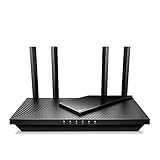
- 4. TP-Link Archer AX55 Pro – Best Value Multi-Gig Entry
- 5. GL.iNet Flint 3 – Best 2.5GbE Port Density
- 6. NETGEAR Nighthawk BE9300 – Best RAM Headroom in a Wi-Fi 7 Box
- 7. GL.iNet Brume 2 – Best Low-Power VPN Gateway
- 8. TP-Link Omada ER707-M2 – Best for Dual-WAN and Rack Install
- 9. Ubiquiti Cloud Gateway Max – Best Multi-Gig With IDS/IPS On
- 10. Ubiquiti UDR7 – Best Single-Box All-in-One
- 11. MikroTik hEX S – Best Budget Wired Router
- 12. MikroTik hAP ax3 – Best Router With Built-In Wireless
- Do You Actually Need a 2.5GbE Router?
- Router vs Gateway vs Switch vs Access Point
- Is 2.5GbE or 10GbE Better?
- How Many 2.5GbE Ports Do You Need?
- VLANs and DMZ Segmentation for Self-Hosters
- Frequently Asked Questions
- The Best 2.5GbE Router for Your Home Lab
Top 3 Picks for Best 2.5GbE Routers for Home Labs in 2026
Three products stand out, and they win for different reasons rather than because one spec sheet dominates. The Flint 2 wins on flexibility per unit of complexity, the BE400 wins on wireless, and the Cloud Gateway Ultra wins on a single console that ties an entire Ubiquiti lab together.

GL.iNet Flint 2
- 2x 2.5GbE plus 4x 1GbE
- OpenWrt with full LuCI
- WireGuard up to 900 Mbps
- AdGuard Home built in

TP-Link Archer BE400
- Wi-Fi 7 BE6500 dual-band with MLO
- 1x 2.5GbE WAN/LAN and 1x 2.5GbE LAN
- VPN client and server
- USB 3.0

Ubiquiti Cloud Gateway Ultra
- Full UniFi Network console built in
- 1 Gbps routing with IDS/IPS
- multi-WAN failover
- native VLANs
One warning before the full list. The Cloud Gateway Ultra is a fine gateway, but it has no 2.5GbE ports at all, so if a multi-gig path is the reason you are reading this, it belongs in a lab that routes gigabit and switches multi-gig elsewhere. We explain that trade properly in its own section.
Every Router in the List Compared in October
| Product | Specifications | Action |
|---|---|---|
| GL.iNet Flint 2 |
|
Check Latest Price |
| TP-Link Archer BE400 |
|
Check Latest Price |
| Ubiquiti Cloud Gateway Ultra |
|
Check Latest Price |
 TP-Link Archer AX55 Pro TP-Link Archer AX55 Pro |
|
Check Latest Price |
 GL.iNet Flint 3 GL.iNet Flint 3 |
|
Check Latest Price |
 NETGEAR Nighthawk BE9300 NETGEAR Nighthawk BE9300 |
|
Check Latest Price |
 GL.iNet Brume 2 GL.iNet Brume 2 |
|
Check Latest Price |
 TP-Link Omada ER707-M2 TP-Link Omada ER707-M2 |
|
Check Latest Price |
 Ubiquiti Cloud Gateway Max Ubiquiti Cloud Gateway Max |
|
Check Latest Price |
 Ubiquiti UDR7 Ubiquiti UDR7 |
|
Check Latest Price |
 MikroTik hEX S MikroTik hEX S |
|
Check Latest Price |
 MikroTik hAP ax3 MikroTik hAP ax3 |
|
Check Latest Price |
How We Evaluated These Routers
We did not bench-test twelve routers in a lab, so we will not pretend otherwise. Every number in this roundup comes from the published manufacturer specification, and every behavioural claim is attributed to the aggregated owner reviews rather than to a measurement of ours. Where those two sources disagree, we tell you which one we are using.
Six criteria decided the order of the list. The first is the real count of multi-gig RJ45 ports, because a device with one 2.5GbE port is a dead end for a lab. The second is whether the WAN port is itself multi-gig, which is what makes the box useful on a 2.5Gbps fibre or multi-gig ISP line. The third is CPU headroom, judged from the published VPN figures and IDS/IPS ratings.
The fourth criterion is VLAN support, which forum members treat as a deal breaker rather than a nice-to-have. The fifth is management model, specifically whether you can run it without handing an account to a vendor cloud. The sixth is the physical picture: fanless operation, idle power draw, footprint and warranty length for something that will sit powered on for years.
One vocabulary note before the reviews, because it causes most of the disappointment in this category. Hardware offloading means the switch silicon forwards some traffic without involving the CPU at all. Routing between two VLANs, or anything that must be inspected, encrypted or filtered, does not get that shortcut. So a box can have a 2.5GbE port on every side and still route well under 2.5Gbps.
1. GL.iNet Flint 2 – Best Overall for a Wired Home Lab
GL.iNet GL-MT6000 Flint 2 Wi-Fi 6 Gaming Router Dual 2.5G Ports
- Two genuine 2.5Gbps ports alongside four 1Gbps ports
- Fully accessible OpenWrt with LuCI for VLANs and custom packages
- WireGuard throughput near 900 Mbps
- AdGuard Home built in so DNS blocking needs no extra server
- 1 GB of RAM handles many VLANs
- SSIDs and rules
- LuCI interface is more involved than a consumer router UI
- Firmware needs an update after setup to hit full spec
- Only one 2.5G port can be assigned as WAN
- Retractable antennas are not position adjustable
Out of everything we looked at for this roundup, the Flint 2 is the box we would put under a home bench first. It combines a quad-core MediaTek running at 2 GHz, 1 GB of DDR4 and 8 GB of eMMC with two real 2.5Gbps ports and four 1Gbps ports, and it comes with OpenWrt already installed rather than making you flash anything.
Owner reviews describe it as a home-lab favourite for one specific reason: the firmware is not a wall. You get VLANs, SQM bufferbloat tuning, a WireGuard server and a working AdGuard Home instance on a router that costs about the same as a mid-range consumer unit. The same reviews report long uptimes with no crashes after weeks of daily use, and steady behaviour under sustained heavy load.
The VPN numbers are the standout. WireGuard is quoted at up to 900 Mbps and OpenVPN at up to 880 Mbps, which is far above what most consumer routers manage and close enough to a gigabit line to matter for remote access to a NAS. AdGuard Home is integrated, so network-wide tracker and ad blocking works without standing up a DNS container on your hypervisor.
It runs cool and stable, and it is a genuinely small desktop box rather than a rack unit. For a lab that is wired-first with a separate access point, the Wi-Fi 6 radios are almost irrelevant, and the two 2.5Gbps ports are the entire story.
What the Flint 2 does that most lab routers cannot
The combination that matters is 1 GB of RAM with full package installation. That is enough headroom to run SQM queue management, a firewall with a real ruleset, several VLANs and the built-in DNS blocker simultaneously without the interface stalling. Most multi-gig consumer routers give you a multi-gig port and a locked firmware, which means no segmentation and no queue tuning.
For a self-hoster this is the practical difference. VLAN support means your NAS, your cameras, your IoT devices and any internet-exposed service can each sit on their own segment, and that is the single feature forum members call non-negotiable for self-hosting. The dual 2.5GbE ports also let you use one for WAN and one for a NAS or hypervisor uplink without adding a switch.
Where the Flint 2 disappoints
LuCI is a learning curve if you have only ever used a consumer router wizard, and several owners point this out directly. The configuration model is a professional one, so VLAN and firewall work takes reading rather than tapping through a guided flow.
Two smaller frictions are worth knowing before you commit. The firmware needs an update straight after initial setup before it performs to specification, and only one of the two 2.5Gbps ports can be designated as WAN, so a lab wanting a 2.5Gbps LAN uplink alongside it will reconfigure as it grows. If you need more than two multi-gig ports, look at the Flint 3 below.
2. TP-Link Archer BE400 – Best Wi-Fi 7 All-in-One
- Two 2.5Gbps ports at a Wi-Fi 7 price point few rivals match
- Real-world gigabit fiber downloads reported by multiple owners
- App setup takes roughly 10 to 15 minutes
- Common SSID with automatic band steering
- VPN client reaches remote servers without per-device software
- Real-world range falls short of the stated 2400 sq ft
- Built-in VPN client reported as slow with frequent disconnects
- HomeShield advanced features need the app and a data-sharing opt-out
- Not compatible with TP-Link Deco mesh systems
The BE400 is the pick for a lab where wireless is not an afterthought. It is a dual-band Wi-Fi 7 BE6500 unit with Multi-Link Operation, Multi-RUs and 4K-QAM, rated at 5764 Mbps on the 5 GHz band and 688 Mbps on 2.4 GHz, and it carries one 2.5Gbps WAN/LAN port, one dedicated 2.5Gbps LAN port and three 1Gbps LAN ports.
Multiple owners report pulling around 850 Mbps on gigabit fiber service, which is the number that matters for a home lab: the wireless side is fast enough not to be the bottleneck when a laptop pulls a VM image off a NAS. The quad-core CPU, 1 GB of RAM and USB 3.0 port round out a box that is closer to a small server than a typical consumer router.
Setup is app-driven and takes about 10 to 15 minutes with no manual, which matters more than it sounds for anyone who has configured OpenWrt before. TP-Link HomeShield covers parental controls and IoT security, and the unit supports a VPN client and server with simultaneous VPN plus internet so a connected device can reach a remote network without per-device software.
It is also EasyMesh compatible, which gives you a path to expand coverage in a larger house. Note that it is not compatible with TP-Link Deco mesh systems, so existing Deco owners should not assume the two will cooperate.
What the BE400 does that a gateway plus access point does not
It collapses two boxes into one. If your lab is a handful of servers on a shelf and a strong wireless signal is the only thing you actually need from the networking side, the BE400 removes a switch, an access point, their power supplies and a pile of cable from the design. Two 2.5Gbps ports still give you a multi-gig WAN and one multi-gig LAN for a NAS.
It also works well as a pure access point when a separate firewall handles routing, which reviewers mention as a genuine option. That flexibility is what lets you start here today and move the routing function to a dedicated box later without replacing the wireless.
Where the BE400 disappoints
Range is the most common complaint. Owners report that real-world coverage falls short of the stated 2,400 square feet, particularly in multi-storey homes where a single unit struggles to reach upper floors. The 6 fixed antennas and beamforming help, but the marketing figure is optimistic in the same way most Wi-Fi coverage claims are.
The built-in VPN client is the second real grip. Reviewers describe it as slow and prone to constant disconnects, with at least one owner calling it a regression from an earlier TP-Link model. If remote access to your homelab matters, plan to run WireGuard on a server or a Tailscale subnet router instead of relying on the router’s client. The advanced HomeShield features also require opting out of data sharing, which is a reasonable condition but worth checking before you build a dependency on them.
3. Ubiquiti Cloud Gateway Ultra – Best for the UniFi Ecosystem
Ubiquiti Cloud Gateway Ultra (UCG-Ultra)
- Runs the complete UniFi Network console locally with no separate host
- Very polished web interface with deep diagnostic telemetry
- Native VLANs and VPN options without a recurring subscription
- Compact enough to mount beside a patch panel
- Fast WAN failover that returns to primary correctly
- Replaces an EdgeRouter plus a Raspberry Pi controller
- No 2.5Gbps ports at all
- Setup is not plug-and-play and settings sit in non-obvious menus
- Real time investment needed to learn the console
- Gateway only
- so access points are a separate purchase
- Permissive default firewall rules are reported as confusing
The Cloud Gateway Ultra is the box to buy if your home lab is already Ubiquiti. It runs the full UniFi Network application locally, manages 30+ UniFi devices and 300+ clients, and gives you native VLAN support, multi-WAN load balancing and failover, plus IDS/IPS and domain filtering with no recurring subscription.
Owners consistently describe it as the best value in the UniFi line because it consolidates three things into one: the gateway, the controller and the network application. Several report replacing an EdgeRouter and a separate Raspberry Pi controller with this single box, which simplifies a rack and removes a single point of failure from the management side.
The console itself is the real product. It is a polished web interface with a large amount of diagnostic telemetry that most competitors do not expose, and it manages switches, access points and cameras in one place. Failover behaviour is reported as fast and reliable, including correctly returning to the primary WAN once it recovers.
It is also very small. At roughly 5 by 5.6 by 1.2 inches and weighing 1.15 pounds, it is about half the height of a Mac mini and mounts comfortably next to a patch panel, which matters in the tight network closets people describe in forum threads about apartment installs.
What the Cloud Gateway Ultra does well in a home lab
Centralised management is the draw. A lab running switches, an access point, a NAS and a handful of cameras is far easier to maintain when the gateway, the switch port maps and the client list all live in one console. Traffic and device telemetry is unusually deep, so debugging a throughput problem takes minutes rather than an afternoon of SSH.
It also runs locally. Ubiquiti has historically pushed account-based operation, but this unit performs its core functions without a required cloud account, which answers the vendor-dependency worry that forum members raise. You get VLANs, VPN options and per-client control, and the IDS/IPS engine runs without a subscription fee.
Where the Cloud Gateway Ultra disappoints
It has no 2.5Gbps ports whatsoever, and its rated routing throughput is 1 Gbps with IDS/IPS enabled. That is the single reason it sits third rather than first in a roundup about multi-gig. If your lab is gigabit on the WAN side and you plan to add multi-gig switching downstream, this box is a very good fit. If you have a 2.5Gbps line or a multi-gig NAS uplink you want the router itself to move, it is the wrong tool.
Setup is not plug-and-play. Many settings sit in non-obvious menu locations, and owners describe a genuine time investment to learn the console. Firewall rule configuration is also reported as confusing, with permissive defaults that you should tighten deliberately rather than accept. And because the controller runs on the gateway, a controller failure means you lose network control until you rebuild it.
4. TP-Link Archer AX55 Pro – Best Value Multi-Gig Entry
TP-Link AX3000 WiFi 6 Router, 2 x 2.5 Gbps Ports (Archer AX55 Pro)
- Least expensive way to add two 2.5Gbps ports to a home network
- Multi-gig on both the WAN and the LAN side
- Straightforward app-based setup with HomeShield controls
- EasyMesh support for expanding coverage
- Consistent throughput across many simultaneous devices
- Wi-Fi 6 only
- with none of the Wi-Fi 7 features
- Only one dedicated 2.5Gbps LAN port
- Basic firewall security level compared with the AX series
- Limited USB 3.0 support versus higher-end TP-Link models
The AX55 Pro is the cheapest way we found to put two 2.5Gbps ports on a home network, and for a first multi-gig step it is hard to argue with. It carries one 2.5Gbps WAN/LAN port, one 2.5Gbps LAN port and three 1Gbps LAN ports alongside dual-band AX3000 Wi-Fi 6 on 160 MHz channels.
Reception is solidly positive on stability and value, with owners noting consistent throughput across many simultaneous devices. MU-MIMO and OFDMA handle a busy household without throughput collapsing, and the four fixed antennas with beamforming cover a normal home without drama.
It has a built-in VPN client and server, TP-Link HomeShield for parental controls and IoT security, and EasyMesh compatibility so you can extend coverage with a RE715X extender or equivalent. For a lab where the wireless side is a convenience rather than the focus, that is a complete feature set for the money.
One thing to plan around: with only one dedicated 2.5Gbps LAN port, expanding multi-gig further down the line means adding a switch. That is exactly where our home lab switch picks come in, and it is a normal way to build a lab rather than a flaw in the router.
What the AX55 Pro gets right for a first multi-gig build
It does the one thing that matters at this tier, which is give you a multi-gig port on each side of the device. Most budget multi-gig routers have a 2.5Gbps WAN port and gigabit LAN, which means your fibre line arrives at 2.5Gbps and then immediately drops to 1Gbps on the way to your server. This one does not.
Setup is app-based and straightforward, and HomeShield gives you IoT segmentation controls without a command line. For someone moving off an ISP-supplied router and running two or three self-hosted services, it is a proportionate first purchase rather than an over-engineered one.
Where the AX55 Pro disappoints
It is Wi-Fi 6, so there is no Multi-Link Operation and no 4K-QAM. If you are buying new and intend to keep the wireless for five years, a Wi-Fi 7 unit costs only modestly more and buys you a dedicated 6 GHz path on some models.
The firewall security level is more basic than TP-Link’s higher-end AX series, which is worth knowing if this box will be doing the routing for internet-exposed services. USB 3.0 support is also limited compared with the models above it. With one 2.5Gbps LAN port, budget for a switch to grow, and remember that any multi-gig expansion beyond that depends on hardware offloading staying enabled for the traffic you care about.
5. GL.iNet Flint 3 – Best 2.5GbE Port Density
GL.iNet GL-BE9300 Flint 3 Tri-Band Wi-Fi 7 Router 5 x 2.5G VPN Router
- Five 2.5Gbps ports in one box is rare at this price point
- Dedicated 6 GHz band for low-latency modern clients
- OpenWrt-based firmware keeps VLANs and package installs available
- AdGuard Home and Bark parental controls included
- 1 GB RAM handles 100+ devices without strain
- Advertised 2000 sq ft coverage is smaller than some Wi-Fi 7 rivals claim
- Retractable antennas and a plain boxy enclosure
- OpenWrt interface needs more effort than a stock consumer web UI
- Firmware should be updated immediately after setup
The Flint 3 is the port-density answer in this roundup. Five 2.5Gbps ports in a single unit is unusual at this size and price, and for a lab that wants to wire a NAS, two hypervisor hosts, an access point and a management VLAN without adding a switch immediately, it removes a whole box from the design.
It is a tri-band Wi-Fi 7 unit rated at up to 9 Gbps aggregate with a 12.5 Gbps link rate, and it uses a dedicated 6 GHz band that gives newer clients a clean lane of their own. MLO, enhanced OFDMA, 4K-QAM and preamble puncturing all help in a dense wireless environment where the 2.4 and 5 GHz bands are crowded.
The firmware is OpenWrt-based, so VPN, VLAN configuration and package installation all remain available, and the 1 GB of DDR4 with 8 GB of eMMC leaves room for DIY plugin installs. AdGuard Home is supported and Bark parental control integration is included out of the box, which covers two of the most commonly self-hosted services before you install anything.
Reviewers single out the bank of five 2.5Gbps ports as the feature separating it from cheaper tri-band models, and report that 1 GB of RAM handles 100+ devices without strain. Coverage is designed for up to 2,000 square feet.
What five 2.5GbE ports actually lets you build
A wired-first lab bench with no switch. Put the access point on one port, the NAS on another, two Proxmox or TrueNAS hosts on the others, and route the fifth to your management VLAN. Everything stays at 2.5Gbps link speed and the whole topology fits behind a panel with room to spare.
It also handles the 6 GHz question better than most tri-band units at this level, because the dedicated band is present rather than shared. On a lab where a laptop occasionally moves large VM images while the NAS is also serving, that separation reduces contention on the 5 GHz airtime.
Where the Flint 3 disappoints
The 2,000 square foot coverage claim is smaller than some Wi-Fi 7 rivals make, and owners in larger homes report that falling short is noticeable. The physical design is deliberately plain, with retractable antennas and a boxy enclosure, so it will not blend into a living space the way a consumer router can.
As with the Flint 2, the OpenWrt interface asks more of you than a stock consumer web UI, and the firmware should be updated immediately after setup to reach full performance. The quoted VPN ceiling of 680 Mbps for both WireGuard and OpenVPN is below the Flint 2 figure, so if remote access throughput is your primary requirement rather than port count, the cheaper model is the better buy.
6. NETGEAR Nighthawk BE9300 – Best RAM Headroom in a Wi-Fi 7 Box
NETGEAR Nighthawk WiFi 7 Router, Up to 2,500 sq ft, 9.3 Gbps
- Multi-gig ready with a 2.5G WAN and two 2.5G plus two 1G LAN ports
- Dedicated 6 GHz band keeps fast clients off congested spectrum
- 2 GB of RAM is the most in this group for firmware headroom
- Straightforward Nighthawk app setup and management
- Automatic firmware updates and protection enabled by default
- NETGEAR Armor becomes a paid subscription after the trial
- Real-world range falls short of the stated 2500 sq ft in many homes
- Only a 1 year limited warranty
- Heavier and bulkier chassis than most tri-band rivals
- Some modem or gateway combos require bridge mode
The Nighthawk BE9300 earns its place on two things: port density on the wired side and 2 GB of RAM. It carries a 2.5Gbps WAN port, two 2.5Gbps LAN ports and two 1Gbps LAN ports, which is more multi-gig LAN capacity than most tri-band units in this roundup offer.
That RAM figure matters more than it sounds. It is the highest memory capacity among the wireless units here, and headroom is what lets firmware keep running smoothly as features accumulate. Owners credit it with a straightforward setup and management path through the Nighthawk app, including speed tests, device pausing and guest networks.
Wireless is tri-band Wi-Fi 7 BE9300 at up to 9.3 Gbps across 2.4, 5 and 6 GHz, with a dedicated 6 GHz band. That band is what separates the newest clients from a congested 5 GHz environment, and it is the reason this unit appears on lists of the best Wi-Fi 7 routers for a home rather than a lab.
Automatic firmware updates and Advanced Router Protection are enabled out of the box, which addresses the patch-cadence worry that self-hosters raise about consumer brands. It works with an existing modem or gateway over ethernet, though some combinations need bridge mode enabled on the upstream device.
What the 2 GB of RAM buys you in a home lab
Firmware headroom. Most complaints about consumer routers that age badly are really complaints about a platform that ran out of memory once features piled on. With 2 GB, this unit has the largest memory pool in the wireless group, which is a reasonable hedge against a multi-year service life in a lab that expects to keep running.
The three 2.5Gbps ports also make it a credible pick for a lab that is partly wireless and partly wired, because a NAS, an access point and a hypervisor host can all sit on multi-gig without a switch. Its 4 pounds and bulkier chassis are a fair trade for that in a closet rather than a living room.
Where the Nighthawk BE9300 disappoints
NETGEAR Armor, the security suite, becomes a paid subscription after a 30-day trial. Anyone who dislikes recurring fees for core firewall features should factor that in, and the automatic update behaviour is the part worth keeping regardless.
Real-world range frequently falls short of the advertised 2,500 square feet, particularly in multi-storey homes, and it carries only a 1 year limited warranty, the shortest in this roundup. It also cannot be pre-configured for a static-IP client before arriving on site, which is a small operational annoyance for anyone staging a client install.
7. GL.iNet Brume 2 – Best Low-Power VPN Gateway
GL.iNet GL-MT2500A Brume 2 Wired VPN Security Gateway 2.5G WAN
- Tiny
- low-power box that adds real VPN termination to an existing network
- VPN server and client run simultaneously for site-to-site and remote work
- Solved CGNAT and IPv6-only ISP access for multiple owners
- OpenWrt and LuCI available for advanced configuration
- Compact aluminium case
- 157 g total
- Initial configuration needs a wired Ethernet connection to a laptop
- Aluminium case runs warm and radiates heat
- No Wi-Fi
- so it cannot act as an all-in-one router
- OpenVPN throughput modest versus comparable Asus hardware
- No wall-mount facility included
The Brume 2 is not a general-purpose router and should not be judged as one. It is a specialist wired gateway for a single job: terminating a VPN on your existing network. It has a 2.5Gbps WAN port, a 1Gbps LAN port with USB 3.0, and pre-installed OpenVPN and WireGuard with profiles for 30+ providers.
Several owners report it solving real problems, including remote access behind CGNAT providers and replacing a failed Netgear VPN appliance. One of the more useful features is simultaneous VPN server and client operation, which is what makes a site-to-site tunnel between two homes possible on a device this small.
It runs 8 GB of RAM and 8 GB of eMMC, and it draws between 1 and 2 W in typical use. For an always-on device, that is the number that decides it: a router that runs for a year in a closet should not be a meaningful line on a power bill, and this one is about as small as that requirement gets.
OpenWrt and LuCI are available, so you can go deeper than the web interface, and Cloudflare encryption and IPv6 security protocol support handle two awkward modern cases. The aluminium enclosure keeps it compact at 157 g, and the WireGuard server setup is reported to take only a few clicks plus a dynamic DNS record.
What the Brume 2 does that your main router cannot
It gives you a separate encryption boundary. Running your VPN server on a dedicated box means a failure in that box does not take down routing for the whole house, and it keeps the VPN workload off a router that may be busy forwarding storage traffic. For remote access into a homelab, that separation is worth more than raw port count.
It is also the cleanest option for a CGNAT or IPv6-only provider, because the 2.5Gbps WAN terminates the tunnel at line speed rather than at gigabit. If you use Tailscale elsewhere in the lab, this sits alongside it comfortably rather than competing for the same job.
Where the Brume 2 disappoints
It is wired only, with no Wi-Fi radios, so it can never be an all-in-one router. Initial configuration requires a wired Ethernet connection to a laptop, which is a deliberate design choice and an inconvenience if your only machine with Ethernet is stored away.
The quoted OpenVPN ceiling of 150 Mbps is modest and is reported as slower than comparable Asus hardware, so pick it for WireGuard rather than OpenVPN. The aluminium case runs warm and radiates heat into the surrounding area, and there are no wall-mount holes, so plan a shelf rather than a wall. In some regions the bundled power adapter includes only a US plug.
8. TP-Link Omada ER707-M2 – Best for Dual-WAN and Rack Install
Omada ER707-M2, Multi-Gigabit VPN Route
- Holds line rate on multi-gig links with modem-direct speed reported by one owner
- Dual 2.5Gbps WAN ports enable real load balancing and failover
- Broad VPN protocol support including WireGuard at no extra cost
- SPI firewall
- VLANs
- ACLs and monitoring through the Omada controller
- Metal chassis with lightning protection suits a closet install
- Not aimed at casual users
- configuration is more involved than a consumer router
- IPSec interoperability issues with some Linux servers
- IPSec cannot be terminated between IPv6 endpoints
- Factory default subnet overlaps 192.168.0.0 which complicates setup
The ER707-M2 is the only unit here with two 2.5Gbps WAN ports, and that single fact makes it the pick for anyone with two internet connections. It also carries one 2.5Gbps WAN/LAN port, four Gigabit WAN/LAN ports, one Gigabit SFP slot and a USB 2.0 port, across a metal chassis with lightning protection.
One owner reports matching modem-direct speed on multi-gig links, which is the most direct evidence we have that this box can move traffic at line rate. The rated maximum upstream data transfer rate is 5 Gbps, and it supports up to 500,000 concurrent sessions and 1,000+ clients, which is far beyond a home lab’s needs.
The VPN support is unusually broad for this category: up to 100 LAN-to-LAN IPsec tunnels, 66 OpenVPN, 60 L2TP and 60 PPTP, plus WireGuard. Multi-WAN load balancing and failover are built in, the SPI firewall, VLANs and ACLs are all configurable, and the USB port accepts a storage device or an LTE dongle as a backup WAN.
Long-term ownership details are strong. It runs steadily with no reboots or connectivity drops over months of service, and it carries a 5-year manufacturer warranty with 5 years of spare part availability, which is rare in a category where one year is common. Our patch panel guide covers the physical side of a closet install if that is where this is going.
What the ER707-M2 does that a single-WAN router cannot
Two genuine 2.5Gbps WAN ports means real load balancing rather than a token second uplink. For a home lab that wants a primary fibre line and a cellular or cable backup carrying voice and monitoring traffic, the two ports make the policy obvious and enforceable at line rate.
The Gigabit SFP slot is the other underused feature. It accepts a fibre or SFP uplink, which matters for anyone in an apartment where the ISP handoff is optical rather than copper, and it keeps the multi-gig path off the RJ45 ports you need for servers.
Where the ER707-M2 disappoints
It is not aimed at casual users. Configuration is more involved than a consumer router, the Omada controller is the interface, and the learning curve is real. The factory default subnet overlaps 192.168.0.0, which complicates staging a client network, and the unit cannot be pre-configured for a client with a static IP before arriving on site.
Two firmware limitations are worth knowing in advance. IPSec interoperability problems are reported with some Linux servers, and IPSec cannot be terminated between IPv6 endpoints at all, which is a genuine limitation for anyone running dual-stack services. Reviewers also report units arriving with an unexpected configuration that needed a reset.
9. Ubiquiti Cloud Gateway Max – Best Multi-Gig With IDS/IPS On
Ubiquiti Cloud Gateway Max – (UCG-Max) (512GB)
- 1.5 Gbps routing with IDS/IPS covers multi-gig lines the Ultra cannot
- Consolidates gateway
- controller and network apps in one unit
- Onboard NVMe storage removes the need for a separate NVR host
- Same polished UniFi interface owners praise elsewhere
- Multi-WAN load balancing built in
- Costs noticeably more than the Cloud Gateway Ultra
- No Wi-Fi radios so access points are a separate purchase
- Only 201 reviews
- the smallest sample in this comparison
- Listed warranty is 6 months
The Cloud Gateway Max is the UniFi answer to the multi-gig problem the Ultra cannot solve. Its rated routing throughput is 1.5 Gbps with IDS/IPS enabled, which is the figure that matters, because that measurement includes the cost of running intrusion detection rather than quoting a link speed.
Owners who moved up from the Cloud Gateway Ultra point to exactly two things: the higher routing ceiling with IDS/IPS active, and the built-in NVMe storage. This 512 GB variant can host Protect camera recording, which removes a separate NVR host from the build entirely for a small camera count.
It runs the full UniFi application suite including Network and Protect, manages 30+ UniFi devices and 300+ clients, and has multi-WAN load balancing and a 0.96-inch LCM status display. Storage-free variants exist if you do not need the recording capacity.
It has the highest rating of any product in this roundup, at 4.8 with 87 percent five-star reviews. That figure deserves a caveat, though: the review base is 201, the smallest sample here, so the rating reflects a narrow but very satisfied set of owners rather than a long track record.
Why IDS/IPS throughput is the number to shop on
Intrusion detection is the feature self-hosters ask for most and quietly pay for. When it runs, every packet is inspected in software, so throughput falls well below link speed. Two gateways that both advertise multi-gig can differ by half their usable throughput once Suricata-style inspection is switched on, which is why a rated figure that already includes IDS/IPS is more useful than one that does not.
At 1.5 Gbps with inspection enabled, this box is the first UniFi gateway in the list that can plausibly keep up with a multi-gig WAN line while you leave protection on. That is a real security improvement, not a spec-sheet trick, and it is why this unit exists above the Ultra.
Where the Cloud Gateway Max disappoints
It costs noticeably more than the Cloud Gateway Ultra, and the NVMe storage is the reason for part of that. If you are not running cameras, the storage-free variant is the sensible configuration and you are paying for routing headroom you may not use.
Like the Ultra, it has no Wi-Fi radios, so access points are a separate purchase. The listed warranty of 6 months is unusually short and worth raising with the vendor if that matters to you. And with only 201 reviews, you have less field history to lean on than the 2999-review Flint 2 or the 1115-review Ultra.
10. Ubiquiti UDR7 – Best Single-Box All-in-One
UbiQuiti UDR7
- Combines cloud gateway
- router
- switch and Wi-Fi 7 access point in one appliance
- 3x 2.5GbE LAN plus a 2.5GbE WAN and a 10G SFP+ fibre WAN
- Up to 2.3 Gbps IDS/IPS gateway throughput
- PoE output removes the need for a separate injector
- Preinstalled 64GB microSD supports NVR use for up to 5 HD cameras
- Requires the UniFi ecosystem and an account for setup and management
- Wi-Fi coverage of roughly 1750 sq ft is modest for larger homes
- Only three 2.5G LAN ports limits wired expansion without a switch
The UDR7 is the most capable single box in this roundup, and the only one with a 10G SFP+ fibre WAN alongside 2.5GbE copper. It combines a 10G cloud gateway, a router and a PoE switch in one desktop appliance, with 3 GB of RAM running UniFi OS and up to 2.3 Gbps of IDS/IPS gateway throughput.
That throughput figure is the highest here, and it is quoted with intrusion detection active, which is the honest way to advertise it. For a lab on a 2.5Gbps fibre line that wants firewall protection left on permanently, this is the box that does not force the choice.
On the wired side it carries 3x 2.5GbE RJ45 LAN ports, 1x 2.5GbE RJ45 WAN and 1x 10G SFP+ fibre WAN, so it handles a fibre handoff and a copper backup in one chassis. The PoE-compliant port delivers 15.4W, which means an access point or a camera can take power from the router instead of a separate injector.
Wireless is tri-band Wi-Fi 7 at up to 10.6 Gbps with compatible devices, covering roughly 1,750 square feet. A preinstalled 64GB microSD card supports NVR use for up to 5 HD cameras, and the 0.96-inch LCM display shows device status without logging in.
What one box actually replaces
Gateway, router, four-port switch, wireless access point and camera recorder. Owners rate it highly for exactly this consolidation, and the 2.3 Gbps IDS/IPS figure means the consolidation does not cost you inspection capability. For a lab that wants a tidy single appliance and has no objection to the UniFi console, that is a strong argument.
The 10G SFP+ WAN is the piece that no other unit here offers, and it matters for anyone whose ISP handoff is optical. The PoE output is a quiet second win, since it removes an injector and a power supply from the design.
Where the UDR7 disappoints
It commits you to the UniFi ecosystem and requires an account for setup and management, which is the vendor-dependency concern forum members raise most often. That is a legitimate trade for the interface quality, but it is a real dependency.
Coverage of roughly 1,750 square feet is modest for a larger home, and the three 2.5G LAN ports limit wired expansion without adding a switch. Rated power is 16.1 W, so it is not a low-draw closet device either.
11. MikroTik hEX S – Best Budget Wired Router
- Very affordable wired routing with 5 Gigabit Ethernet ports
- Includes an SFP slot that accepts 2.5Gb SFP modules for fibre or DAC links
- Compact with low power draw
- Low CPU usage and a solid base firewall rule set in RouterOS
- Supports CLI
- web GUI and phone configuration
- SFP uplink never links faster than 1Gb
- so it is not a true 2.5G path
- Arrives in CPE bridge mode and needs manual configuration
- RouterOS has a steep learning curve
- No built-in wireless radio
- Manufacturer support is widely reported as weak
The hEX S is the cheapest competent wired router in this list, and it is worth understanding exactly what you get. Five Gigabit Ethernet ports, a 2.5G SFP slot that accepts 2.5Gb SFP modules, PoE out on one port, a USB port, a dual-core ARM CPU and 512 MB of RAM running RouterOS.
Reviewers consistently praise it as compact, capable and inexpensive, with strong firewall features and low resource use. Configuring it by CLI, the web GUI or the mobile app all work, and the base RouterOS firewall rule set is solid for a home lab.
There is one catch that matters enormously in a roundup about 2.5GbE, and reviewers raise it as the dominant complaint. The SFP uplink never links faster than 1Gb, so despite the 2.5G label in the slot, it is not a true 2.5G path. For a lab that needs multi-gig, this box is a gigabit router with a fibre-capable uplink.
It also arrives in CPE bridge mode by default, which means it will not route until you configure it manually. That is a fine choice for a product aimed at people who know what CPE bridge mode means, and an unwelcome surprise for anyone who expects a consumer router out of the box.
When the hEX S is still the right answer
When the lab’s multi-gig traffic never crosses the router. If you plan to put your 2.5GbE devices behind a switch and let the switch do the forwarding, the router only needs to handle internet-bound traffic, and five Gigabit ports plus PoE out at this price is a very cheap way to get there. Home lab operators frequently take exactly this approach.
The SFP slot is also useful for a fibre handoff, a DAC run to a nearby switch, or simply for a spare uplink when you outgrow copper. And 512 MB of RAM with a dual-core CPU means RouterOS runs this without any strain at all.
Where the hEX S disappoints
The 1Gb SFP ceiling is the deal breaker for a multi-gig lab, and it is not fixable in software. RouterOS itself has a steep learning curve for anyone without networking experience, and the interface assumes you know what you are doing.
Manufacturer support is widely reported as weak, which is worth weighing against the breadth of configuration RouterOS offers. There is no built-in wireless radio, so access points are a separate purchase, and the warranty is one year. Read the switch-chip topology documentation before buying any MikroTik for a lab, because traffic crossing between port groups on different switch chips goes through the CPU and can be much slower than the link speed suggests.
12. MikroTik hAP ax3 – Best Router With Built-In Wireless
MikroTik – hAP ax3 Access Point with 4-Core 1.8GHz CPU, 1GB RAM, 4X GLAN, 1×2.5G LAN, US Version
- 4-core CPU and 1 GB RAM give real headroom versus earlier hAP models
- Single 2.5G LAN port for high-speed wired uplinks alongside 4 Gigabit ports
- Rock-solid stability once configured
- WireGuard and IPsec VPN including site-to-site tunnels
- Strong value against enterprise gear of similar capability
- Only five wired ports limits expansion without an external switch
- Some owners report unreliable or hard-to-detect 5 GHz networks
- WinBox looks dated and lacks consumer-style mobile apps
- RouterOS requires a learning curve
- Limited internal storage for packages and containers
The hAP ax3 is a Wi-Fi 6 access point that can also route, and it is built on a 4-core 1.8 GHz CPU with 1 GB of RAM. That is a substantial step up from earlier hAP models, and owners describe the difference as noticeable headroom rather than marginal improvement.
On the wired side it carries 4x Gigabit Ethernet LAN plus one 2.5GbE LAN port, which is exactly the layout you want for an access point: one fast uplink to a switch, several 1Gbps ports for wired devices, and no wasted multi-gig port. It is rack and desktop mountable, which suits a closet or a patch panel.
Owners describe it as professional-grade hardware that is stable, feature-rich and good value once configured, and it is frequently used to replace an ISP router outright or to serve purely as a dedicated access point. Wireless throughput is rated at up to 1.2 Gbps on dual-band Wi-Fi 6, which is comfortably above what a gigabit line needs.
WireGuard and IPsec VPN support is built in, including site-to-site tunnels, so it can act as a small router in its own right for a branch or a guest segment rather than being purely a wireless device.
What one 2.5GbE uplink on an access point actually does
It removes the wireless side from your bandwidth ceiling. With clients connecting over Wi-Fi 6, the uplink to your switch is almost always the slowest link in the chain, so a single 2.5GbE port is the correct amount of multi-gig on an access point. Putting four multi-gig ports on a wireless box would be spending ports where they do nothing.
Pairing it with one of the routers earlier in this list gives you a clean split, which is the pattern home lab builders use most often: a wired gateway, a cheap managed switch, and access points with a single multi-gig uplink each. Our mini PC roundup covers the other common gateway option if you want full software control instead.
Where the hAP ax3 disappoints
Five wired ports is the whole port budget, so expansion needs an external switch. Some owners report unreliable or hard-to-detect 5 GHz networks, which is worth testing in your specific house before committing. WinBox looks dated next to any consumer interface and there is no consumer-style mobile app to fall back on.
RouterOS needs a learning curve, internal storage for packages and containers is limited, and the US power supply is what is included with this version, which matters if you are outside that market. As with the hEX S, read the port block diagram: traffic that crosses between switch chips goes through the CPU, and that is the usual reason a MikroTik box underperforms its port list suggests.
Do You Actually Need a 2.5GbE Router?
Most home labs do not, and the forum consensus is blunt about it. The highest-engagement thread on this whole topic is titled as a question about whether 2.5GbE is genuinely that expensive, and a meaningful share of respondents answered that they bought nothing and ran what they already had. A large number of home lab operators similarly recommend inexpensive 2.5GbE switches and a modest router, on the reasoning that the switch does the work.
That framing is right, and it should shape your purchase. Run through these checks before buying anything.
First, is your internet plan below 1Gbps? If yes, the WAN port being multi-gig changes nothing for internet traffic. What matters is whether your servers talk to each other at multi-gig, and that is a switching problem more often than a routing problem.
Second, do you actually move large files between machines? A 1Gbps link caps a NAS copy at roughly 110 MB/s. If you are replicating storage or migrating virtual machines, that ceiling is real and multi-gig fixes it. If your workloads are web browsing and streaming, it is not.
Third, do you have a device that will speak 2.5Gbps? A NAS with a 1GbE NIC, a hypervisor with a 1GbE bridge and an access point with a gigabit uplink will all negotiate down to 1Gbps no matter what the router can do. This is the most common disappointment, and it is why we would pair any router on this list with one of our 2.5GbE switch picks rather than treating the router as a standalone upgrade.
Fourth, do you need VLANs? If you run self-hosted services and want them on separate segments from your IoT devices, VLAN support is a requirement, not a nicety. Every product in this roundup supports VLANs, but they differ wildly in how much configuration they demand to get there.
Fifth, do you want internet-exposed services? If you terminate anything from the open internet on your network, a DMZ VLAN is the minimum sensible arrangement. See the segmentation section below.
One pattern to be careful with is running your router as a virtual machine on Proxmox. It is debated constantly in forums and it works, but a hypervisor outage takes the internet with it, and troubleshooting a network problem from a machine that is also managing the network is genuinely harder. Dedicated hardware or a separate box is worth the extra cost for that reason alone.
Router vs Gateway vs Switch vs Access Point
The shopping results for this query mix routers, gateways and switches in one carousel, which is why people buy the wrong thing. Four categories, four jobs.
A router decides where traffic goes between networks. Its job is WAN to LAN, inter-VLAN routing, NAT and firewall rules, and it is the only device that terminates your internet connection. A gateway is a router sold as part of a vendor ecosystem, usually bundling a controller or a radio as well. A switch forwards frames inside one network and never makes a routing decision, which is why it can hit link speed so cheaply. An access point is a bridge from wireless to wired, and it belongs on a switch, not in the routing path.
The practical consequence: a 2.5GbE switch under a gigabit router will still deliver 2.5GbE between devices on the same VLAN. That is why so many builders recommend the cheap-switch-plus-modest-router route. You only need a multi-gig router once traffic has to cross networks, and most home lab traffic does not.
The third option is a software router on x86. Home lab operators describe N100-class mini PCs with four 2.5GbE NICs as the consensus answer for a compact, capable router, and the boards behind them commonly use Intel I225-V or I226-V controllers. Running OPNsense or pfSense on that hardware gives you full software control, and our mini PC picks cover the platform options.
Two honest caveats on the x86 route. It is a build rather than a purchase, so you own the assembly, the fan noise and the storage choice, and a small form factor box that will not physically fit a network closet is a real problem that forum threads keep raising. The advantage is that you can size the NIC count and the RAM yourself, and upgrade either independently.
Is 2.5GbE or 10GbE Better?
For a home lab, 2.5GbE is better, and the reason is arithmetic rather than opinion. A 1Gbps NAS copy runs at roughly 110 MB/s. At 2.5Gbps you approach 280 MB/s. At 10Gbps you approach 1.1 GB/s, but only on clients that can consume it.
Most home lab workloads are bursty rather than sustained. Copying a 40 GB VM image from a NAS to a laptop at 2.5Gbps takes about 2.5 minutes against 6 minutes at gigabit. You will not feel the difference between that and 10Gbps unless you move hundreds of gigabytes regularly.
The decisive practical point is that 2.5GbE and 10GbE are effectively mutually exclusive on most equipment. A 10GbE-only switch forces everything attached to it down to 1Gbps when the other side of the link only speaks gigabit. A 2.5GbE network is uniformly multi-gig end to end at a fraction of the switch cost, which is why it became the home lab default.
10GbE makes sense in two places. The first is a 10GbE SFP+ fibre WAN when your ISP handoff is optical, which is a WAN problem rather than a LAN one. The second is a short server-to-server backbone between two machines that genuinely saturate multi-gig, where the cable run is fixed and short. Everywhere else, 2.5GbE is the right ceiling.
Hardware offloading is the detail that explains most underperformance. When the switch silicon can forward a frame without help, you get link speed. Routing between VLANs, anything encrypted, and anything inspected by IDS/IPS all have to go through the CPU. That is why a box can advertise 2.5Gbps ports and still route at 1 Gbps, and why the rated throughput figures that already include IDS/IPS are the ones worth comparing.
How Many 2.5GbE Ports Do You Need?
Count the multi-gig devices, then subtract the ones that can live at gigabit. Cameras, printers, smart home hubs and most IoT sensors never need more than 1Gbps, and putting them on 1Gbps ports is the correct design rather than a compromise.
A minimal two-server lab needs very few. One 2.5Gbps port for the WAN, one for a NAS and one for a hypervisor host is enough, which means a two-port box works if you add a switch. A four-port appliance like the Flint 3 covers WAN, NAS, two hosts and an access point uplink without any switch at all.
Here is what to avoid. A device with only a single 2.5GbE port is a dead end the moment you add a second multi-gig server. A 2.5GbE slot that caps at 1Gb is worse than no 2.5GbE claim at all, because it wastes the SFP module you buy for it. Gear with no VLAN support cannot segment anything. And a CPU that cannot route at line rate turns every multi-gig port into a 1Gbps port with extra steps, so check the published routed throughput rather than the port labels.
Also be wary of boxes that arrive with factory defaults that conflict with your network. The ER707-M2 defaulting to a subnet overlapping 192.168.0.0 and the MikroTik hEX S shipping in CPE bridge mode are both examples of a small detail that costs an evening.
VLANs and DMZ Segmentation for Self-Hosters
If you run self-hosted services, VLAN support is the feature that separates a home lab from a home network. A workable plan is short: four segments, one router, and a firewall rule set that defaults to deny between them.
The management VLAN holds the router console, your laptop when you are administering, and nothing else. The lab VLAN holds your NAS, hypervisor hosts and management interfaces. An IoT VLAN holds the things that talk to the internet and should never see your storage. A camera VLAN holds the NVR and the cameras.
The fifth segment is the one nobody writes about, and it is the one that matters most for anything you expose to the open internet. Put each internet-facing service in its own DMZ VLAN, and give that VLAN its own address range with no route to the lab VLAN. A compromised Immich or Home Assistant instance then has nowhere to reach even if it is exploited, because there is simply no permitted path from the DMZ to your storage.
From there, harden the basics. Change default credentials on the router, disable administration over the WAN, keep firmware updates automatic, and confirm that your chosen device can be managed without an account tied to a vendor cloud if that is a requirement for you. The Cloud Gateway Ultra and the OpenWrt-based units in this list can all run locally; the Ubiquiti access points are the part of that ecosystem that wants a cloud account.
One practical detail on the hardware side: a PoE port on the gateway, as the UDR7 has, lets an access point or a camera take power from the router and removes a power brick from the design. A PoE++ switch is the better answer once you have more than one or two of them, and it is a separate purchase from the router either way.
Frequently Asked Questions
Which 2.5Gbps router is the best?
For a wired home lab the GL.iNet Flint 2 is the strongest all-round choice, because it combines two genuine 2.5GbE ports, 1 GB of RAM and full OpenWrt access with VLANs, WireGuard near 900 Mbps and built-in AdGuard Home. If you are already in the Ubiquiti ecosystem, the Cloud Gateway Max is the multi-gig step up. If you want one box with Wi-Fi 7, the Archer BE400 covers that. Judge every option on routed throughput with IDS/IPS enabled, not on port labels.
What is the best router for a homelab?
It depends on what your lab actually does. A NAS plus one hypervisor needs two 2.5GbE ports, which the Flint 2 or the Archer AX55 Pro cover, plus a managed switch. A Proxmox cluster with camera recording and internet-exposed services benefits from a gateway with 10G SFP+ and PoE, like the UDR7, or an x86 mini PC running OPNsense with four 2.5GbE NICs. Most labs over-buy here, so check whether a cheap switch and a modest router already solve your problem.
Is 2.5GbE or 10GbE better?
For a home lab, 2.5GbE. A gigabit link caps a NAS copy at roughly 110 MB/s, 2.5Gbps reaches about 280 MB/s, and 10Gbps reaches about 1.1 GB/s only if both ends can consume it. The deciding factor is that 2.5GbE and 10GbE are mutually exclusive on most gear, so a 10GbE-only switch forces everything to negotiate down. Choose 10GbE only for a fibre WAN handoff or a short server-to-server backbone.
Is 2.5 GB Ethernet overkill?
Often, yes. If your internet plan is below 1Gbps and your devices talk to each other on a switch, a 2.5GbE switch alone delivers nearly all the benefit for far less than a 2.5GbE router. Multi-gig routing only starts to matter when traffic must cross networks, or when you have a 2.5Gbps WAN line. Measure whether you are actually hitting a 110 MB/s ceiling before upgrading the router.
Which Wi-Fi router has a 2.5GbE port?
Several units in this roundup carry multi-gig ports alongside wireless. The TP-Link Archer BE400 has one 2.5GbE WAN/LAN port and one dedicated 2.5GbE LAN port. The GL.iNet Flint 2 has two 2.5GbE ports with a Wi-Fi 6 radio. The Flint 3 and the NETGEAR Nighthawk BE9300 both pair tri-band Wi-Fi 7 with two or three 2.5Gbps ports. If the wireless is the priority, weigh radio quality alongside port count.
How many 2.5GbE ports do I need for a home lab?
Count only the devices that move more than a gigabit of traffic, which usually means your NAS, your hypervisor hosts and an access point uplink. A minimal two-server lab needs three ports, one for WAN and two for servers. A four-port appliance such as the Flint 3 covers WAN, NAS, two hosts and an access point without a switch. Cameras, printers and IoT devices belong on 1Gbps ports, which is the correct design rather than a compromise.
Can a mini PC replace a home lab router?
Yes, and home lab operators widely recommend it. An N100-class mini PC with four 2.5GbE ports, typically using Intel I225-V or I226-V controllers, running OPNsense or pfSense saturates 2.5GbE lines and gives you full software control. The trade-offs are that it is a build rather than a purchase, fan noise and storage choice become your problem, and a small form factor box may not physically fit a network closet.
What is hardware offloading on a router?
Hardware offloading lets switch silicon forward some traffic without involving the CPU at all, which is why a switch can hit link speed so cheaply. Routing between VLANs, encrypted traffic and anything inspected by IDS/IPS do not get that shortcut and must pass through the processor. That is how a router with 2.5GbE ports on every side can still route well under 2.5Gbps, and why published throughput figures that include IDS/IPS are the ones worth comparing.
The Best 2.5GbE Router for Your Home Lab
The GL.iNet Flint 2 is the best 2.5GbE router for a home lab in 2026, because it is the only unit in this roundup that pairs two real 2.5GbE ports and a full OpenWrt installation with a 1 GB memory pool, VLAN support, WireGuard near 900 Mbps and a large review history of stable long-term running. It is also the least committed purchase if your lab changes shape.
The alternatives each win on a narrower axis. The Ubiquiti Cloud Gateway Max is the pick if you want multi-gig routing with IDS/IPS running permanently, and the UDR7 goes further with a 10G SFP+ WAN, PoE output and 2.3 Gbps of inspected throughput. The Flint 3 wins on port density with five 2.5GbE ports, the Archer BE400 and the Nighthawk BE9300 cover Wi-Fi 7, and the ER707-M2 is the one to buy for two WAN connections or a fibre handoff.
The Brume 2 solves a different problem entirely, adding VPN termination for 1 to 2 W without touching your main router, and the two MikroTik units deliver RouterOS control at the budget end provided you understand the port topology and the learning curve. If none of that applies to you yet, start with a 2.5GbE switch and revisit the router when you measure a real bottleneck.
We may earn a commission from purchases made through the links on this page, at no additional cost to you. Figures quoted are manufacturer specifications and aggregated owner review data, and prices in this category move frequently, so check current pricing before you commit.