

Storage is the least glamorous part of photography and the only part that can take a decade of work with it when it fails. Every shoot fills cards, every card fills a laptop, and eventually the laptop drive is full or dead. Choosing the best external hard drives for photographers is less about chasing a headline speed number and more about matching the drive to the job: offloading cards in a hotel room, editing RAW files straight from the drive, or parking a multi-terabyte archive on a shelf.
We spent the last few months cycling through the current generation of portable SSDs and mechanical drives, moving real card dumps and RAW libraries back and forth to see which ones hold up in practice. Ten drives made the list below, from a 2TB mechanical backup drive rated at 4.7 stars across more than 165000 reviews to a ruggedized 4TB model rated to survive full submersion. No price appears anywhere on this page, so use the check buttons to see current pricing for each drive.
One thing to clear up early: a single external drive is not a backup. No matter which model you pick, every drive on this list will eventually fail. The picks below are about choosing the right tool for each part of a proper three-copy workflow, starting with a fast portable SSD you can trust in a hotel room and ending with a large mechanical drive that holds the archive.
Table of Contents
- Top 3 Picks for Best External Hard Drives for Photographers in October
- Best External Hard Drives for Photographers at a Glance (2026)
- 1. WD Elements 2TB – The Best Overall Photo Backup Drive
- 2. SanDisk Extreme Portable SSD 2TB – The Best for Editing Straight From the Drive
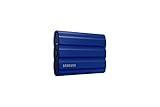
- 3. Samsung T7 Shield 2TB – The Premium Rugged Portable SSD
- 4. Seagate 2TB Portable HDD – The Budget Backup Drive
- 5. WD My Passport 6TB – The Best for Big Photo Archives
- 6. ADATA HD710 Pro 4TB – The Best for Dust, Water and Drops
- 7. Transcend StoreJet 25M3 4TB – The Best for One-Touch Backups
- 8. LaCie Rugged USB-C 2TB – The Best for USB-C and USB-A Together
- 9. LaCie Rugged Mini 4TB – The Best for Mac Time Machine
- 10. SanDisk Professional G-DRIVE ArmorATD 4TB – The Best for an Aluminum Build
- SSD or HDD: Which One Your Photography Actually Needs
- How Much Storage Do Photographers Need? Photo Counts by Capacity
- exFAT, APFS or NTFS: The Format Decision That Ends the Reformatting
- Check Your USB Port Before You Buy
- The Field Workflow: Two Drives, Verified Card Offloads
- 3-2-1 Backup and Why RAID Is Not One
- Frequently Asked Questions
- What is the best external hard drive?
- How many photos and videos can a 1TB hard drive hold?
- How many pictures will a 500GB external hard drive hold?
- Is SSD or HDD better for photos?
- Which hard drive is best for storing photos?
- What external hard drives do photographers use?
- Is it a good idea to store photos on an external hard drive?
- What is the best external drive for storing photos and editing them?
- Conclusion: Which Photo Backup Drive Should You Buy in 2026?
Top 3 Picks for Best External Hard Drives for Photographers in October

WD Elements 2TB Portable HDD
- 4.7 stars from 165304 reviews
- Up to 6TB in the line
- USB 3.2 Gen 1 plug and play

Best External Hard Drives for Photographers at a Glance (2026)
Every drive below is listed with the speed and durability figures the manufacturer states, so you can scan the whole field before reading a single review. Rated read speeds are what the maker claims under ideal conditions, and real-world figures are usually a little lower depending on your port and cable.
| Product | Specifications | Action |
|---|---|---|
| WD Elements 2TB Portable HDD |
|
Check Latest Price |
| SanDisk Extreme 2TB Portable SSD |
|
Check Latest Price |
| Samsung T7 Shield 2TB |
|
Check Latest Price |
 Seagate 2TB Portable HDD Seagate 2TB Portable HDD |
|
Check Latest Price |
 WD My Passport 6TB WD My Passport 6TB |
|
Check Latest Price |
 ADATA HD710 Pro 4TB ADATA HD710 Pro 4TB |
|
Check Latest Price |
 Transcend StoreJet 25M3 4TB Transcend StoreJet 25M3 4TB |
|
Check Latest Price |
 LaCie Rugged USB-C 2TB LaCie Rugged USB-C 2TB |
|
Check Latest Price |
 LaCie Rugged Mini 4TB LaCie Rugged Mini 4TB |
|
Check Latest Price |
 SanDisk Pro G-DRIVE ArmorATD 4TB SanDisk Pro G-DRIVE ArmorATD 4TB |
|
Check Latest Price |
1. WD Elements 2TB – The Best Overall Photo Backup Drive
- Highest-rated drive in this lineup at 4.7 stars
- Compact enclosure with up to 6TB available
- Plug-and-play with no installation steps
- Quiet and cool during long transfers
- Mechanical speeds sit well below any portable SSD
- Rotating platters make it more shock-sensitive than SSD rivals
- USB-A cable only in this listing
This is the drive we keep reaching for when a client hands over a card with a wedding’s worth of files on it and we need somewhere safe to put them before we even get back to the room. The WD Elements 2TB is a plain mechanical portable drive with no moving marketing story behind it, and that plainness is exactly why it works. It is rated 4.7 stars across 165304 reviews, the highest average and one of the two largest review counts in this whole roundup.
Capacity is the real headline. The Elements line goes up to 6TB, so the 2TB unit is the sensible starting point for a hobbyist library and the larger versions cover a working professional who shoots daily. The enclosure is genuinely small, and reviewers consistently describe it as lightweight enough to forget in a camera bag between trips.
The interface is USB 3.2 Gen 1 at 5Gbps, which is the current baseline for cheap external drives. It will not touch the 1050 MB/s of the SSDs on this list, but for copying files off a card and parking them safely it is more than enough. There is no software to install: you plug it in, drag, and it copies.
What separates it from the bargain-basement drives is longevity. Reviewers talk about drives that have run for years in a drawer, in a laptop bag, in a car glovebox, without drama. In forums, the most common photographer complaint is not speed, it is a drive that died quietly and took the only copy with it. That is exactly the failure mode this drive’s review history argues against.
How much can you actually offload onto it
At roughly 2TB of usable space after formatting, a 2TB Elements holds about 200000 JPEGs at 10MB each, or around 66000 RAW files from a 24MP body at 30MB apiece, or somewhere near 20000 RAW files from a 45MP sensor at 100MB each. Video is the differentiator: a two-hour 4K ProRes clip can eat 100GB on its own, so a shooting-heavy workflow will fill 2TB fast.
The connection also matters more than people expect. The unit includes a USB-A cable, and the USB-C version is a separate listing, so if your laptop only has USB-C ports you will want the newer variant rather than hunting down an adapter mid-trip.
Where it falls short for photography
This is a spinning platter, so it is both slower and more physically fragile than any SSD here. A drop onto gravel is a genuine risk, not a theoretical one, and that is a real consideration for a photographer working in the field. Editing high-bitrate video directly from it is not realistic at these speeds.
A small number of owners also report unit failures after long-term use, and the two-year limited warranty is shorter than several rivals. For an archive drive that gets plugged in twice a year, I would not worry. For the only copy of anything, I would.
2. SanDisk Extreme Portable SSD 2TB – The Best for Editing Straight From the Drive
- Rated 1050 MB/s read and 1000 MB/s write
- IP65 sealing plus 3m drop protection
- Carabiner loop for belt or bag
- Arrives pre-formatted exFAT for Mac and PC
- Very sensitive to the cable you plug into it
- Warms during sustained large transfers
- Highest cost per terabyte here
- No native iPhone support without extra power
If you edit RAW files with the images still living on the external drive, this is the one. A solid-state drive has no platter to spin up, so opening a 45MP file, generating previews, and writing a sidecar XMP all happen at a speed that feels local rather than remote. The SanDisk Extreme is rated at 1050 MB/s read and 1000 MB/s write over USB 3.2 Gen 2.
Benchmark reports in the review data measure it at 984 MB/s read and 991 MB/s write on an M-series Mac, which is close enough to the headline figures that you will feel the difference. That is roughly ten times the throughput of the mechanical drives here, and it is the gap between a workable editing session and a coffee break.
Durability is handled properly for a travel drive. The shell is rubberized and rated IP65 for water and dust with 3-meter drop protection, and the operating range is -20 to 85 degrees Celsius. At 1.76 ounces with a carabiner loop, it is the drive you clip to a backpack strap and forget about.
Two details make it friendlier than most. It comes pre-formatted to exFAT, so it mounts on both macOS and Windows without a reformat step, and it carries 256-bit AES hardware encryption managed through the SanDisk Memory Zone app. That matters if you are handling client galleries on a shared laptop.
What to check before you buy it
The single most repeated caveat in reviews is cable sensitivity. Owners report the drive failing to mount, or ejecting itself mid-copy, when paired with a generic or Apple-supplied cable. A certified high-speed USB-C cable is not an optional extra here; it is part of the product.
Some Mac users also needed a firmware update to stop random auto-ejection when the drive sat idle, so check the current firmware before a trip. And if you are planning to offload from an iPhone rather than a camera, note that iOS power limits mean you will need a powered adapter.
Where it falls short for photography
Cost per terabyte is the highest on this list, and that is a real number for a photographer building a 6TB working library. Two terabytes is enough for a fast scratch and offload drive, not for an archive.
It also warms noticeably during sustained large transfers, which is normal for a compact NVMe drive but worth knowing if you are working in a hot vehicle with the drive on your lap. Our advice is to treat this as a working drive, not an archive, and copy to something slower once you are back at a desk.
3. Samsung T7 Shield 2TB – The Premium Rugged Portable SSD
- IP65 sealing with drop protection to 9.8 feet
- Rated 1050 MB/s read over USB 3.2 Gen 2
- Samsung Magician monitors drive health and firmware
- Works with PC and Mac plus Android and consoles
- Highest cost per capacity in this lineup
- Will not hit full speed without a Gen 2 port
- Not rated for full submersion
- 2TB is a big outlay for a photo archive
The T7 Shield is the SanDisk Extreme’s more conservative sibling, and for a working photographer the difference is the software around it. Samsung Magician reports drive health, runs firmware updates, and handles encryption from one place, which is exactly what you want from the drive that holds the only copy of a shoot you have not backed up yet.
Core numbers are the same class as the Extreme: 1050 MB/s read and 1000 MB/s write over USB 3.2 Gen 2, with PCIe NVMe underneath. It holds a 4.7 average across 16356 reviews, with 85 percent of those being five-star, which is the highest five-star share in this group.
The physical design is the reason to choose it over the other SSDs. IP65 water and dust sealing, drop protection rated to 9.8 feet, and a rubberized grippy exterior that stays controllable with cold hands. At 97 grams and 3.39 by 2.24 inches it is a palm-sized unit that lives in a camera bag without being noticed.
Compatibility is unusually broad for a rugged drive. Reviewers use it with PC, Mac, Android tablets, the Nintendo Switch, and iPhone 15 and 16 models, with the bundled cable recommended for iPhone 15 Pro 4K 60fps recording. Capacities run from 1TB to 4TB in the same body.
What the health monitoring actually gives you
Samsung Magician is the part that changes behaviour rather than just specs. A drive that is about to fail usually tells you first through read errors and slowness, and a tool that surfaces health readings lets you catch that before the copy job dies halfway through. For a photographer who shoots weekends and edits in batches, that warning is worth more than a few hundred extra MB/s.
It also handles the password and encryption setup that protects a client library if the laptop goes missing. Doing that through a single vendor app is simpler than third-party tools.
Where it falls short for photography
Cost is the honest drawback. It carries the highest price per capacity of anything on this list, and two terabytes of SSD storage is a significant outlay compared with the mechanical drives that offer eight times the space for the money.
It also only reaches its rated speed on a host that supports USB 3.2 Gen 2. On an older Gen 1 port it will negotiate a lower rate, which is the single most common reason owners report disappointing results. And IP65 means water and dust resistant, not waterproof, so keep it out of a submerged bag.
4. Seagate 2TB Portable HDD – The Budget Backup Drive
- 273079 reviews at 4.6 stars
- Plenty fast for card offload and backup
- Stays cool through long transfers
- Capacity options from 1TB to 5TB
- Slower and less drop-resistant than any SSD
- All-plastic enclosure feels less premium
- Non-standard cable is not easy to replace
- May need initialization before first use
When the question is simply where to put the offloaded files tonight, the Seagate 2TB portable drive is the answer most photographers land on, and the review numbers explain why. It holds a 4.6 average across 273079 reviews, the single largest review base of any drive here, and 82 percent of those are five-star.
Real-world transfers run around 120 MB/s, which means a full 128GB card copies in roughly 18 minutes and a 2TB drive fills in about four and a half hours of continuous writing. That is not fast, but for a backup you start and walk away from, it is entirely workable.
Two operational details get repeated praise. It connects and is recognised automatically with no software, and the one-time reformat on Mac takes about a minute. The line also runs from 1TB to 5TB, so a 2TB unit is a middle step rather than a ceiling.
Thermals are better than the price suggests. Owners specifically note it runs cool and does not overheat during long transfers, which matters more on a mechanical drive than it sounds, since sustained heat is what pushes platters toward early failure.
Where it fits in a real photographer workflow
Think of this as the second copy in a field pair. A fast SSD holds the current shoot, and a Seagate portable drive behind it holds everything else, so a lost or stolen laptop costs you nothing. Wedding photographers in particular push several terabytes a year through exactly this kind of two-drive arrangement.
At 190 grams and 4.6 by 3.15 by 0.58 inches, it is a normal object in a camera bag, and it draws power over bus power with no separate supply. That is the practical reason mechanical drives still sell for this job despite being slower.
Where it falls short for photography
The all-plastic enclosure is the first thing buyers mention when comparing it to metal-bodied rivals, and the non-standard cable is awkward if you lose it. A small number of examples also arrive needing disk initialization or partitioning before first use.
It is also the least forgiving drive here to drop. A spinning platter at 120 MB/s has a head that must stay on a fixed height, and there is no IP rating protecting it from dust or rain. Keep it in a padded pocket, and never treat it as the only copy.
5. WD My Passport 6TB – The Best for Big Photo Archives
- 6TB in a slim 2.5-inch body
- Ransomware-defence backup software included
- Password protection and hardware encryption
- Ample capacity for a full career archive
- Lowest average rating here at 4.5
- Slow next to any portable SSD
- No IP water or dust rating
- Some owner reports of in-warranty failures
Six terabytes in a body the size of a paperback is the trick this drive pulls off, and for a working photographer with an existing library it solves the problem that matters most: where the archive lives. The listing describes it as the first 6TB 2.5-inch portable hard drive, and the aluminium-and-black slim body is only 7.36 ounces.
Throughput is listed at 110 MB/s read with media speed between 80 and 160 MB/s depending on where the data sits on the platter. That is slower than a fast 7200 rpm-class mechanical drive, but the capacity per unit of desk space is the reason to choose it.
Two software features stand out for a photo workflow. The bundled device management software includes ransomware defence, which matters more than it sounds now that delivery services index straight to a mapped drive, and there is password protection with hardware encryption so a lost drive does not become a lost client library.
The 3-year manufacturer warranty is longer than most of the mechanical drives here, which is a fair signal given how this one is likely to be used: plugged in occasionally, filled up, and set aside again.
How six terabytes changes your workflow
Run the numbers and six terabytes covers a lot. At 100MB per RAW file from a 45MP body it holds about 60000 frames. At 30MB for 24MP RAW, about 200000. For JPEG delivery copies at 10MB, roughly 600000 images. A photographer shooting 500 RAW files a month can park nearly four years of work on a single unit.
Because it stays in one place, it also becomes the natural target for a second copy rather than a working drive. Copy to the SSD, edit there, and mirror the finished shoot back here once a week.
Where it falls short for photography
This is the weakest-rated drive in the lineup at 4.5 stars, with 8 percent one-star reviews, and unit failure reports appear more often here than for the Seagate, WD Elements or LaCie alternatives. The slim 2.5-inch format has less metal than a full-size desktop drive, and the model name has a history that makes cautious buyers nervous after past external My Passport failure waves.
There is also no IP rating despite the rugged styling, so it is a desk drive that occasionally travels, not a bag drive. If the photo library is irreplaceable, buy two.
6. ADATA HD710 Pro 4TB – The Best for Dust, Water and Drops
ADATA HD710 Pro, External Hard Drive, Black, 4TB
- Strongest ingress and shock protection in this roundup
- Triple-layered ruggedized construction
- Metal body that tolerates knocks
- Works on Windows and Mac plus Linux
- Slowest read speed here at about 90 MB/s
- Short included cable of roughly 30 cm
- Heavier at 14 ounces
- Connector can be awkward to grip
Every other drive here has a caveat about water or drops. This one has the answer in writing. The ADATA HD710 Pro 4TB is rated IP68 for waterproofing and dustproofing, and it carries MIL-STD-810G 516.6 shock resistance, which is a military test method for how far a unit survives being dropped onto a hard surface.
For a photographer working in sand, surf, snow or on a motorbike, that rating is worth more than any throughput figure. A 4.6 average across 17649 reviews with 81 percent five-star suggests owners mostly bought it for exactly that reason and were not disappointed.
The build matches the numbers. It is a triple-layered ruggedized body in metal rather than plastic, with cable management built into the shell and a socket dust cover. It is compatible with PC, Mac and Linux, which is broader than most of the drives on this list.
Throughput is the compromise, at a listed 90 MB/s. Read-heavy owners report moving 606GB in a few minutes of sustained transfer, and for a backup drive that gets written to and left alone, the number matters far less than the enclosure surviving the trip.
What IP68 actually protects against
IP ratings have two numbers. The first is dust: 6 means the enclosure is completely dust-tight, with no ingress at all. The second is water, and unlike the 5 in IP65, an 8 means protection against continuous immersion in water deeper than one metre for a duration the manufacturer specifies.
That is a real distinction and it is why we rank this drive first for harsh conditions. The IP65 drives on this list, such as the SanDisk Extreme and Samsung T7 Shield, are rated against water jets from any direction, not submersion. Neither rating means you should deliberately dunk a drive, but the gap between them matters if a bag goes into a river.
Where it falls short for photography
It is the heaviest portable drive here at 14 ounces and the slowest at roughly 90 MB/s, so it is not an editing drive. The included cable is short, around 30 cm, which several buyers replaced to reach a desktop tower, and the proprietary-style connector is harder to grip than a standard USB plug.
It is also not ideal for people who need to swap between Mac and Windows without friction, since the general advice for this enclosure family is to format it for the system you use most. Treat it as a rugged archive or field backup, not a live catalog drive.
7. Transcend StoreJet 25M3 4TB – The Best for One-Touch Backups
Transcend 4TB StoreJet 25M3 Rugged Portable HDD, One Touch Backup
- Hardware button launches a backup with one hand
- Three-stage shock protection system
- 4TB in a 2.5-inch body
- Transcend Elite plus Recover recovery software included
- Lowest listed read speed here at 60 MB/s
- This variant uses a Micro-B to Type-A cable
- Plastic and rubber shell feels less premium
- One-touch button leans on desktop software
There is a specific moment in a photographer’s workflow where a hardware button earns its keep: you have just come in from a shoot, you are tired, and the backup needs to happen now rather than after you have tidied up. The Transcend StoreJet 25M3 has a physical one-touch button that launches a scheduled backup on a Windows machine with a single press.
It holds a 4.6 average across 13412 reviews. At four terabytes it sits in the useful middle of the capacity range, big enough for several working years of RAW files, small enough to move between a studio and a location kit.
The enclosure is a rugged portable mechanical drive with a three-stage shock protection system, and it uses USB 3.1 Gen 1 with UASP for faster transfers over the older interface. Iron grey, 2.5-inch form factor, 12 ounces.
Software support is unusually good for a drive at this level. Transcend Elite handles scheduling and device management, and the bundled Recover utility is a data recovery tool, which is a genuine saving when a card corrupts rather than a drive dying. The three-year limited warranty is among the longest here.
One-touch versus software, honestly
The button is not magic and it is worth being clear about the limits. It depends on the Transcend desktop software being installed and configured, and it is less useful in a Mac-only workflow, where the backup scheduling happens in the operating system instead. What it does buy you is a physical, muscle-memory action that is hard to skip at the end of a long day.
For a Mac photographer, the equivalent is a one-click Time Machine target, which is the argument for the LaCie Rugged Mini later in this list. For a Windows photographer who wants the button, this is the clearest option.
Where it falls short for photography
Speed is the issue. At a listed 60 MB/s, this is the slowest drive here, and a 2TB of RAW files takes the best part of ten hours to copy across. That is fine for an overnight backup, and it is not fine for anything else.
This specific variant uses a Micro-B to Type-A cable, so a USB-C laptop needs a different version or an adapter. The plastic and rubber shell feels less refined next to the aluminium drives, and the one-touch feature is close to useless if you shoot on Mac.
8. LaCie Rugged USB-C 2TB – The Best for USB-C and USB-A Together
- USB-C and USB 3.0 in one unit
- Sealed rubberized build rated for drops and rain
- Bridges to older USB-A laptops
- Works with both Mac and PC
- Only a 2-year limited warranty
- 130 MB/s is too slow for high-bitrate video editing
- Bundled cable is proprietary
- Some Mac users had to reformat on arrival
Most portable drives make you choose a connector. This one does not. The LaCie Rugged USB-C 2TB offers a USB-C port and bridges to USB-A, so it fits a current MacBook, a Windows ultrabook and a five-year-old laptop from the same bag without an adapter in your pocket.
That flexibility is the reason to pick it over a faster SSD, particularly for a photographer who borrows machines or works across a Mac and a Windows machine regularly. It holds 4.7 stars across 2122 reviews, with 85 percent five-star, which is the highest five-star share of any mechanical drive here.
The physical design is properly rugged for a mechanical drive. The listing describes it as drop, shock, dust and rain resistant, and the enclosure combines aluminium with a rubber outer shell, so it survives the kind of handling that ends cheaper drives. The colour is the recognisable LaCie orange.
Speed is listed at 130 MB/s from a 5400 rpm mechanism, which is respectable for this class and a little quicker than most of the portable mechanical drives here. Two terabytes is a reasonable working capacity, and a month of Adobe Creative Cloud comes bundled.
When dual connectivity actually saves you
The practical case is a working photographer with more than one machine. If your editing laptop is USB-C only and the machine you offload on is USB-A, a dual-interface drive removes a failure point and a dongle. It also means the drive stays useful when you upgrade hardware, which is a rare and underrated property.
It is also a reasonable pick for a photographer who shuttles between a studio Mac and a Windows editing machine and wants one drive that both read. Just remember that reading both ways is not the same as writing both ways, so pick a file system deliberately.
Where it falls short for photography
The two-year limited warranty is short, and it is the mechanical speed ceiling that rules it out for video. At 130 MB/s it cannot serve as a scratch disk for high-bitrate 4K or 6K editing, only as a place to store and move files.
The bundled cable is proprietary rather than a standard USB-C lead, and some Mac users had to reformat before the drive behaved stably. If you plan to rely on this as your primary daily drive, budget for a one-time format on arrival.
9. LaCie Rugged Mini 4TB – The Best for Mac Time Machine
- Works with Time Machine after a reformat
- Bus-powered over a single USB 3.0 cable
- Silent and cool during sustained transfers
- Includes a 2-year Data Rescue Service plan
- Only a 2-year limited warranty
- No USB-C adapter for the USB-A cable
- 8.3 ms average latency suits backup not editing
- exFAT caused random disconnects for some Mac users
For a Mac-only photographer, the LaCie Rugged Mini 4TB is the least friction option on this list. Once reformatted to APFS or Mac OS Journaled it becomes a Time Machine target, and that turns backup from a decision you make into a background process the machine handles on its own schedule.
It holds a 4.6 average across 5718 reviews with 82 percent five-star, and the Mac-centric review base is its clearest strength. Owners describe painless Time Machine setup and near-rated 130 MB/s throughput, with one reporting 260GB handled in an hour.
It is bus-powered over a single USB 3.0 cable with no external power supply, which is a meaningful advantage over desktop enclosures. The rubber cushion exterior is rated shock, dust and rain resistant with drop protection, so it can live in a bag between uses.
The bundled Data Rescue Service plan is the sleeper feature. Two years of professional recovery for lost or corrupted files costs far less than a decade of client work, and it is the kind of insurance that is easy to overlook when comparing spec sheets.
The reformat advice nobody puts on the box
The most repeated piece of advice in the reviews is to reformat on arrival. Owners who kept the drive on exFAT reported Disk Utility hangs and random disconnects on macOS, and once reformatted to a native Mac file system those problems disappear.
That is worth knowing because it cuts against the general advice to format external drives to exFAT for cross-platform flexibility. If you are Mac-only, a native format is the better call. If you move between systems, the SSD options on this list arrive pre-formatted to exFAT and avoid the whole question.
Where it falls short for photography
Two years is the shortest warranty in this roundup, and for an archive drive you expect to keep for a decade that is a real gap. The 8.3 ms average latency is inherent to a 5400 rpm platter and makes it a poor choice for an editing scratch disk, however good the sustained throughput looks.
It is also the heaviest unit here at 330 grams, and there is no USB-C adapter included for the USB-A cable. Weight matters more than the spec sheet suggests when you are carrying a drive, a tripod and a body up a mountain path.
10. SanDisk Professional G-DRIVE ArmorATD 4TB – The Best for an Aluminum Build
- Machined anodized aluminum with an easy-grip bumper
- Fastest rated read speed among the portable HDDs
- USB-C with both USB-C and USB-A cables included
- Ready to use on macOS out of the box
- Lowest average rating in this roundup at 4.4
- Highest cost per terabyte among the HDDs
- Windows users must reformat before use
- Heaviest and deepest enclosure here
This is the drive to buy when the enclosure itself is the point. The G-DRIVE ArmorATD is a machined anodized aluminum body with an easy-grip bumper, built for creative professionals moving large media files between locations. It is the only portable drive here that feels like studio equipment rather than a consumer accessory.
Speed is its other argument. Media speed is listed at 140 MB/s, the highest rated read figure among the mechanical drives on this list, over a USB-C 5Gbps interface. At four terabytes it also holds a decent working archive without a separate drive.
Both cables are included, a USB-C lead and a USB-C to USB-A lead, so the connector problem that trips up several rivals simply does not exist here. It runs on USB 3.1 and USB-C at 5Gbps and works with desktops and laptops.
The warranty is three years, and the unit is manufactured by Western Digital Technologies for the SanDisk Professional brand, which is the same factory behind several of the more reliable drives in this roundup.
Buy it for the build, not the rating
Honesty about the reviews matters here. This is the lowest-rated drive in the roundup at 4.4 stars from 2656 reviews, with 76 percent five-star and 9 percent one-star. The people who buy it are paying for an aluminium chassis, a bumper and a professional brand, and the reviews reflect that split clearly.
If that construction appeals and the fastest mechanical read speed matters to your workflow, it delivers. If you want the lowest cost per terabyte, a mechanical drive without the machined shell gives you more capacity for the money. Both are defensible choices; they are just different purchases.
Where it falls short for photography
Cost per terabyte is the highest among the mechanical drives here, and the rating is the lowest, which is a hard combination to justify on value alone. It is also the heaviest and deepest enclosure in the group at just over 12 ounces and 1.18 inches thick.
It arrives formatted to HFS+ for Mac, so Windows users must reformat before use. That is a small step, but it is the kind of friction that turns people toward the cheaper dual-interface alternatives earlier in this list.
SSD or HDD: Which One Your Photography Actually Needs
The short answer: an SSD if you edit from the drive, an HDD if you store on it. Everything else follows from that. A solid-state drive has no moving parts, so it is faster, silent, immune to shock while running and small enough to fit in a pocket. A mechanical hard disk gives you several times the capacity for the same money, costs nothing to power, and is the only sensible option once an archive passes a few terabytes.
For a photographer, the dividing line is usually job role. If you are offloading cards in the field, editing RAW files straight from the drive, or shooting high-bitrate video on location, you need SSD speed. If you are building a master library, a client archive or a ten-year backup, you need HDD capacity and you are better off spending the difference on a second copy rather than on speed.
Most working photographers end up with both, and that is not indecision. It is a fast working drive plus a large archive drive, with the third copy off-site. If you are still narrowing the field, our guide to the best rugged external SSDs for photographers covers the portable SSD side in more depth, and the WD external drive guide goes deeper on the mechanical side.
One myth worth clearing up: SSDs do not wear out from photo work. Write endurance is measured in terabytes written, and a photographer copying a few terabytes of images a year will take decades to approach any consumer SSD’s endurance rating. The old advice to buy a hard drive because SSDs will degrade has not been true for years.
How Much Storage Do Photographers Need? Photo Counts by Capacity
Almost nobody answers this with numbers, so here they are. Two of the most common questions in this niche are how many photos fit on a 1TB drive and how many pictures fit on a 500GB drive, and the answer depends entirely on file size. A 10MB JPEG, a 30MB 24MP RAW file and a 100MB 45MP RAW file are the three numbers that matter.
A 1TB drive holds roughly 100000 JPEGs at 10MB, about 33000 RAW files at 30MB, or around 10000 RAW files at 100MB. Halve everything for 500GB, and double it for 2TB. A 4TB drive holds about 400000 JPEGs, 133000 24MP RAW files or 40000 high-resolution RAW files.
Video changes the arithmetic completely. Depending on codec and bitrate, an hour of 4K can sit anywhere between 60GB and 500GB, and an hour of 6K or 8K footage from a cinema camera can exceed 1TB. If you shoot video regularly, buy capacity in multiples of the shoot rather than in multiples of the year.
As a rough guide, a hobbyist shooting weekends needs 1TB to 2TB. A professional delivering client galleries every week should treat 4TB as the floor and 6TB to 8TB as comfortable. Videographers and high-volume shooters need 10TB or more, or a RAID array. Wedding photographers, who typically push several terabytes a year through their workflow, sit firmly in that last group.
Buy a second unit rather than one huge one where you can. Several smaller drives separate risk, and a failure takes down one project folder rather than an entire career archive.
exFAT, APFS or NTFS: The Format Decision That Ends the Reformatting
Reformatting every time you change machines is the most repeated complaint in photography forums, and it is entirely avoidable. Pick the file system to match how you actually work rather than what the drive shipped with.
Use exFAT if you move between Mac and Windows. It is the only file system both operating systems read and write natively, which is why the SanDisk Extreme and most other portable SSDs arrive formatted to it. Its weakness is that macOS does not journal it, so pulling the cable during a write can corrupt the volume.
Use APFS or Mac OS Journaled if you are Mac-only. APFS is the current default, it is journalled so it survives interruptions, and Time Machine works with it. The LaCie Rugged Mini reviews are full of advice to reformat on arrival for exactly this reason, because some owners hit random disconnects leaving the drive on exFAT.
Use NTFS if you are Windows-only. It is journalled, universally supported, and the default choice for a Windows-only workflow. The cost is that macOS can read an NTFS volume but not write to it, so a drive formatted this way is useless on a Mac without reformatting.
Whichever you choose, format once on arrival, eject properly every time, and check the free space before a big offload. A drive that drops to under 10 percent free can slow down badly on a mechanical model.
Check Your USB Port Before You Buy
A surprising number of disappointing reviews on this list come down to the port, not the drive. The two SSDs here are rated at 1050 MB/s over USB 3.2 Gen 2, and on a host that only supports Gen 1 they will negotiate a much lower rate. Check what your computer actually has before you decide the drive is slow.
USB 3.2 Gen 1 runs at 5Gbps and is the baseline for everything mechanical on this list. Real-world ceiling is around 400 to 500 MB/s, which never matters because the platters cannot get near it. USB 3.2 Gen 2 runs at 10Gbps and supports the 1050 MB/s SSDs here, and that is the one worth checking your laptop supports before buying an SSD.
USB 3.2 Gen 2×2 and USB4 are faster still, but the ports that use them are uncommon on laptops, so do not buy on the headline number alone. Thunderbolt 3 and 4 appear on some professional enclosures and are worth the cost if you already have the port, since they remove the storage bottleneck entirely.
One more practical note: a USB-C port on a drive does not mean USB-C on your computer. Several drives here include a USB-A cable or a Micro-B to Type-A lead, so check the connector on your machine and buy the matching variant rather than an adapter.
The Field Workflow: Two Drives, Verified Card Offloads
The most common professional pattern is two drives: one fast SSD for the current shoot, one larger drive for everything else. Both come out of the bag, both get written to, and neither is trusted alone. Here is the sequence we use.
First, offload the card to the SSD as soon as you are somewhere safe. Do not format the card until you have compared file counts and opened a handful of frames. Reviewers across photography forums describe the same rule: the card is not free until a second copy exists somewhere that is not your hand.
Second, verify before you clear anything. Compare the file count on the card with the file count on the drive, spot-check that images open and that RAW files are not zero-byte, and only then reformat the card. Running a checksum tool adds a few minutes and removes the single most common way a good shoot is lost.
Third, copy the same shoot to the second drive, ideally a different physical device kept in a different pocket. Two copies of the same card in the same bag protect against a lost card, not against a lost bag, a flood, or a stolen vehicle.
Fourth, at the studio, mirror the shoot to an archive drive. This is the copy that survives a laptop replacement, and it is the one nobody ever remembers to make because nothing has gone wrong yet.
Fifth, if you work across Mac and Windows machines, format the working SSD to exFAT so it moves without a reformat step. That single choice removes the complaint that appears in almost every photography storage thread.
3-2-1 Backup and Why RAID Is Not One
The 3-2-1 rule is simple: three copies of your data, on two different media types, with one copy stored off-site. For a photographer that usually means a working SSD, an archive HDD, and a copy somewhere that is not the same building.
RAID does not satisfy that rule, and the confusion causes real damage. A RAID array uses several drives to give you speed or uptime, and it protects against a single drive failing. It does not protect against ransomware that encrypts everything it can reach, a fire, a flood, a theft, or your own mistake when you delete a folder and the array mirrors the deletion instantly to every member.
All the drives on this list will eventually fail. That is not pessimism, it is the design of spinning disks and flash storage. The question is never which drive never fails, it is whether you noticed early enough to still have a second copy. Tools like the bundled recovery utilities on the Transcend and the Data Rescue plan on the LaCie exist for the day something goes wrong, but they are a last resort, not a plan.
Cloud storage is a legitimate third copy, though photographers consistently report that bulk upload speeds make it impractical for primary storage. Use it for delivery and for the deepest archive, not for the drive you are editing from on a Tuesday. And if you want a deeper primer on storage planning, our external backup drive guide covers capacity and drive selection in a different context.
Frequently Asked Questions
What is the best external hard drive?
For most photographers the WD Elements 2TB is the best overall choice, holding a 4.7 average across 165304 reviews with capacity options up to 6TB. If you edit RAW files directly from the drive, pick a portable SSD such as the SanDisk Extreme or Samsung T7 Shield, both rated at 1050 MB/s. If you need the most rugged unit, the ADATA HD710 Pro 4TB is rated IP68 and MIL-STD-810G.
How many photos and videos can a 1TB hard drive hold?
A 1TB drive holds about 100000 JPEGs at 10MB each, roughly 33000 RAW files from a 24MP body at 30MB each, or around 10000 RAW files from a 45MP sensor at 100MB each. Video depends far more on bitrate: an hour of 4K footage can range from 60GB to several hundred gigabytes, and 8K footage can exceed 1TB per hour.
How many pictures will a 500GB external hard drive hold?
A 500GB drive holds roughly 50000 JPEGs at 10MB each, about 16000 RAW files at 30MB each, or approximately 5000 RAW files at 100MB each. A useful comparison point is the WD Elements, where 2TB of the same drive quadruples every one of those numbers.
Is SSD or HDD better for photos?
An SSD is better if you edit RAW files or high-bitrate video directly from the drive, because the SanDisk Extreme and Samsung T7 Shield here reach a rated 1050 MB/s against roughly 60 to 140 MB/s for the mechanical drives. An HDD is better for storage, because the WD My Passport 6TB and WD Elements hold several times the capacity at a much lower cost per terabyte. Most working photographers use one of each.
Which hard drive is best for storing photos?
For long-term storage, capacity and reliability matter more than speed, which points to the WD Elements and the WD My Passport 6TB. The My Passport packs 6TB into a 2.5-inch body and includes hardware encryption with a three-year warranty. The Elements has the highest average rating in this roundup at 4.7 stars across 165304 reviews. Neither is a backup on its own, so keep a second copy.
What external hard drives do photographers use?
In photography forums the most common professional pattern is two drives carried together: a fast portable SSD for the current shoot and a larger mechanical drive for the archive behind it. Community favourites include the Samsung T5 and T7 family, LaCie Rugged models, the WD Elements line and Seagate portable drives. A popular enthusiast approach is an enclosure with a known-good NVMe drive installed inside it.
Is it a good idea to store photos on an external hard drive?
Yes, provided the drive is one copy among at least three. External drives are bus-powered, portable and removable, which makes them ideal for offloading cards in the field and for parking a multi-terabyte archive. Every drive eventually fails, so follow the 3-2-1 rule: three copies, two different media types, one stored off-site. A single external drive on its own is not a backup.
What is the best external drive for storing photos and editing them?
The SanDisk Extreme Portable SSD 2TB is the strongest all-round editing choice, rated at 1050 MB/s read and 1000 MB/s write with IP65 sealing and 3-meter drop protection. It arrives pre-formatted to exFAT so it works on both Mac and Windows, and it carries 256-bit AES hardware encryption. The Samsung T7 Shield matches the speed and adds a deeper drop rating plus health monitoring software.
Conclusion: Which Photo Backup Drive Should You Buy in 2026?
The best external hard drives for photographers split cleanly by job. For the safest everyday backup at the highest rating in this roundup, take the WD Elements 2TB. For editing RAW files or video straight from the drive, take the SanDisk Extreme 2TB, with the Samsung T7 Shield as the pick if you want health monitoring and a deeper drop rating. For big archives, the WD My Passport 6TB holds the most in the smallest body, and the ADATA HD710 Pro 4TB survives the worst conditions any drive here will face.
Whichever you choose, buy two. Format the working drive to exFAT if you move between Mac and Windows, verify every card offload before you format the card, and keep one copy away from the building your studio sits in. If you are still short on kit, our guide to studio strobes for pro photographers covers the other half of a working setup.