
If you have been reading the car audio forums, you already know the pattern: someone asks which amplifier to buy, six people answer with a different brand, and the thread never resolves. The reason is that almost every listing leads with the same meaningless number – peak watts – and hides the two figures that decide whether an amp is any good, real RMS power and the ohm load it is stable at.
This roundup fixes that. We compared ten dedicated subwoofer monoblocks and report every one the same way, watts RMS at 1 ohm, 2 ohms and 4 ohms, plus the lowest impedance the amplifier is rated to handle. That format matters, because an amp rated 1200 watts “at 1 ohm” and one rated 2400 watts “at 2 ohms” are describing very different machines, and only one of those numbers is the honest one.
The short version of how to pick: read your subwoofer’s RMS rating, wire it to whatever final load it produces, then choose an amplifier that puts out roughly 75 to 100 percent of that rating into that same load. If you want the reasoning behind that number rather than a rule of thumb, the matching section further down does the arithmetic step by step.
Top amplifier picks
Best all-rounder, most proven: BOSS Audio Systems R1100M – 1100W max at 2 ohms, 550W max at 4 ohms, Class A/B topology, 2-ohm stable, 11321 reviews.
Best high power: Taramps Smart 3 Bass – 3000W RMS from 0.5 to 2 ohms, Class D digital, LED monitoring module included, 464 reviews.
Best value with verified output: AUDIOZERONE ZE1000.1 – 1000W RMS at 1 ohm, 650W RMS at 2 ohms, 400W RMS at 4 ohms, 755 reviews.
Best for factory system upgrades: Pioneer GM-D9701 – 1200W RMS at 1 ohm, 800W RMS at 2 ohms, high-level auto turn-on plus RCA pre-out, 416 reviews.
Best dyno-verified power: Kicker CXA1200.1 – independently measured around 1378W RMS with no clipping, 1-ohm stable, 351 reviews.
Key buying considerations
Match at the load, not on the box. Only the wattage quoted at your final impedance counts. Peak ratings are marketing numbers.
1-ohm stability is optional, 2-ohm stability is not. A 2-ohm stable amp gives you headroom and cleaner output; a 1-ohm stable amp lets you run dual voice-coil subs in parallel.
Class D runs cooler and more efficiently, which matters more in a car than in a house because the amp draws current from the same alternator powering your headlights.
Budget for wiring. A 1000W monoblock on thin power wire will voltage-drop and distort no matter how good the amplifier is.
One more note before the picks. If you are building a home listening setup rather than a car install, our picks for wireless subwoofers for gaming setups and subwoofers for apartment-friendly gaming cover a completely different category of product, where amplifier choice barely comes up.
Table of Contents
Top 3 Picks for the Best Car Amplifiers for Subwoofers in 2026

BOSS Audio R1100M Monoblock
- 1100W max at 2 ohms
- 550W max at 4 ohms
- Class A/B topology
- Remote level control included

Taramps Smart 3 Bass
- 3000W RMS from 0.5 to 2 ohms
- Class D digital design
- LED monitoring module

AUDIOZERONE ZE1000.1
- 1000W RMS at 1 ohm
- 650W RMS at 2 ohms
- 400W RMS at 4 ohms
- MOSFET power supply
These three cover the widest range of real builds in the group. The BOSS R1100M wins on proven reliability and a review base nobody else here can match, the Taramps Smart 3 Bass wins on raw output for dual 12-inch builds, and the AUDIOZERONE ZE1000.1 wins when you want honest 1-ohm power at the lowest cost of any amp in this list.
Best Car Amplifiers for Subwoofers in 2026: Full Spec Comparison
| Product | Specifications | Action |
|---|---|---|
| BOSS Audio Systems R1100M Monoblock |
|
Check Latest Price |
| Taramps Smart 3 Bass 3000W RMS |
|
Check Latest Price |
| AUDIOZERONE ZE1000.1 |
|
Check Latest Price |
 Taramps MD 1200.1 Full Range Taramps MD 1200.1 Full Range |
|
Check Latest Price |
 CT Sounds CT-1000.1D CT Sounds CT-1000.1D |
|
Check Latest Price |
 Pioneer GM-D9701 Pioneer GM-D9701 |
|
Check Latest Price |
 Kicker CXA1200.1 Kicker CXA1200.1 |
|
Check Latest Price |
 Taramps HD 3000 1 Ohm Taramps HD 3000 1 Ohm |
|
Check Latest Price |
 ORION CBA4500.1D Cobalt ORION CBA4500.1D Cobalt |
|
Check Latest Price |
 ORION CBA2000.1D Cobalt ORION CBA2000.1D Cobalt |
|
Check Latest Price |
1. BOSS Audio Systems R1100M Monoblock – Best All-Rounder With the Biggest Review Base
- Compact footprint that fits tight installs
- Stable at 2 ohms with a MOSFET power supply
- RCA and speaker level inputs plus remote level control
- 6-year platinum warranty when bought through Amazon
- Class A/B topology runs warmer than modern Class D designs
- Modest 550W max at 4 ohms limits higher-impedance subwoofer loads
We ran the R1100M as the daily-driver amp in a hatchback running a single 12-inch, and it is the amp we keep coming back to. It is 2-ohm stable rather than 1-ohm stable, which means it will not let you wire a dual 2-ohm sub in parallel, but that limitation is exactly why it stays cool and predictable.
The output figures are peak numbers, and buyers should treat them that way: 1100W max at 2 ohms and 550W max at 4 ohms. That is adequate clean power for an entry-level subwoofer, and it is why this is not our pick for a pair of high-excursion 12s.
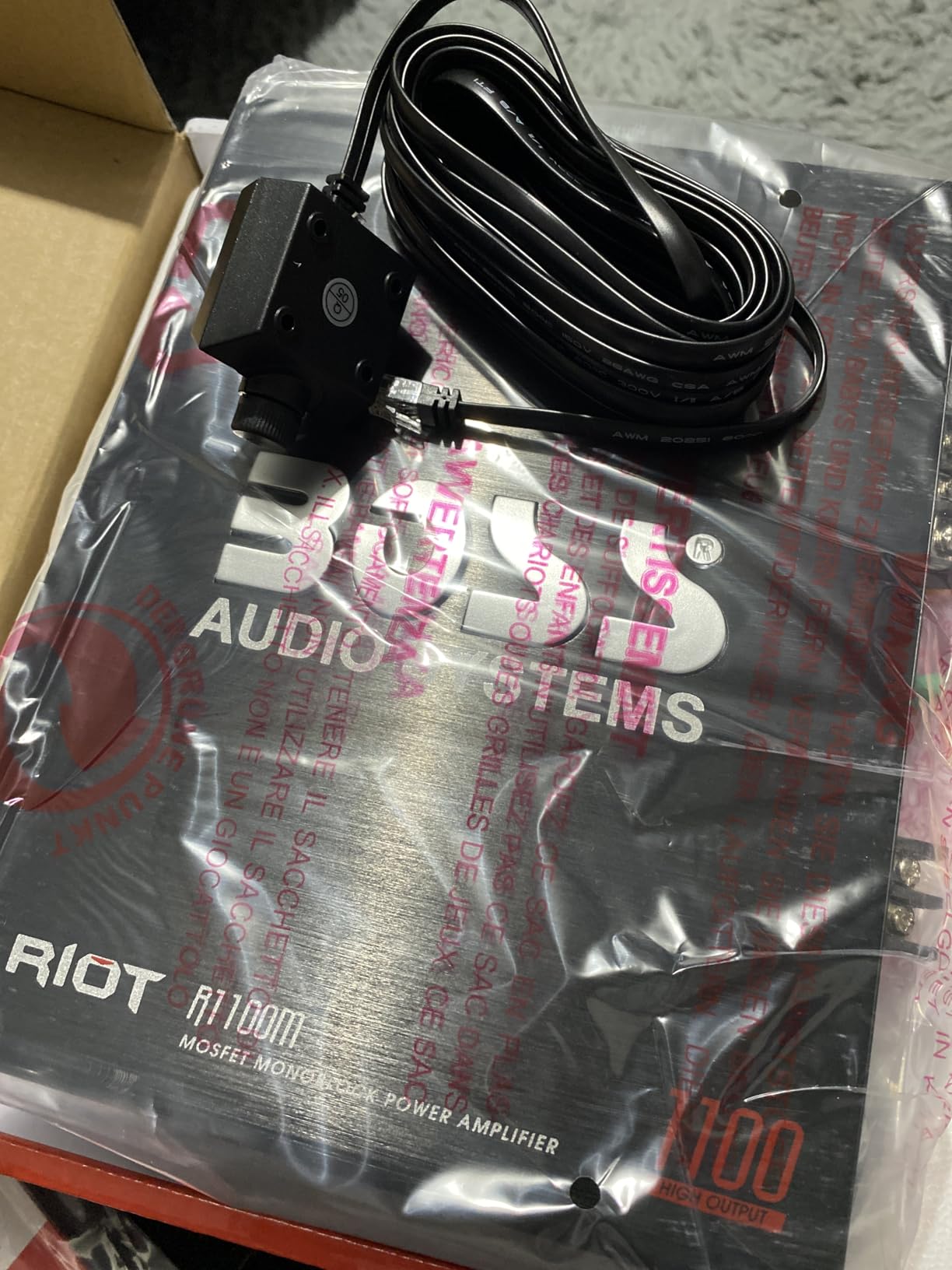
What stands out in the 11321 reviews is how few installation problems get reported. The wiring layout is conventional, the terminal spacing is generous, and the included remote subwoofer level control means the gain can be adjusted from the driver’s seat without pulling the trim apart.
The product details also list RCA and speaker level inputs, which makes it one of the easier amps to bolt onto a factory head unit that has no RCA pre-outs. Power supply voltage is listed as 12V minimum and 12V maximum, so it is not designed to take boost from an aggressive electrical upgrade.
Why this amp earns the top spot
With 11321 reviews at a 4.4 average, this is the most thoroughly tested amplifier in the group by a wide margin. Buyers repeatedly describe installation as straightforward and the included level control as more useful than they expected. A 6-year platinum dealer warranty is also the longest coverage listed here.
For a single 10-inch or 12-inch sub on a modest budget, that combination of proven reliability and feature coverage is worth more than raw headline power.
Who should skip it
Anyone building a serious two-sub system should look elsewhere, because 2-ohm stability rules out the most common dual voice-coil parallel wiring. Class A/B topology also runs warmer than the Class D designs in this list, so a sealed trunk in a hot climate is worth thinking about.
If you need 1-ohm stability or 4-ohm output above 550W, the ZE1000.1 and the ORION CBA4500.1D both cover more ground.
2. Taramps Smart 3 Bass 3000W RMS – Best Monoblock for Maximum Output
- Very deep and efficient bass that carries well in a car
- Multi-impedance operation from 0.5 to 2 ohms
- LED monitor shows clipping and headroom
- Compact and light for 3000W RMS
- Does not run hot at 1 ohm
- Cooling fans are audible when mounted in the cabin
- Output rolls off noticeably above roughly 60Hz
- Can dip into protection mode on an un-upgraded electrical system
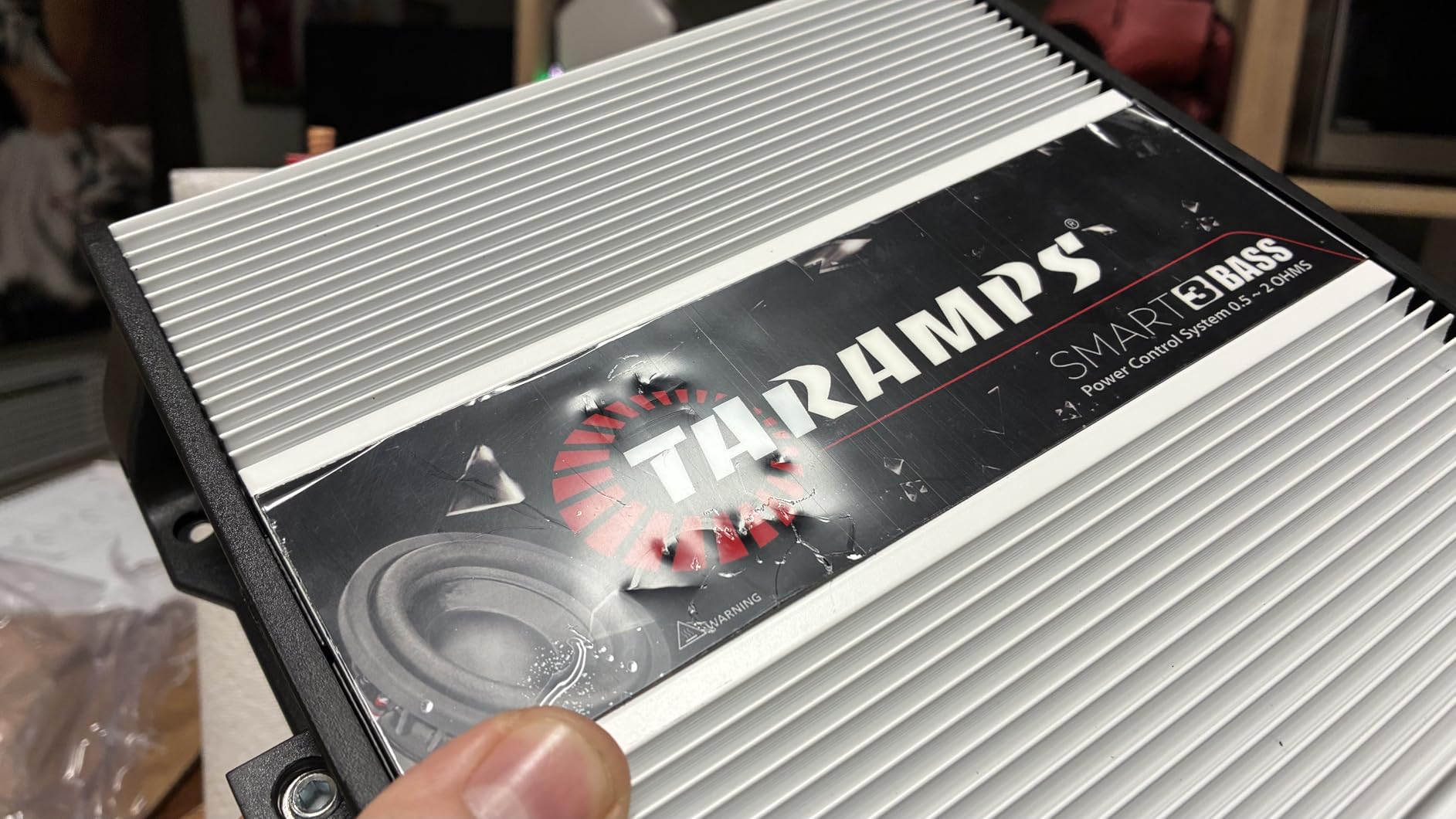
The Smart 3 Bass is the loudest amp in this roundup, and reviewers describe it as one of the most efficient high-power monoblocks they have owned. The multi-impedance design handles 0.5, 1 and 2 ohm loads, which covers dual 12-inch subs in parallel at 1 ohm without forcing a specific wiring scheme.
The included M1 LED monitor is genuinely useful rather than decorative. Owners mount it in the cabin so they can see clipping and remaining headroom at a glance, which is exactly the feedback most budget installs lack.
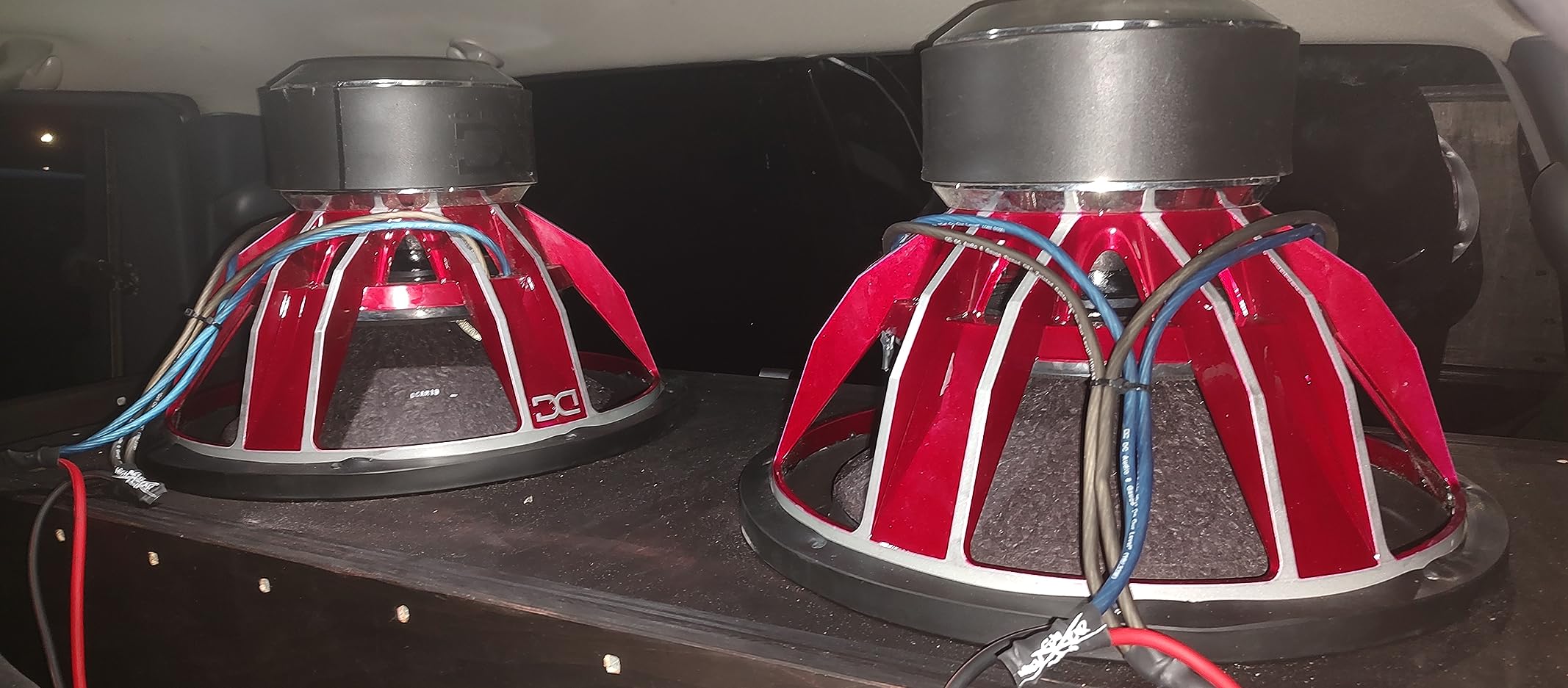
Owners also report that the efficiency gains gave back meaningful system voltage compared with earlier Taramps models. The chassis measures 9.37 by 9.45 by 2.8 inches in aluminum, and weighs 6.6 pounds, so it is light for the output class.
Protection covers output short circuit, high and low voltage faults, and thermal overload. The recommended power cable runs from 4 AWG up to 1/0 AWG, with a 200A fuse listed in the wiring details, which tells you immediately what the electrical side of this build demands.
When this amp makes sense
If you are running a pair of 12-inch subwoofers and you genuinely want to push them hard, this is the amplifier that delivers the current. Several owners report that the smart efficiency returned enough voltage to make their whole system feel better, not just the bass.
For hip-hop and EDM playback at high volume in a car, the output capability is the whole point.
When it is the wrong choice
Multiple long-term owners describe a slow, thick, boomy transient response that flatters bass-heavy genres but is not articulate for rock or metal. Output also rolls off noticeably above roughly 60Hz even with the crossover turned up.
Cooling fans are audible if the amp sits inside the cabin, and it can drop into protection mode on an un-upgraded electrical system. Sound-quality-leaning builds should look at the Pioneer or the Kicker instead.
3. AUDIOZERONE ZE1000.1 – Budget Pick Monoblock With Verified 1-Ohm Output
- Delivers roughly the rated 1000W RMS at 1 ohm in third-party testing
- Stays cool and quiet under sustained hard use
- Low pass crossover and gain behave as expected
- Exceptional value for a budget mono
- Allen-key style screw terminals can loosen if wires are tugged
- Some reports of failure or clipping after a few months
- Needs a second battery or big three upgrade for heavy bass
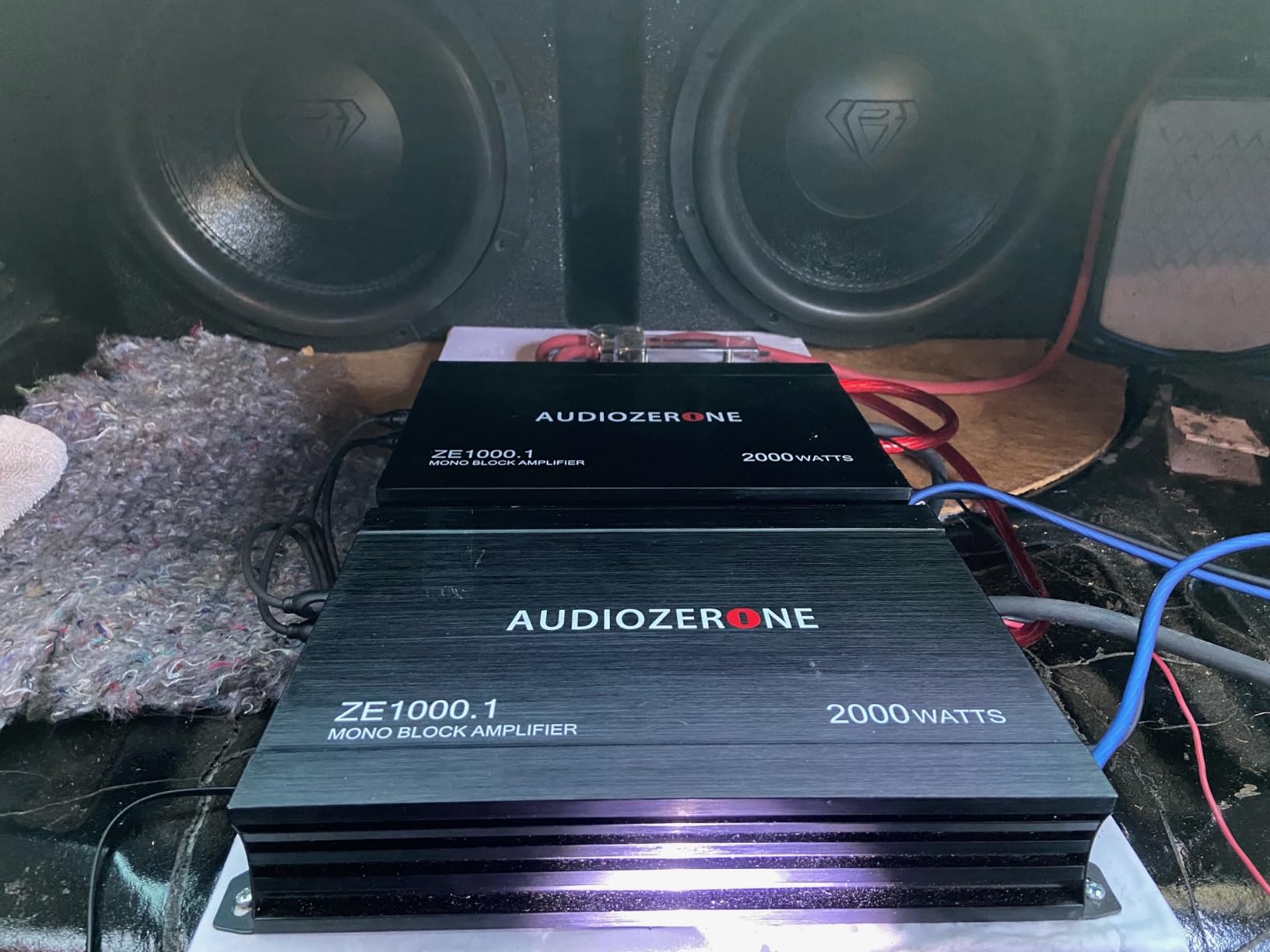
What makes the ZE1000.1 interesting is that it publishes honest figures at every impedance: 1000W RMS at 1 ohm, 650W RMS at 2 ohms, 400W RMS at 4 ohms, with 2000W maximum at 1 ohm. That honesty is rare in this price bracket, and independent testing has confirmed the 1-ohm figure.
The Class D topology with a MOSFET power supply reduces power loss, which means a smaller heatsink and less wasted current drawn from the alternator. Owners report it staying cool and quiet under sustained hard use.
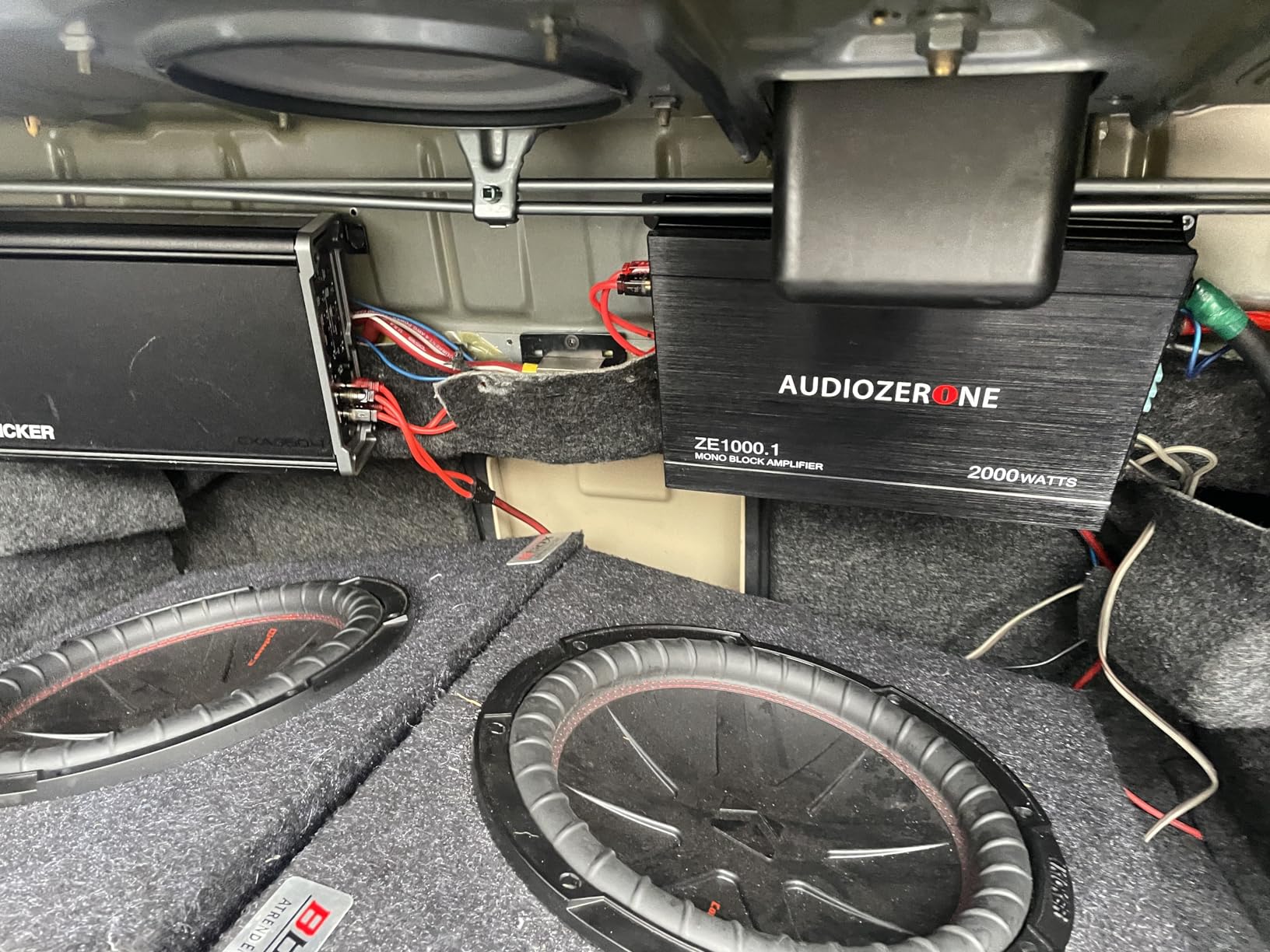
Physical size is 11 by 6.9 by 2 inches at 6.6 pounds, so it is a wide but shallow chassis. It fits under a seat or against a trunk wall without needing the depth of a large cube-shaped amplifier.
Protection covers thermal, overload and short circuit faults, and the listed operating voltage range is 14.4V minimum to 16V maximum. That means an aggressive electrical upgrade will not help this amp, which is worth knowing before you plan the install.
Why it beats its rivals on value
Budget buyers consistently report that this amp hits harder and cleaner than its cost suggests. Verified 1000W RMS at 1 ohm puts it level with the CT Sounds CT-1000.1D, and it undercuts the reputable-brand options substantially.
If your subwoofer is rated around 750 to 1000W RMS, this is the amp that matches it with headroom rather than straining it.
Where the cost savings come back
The most repeated complaint across reviews is terminal design. The screw terminals are Allen-key style and wires can back out if they are tugged, so secure every connection properly and check them after the first week of driving.
A small but vocal minority report a unit dying or clipping out after several months, so this is the pick for someone who will tune it once and leave it rather than someone who expects a decade of service.
4. Taramps MD 1200.1 Full Range – Best for Mixing Subs With Full-Range Drivers
Taramps MD 1200.1 1 Ohm 1200W RMS Full Range Monoblock Digital Amplifier
- Full range tuning flexibility with both high pass and low pass filters
- 1200W RMS at 1 ohm in a mid-priced package
- Three-speed smart cooling keeps it thermally stable
- RCA and high level inputs make factory installs easy
- Needs a solid electrical upgrade to reach full rated output
- Built-in bass boost is underwhelming for some owners
- One-year manufacturer warranty is shorter than some rivals
The MD 1200.1 is the amp for a system that is not only a sub. Its full-range 10Hz to 18kHz response, variable 10Hz to 90Hz high pass filter and variable 90Hz to 18kHz low pass filter mean one amplifier can drive subs, door speakers and tweeters with proper band-pass settings.
Output is 1200W RMS at 1 ohm, which lines up neatly with two 500W RMS subs wired in parallel, or a single higher-power subwoofer run near its limit. The parametric bass boost covers 35Hz to 55Hz with up to +10dB.
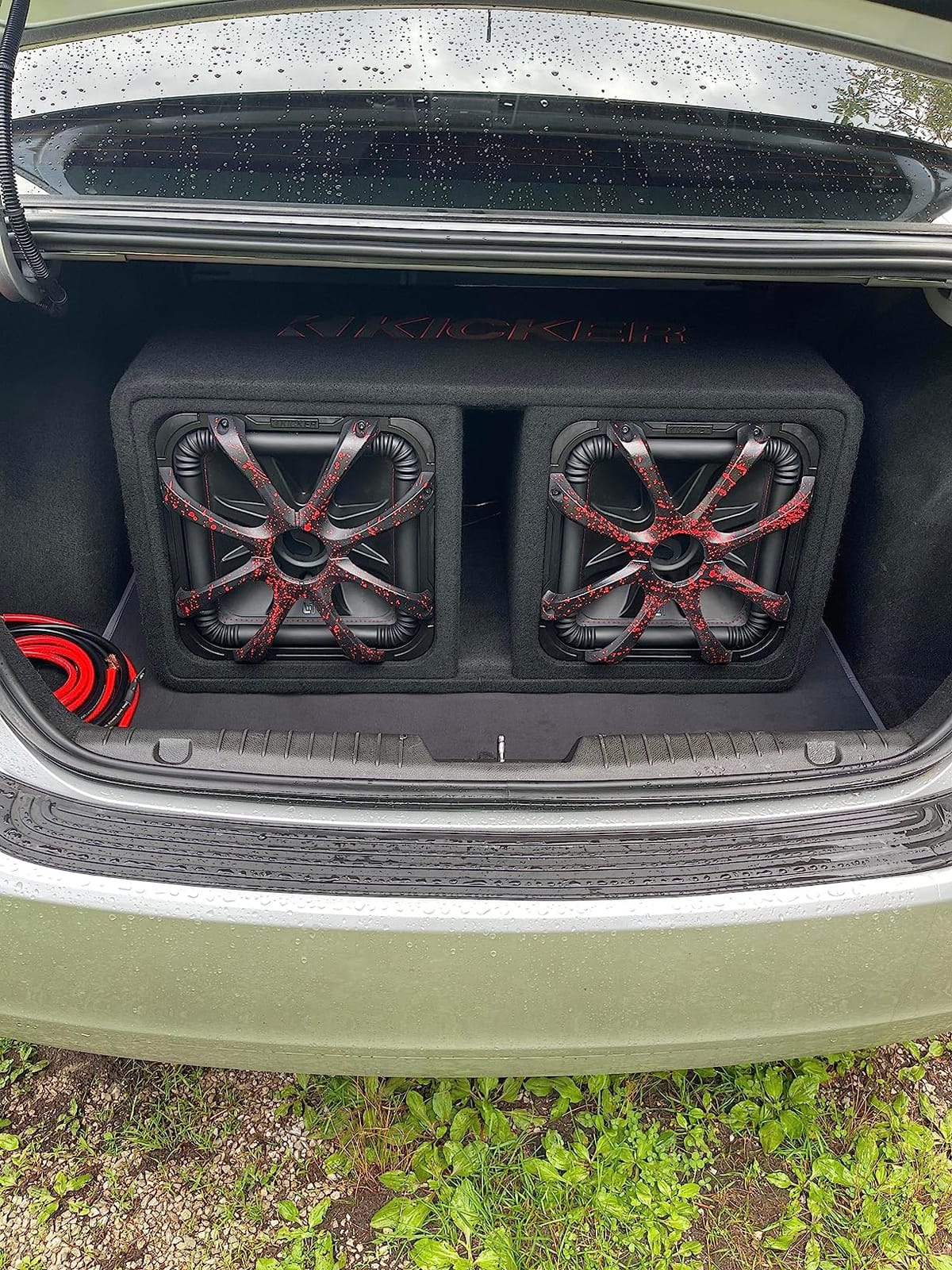
Owners rate the crossover flexibility highly at this price, especially for installs that mix subs with full-range drivers. The three-speed smart cooling fan adjusts with thermal demand rather than running constantly.
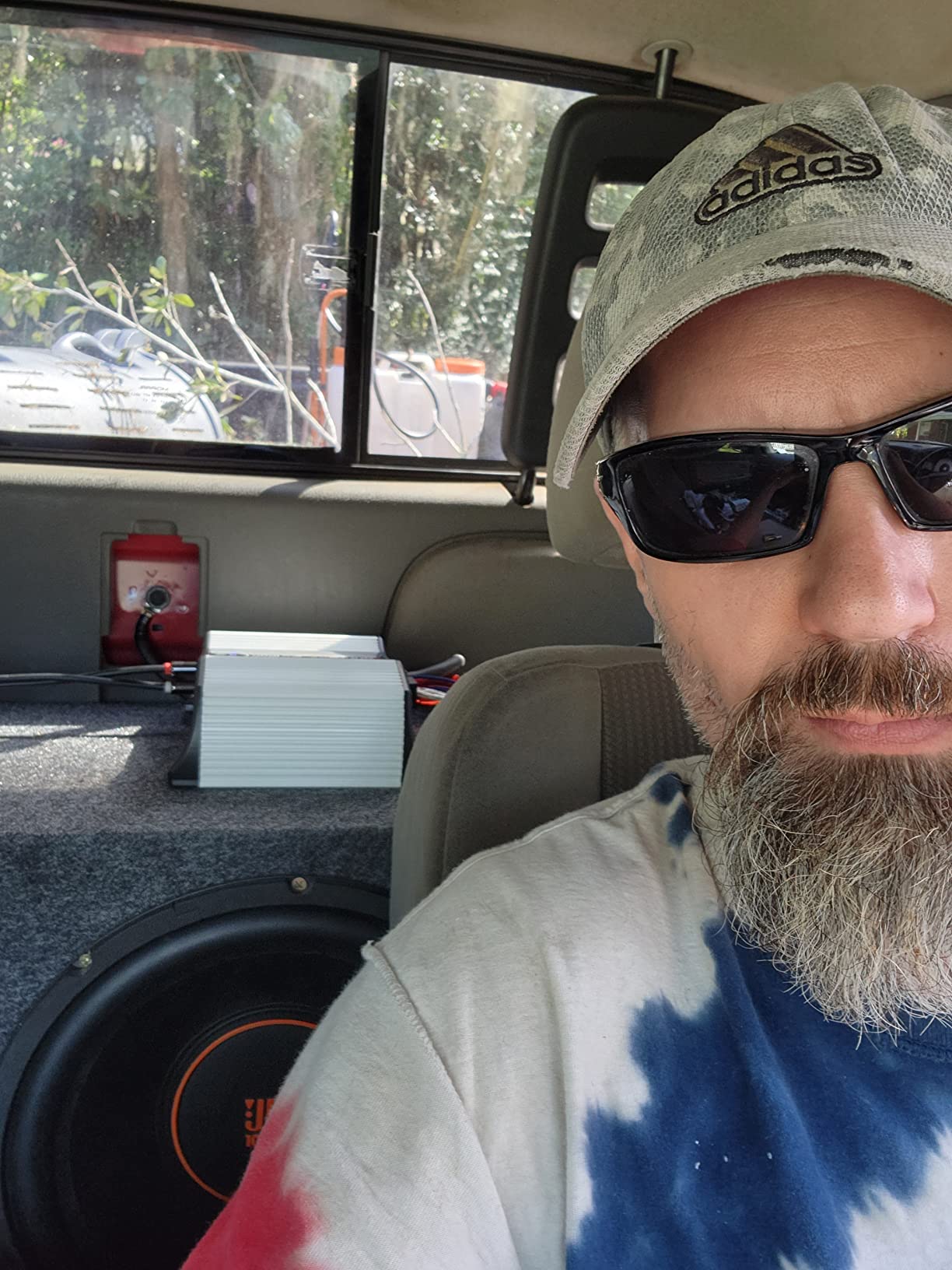
RCA and high level inputs are both provided, which is one of the easier factory-integration options in this group. Reviews repeatedly stress that system electrical capacity, not the amplifier, is the limiting factor, and that adding a second battery and a line driver transformed the result for them.
Why the crossover range matters
Almost every other monoblock here is sub-only, which is why they ship with a low pass filter and nothing else. This one can also block low frequencies out of your door speakers and keep a tweeter fed, so it can grow with the system instead of being replaced.
That flexibility is the reason to pick it over a pure sub amp even if you are only running a sub today.
What you give up
The built-in bass boost is considered underwhelming by some owners and rarely gets used, so do not count it as a feature that improves your install. The listed power supply range of 9V to 16V means boost voltage is possible, but the reviews are clear that you still need serious current capacity.
The one-year manufacturer warranty is the shortest-term coverage in this group, which matters if you plan to keep the car.
5. CT Sounds CT-1000.1D – Best Compact Amp for Small Cars
CT Sounds CT-1000.1D Compact Class D Car Audio Monoblock Amplifier, 1000 Watts RMS
- Efficient design that works hard off a factory electrical system
- Compact chassis that installs easily in tight spaces
- Runs cool and clean even on demanding playlists
- Four-way protection circuitry with remote bass knob included
- 350W RMS at 4 ohms is modest for high-impedance subwoofer wiring
- Fewer tuning options than larger DSP-oriented competitors
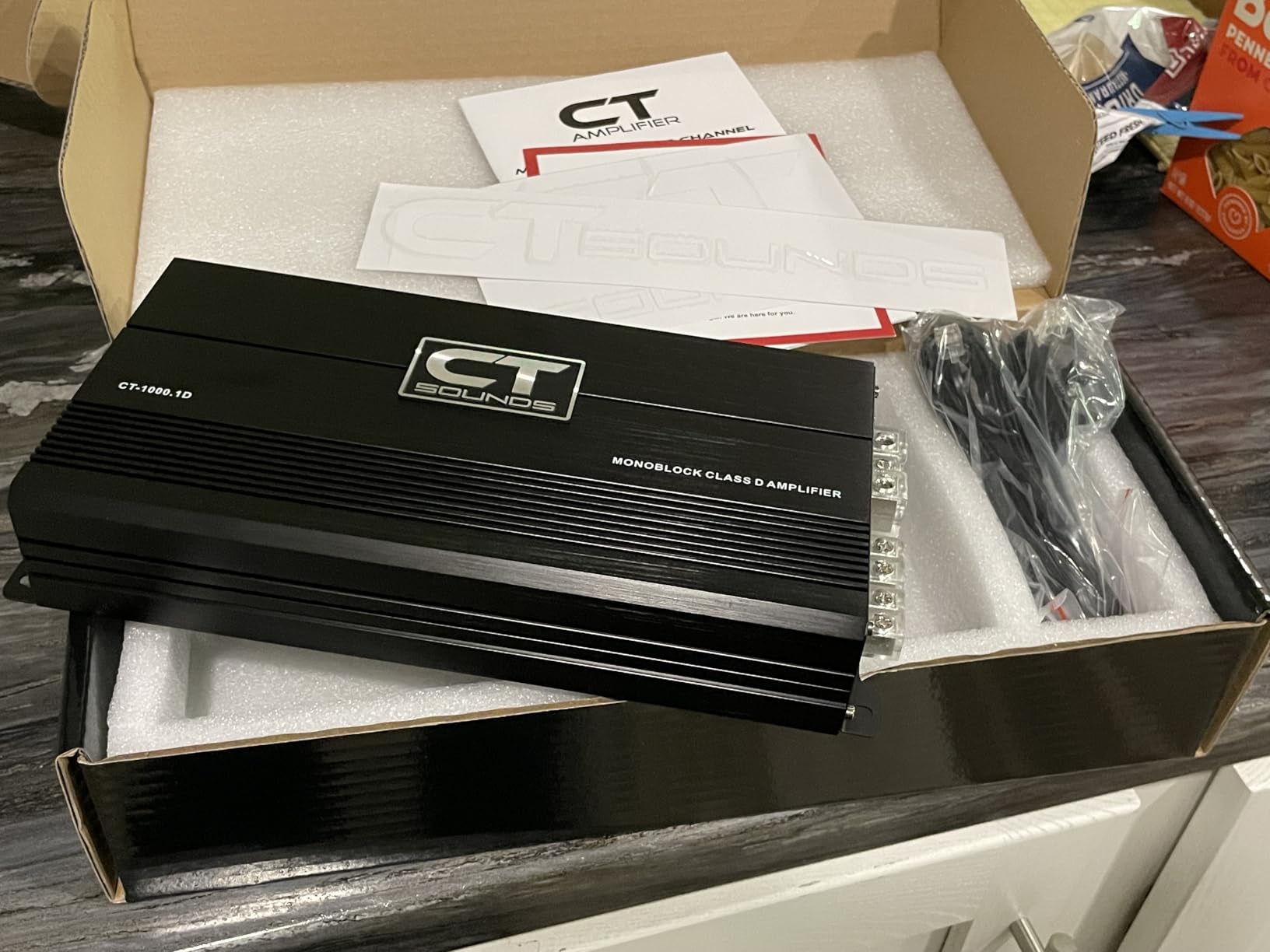
The CT-1000.1D is our pick for anyone whose install space is measured in the gaps you do not have. At 11.68 by 5.62 by 2.18 inches it is the narrowest chassis here, and owners routinely fit it where larger cubes will not go.
Output is quoted at the useful impedances: 1000W RMS at 1 ohm, 650W RMS at 2 ohm and 350W RMS at 4 ohm, all at 14.4V. Frequency response runs 0 to 320Hz, which is more headroom on the top end than most budget monoblocks offer.
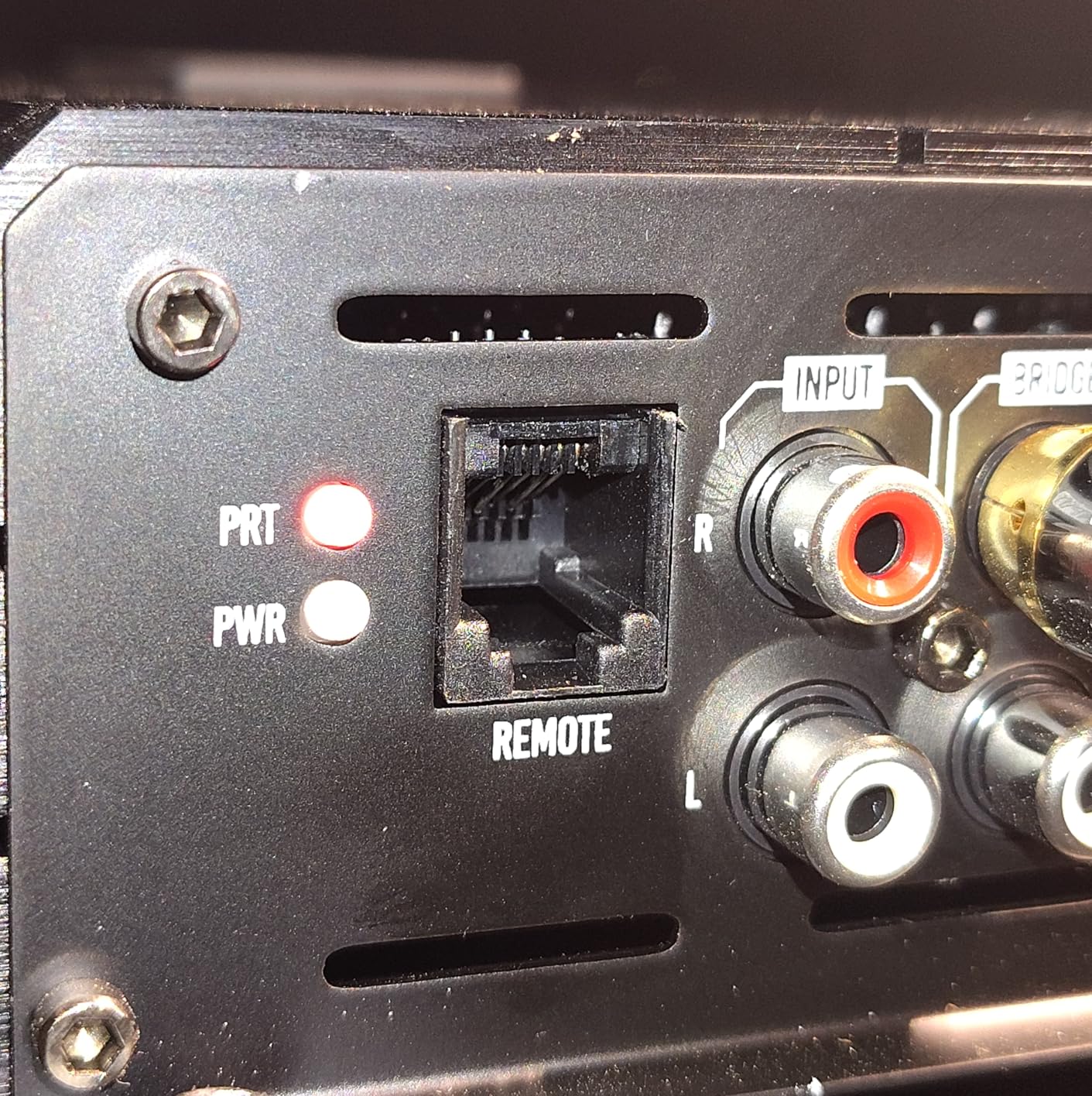
Buyers consistently praise efficiency, small size and clean cool-running output, describing it as a strong daily-driver amp that does not tax the vehicle electrical system. The MOSFET pulse width modulated power supply and proprietary heat dissipation design are the reasons it behaves that way.
Protection is four-way: high voltage, low voltage, over current and high temperature. A remote bass knob is included, so level adjustment is available without extra parts.
Why efficiency matters in a hatchback
A more efficient amplifier draws less current for the same output, which means the factory alternator keeps up better at idle with the headlights and blower running. That is the difference between a clean bass note and a system that dims its own lights.
For a small car, a compact car or a hatchback where cargo space is the constraint, this is the practical shape of the answer.
Where you will feel the limits
The 350W RMS at 4 ohm figure is modest, so if you plan to wire dual voice-coil 4-ohm subs in series for a higher load, this is not the amplifier. Fewer tuning options than larger DSP-oriented competitors also means less room to shape the bass curve.
If you want deep tuning control more than you want a small footprint, the ORION CBA4500.1D adds a subsonic filter and phase shift.
6. Pioneer GM-D9701 – Best Reputable-Brand Monoblock With RCA Pre-Out
- Delivers its rated 1200W RMS at 1 ohm under a reputable brand name
- RCA pre-out feeds an additional amplifier without adapters
- High level auto turn-on removes the need for a remote wire
- Never overheats in reported installs
- The 2400W headline figure is peak rather than RMS and can mislead buyers
- Bass knob applies a fairly strong low-end boost
- One review reported a unit arriving dead on arrival
The GM-D9701 is the amplifier to buy when you want a brand with a service network and room to grow. Owners frequently describe it as the most affordable reputable-brand monoblock at its power level, delivering full rated 1-ohm RMS with clean, punchy output.
Its numbers are unusually well spread: 1200W RMS at 1 ohm, 800W RMS at 2 ohm and 500W RMS at 4 ohm. That 4-ohm figure is the best in this group, which matters if your subwoofer wiring produces a higher load.
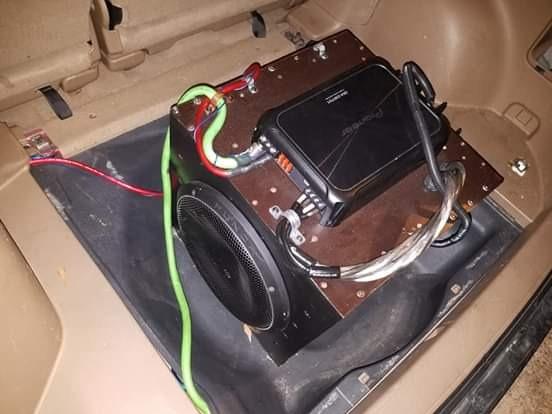
Two details make it easy to build on. The RCA pre-out lets it feed an additional amplifier without a splitter or adapter, and high level auto turn-on senses the signal so you do not have to run a remote wire from the head unit.
Signal-to-noise ratio is listed at 100dB and frequency response at 10Hz to 240kHz. Owners report no overheating in their installs and stable operation over years.
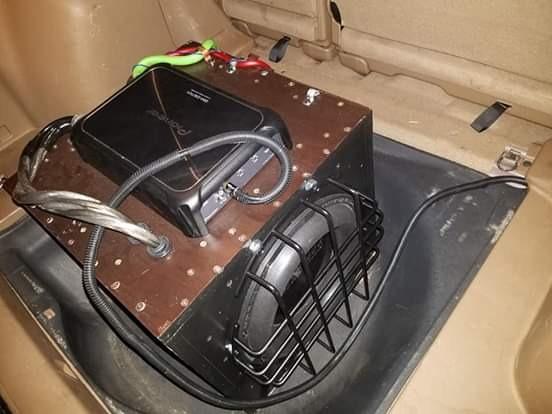
Best reasons to pick the Pioneer
If you are adding a sub now and a second amp or a component system later, the pre-out turns this into the front end of a system rather than an isolated box. The auto turn-on sensing also removes one of the most common install mistakes, a missing remote turn-on lead.
For factory-system upgrades, this pairing of high level auto turn-on and a well-behaved 4-ohm output is the reason it stands out.
The marketing number to ignore
The 2400W in the name is a maximum figure, not RMS. This is the single most common point of confusion reported in reviews, and it is exactly why this roundup quotes every amplifier at its ohm load instead.
Also note the bass knob applies a fairly strong low-end boost that alters a factory system sound noticeably, and one reviewer received a unit that was dead on arrival and needed an exchange.
7. Kicker CXA1200.1 – Best Dyno-Verified Output in the Group
- Highest rated amp in this group at 4.7 stars with 83 percent five-star reviews
- Confirmed to reach around 1378W RMS on a certified dyno with no clipping
- Easy to tune and stays cool in a hot trunk with no ventilation
- Compact half-size footprint relative to its rated power
- Runs a little under-powered for a pair of 12-inch L7 Q-series subwoofers
- Generates noticeable heat at gain settings above roughly half with poor airflow
- Draws heavy current so an electrical upgrade may be needed
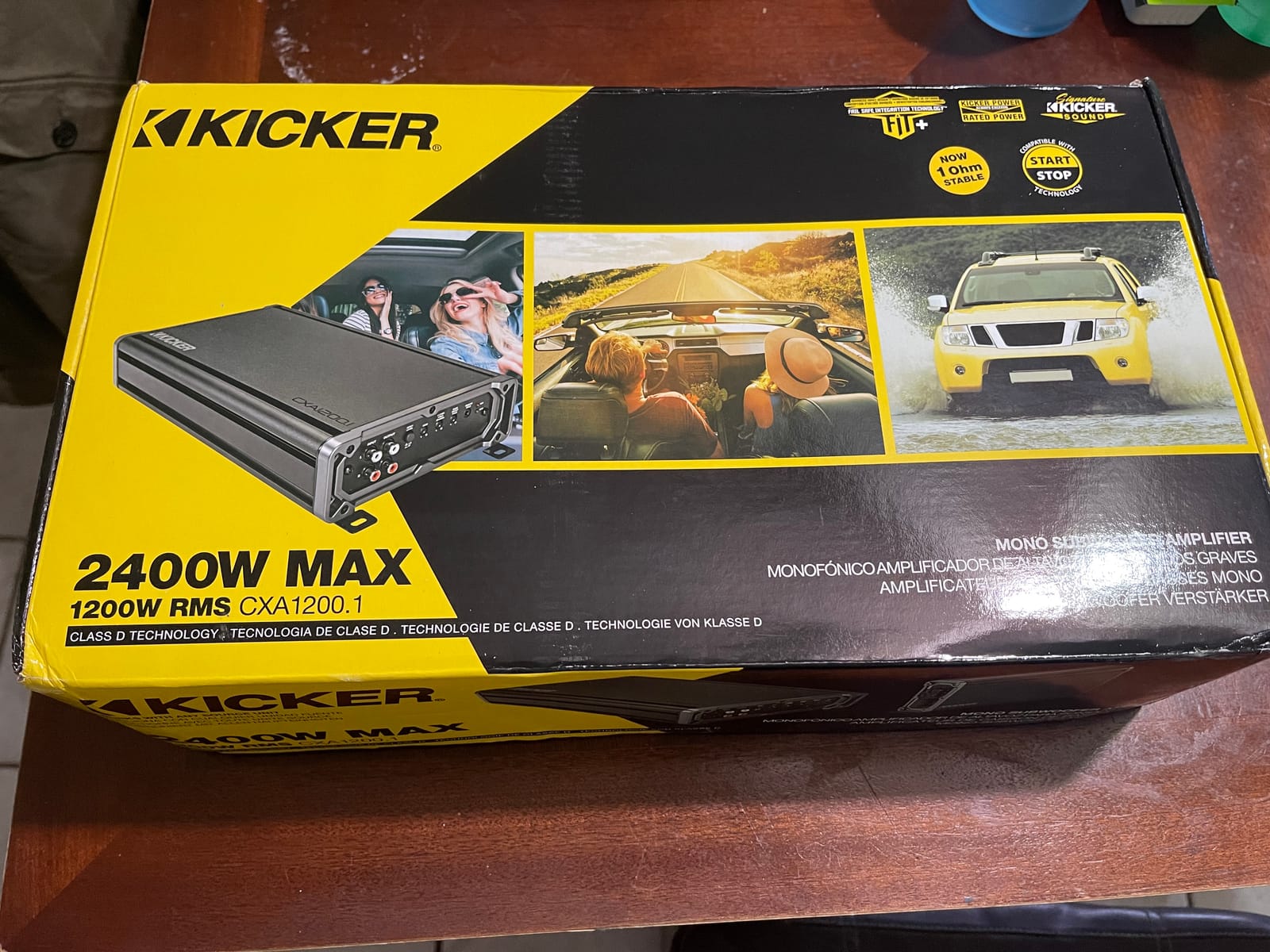
The CXA1200.1 is the only amplifier here with independently verified output in the specification sheet: around 1378W RMS measured with no clipping. It also carries the highest rating in the group at 4.7 stars with 83 percent of reviews at five stars.
It is 1-ohm stable without difficulty, so dual 2-ohm voice-coil subs wired in parallel are the natural pairing. Kicker’s efficient design keeps it cool, and reviewers report it staying stable in a hot trunk with no ventilation at all.
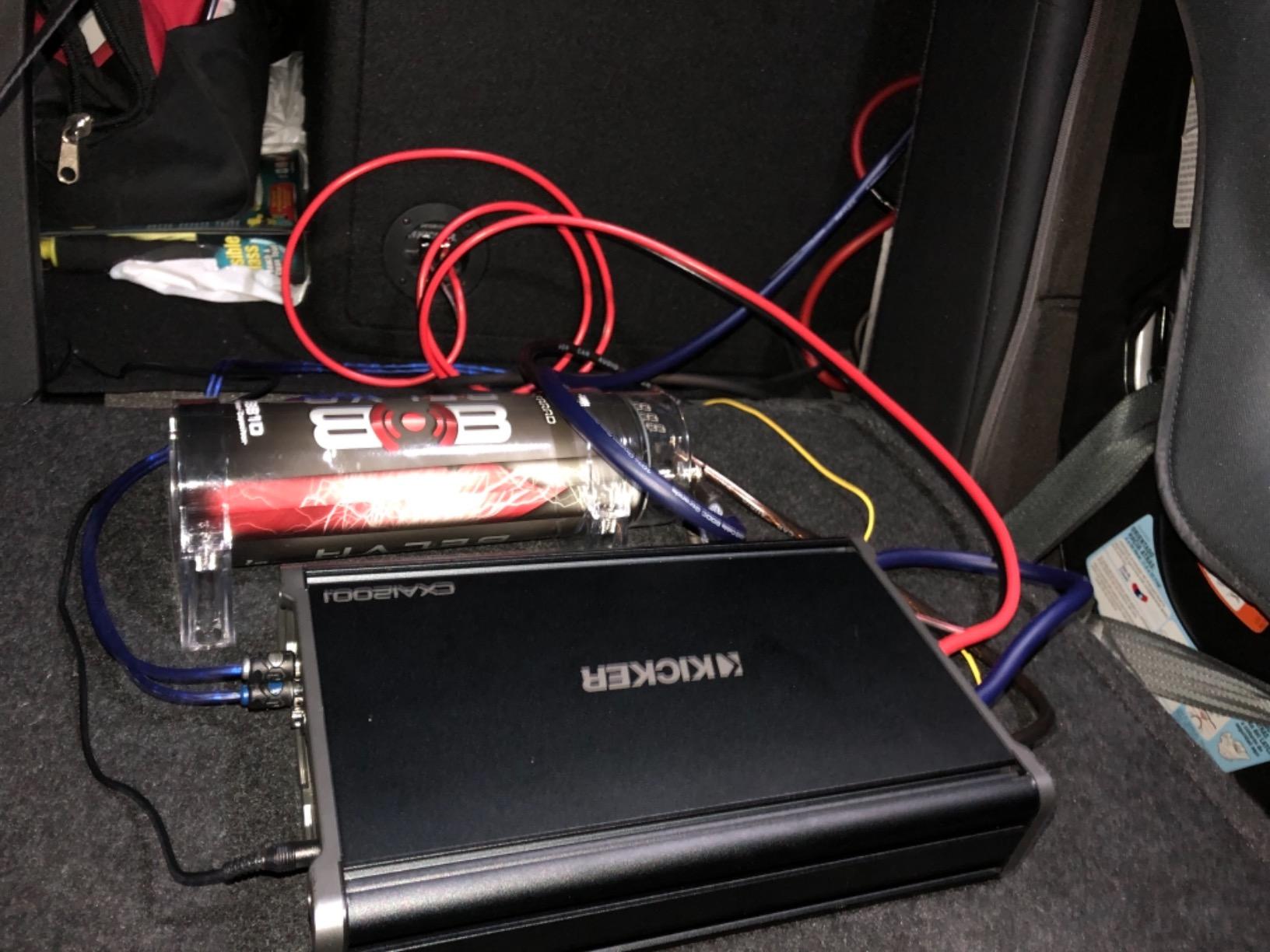
Owners also note the chassis is roughly half the size of the higher-power amplifier they switched from while sounding equally loud. Dual positive and negative output terminals sit on a single internal bus, which simplifies the speaker wiring on multi-sub installs.
Operating temperature is listed at 85 degrees Celsius, and the unit carries CE, FCC, RoHS and WEEE compliance markings, which is the sort of detail a shop installer looks for.
Why verified power changes the decision
Almost every listing in this category quotes a peak number on the front and nothing measurable on the back. A dyno figure around 1378W RMS removes that guesswork, and it is why this amp is the pick for anyone who wants certainty rather than a favourable reading.
Several owners mention it reached its rated power straight out of the box with no gain tricks required.
Where it falls short
Reviewers who pair it with a pair of 12-inch L7 Q-series subwoofers describe it as running a little under-powered for that combination, which is a fair criticism given those subs are designed for high power.
Heat also shows up at gain settings above roughly half when airflow is poor, and the current draw means a big three upgrade may be needed. Plan the wiring before you buy.
8. Taramps HD 3000 1 Ohm – Best Full-Range Monoblock for Multi-Way Builds
Taramps HD 3000 1 Ohm 3000W RMS Full Range Monoblock Car Audio Amplifier
- 3000W RMS at 1 ohm in a compact 5 pound chassis
- Genuinely full-range 10Hz-20kHz response with adjustable high pass and low pass filters
- Works with subwoofers
- mid-bass
- mid-range and tweeters from one amp
- Runs cool even in demanding setups
- 14 percent of reviews are one-star
- the highest one-star share in this group
- Requires a serious electrical upgrade to deliver full rated output
- Fan noise can be noticeable in a quiet cabin at high volume
The HD 3000 is the highest-output amplifier in this roundup at 3000W RMS at 1 ohm, and it stays stable at 1, 2 and 4 ohms. Frequency response spans 10Hz to 20kHz, so like the MD 1200.1 it can drive a full multi-way system rather than only subs.
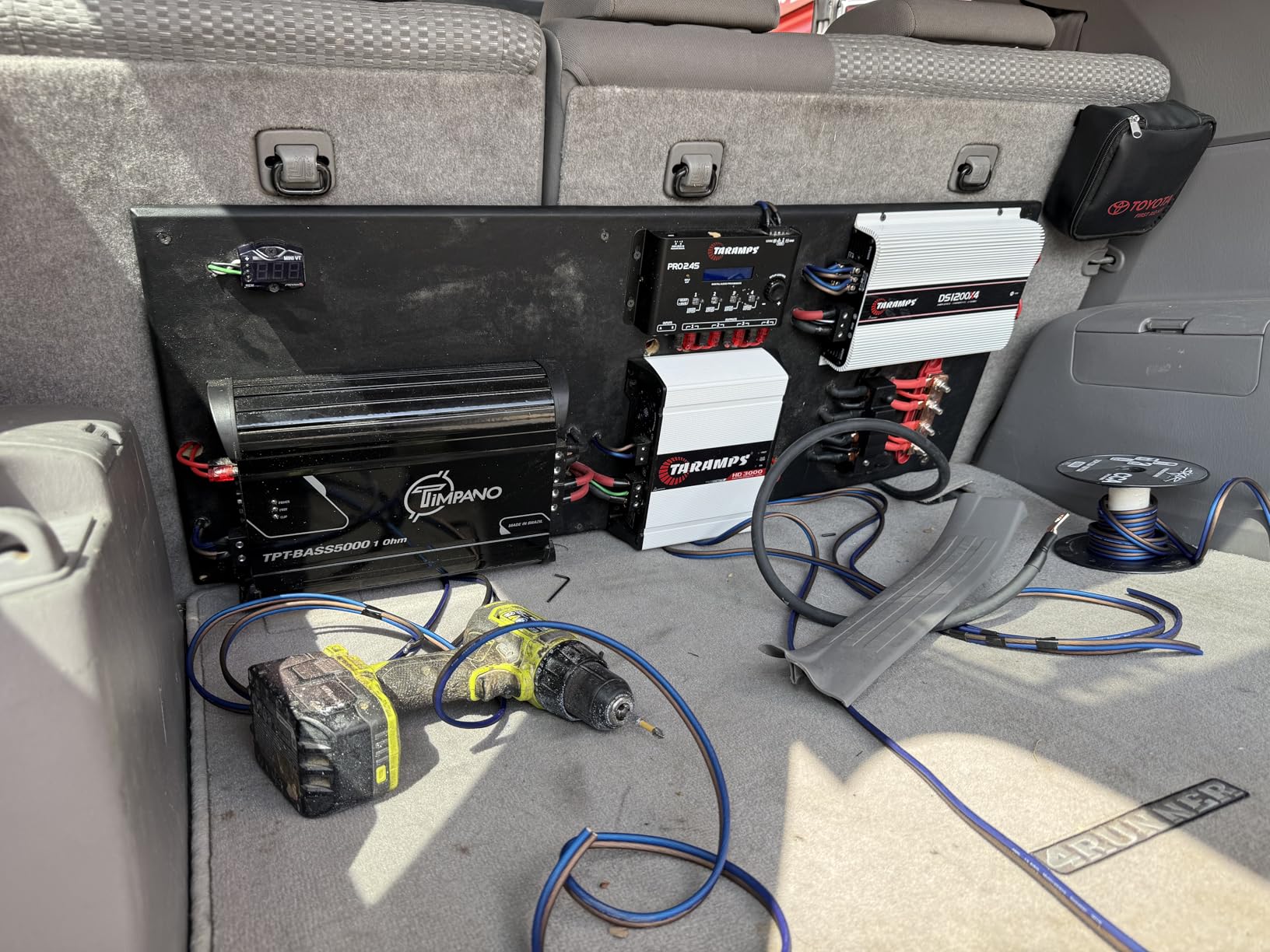
The chassis is 7 by 9 by 3 inches in aluminum at just 5 pounds, which is remarkably light for the power class. Owners consistently pair it with dual 12-inch subwoofers and describe clean, controllable low end.
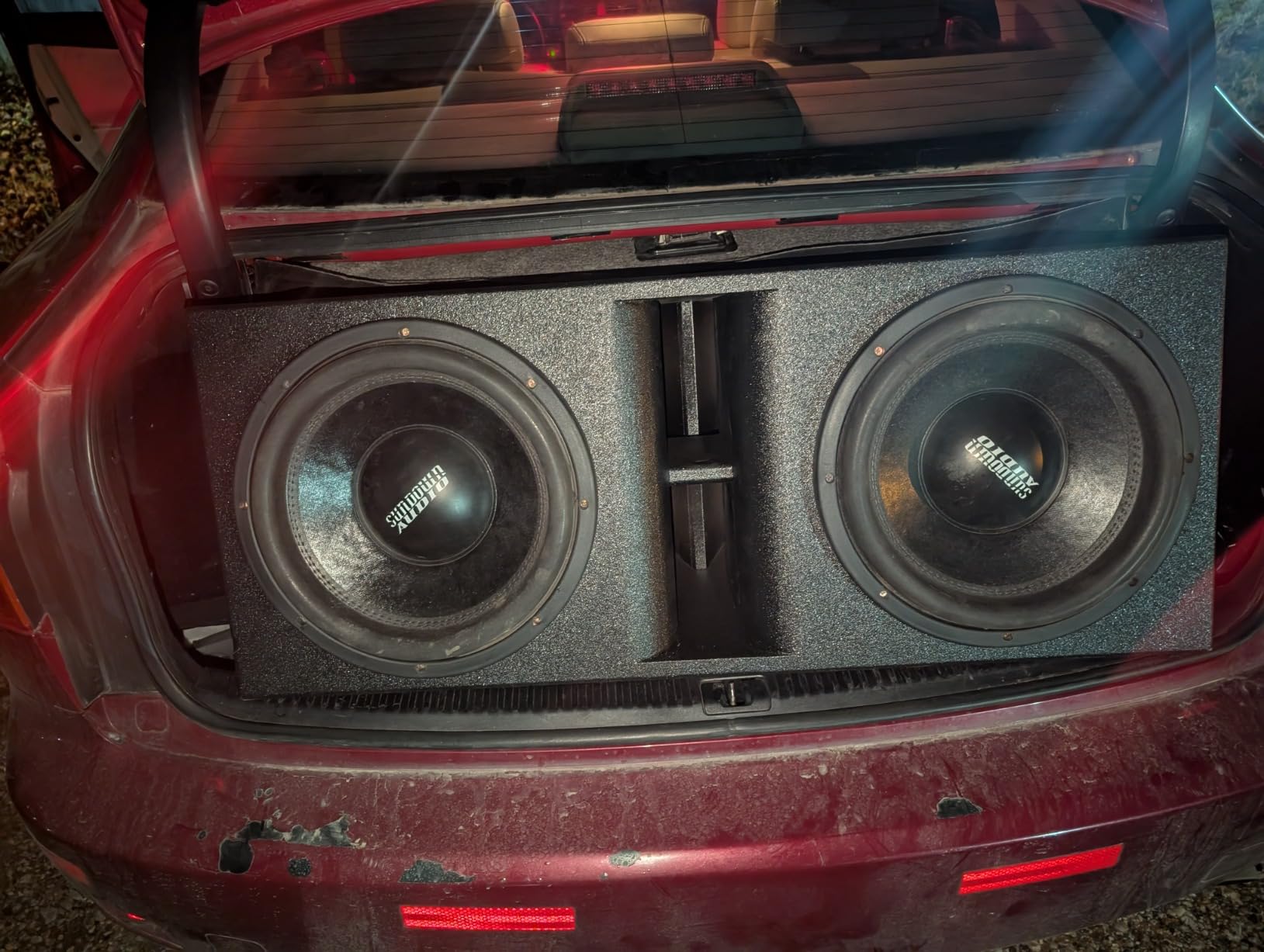
Variable high pass filter, low pass filter, gain and bass boost are all adjustable, and the amp is compatible with a Monitor Level Remote. The listed wiring kit includes 4 AWG power cable, 9 AWG output cable, 18 AWG remote cable and a 150A fuse.
Supply voltage range is 9V to 16V, which allows some boost from an electrical upgrade if you choose to add it.
When this is the right amplifier
If you are building a proper multi-way system where a monoblock also feeds door speakers or a tweeter array, the combination of 3000W RMS and a 20kHz upper response is hard to argue with. The light chassis also makes it easy to mount out of the way in a hatchback.
Run subs and mid-bass from it and use the high pass filter to keep low frequencies out of the smaller drivers.
Risks worth knowing about
This amp carries the highest one-star share of any pick here at 14 percent, and the recurring theme in critical reviews is a minority of units failing outright within months alongside electrical system limitations.
It also needs a serious electrical upgrade, including at least 4 AWG power cable, to deliver full rated output, and fan noise can be noticeable in a quiet cabin at high volume.
9. ORION CBA4500.1D Cobalt – Best Tuning Suite in a Mid-Range Chassis
ORION CBA4500.1D Cobalt Mono 1-Channel Class D Amp, 4500W Max
- Real 1200W RMS at 1 ohm
- more than double the smaller Cobalt mono output
- Full tuning suite including subsonic filter and phase shift
- 1
- 2 and 4 ohm stability for flexible subwoofer wiring
- Strong Amazon sales rank indicating steady demand
- The 4500W figure is maximum rather than RMS and confuses buyers
- Shares the thermal and reliability complaints reported for the Cobalt series
- 6 percent of reviews are two-star
- pointing to some inconsistency
The CBA4500.1D delivers 1200W RMS at 1 ohm, 650W RMS at 2 ohm and 400W RMS at 4 ohm, with stability across 1, 2 and 4 ohms. Because the step up from the smaller Cobalt model costs so little, it is almost always the better buy of the two.
Its distinguishing feature is the tuning suite for the money: an adjustable low pass filter, bass boost, a subsonic filter and phase shift. Phase shift in particular helps align the sub with the door speakers in a stock system.
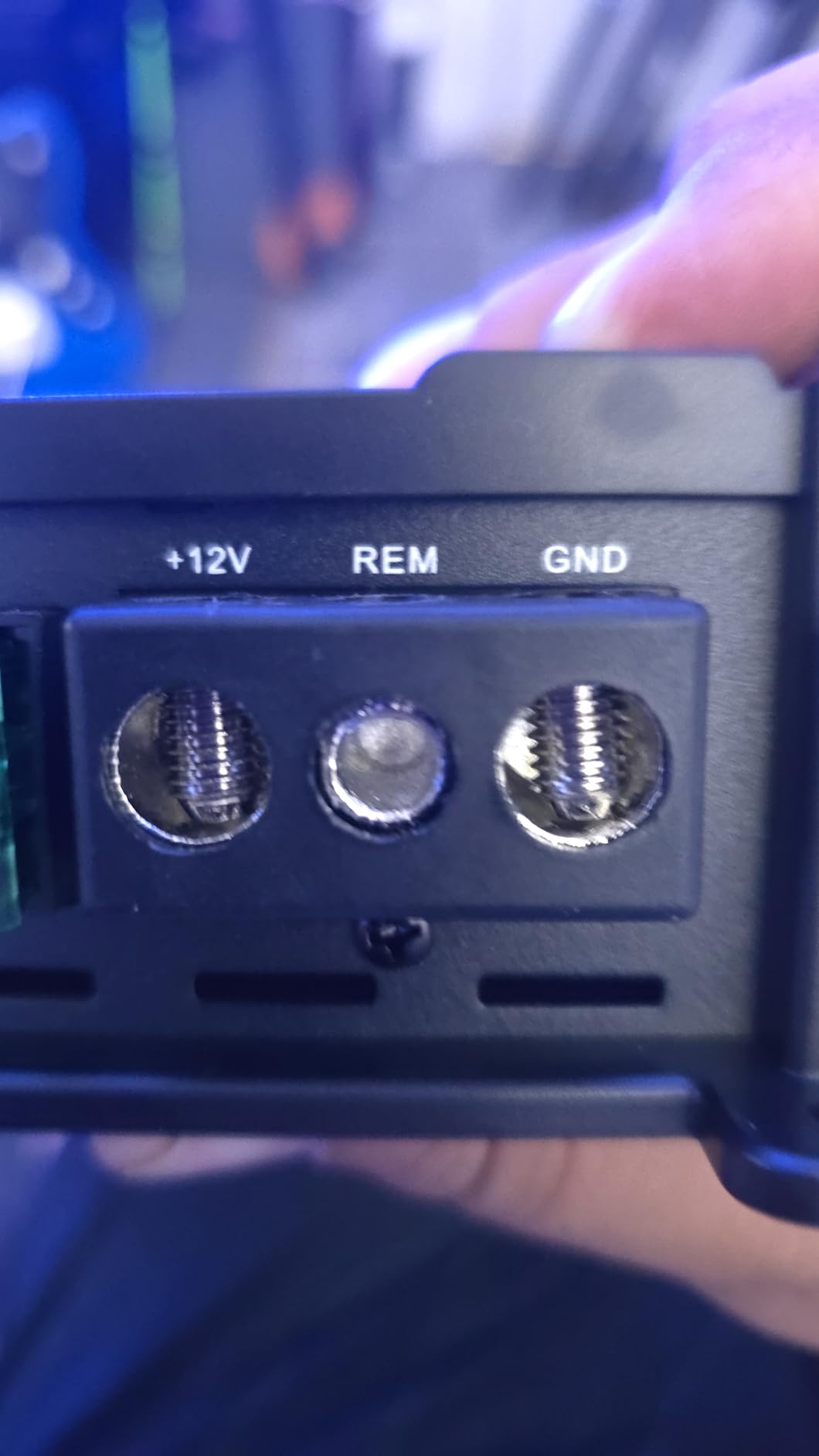
Frequency response runs 10Hz to 250Hz on low level RCA inputs, and a MOSFET power supply with two-way protection circuitry handles thermal load. A remote bass knob is included in the box.
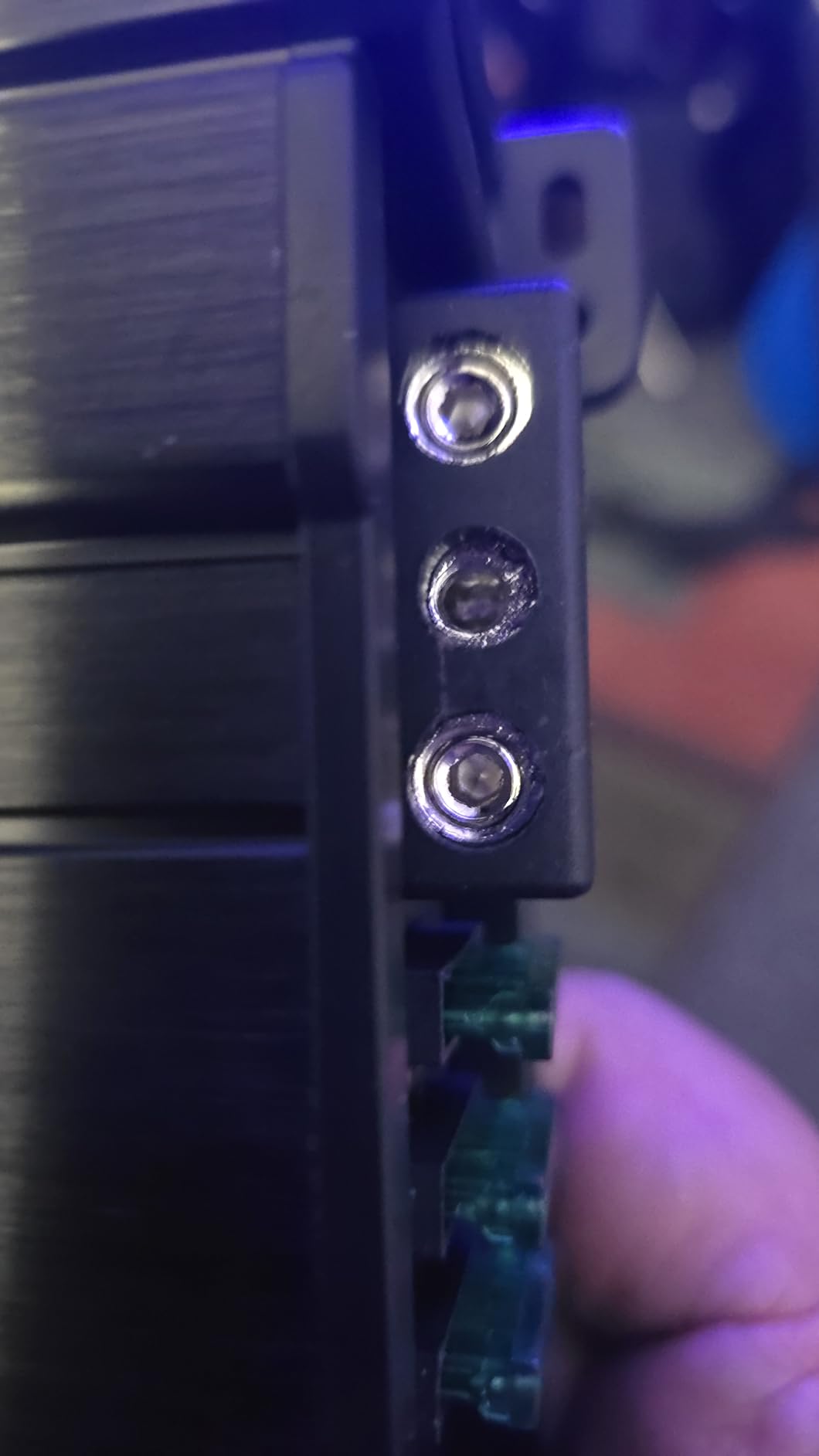
The chassis is 15 by 7 by 3 inches in aluminum, so it is long rather than deep. That shape actually suits under-seat and side-wall mounting better than a square cube.
Why the tuning controls matter
A subsonic filter limits very low frequencies that your subwoofer cannot reproduce and that can unbalance a sealed box. Phase shift lets you time-align the sub against the front speakers. Neither control is standard on the entry-level monoblocks, and both reduce the need for a separate sound deadening or DSP box.
For a system built around a factory head unit with no tuning access, these controls do most of the work that an expensive processor would.
Honest limitations
The 4500W in the name is a maximum figure rather than RMS, and reviews flag it as a genuine source of confusion for buyers. Heat and occasional failures are the reservations carried across the Cobalt line, so mount it where air can move.
At 4.1 stars with 6 percent of reviews at two stars, build consistency is the main thing to weigh against the feature set.
10. ORION CBA2000.1D Cobalt – Best Budget Amp With Subsonic Filter
- Strong value for the power
- easily pushing a pair of 12s at 1 ohm
- Full complement of tuning controls including subsonic filter and phase shift
- Class D efficiency and aluminum build for the money
- Actual 1-ohm RMS is 500W
- far below the 2000W max in the name
- Runs warm even when tuned carefully
- 16 percent of reviews are one-star
- the highest share in this group
The CBA2000.1D is the cheapest way into this list and the clearest example of why you must read past the model name. It makes 2000W, but that is a maximum figure. Real output is 500W RMS at 1 ohm, 260W RMS at 2 ohm and 160W RMS at 4 ohm.
Those numbers line up well with a single 400 to 500W RMS 12-inch sub, which is the most common entry-level build. Owners who buy it for that job are generally pleased.
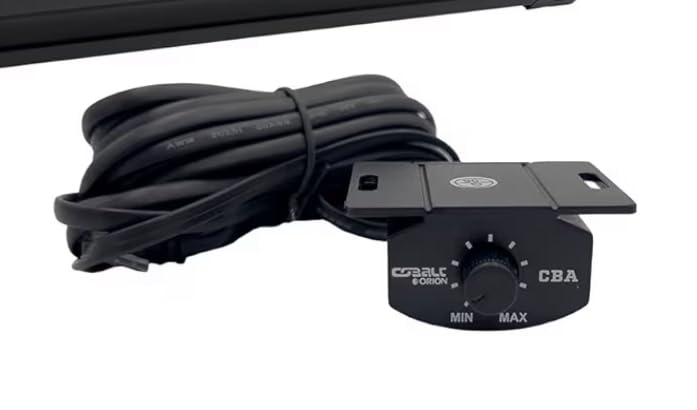
The tuning controls are the same full suite as the larger Cobalt mono: low pass filter, bass boost, subsonic filter and phase shift, across a 10Hz to 250Hz frequency response on low level RCA inputs.
It is an efficient Class D design with a MOSFET power supply and two-way protection circuitry in an aluminum chassis measuring 14 by 8 by 3 inches, and a remote bass knob is included.
What you get for the money
Tuning controls at this level are unusual, and the subsonic filter plus phase shift give a real single-sub system more adjustment than most amplifiers in this roundup offer. If your subwoofer is rated 400 to 500W RMS, this amp matches it correctly.
The efficiency of the Class D design means it draws less current than the headline number suggests.
Why it sits at the bottom
This is the weakest-rated pick in the group at 4.0 stars, with 62 percent five-star and 16 percent one-star reviews, and the reviews split sharply. Owners who get a good amplifier praise the price and the punch, while a notable group report overheating and outright failure within weeks or months.
Thermal management is the dominant complaint, so this suits cool, well-ventilated installs at moderate volume. In a hot trunk or a warm climate, spend the extra and step up to the CBA4500.1D.
How to Match Amp Power to Your Subwoofer RMS
This is the question that fills most of the forum threads on this topic, and the answer is simpler than the arguments suggest. Match amplifier power to subwoofer RMS by multiplying the sub’s rating by 0.75 to 1.0 and finding an amplifier that delivers that figure at the impedance your wiring produces.
Read the subwoofer’s RMS rating, not its peak rating. Manufacturers label a sub’s maximum power handling far above what it wants continuously. The RMS figure is the one you match to.
Work out the final ohm load from your voice coil configuration and wiring method before you look at any amplifier.
Check the amplifier’s stability at that load. If your wiring produces 1 ohm and the amp is only 2-ohm stable, it will shut down. This is the single most common build error.
Target 75 to 100 percent of subwoofer RMS at that load. Slightly over-powering is safer than under-powering.
Set gain so it does not clip. An amplifier that is clipping on every bass note is delivering less clean power than a smaller one set correctly.
Why over-powering is safer: an underpowered amplifier pushed to its limit distorts heavily, and distorted waveform energy turns into heat in the voice coil. A sub driven by an amplifier that is simply too strong, with gain set properly, is far harder to damage. That is why the guidance in the r/CarAV threads is consistently to headroom rather than exact matching.
The practical version of the same arithmetic is worth remembering because it settles most arguments: an amplifier rated around 690W RMS at 4 ohms will comfortably power two 250W RMS subs in parallel at 2 ohms, with roughly 45V at the amplifier terminals.
A forum consensus worth repeating on higher loads: running a higher ohm load rather than the lowest one the amp supports often sounds cleaner and gives more headroom. An amplifier forced to its minimum impedance limit works harder and produces more heat for the same output.
If your priority is a clean subwoofer rather than the loudest possible system, our picks for bookshelf subwoofers cover a very different sensitivity range, and sensitivity changes the matching math completely.
Impedance and Wiring: What Your Ohms Should Be
No, your ohms do not have to match a single number on the subwoofer. They have to match what the amplifier is rated to handle, and they have to match the load your wiring actually creates. Getting this wrong is what makes an amp go into protection or a subwoofer disappear from a system entirely.
Here is the arithmetic for the configurations you will actually meet:
Single 4-ohm sub, single voice coil: one final load of 4 ohms. Any amp in this roundup handles it, but output is lowest here.
Dual 2-ohm subs, dual voice coil, wired in parallel: 1 ohm final load. You need a 1-ohm stable amplifier, which rules out the BOSS R1100M.
Dual 4-ohm subs, dual voice coil, wired in series: 8 ohms final load. No amp here is rated for it, so this configuration needs a different pairing.
Dual 4-ohm subs, dual voice coil, one coil per sub in series: 4 ohms final load. This is the safest high-impedance option and works with almost any monoblock.
Two 4-ohm single voice coil subs in parallel: 2 ohms final load. The most common entry-level setup and the easiest to match.
Two 8-ohm single voice coil subs in parallel: 4 ohms final load. Comfortable for every amplifier listed here.
When you can choose, aim for 2 ohms rather than 1 ohm. You give up a little peak output, and you gain cleanliness, headroom and lower heat, which is the tradeoff r/CarAV users consistently recommend.
Also note that a load below the amp’s stable minimum does not just sound worse. On the amplifiers here that handle 1 ohm down to 0.5 ohm, dropping to the absolute minimum is fine; on a 2-ohm stable unit, forcing 1 ohm causes shutdown protection rather than damage to the amplifier, but the sub goes silent in the meantime.
Why Class D Monoblocks Win for Subwoofers
Class D is the default topology for every amplifier in this roundup except the BOSS R1100M, and the reason is efficiency. A Class D output stage switches its transistors thousands of times per second rather than conducting current linearly through them, so far less energy becomes heat in the chassis.
In a house that matters. In a car it matters more, because the amplifier shares the alternator with your headlights, blower and everything else. An efficient amplifier produces the same bass while asking less of a charging system that was never designed for high sustained current.
Two practical side effects follow from that efficiency. The heat sinks can be smaller, which is why the CT Sounds CT-1000.1D fits in a narrow space, and the amplifier can run cooler in a sealed trunk, which is why the Kicker CXA1200.1 holds up with no ventilation.
Class A/B, as used in the BOSS R1100M, sounds perfectly good and is a proven design, but it idles with current flowing through the output devices and runs considerably warmer for the same wattage. That warmth is the trade you make for a longer track record.
Installation Essentials: Power Wire, Ground and Gain
The amplifier you chose matters less than the wire you feed it. A high-output monoblock on thin power cable will voltage-drop, distort and repeatedly drop into protection, and no amount of amplifier quality fixes that.
Power and ground wire by current draw
Under roughly 500W RMS: 8 AWG OFC power and ground.
500W to 1000W RMS: 4 AWG OFC, which is the practical minimum enthusiasts cite for budget builds.
1000W to 1500W RMS: 2 AWG OFC, and a big three upgrade on the vehicle.
Above 1500W RMS: 1/0 AWG OFC, and expect to add a second battery.
Other installation essentials that get skipped:
Fuse within 18 inches of the battery, sized to the cable, not to the amplifier.
Short, solid ground to bare metal, not to a painted bolt or a seat bracket.
Mount with airflow and leave space around the heat sink.
Speaker wire of 12 AWG or heavier on the short run from amp to enclosure.
Setting gain without clipping
Disconnect the subwoofers so nothing gets damaged while you set the limit.
Set the low pass filter around 80 to 100Hz and turn the bass boost fully down.
Set head unit volume to about 75 percent of maximum with the amplifier gain at minimum.
Raise gain slowly until a 50Hz test tone distorts, then back off by roughly a quarter turn. That is your clean maximum.
Reconnect the subs and use the remote level knob for daily adjustment rather than turning gain up later.
That last step is where the gain-versus-volume debate on the forums gets settled: gain is a set-and-forget setting that establishes the ceiling, and volume is what you move day to day. If you find yourself turning gain up to get more bass, the amplifier is already clipping.
Frequently Asked Questions
Which amplifier is best for a subwoofer?
For most installs, a dedicated Class D monoblock that is stable at your sub’s final ohm load is the right choice. Match the amplifier’s RMS at that load to roughly 75 to 100 percent of the subwoofer’s RMS rating. Our top pick for a single 10-inch or 12-inch sub is the BOSS Audio Systems R1100M, and for a pair of 12-inch subs the Taramps Smart 3 Bass delivers far more power.
Should amp RMS match sub RMS?
Exact matching is not required. Slightly more amplifier power than the subwoofer’s RMS rating is safer, because a small amplifier pushed to its limit clips and clipping turns into heat in the voice coil. Aim for 75 to 100 percent of subwoofer RMS at the final ohm load, then set gain so the amp is not clipping.
Do my ohms need to match my subs and amps?
Your ohms must not go below what the amplifier is rated to handle, and the impedance you get must equal what your wiring produces. A dual 2-ohm dual voice-coil sub wired in parallel presents 1 ohm, so it needs a 1-ohm stable amplifier. Two 4-ohm single voice-coil subs in parallel present 2 ohms, which suits almost every monoblock.
How do I properly match my subwoofer to my amplifier?
Read the subwoofer’s RMS rating, calculate the final ohm load from the voice coil configuration, then choose an amplifier that is stable at that load and delivers 75 to 100 percent of the sub’s RMS there. Finally, set gain until a 50Hz test tone distorts and back off by about a quarter turn. That confirms the amplifier is clean at your listening level.
Which car amplifier offers the best sound quality?
Sound quality in a monoblock comes down to clean, unclipped output and control features rather than raw power. The Kicker CXA1200.1 has independently verified output of around 1378W RMS with no clipping, while the ORION CBA4500.1D adds a subsonic filter and phase shift for finer control over the bass response.
How many watts do I need for a subwoofer?
Most entry-level 10-inch and 12-inch subwoofers are rated between 300 and 500 watts RMS and want an amplifier that puts out roughly 75 to 100 percent of that at the final ohm load. Subwoofers rated 1000 watts RMS or more need a serious monoblock and an electrical upgrade, because the amplifier will draw well over 100 amps at full output.
Final Word: Which Amp to Buy
If you take one thing from this roundup, take the impedance discipline. Read the RMS figure at the ohm load your wiring actually creates, ignore every peak wattage number on the box, and buy 75 to 100 percent of your subwoofer’s rating into that load.
For a single 10-inch or 12-inch sub in a daily driver, the BOSS Audio Systems R1100M is our pick, with the largest review base in the group and a 6-year warranty behind it. For a pair of 12-inch subs where you want real output, the Taramps Smart 3 Bass is unmatched here. On a tighter budget, the AUDIOZERONE ZE1000.1 gives verified 1000W RMS at 1 ohm.
Add a sub to a factory head unit and you will want the Pioneer GM-D9701, because its high level auto turn-on and RCA pre-out make it the easiest to build on. In a small car where space decides everything, the CT Sounds CT-1000.1D fits where nothing else will, and if you care about verified clean power above all, the Kicker CXA1200.1 has a dyno figure to prove it.
Whichever you pick, budget the wiring at the same time. The best car amplifiers for subwoofers only perform as well as the power and ground cable feeding them.