
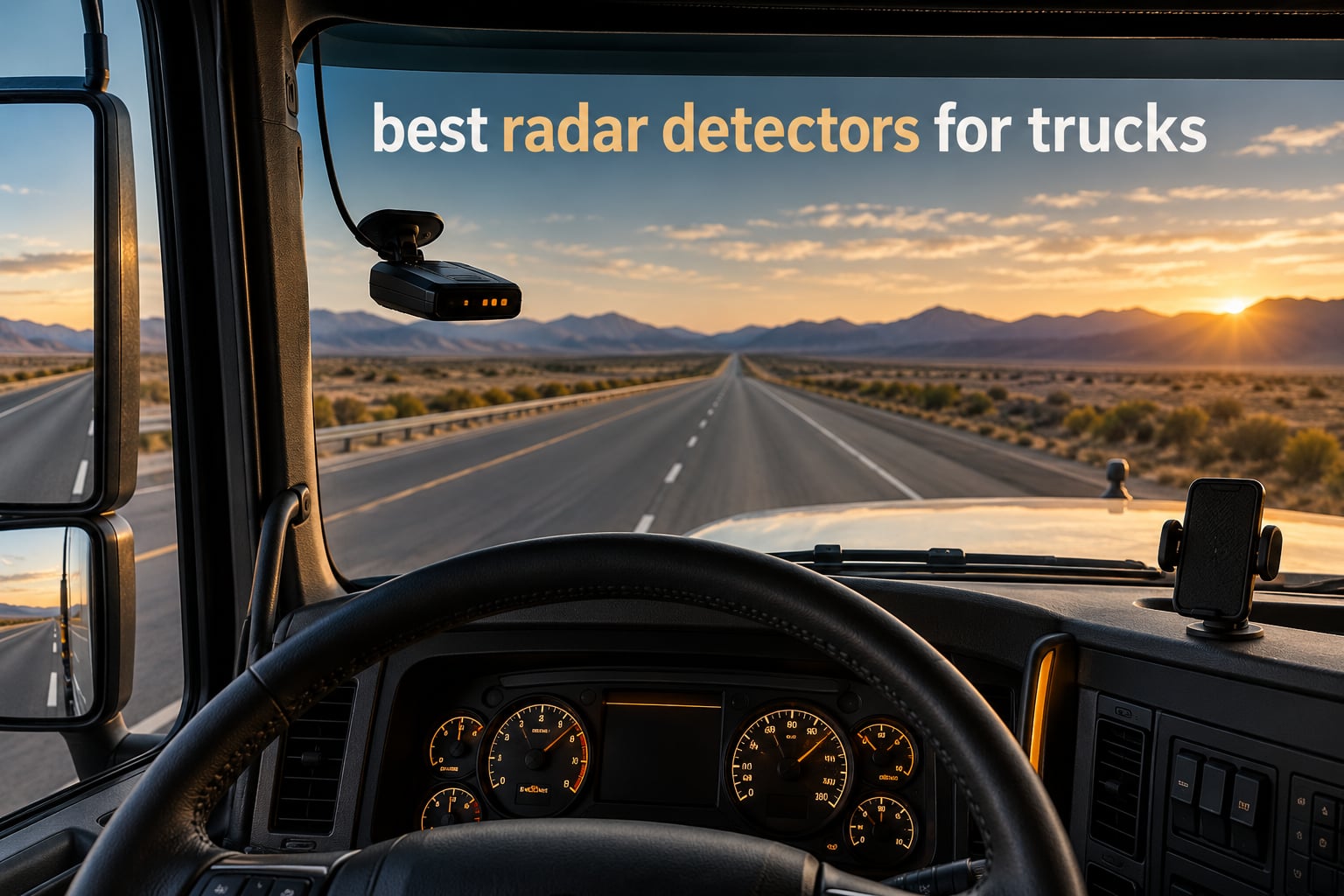
If you haul a pickup, a straight truck or a Class 8 rig and you want advance warning of police radar, the shortlist of the best radar detectors for trucks is shorter than the marketing pages suggest. Twelve models here were compared on the things that actually break in a truck cab: how far they hear, how fast they react, how well they reject the flood of signals coming off modern blind spot and collision avoidance radar, and whether the mount survives a thousand miles of road vibration.
Before any product recommendation, the legal picture needs to be clear, because a truck is not a car. Radar detector use is federally prohibited in commercial motor vehicles over 10000 lbs, detectors are banned outright in Virginia, in the District of Columbia and on military bases, and in several states troopers use radar detector detectors that can flag your unit electronically. That section comes first, below, before a single model gets recommended.
One more thing worth saying plainly, because it comes up constantly in truck forums: most drivers who run these units say the value is awareness, not ticket avoidance. Knowing enforcement is active two exits ahead changes how you drive through a state whose speed limits drop without warning. A detector that tells you what is around you is worth more than one that claims to save you money.
We also put together a separate breakdown for highway driving specifically, if you split your time between the interstate and the farm road, and a look at combustible gas detectors, which matters in a different way on a rig that spends its life around diesel equipment.
Table of Contents
Are Radar Detectors Legal in a Truck? Read This First
Why can’t commercial vehicles have radar detectors? Because federal law treats them differently from passenger vehicles. The federal prohibition applies to commercial motor vehicles over 10000 lbs gross vehicle weight rating, which covers most Class 8 tractors, box trucks and straight trucks operating on a CDL. Personal vehicles under that weight, including pickups towing a trailer, are a separate legal category.
That distinction matters more than people expect. A pickup with a fifth-wheel trailer under 10000 lbs and a tandem-axle straight truck are not treated the same way, and drivers on truck forums disagree constantly about whether mere possession in a CMV is illegal or only use. The conservative read is that having the device in the cab at all creates risk.
Drivers on TruckersReport have posted about having a detector removed from a suitcase while it was disconnected and packed away. The recurring theme is that a CMV driver has fewer protections during a vehicle search, so consent to a search is effectively assumed. If you run a CMV over 10000 lbs, the cleanest risk posture is not having a detector in the cab.
Then there is the radar detector detector, or RDD. Virginia and the District of Columbia ban detectors outright, and troopers in both states can use RDD equipment to sweep a vehicle. On RDD-banned roads the unit also receives no signal at all, which means it sits silent while the gun behind you is live. Several drivers report that anything outside a small group of stealth designs gets flagged electronically.
Military bases are a third zone. Detector possession is prohibited on most bases regardless of vehicle class, and a finding is treated as a security matter rather than a traffic one.
We are not going to tell you which of those rules to bend. What we will say is that everything below is written for legal truck use: pickups, tow trucks, RV-style vehicles and light-duty commercial work under 10000 lbs. If you run a CMV above that weight, use a driver monitoring or route-planning tool instead of a radar detector, and take our highway driving detector guide as background reading rather than a shopping list.
One honest counterpoint from the veteran-driver side, because no roundup should pretend the consensus is unanimous: a driver with decades behind the wheel told forum readers that radar detectors are snake oil and that he never got a speeding ticket without one. That view is not crazy. A detector does not change your speed, it changes your information.
How We Evaluated Detectors for Truck Cabins
Every unit here was assessed against the same seven criteria, and the truck context changed how we weighted several of them.
Detection range. Not a lab number, but consistent owner reports of how far out a signal is picked up on open highway, including at the higher eye height of a truck cab.
Reactivity. How quickly the alert ramps and how fast the signal strength climbs. A detector that announces a radar signal late is a camera detector, not a warning device.
False alert filtering. The single biggest quality of life issue in a truck, because you are boxed in between newer cars whose blind spot and collision avoidance systems are constantly pulsing.
Power handling. Whether it runs cleanly from a truck accessory circuit and whether the included cord reaches from the mount to the socket.
Mount stability. Tall truck windshields are large, curved and often coated. A suction cup that holds on a sedan is a different proposition at 13 feet up with a trailer behind you.
Update path. How the camera database and firmware get refreshed: USB, Bluetooth, Wi-Fi or an app.
Warranty and support. Two-year coverage shows up in the specs and shows up in our recommendations. Marketplace storefronts with no support line do not.
Top 3 Radar Detectors for Trucks Right Now in 2026

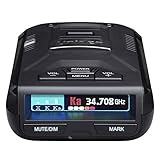
Cobra RAD 480i
- Front and rear LaserEye
- Updateable IVT filter
- CarPlay and Android Auto
- OLED display
Best Radar Detectors for Trucks (October 2026)
| Product | Specifications | Action |
|---|---|---|
| Cobra RAD 480i |
|
Check Latest Price |
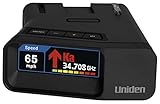
| Uniden R3 |
|
Check Latest Price |
| Uniden R7 |
|
Check Latest Price |
 Uniden DFR7 Uniden DFR7 |
|
Check Latest Price |
 Cobra RAD 350 Cobra RAD 350 |
|
Check Latest Price |
 Radenso XP Radenso XP |
|
Check Latest Price |
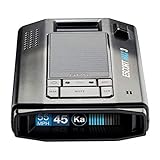 Escort MAX 3 Escort MAX 3 |
|
Check Latest Price |
 Escort Redline 360c Escort Redline 360c |
|
Check Latest Price |
 Escort MAX 360c MKII Escort MAX 360c MKII |
|
Check Latest Price |
 Valentine One V1 Gen 2 Valentine One V1 Gen 2 |
|
Check Latest Price |
 Whistler CR93 Whistler CR93 |
|
Check Latest Price |
 Escort iXc Escort iXc |
|
Check Latest Price |
1. Cobra RAD 480i – Best Overall for Trucks
Cobra RAD 480i Laser Radar Detector, Long Range Detection, Bluetooth, Black
- Front and rear detection in one unit
- Strong Ka band performance on open highway
- Updateable IVT filter tames blind spot chatter
- Suction cups hold through temperature swings
- Compact body that does not crowd the windshield
- Mute button is hard to reach from a high truck seat position
- App connection needed for GPS lockouts and auto sensitivity
- Some units lose speaker audio after about 18 months
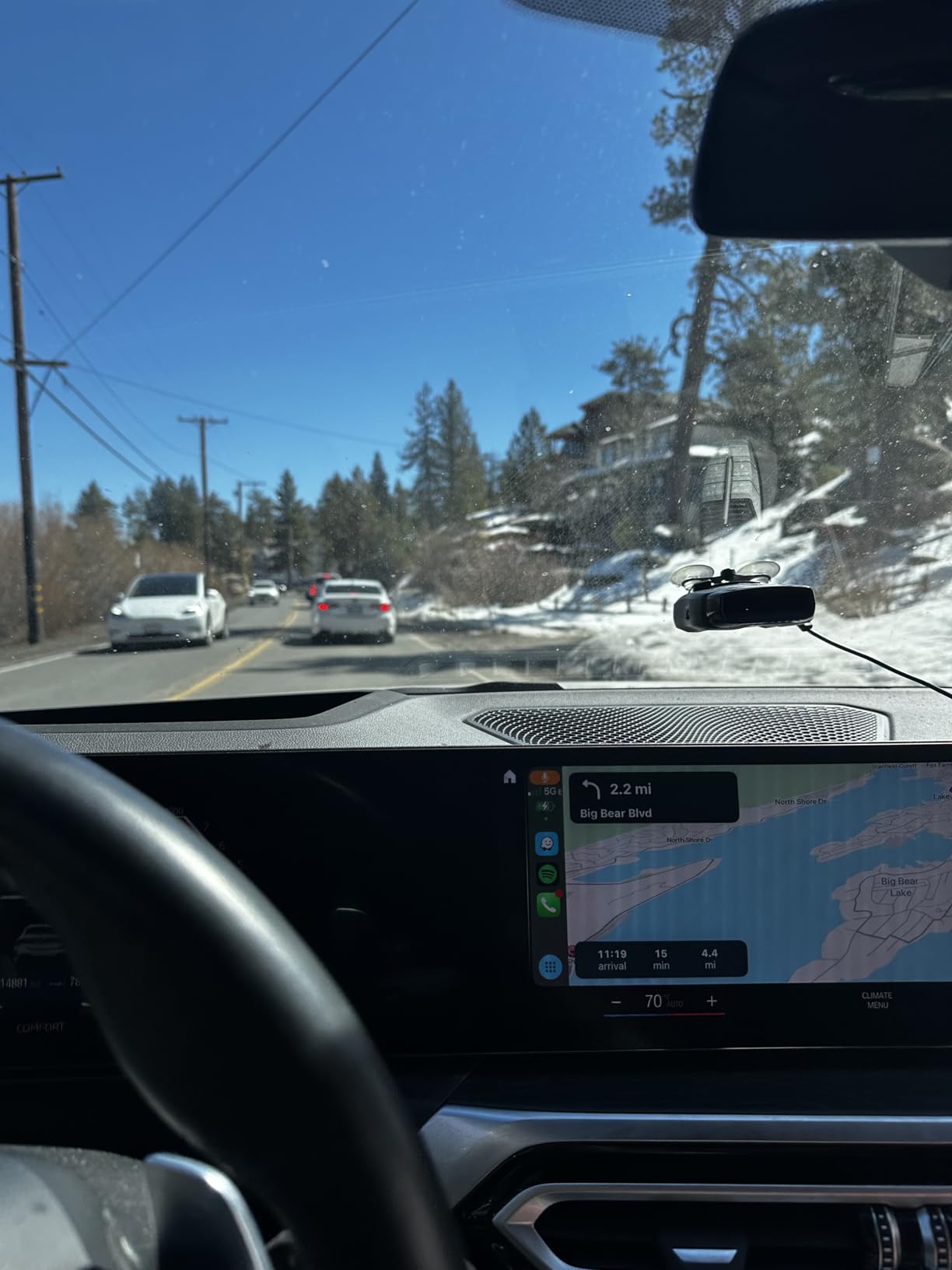
The RAD 480i is the unit I keep coming back to for truck duty because it does the one thing most single-antenna detectors cannot: it hears behind you. LaserEye gives it front and rear detection in a body that measures 4.25 inches long and weighs just over 4 ounces, which matters when your mounting surface is a tall, raked windshield rather than a flat sedan glass.
Detection performance is the real story. Owners report assertive audible and visual alerts on Ka band against real police radar, and the ability to pick up a signal early enough on a straight interstate run to give you a genuine margin. That is where a truck earns its keep, because you carry more stopping distance than the driver beside you.
In traffic it behaves better than its class usually does. The updateable IVT filter and the anti-falsing circuitry cut most of the noise from blind spot monitoring and other vehicle avoidance systems, which in a truck is a constant background hum of signals from every car around you.
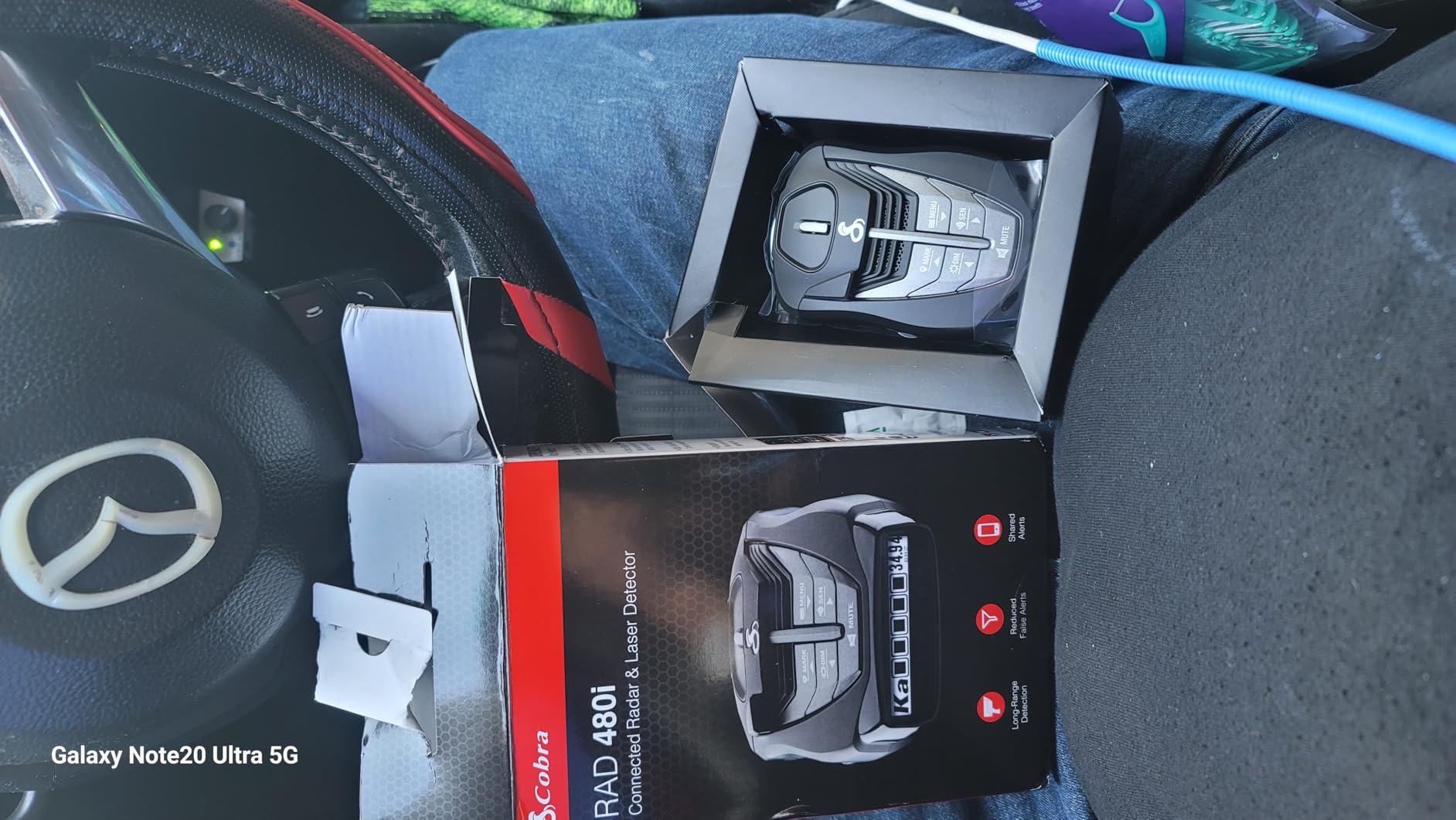
The OLED display is bright enough to read in daylight through a windshield that is catching low sun off a hood, and the Bluetooth pairing is quick and works with CarPlay and Android Auto. Shared alerts from the Drive Smarter community give you crowd-sourced information about what other drivers are seeing, which on a long haul is genuinely useful situational awareness.
The included 12V power cord, suction cup mount and hook and loop dash fastener cover both mounting styles, and the compact footprint means it can sit low on the dash of a pickup without eating your sightline. The one habit it forces on you is learning where the mute button sits before you need it.
Who the RAD 480i suits in a truck
Pickup owners who tow and want a rear signal for the radar behind you on a two-lane road. It is also the easiest of the twelve to live with, because the front and rear coverage means you do not have to reason about where a threat is coming from before you react.
The app integration is a real advantage if your truck has a modern head unit. Display and alert control from the screen keeps your eyes on the road instead of down at a small unit bolted to glass.
Where the RAD 480i falls short
The mute button sits on the unit itself, which is awkward from a high truck seating position where you are reaching down and across. That is a small ergonomic complaint that becomes a bigger one the higher you sit and the more you have to lean.
The paired app is the weak link. Owners report connection problems and unwanted email notifications, and without the app connecting you do not get GPS lockouts or automatic sensitivity mode. Some units have also reported speaker failure and lost audio after roughly a year and a half of service, and K band chatter still reaches some owners in dense city driving.
2. Uniden R3 – Best Long Range for Highway Running
- Class-leading detection range on open highway
- Excellent filtering against collision avoidance radar
- GPS mute memory clears repeat nuisance signals
- Compact body that fits low in a tall cab
- Free firmware and camera database updates
- The supplied suction cup mount is weak on a tall windshield
- Needs real tuning time before false positives settle
- Camera database covers US roads only
The R3 is the performance-per-dollar answer, and owners describe kilometre-plus detection distances on open highway with class-leading Ka band sensitivity. For a truck doing 70 mph on an interstate with a state trooper sitting in a median, that extra margin is the whole point.
Filtering is the surprise. After firmware updates, owners report near-zero false alerts, including against the newer vehicle collision avoidance radar that fills a truck’s surroundings with K band noise. The beeps speed up and the display colour changes as the signal strengthens, which tells you how much time you actually have.
The built-in GPS remembers and mutes common false alerts such as retail store automatic doors along the routes you drive regularly. For a truck on a fixed lane, that is more useful than it sounds, because your route is predictable and the nuisance sources repeat.
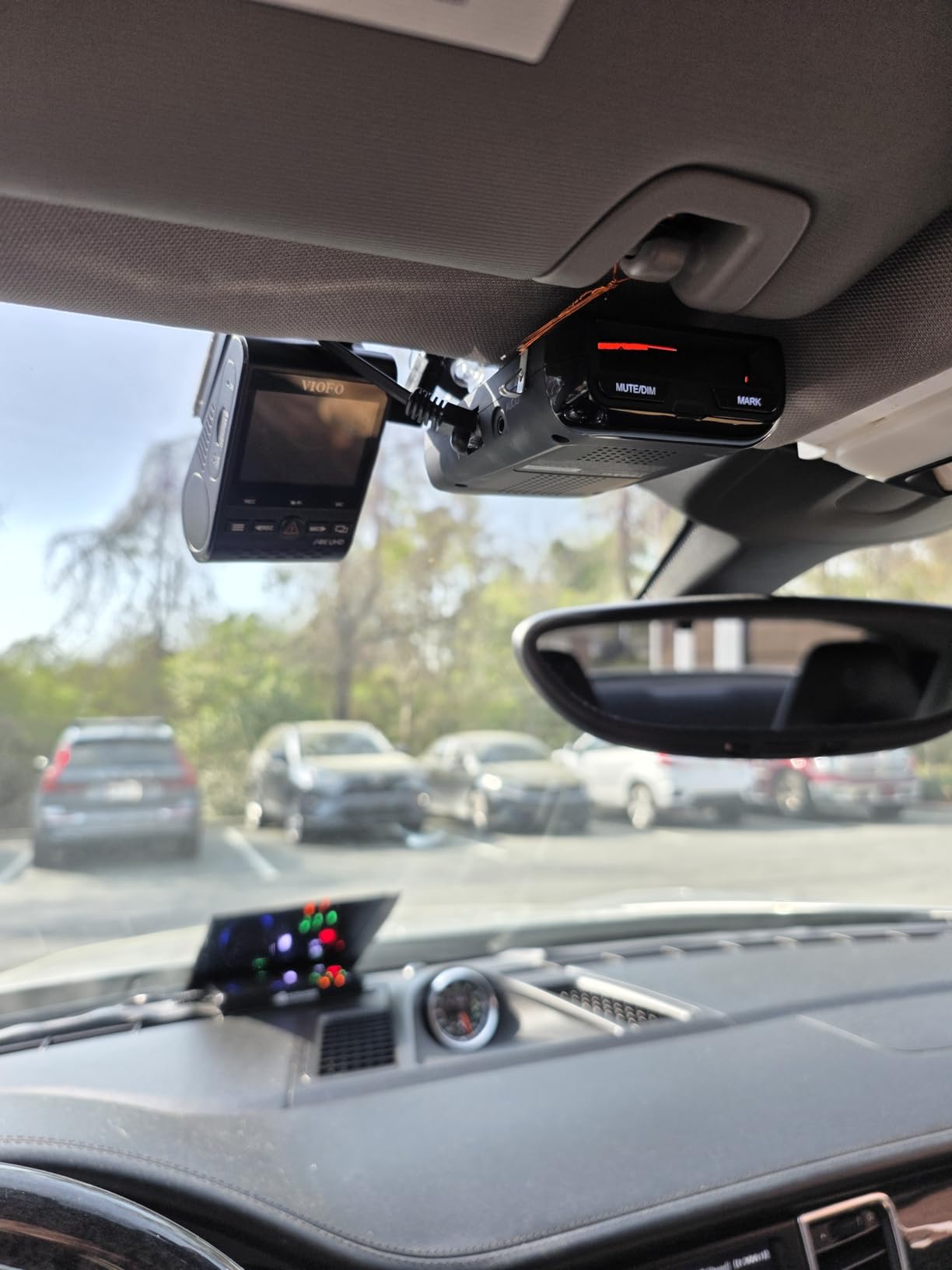
The multi-color OLED shows more useful information at once than the small segmented displays on budget units, and the programmable voice warnings let you run it hands-free. Free firmware and database updates keep camera locations current without a subscription.
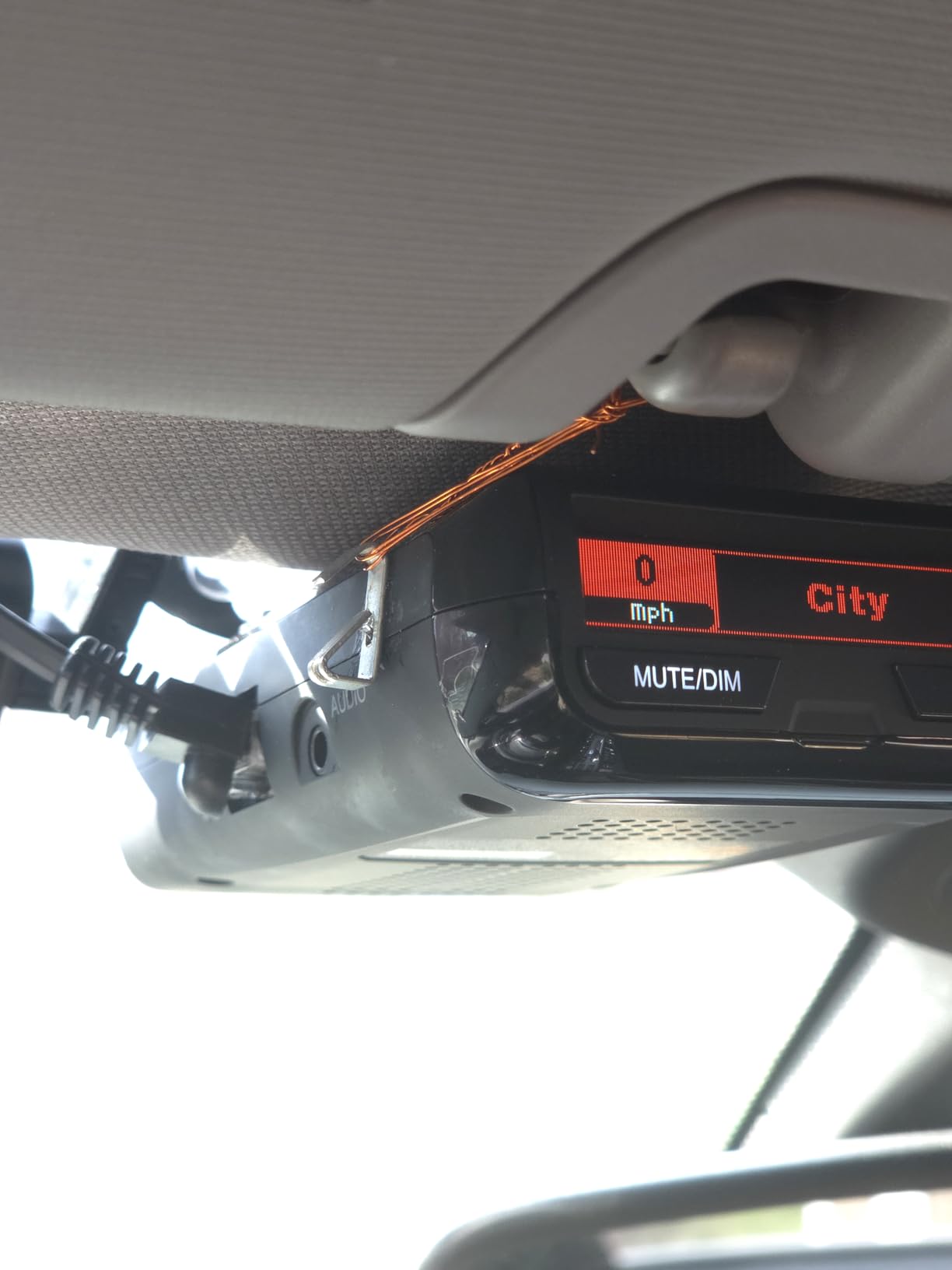
The body is compact, 4.5 inches long and 1.7 pounds, which helps it sit low in a truck cab without blocking your view down a tall windshield. Owners regularly highlight that compactness as a deciding factor in a truck.
What the R3 does well in a truck cab
Raw range on a straight highway, where the road ahead is the point. When the list of picks is mostly premium dual-antenna units, the R3’s answer is that it simply hears things further out, and enthusiasts run it as a daily driver rather than saving it for show.
GPS mute memory is genuinely valuable on a fixed freight lane. Press and hold to mark a nuisance source once, and it stops interrupting you on every return trip.
What to watch for before you buy
The supplied suction cup mount is the most repeated complaint and it is a truck-specific one. On a tall, curved windshield those stock cups let go, so budget for a heavier-duty windshield mount or a hardwired dash placement.
Settings need real tuning time before false positives are under control, and the rear sensor cover can detach if the unit is knocked loose. The preloaded camera database is US-only, which matters if you cross into Canada or drive overseas.
3. Uniden R7 – Best Directional Arrows
- Dual antennas pinpoint front side and rear threats
- Flags multiple signals on the display at once
- Filtering stays quiet in dense traffic
- GPS self-muting clears repeat alerts
- Fast alert ramp-up gives braking time
- No Bluetooth so updates need a laptop and USB
- Menu system is dense and takes practice
- Arrows occasionally point the wrong way
- Does not detect radar detector detectors
The R7 is the enthusiast benchmark for a reason: two antennas and real directional arrows. On a highway with a car running alongside you, knowing the signal is behind and to the side instead of guessing is the difference between reacting and hesitating.
Owners routinely report detecting radar two to three miles ahead on a straight highway stretch. That figure comes from open road with the antenna high and clear, and it is the number that matters most for a loaded truck that needs distance to slow down.
Filtering is best-in-class for a directional unit. It stays quiet in dense traffic despite widespread blind spot radar, which is exactly the environment a truck sits in, boxed between a sedan and a box trailer.
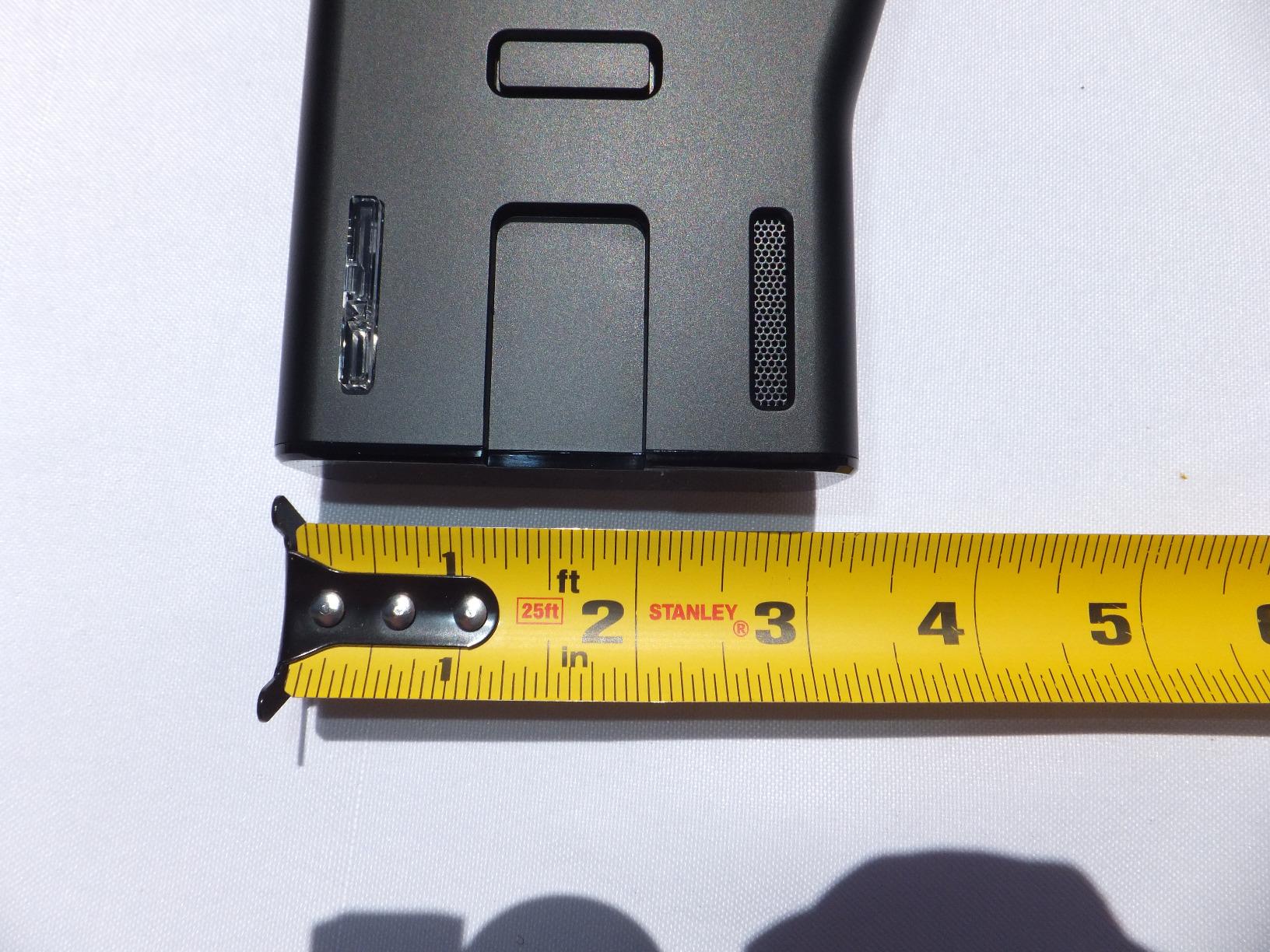
The large multi-color OLED display shows up to four signals at once, so you can see a front threat and a rear threat together. GPS self-muting maps out nuisance signals on your regular routes, and the unit lifts out of its bracket easily for USB firmware updates.
Alerting ramps up fast and loud, which owners credit with giving ample braking time. At 6.72 ounces it is light on the glass, and at 4.81 inches it does not dominate the lower windshield.
When the arrows earn their cost
If you run loaded, run traffic, or spend time on divided highways with cars beside you, the arrows turn a vague alert into a decision. The R7 tells you which side to act on, so you do not swerve toward a threat that is not there.
Showing multiple simultaneous threats is the feature experienced drivers mention most on loaded routes, where a rear radar source is normal and not a reason to panic.
What holds it back
There is no Bluetooth, so every firmware and database update means unplugging the unit and connecting it to a laptop. In a truck cab that is an inconvenience every few months rather than a tap.
The menu is dense and needs practice, arrows occasionally point the wrong way for a given signal, and the GPS lock can take a moment to acquire on startup. It also does not detect radar detector detectors such as VG-2, which is a specific problem on RDD-banned roads.
4. Uniden DFR7 – Best Rear Detection Per Dollar
- Reliable detection about a mile down the road
- Strong back-end detection in side by side testing
- Mute memory for individual nuisance locations
- Quiet Mode filters parking lot and light false alerts
- Easy to learn for a first time buyer
- Bulky body that needs careful windshield placement
- Beeps constantly on K band until bands are narrowed
- Battery powered design with a bulky form factor
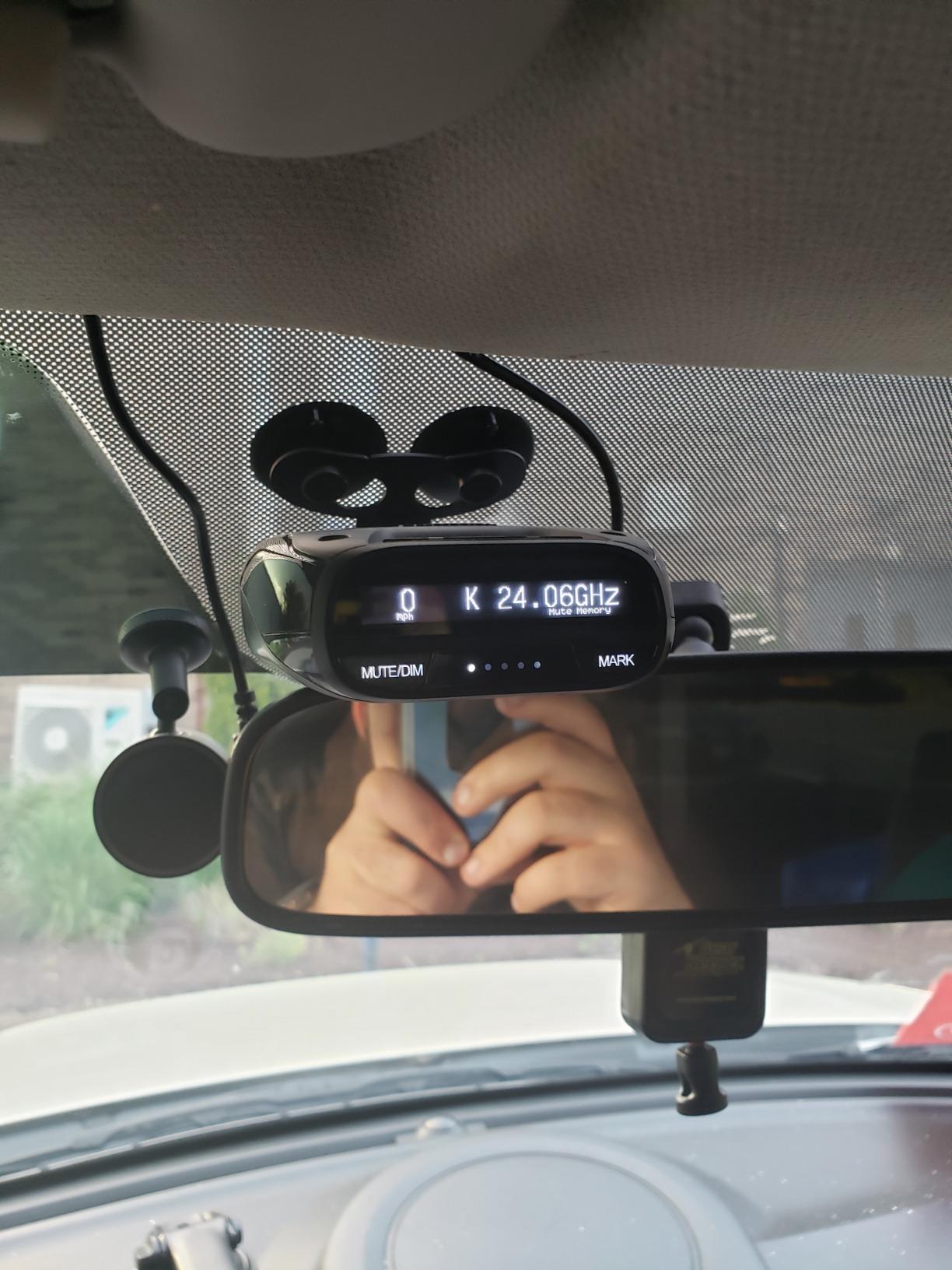
The DFR7 is the mid-tier step up that still surprises people in side-by-side testing, and the part that stands out for trucks is the back end. Owners repeatedly note stronger rear detection than cheaper units, which matters when a threat is behind you on a rural two-lane.
Detection at roughly a mile down a straight road is a real number from owners, not a marketing claim. Wide band protection covers radar and laser, and advanced false alert filtering handles blind spot monitoring and collision avoidance systems.
The OLED display shows band frequency, numeric signal strength, max speed warning and vehicle battery voltage. That voltage readout is a nice touch in a truck because it tells you when the accessory circuit is sagging.
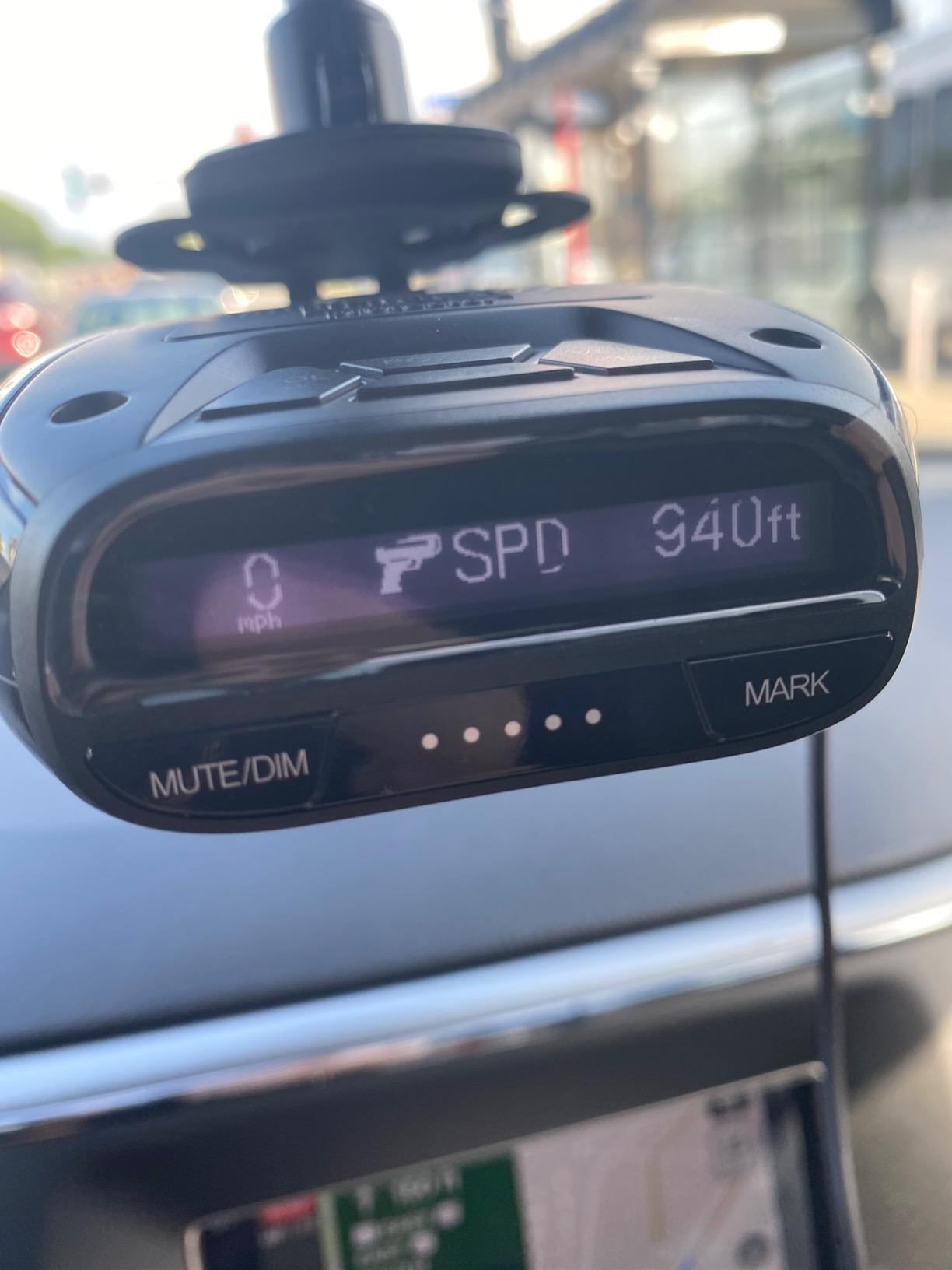
Mute memory for marking individual nuisance locations is the most-loved feature, and Quiet Mode tied to GPS speed filters parking lot and traffic light false alerts without you touching anything. Owners also call it easy to learn, which is unusual in this category.
For a first-time buyer moving up from a cheap unit, the difference is dramatic: better range, better rear coverage and a GPS database with free updates.
Where it makes sense in a truck
If you want the DFR7 to handle the rear threats you get on a two-lane highway with a trailer behind you, this is the cheapest way to get real back-end performance. It costs noticeably less than the dual-antenna directional units.
Quiet Mode and speed-based filtering reduce the constant low-level chatter that makes people turn a detector off entirely, which is the most common reason detectors end up in a glovebox.
What to plan around
The body is bulky at 8.25 inches long, so it needs careful windshield placement to stay out of your sightline, and that is harder to achieve on a tall cab. It is also a larger unit on a curved glass surface.
Out of the box it beeps constantly on K band until you narrow the bands manually, and it can require extensive setting changes to quiet newer vehicle radar. Some long-term owners report the speaker eventually failing after several years of service, and the camera database covers the US and Canada only.
5. Cobra RAD 350 – Best Entry Level for a Work Truck
Cobra RAD 350 Laser Radar Detector, Long Range, False Alert Filter, Black
- Very low entry cost with front and rear laser detection
- Suction mount is extremely solid on rough roads
- Unique tones per band plus numeric signal strength
- Tiny footprint that moves easily between vehicles
- IVT filter keeps highway noise to brief blips
- No voice alerts so you read the display instead
- Silver top finish throws glare at night
- Supplied power cord is short for hidden routing
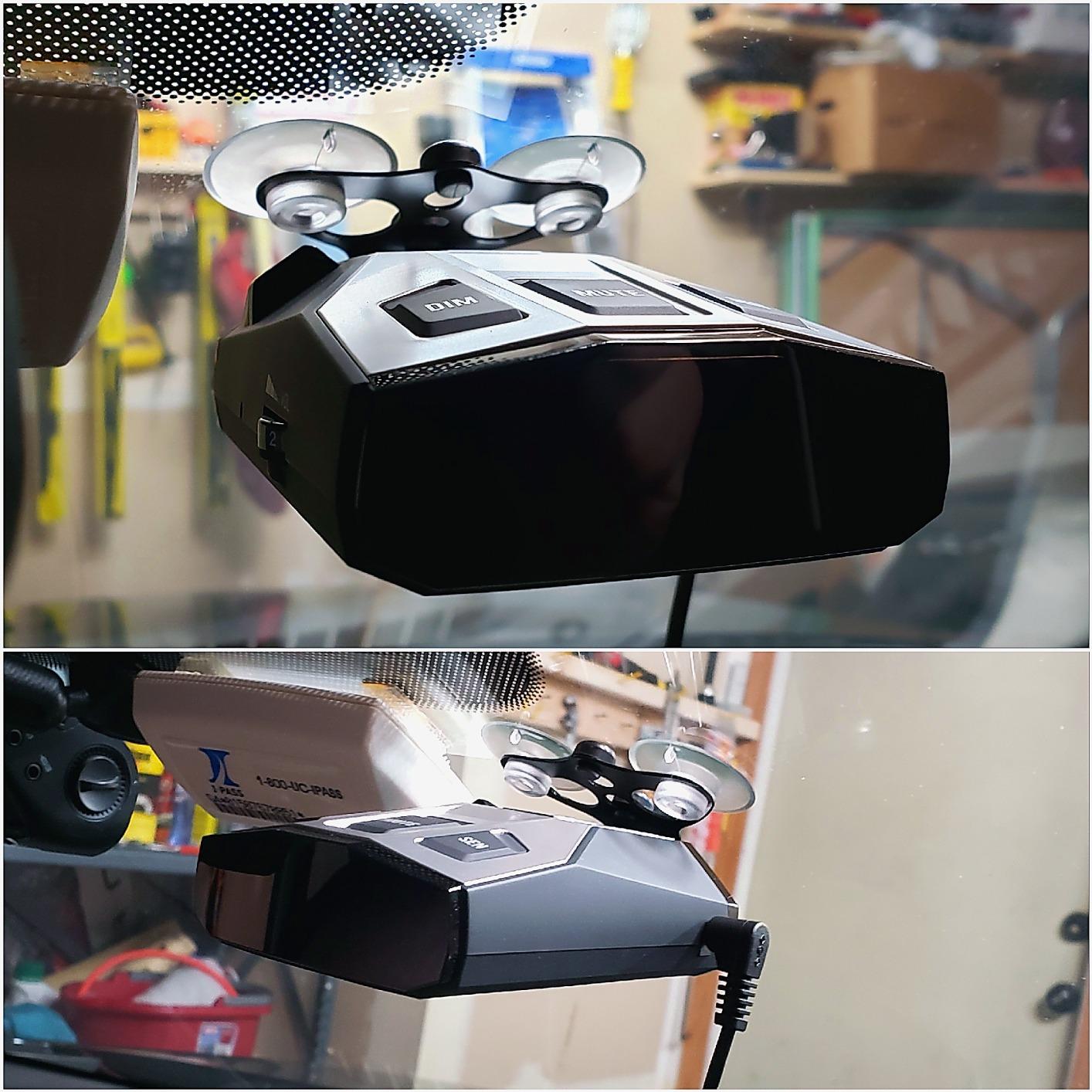
The RAD 350 is the honest entry point, and in a truck context its strongest feature is physical rather than electronic. Owners single out the suction cup mount as extremely solid and holding up on rough roads, which is the opposite of what we heard about the premium units.
For the money you get front and rear laser eye detection, X, K and Ka band coverage with signal strength, and VG-2 signal detection. The patented IVT filter reduces alerts from collision avoidance systems and keeps highway-mode noise down to brief low-level K band blips.
Unique tones per band plus a numeric signal strength meter let you judge the threat level at a glance without reading anything. That matters at speed, when looking down at a display is the last thing you want to do.
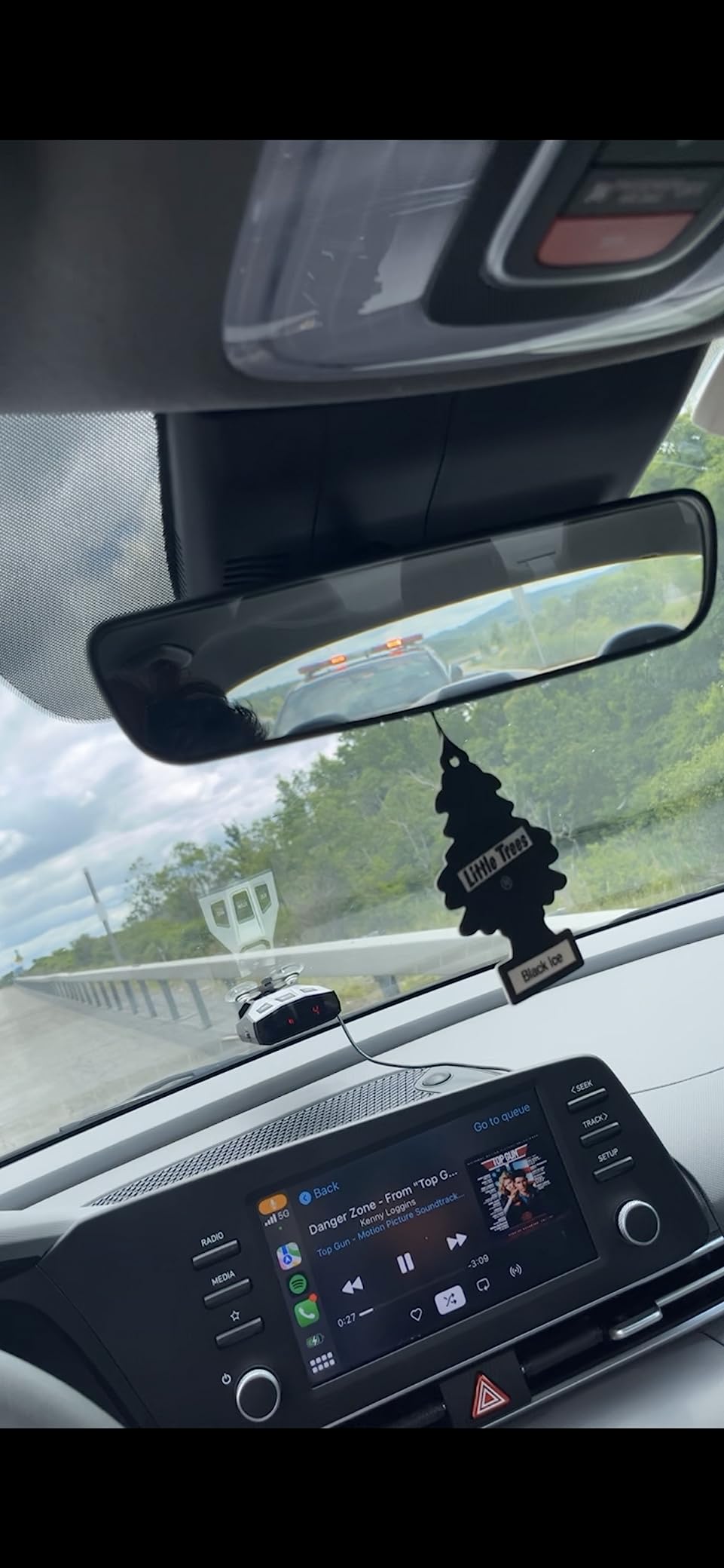
Instant-On ready means it responds quickly to radar guns rather than waiting for a full signal, and the 7-segment color display shows band icons and numeric strength. The 4.12 inch footprint is small enough to move between a truck and a family car in seconds.
It also works internationally where speed cameras use X, K and Ka radar, which makes it a reasonable option for a cross-border truck.
Who should buy this one
A work truck that spends its life on farm roads and short interstate runs where you want basic front and rear awareness without a subscription, an app or a phone pairing. It does one job and the mount will not let go.
The tone-coded alerts are genuinely useful if you dislike feature-heavy units, because the sound alone tells you the band and the strength without any screen interaction.
Where it runs out of road
Detection distance is only acceptable rather than strong, so this is not the tool for open highway range. There are no voice alerts, which means identification depends entirely on tone recognition and the display.
The silver top finish throws a distracting glare onto the windshield at night, and the supplied 6 ft power cord is too short to route hidden along the headliner in a sleeper cab. Quiet output is also easily drowned out by music or a loud diesel cab.
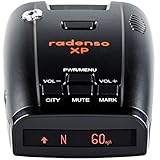
6. Radenso XP – Best False Alert Filtering
- Exceptionally quiet with almost no false laser alerts
- Best-in-class blind spot monitor filtering
- GPS lockouts remove repeat alerts other brands miss
- Ready out of the box with no setup
- Large OLED with smart dark mode
- Power plug exits on the driver side adding clutter
- No printed instructions and the online manual is vague
- Volume could be stronger in a loud diesel cab
Every filtering list eventually names one unit as the quietest, and among owners the XP is usually it. Reviewers specifically call out the absence of false laser alerts, including next to newer vehicles, and the blind spot monitor filtering is regularly described as best in class.
In a truck that quiet matters more than in a car, because the default environment is a wall of newer cars with active avoidance systems. A detector that stays silent until it means something is the difference between keeping it mounted and pulling the cord.
GPS lockouts remove repeat false alerts along regularly driven routes. Press and hold a button to add one, and the same automatic door or signal source stops interrupting you every trip.
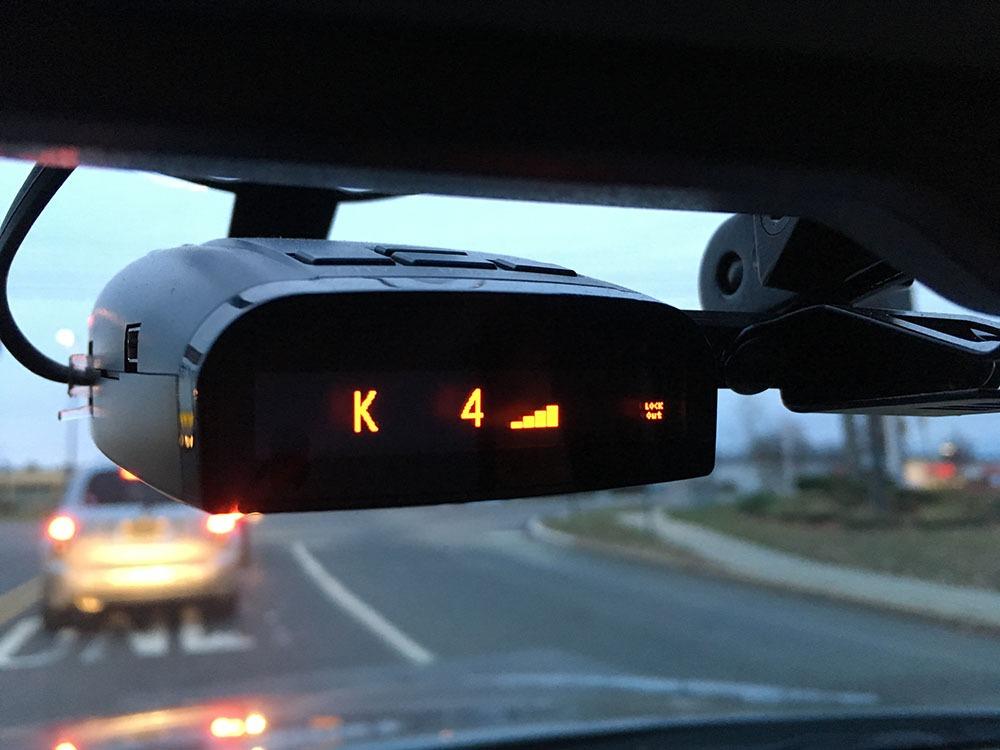
It is ready out of the box, factory settings already configured, which is unusual in this category and saves the tuning weekend that rivals demand. Low speed muting and automatic speed-based sensitivity adjustment handle parking lots and city driving without input.
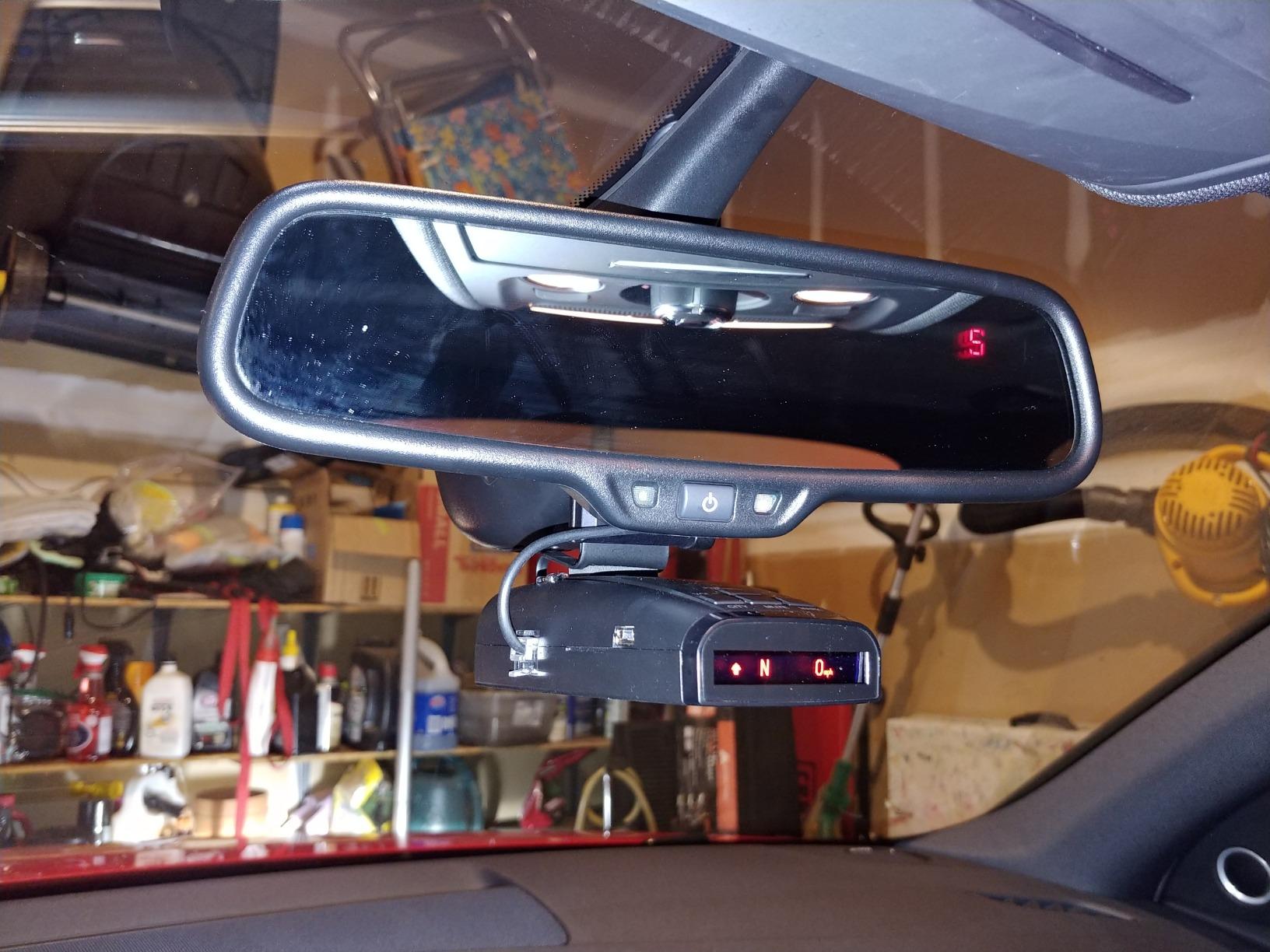
The OLED display is bigger than most at this level and has a smart dark mode that keeps the screen black until an alert fires. Buttons are large and well spaced. Support runs out of the Cincinnati headquarters with a one year manufacturer warranty and a speeding ticket guarantee.
Best fit for a truck
Drivers whose biggest frustration is false alerts. If you have tried a more sensitive detector and turned it off because of the noise, the XP is the reset, because the filtering is aggressive enough to survive dense traffic.
It also suits international and cross-border work better than most, since the filtering does not depend on a US camera database to keep the volume down.
What to watch for
The power plug exits on the driver side, which adds cable clutter right where a truck driver is looking through the A-pillar. There are no printed instructions in the box and the website manual is described as vague and out of date after firmware updates.
Volume could be stronger in a loud diesel cab. Detection can also fail when the officer points the gun away or when it is directly in front of you, it fires on Opticom-equipped fire trucks, and there are no directional arrows.
7. Escort MAX 3 – Best Bluetooth Integration
Escort MAX 3 Laser Radar Detector, Bluetooth Connectivity, Premium Range
- Picks up a state trooper about a mile out
- AutoLearn mutes repeat static signals reliably
- Bluetooth puts alerts on the truck head unit
- Far fewer blind spot false alerts than older Escort units
- Solid mounting bracket and a two year warranty
- Single antenna so no directional arrows
- Some owners report slow scanning and delayed alerts
- Supplied windshield mount does not hold reliably on cleaned glass
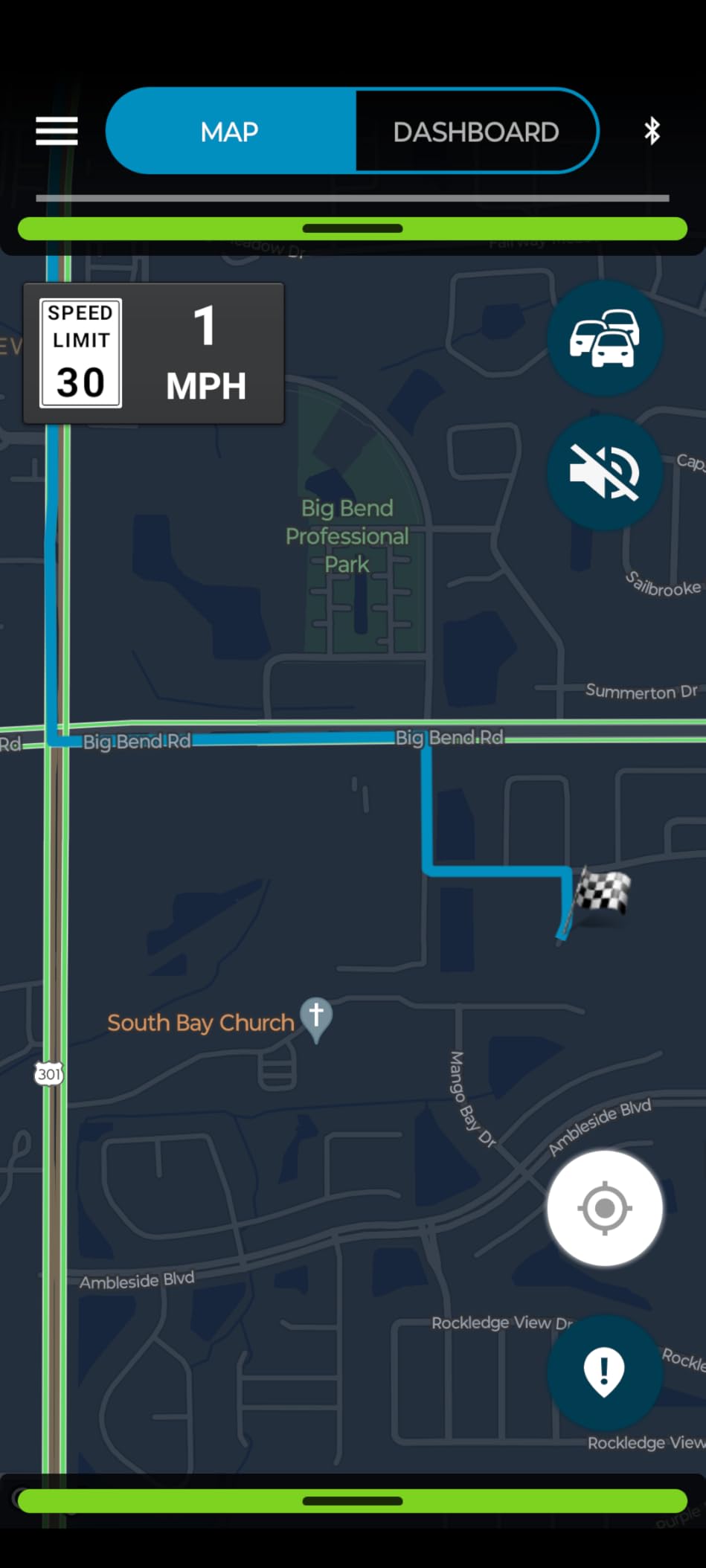
The MAX 3 is Escort’s mid-range step and its stand-out feature for a modern truck is Bluetooth. Band toggling and the display move to the vehicle head unit, which is a cleaner install than a small unit suctioned to a tall windshield.
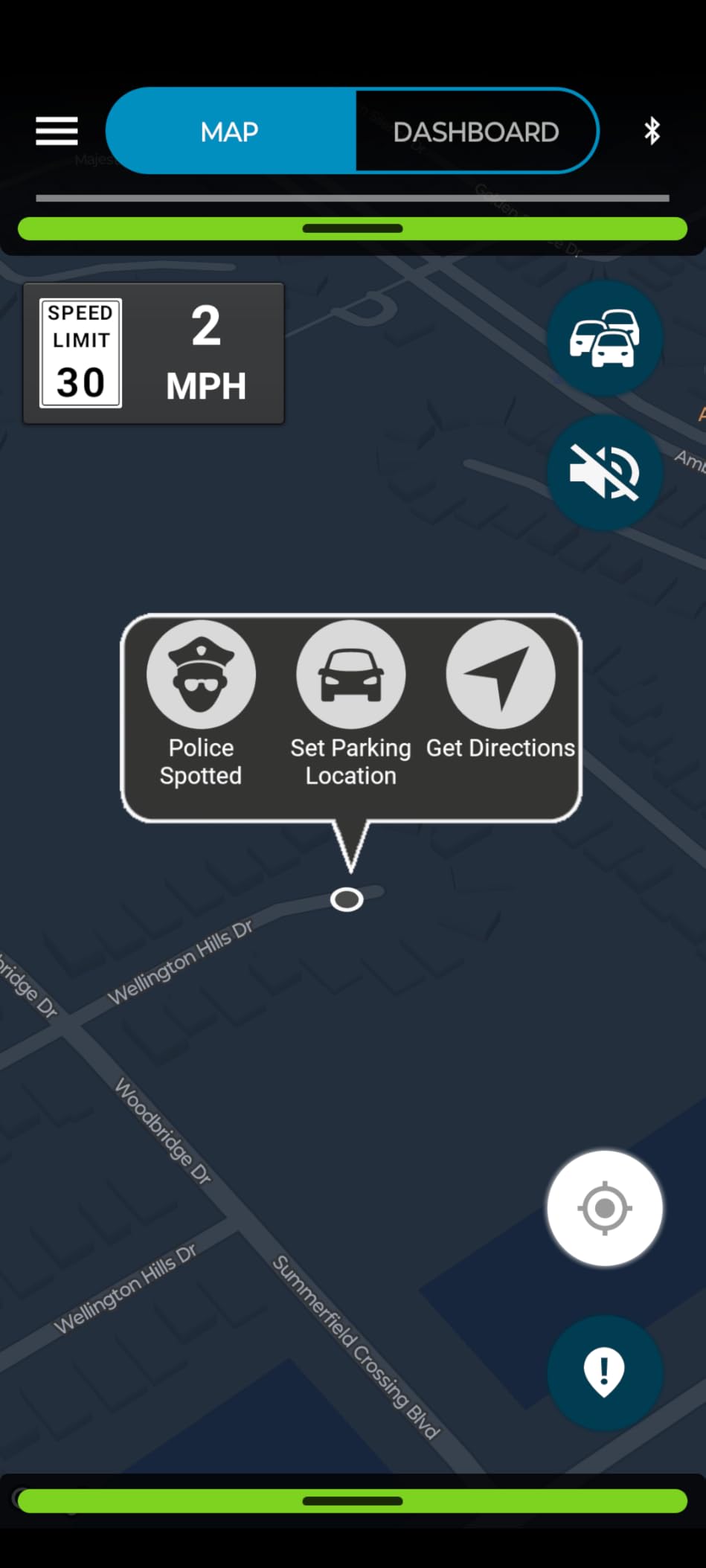
Range is the classic Escort range, with owners reporting a state trooper picked up about a mile out. Variable Speed Sensitivity adjusts the sensitivity based on speed automatically, so city driving is quiet and highway driving is wide open without touching the menus.
AutoLearn GPS based software learns your route after repeat trips and rejects location-specific false alerts. The Defender database handles red light and speed camera locations.
Owners upgrading from an older Escort X50 report noticeably fewer blind spot sensor false alerts. Filtering here claims to process thousands of signals to reduce noise, and long-term Escort owners report continued reliability.
It also pairs with the Escort M2 smart dash cam, which matters if you already run one for insurance evidence. The two year manufacturer warranty is the longest in this roundup and counts in our scoring.
Why truck drivers pick this one
The head unit integration. On a newer pickup with a large center screen, having the detector display there means your eyes stay up and the windshield stays clear, which is a real benefit over a suctioned unit at the base of the glass.
A two year warranty also matters for a truck, because the unit lives in a working vehicle that takes heat, cold and vibration every day.
What experienced owners criticise
Single antenna means no directional arrows and no front or rear distinction, so you are guessing about direction from signal behavior alone. A vocal minority of experienced detector owners also criticise slow scan speed and delayed alerts, taking several seconds to trigger.
The supplied windshield mount does not reliably stick to a cleaned glass surface, which again is a tall-windshield problem more than a sedan problem. The Drive Smarter app is needed to get the most from the filtering features.
8. Escort Redline 360c – Best for Towing and Loaded Runs
- Extreme range with a much faster processor
- 360 degree directional awareness and precise GPS
- AI-assisted filtering cuts false alerts
- Stealth technology reduces on-road detectability
- Magnetic mount and travel case included
- Premium price puts it beyond most budgets
- Far fewer customer reviews than mainstream models
The Redline 360c is the pickup and towing answer in this list. When you are loaded and the trailer is pushing your stopping distance, the detector’s job is to give you maximum time, and this one claims twice the range of the Redline EX with a processor the company says is 25 times faster.
Review volume here is low compared with the mainstream units, but the owners who bought it describe extreme detection range with a genuinely fast processor and 360 degree directional awareness. The GPS position accuracy within 2.5 meters makes the lockouts precise enough to trust.
Stealth technology keeps the unit from being detected on the road. That matters even in states where detectors are legal, because it reduces the chance of a random sweep flagging it.
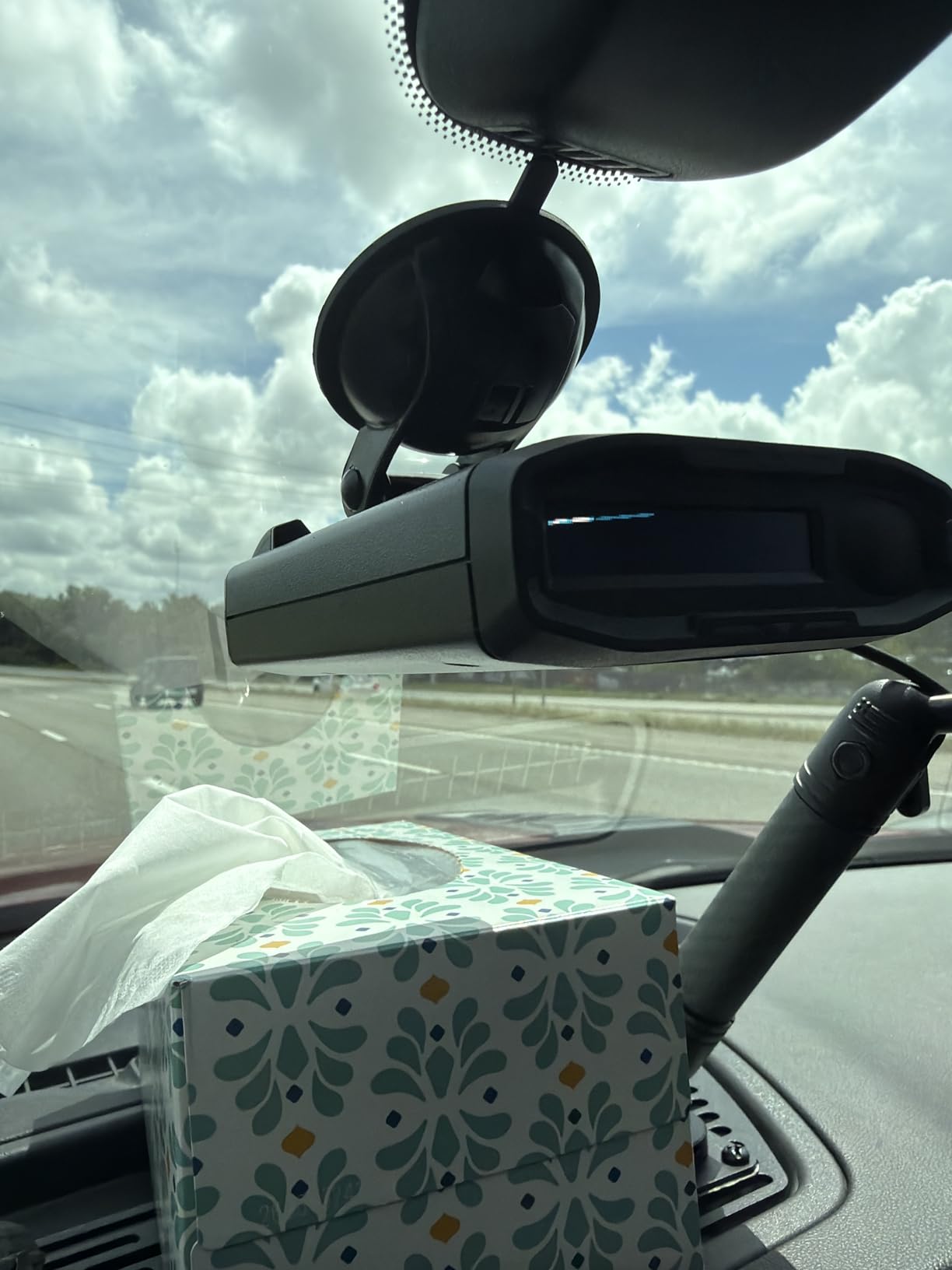
AI-assisted filtering combines GPS Autolearn, an updateable IVT filter and the Drive Smarter shared alert network. Drive Smarter community alerts also work with CarPlay and Android Auto.
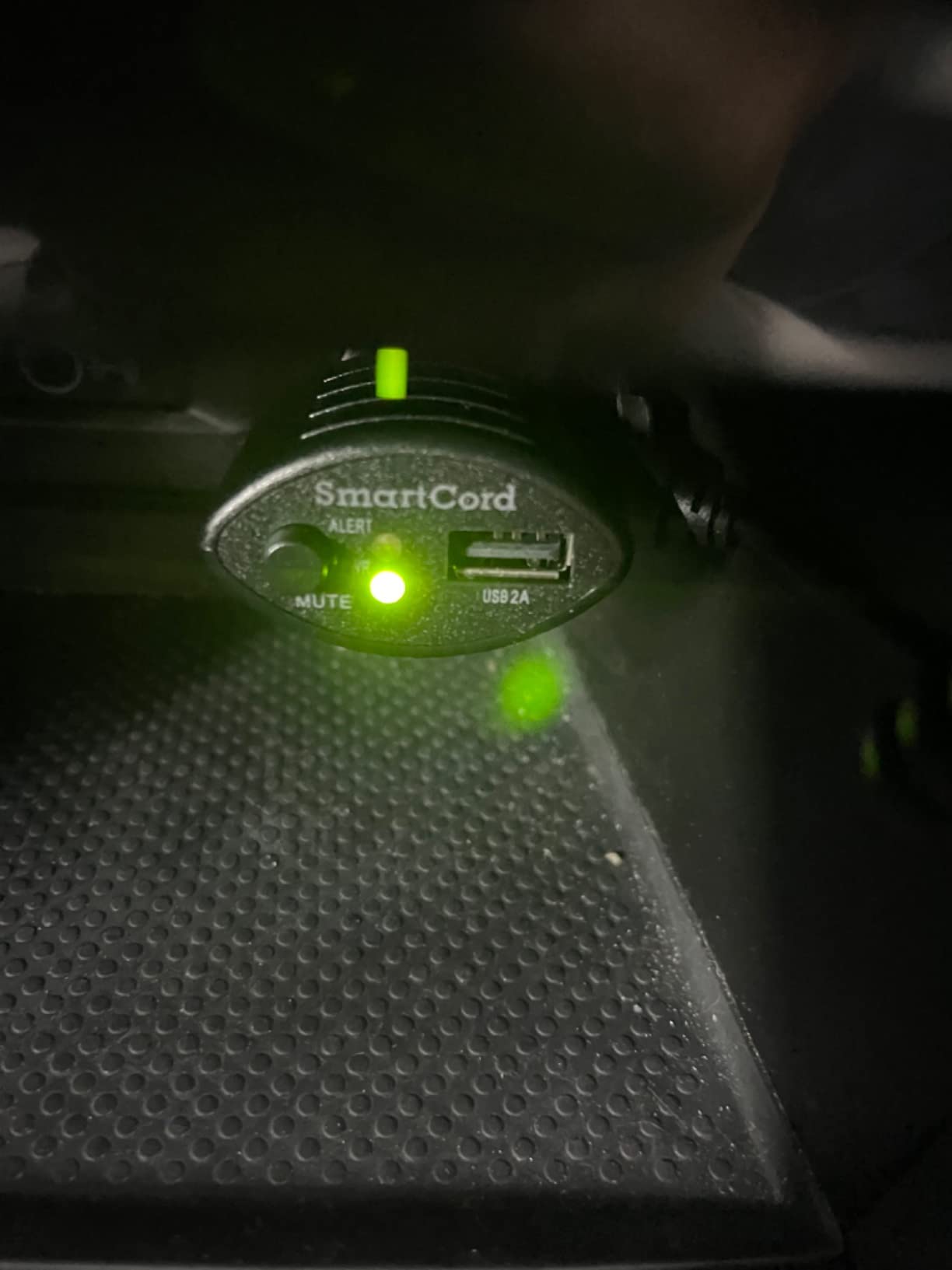
The SmartCord USB with AutoMute and the EZ Mag Mount suction cup make installation clean and quick, and the premium travel case is genuinely useful because it gives you a place to put the unit when the truck is parked at a scale house or a secure yard.
Who it is for
Pickup and tow operators who load heavy, run long stretches of open highway and want the earliest possible warning. The stealth and travel case combination suits a truck that spends nights in public parking.
It is also a strong second unit for a driver who wants front and rear coverage from two separate detectors, a setup enthusiasts on radar forums describe as their daily driver arrangement.
What to consider carefully
The premium price puts it out of reach for most buyers, and that is the honest reason it is not our number one pick. Review volume is thin at 394 ratings, so long-term reliability data is thinner than for the mainstream models here.
Stealth reduces detectability but does not make possession legal where it is banned, and it does nothing for you on an RDD-banned road where the unit receives no signal at all.
9. Escort MAX 360c MKII – Best Wireless Updates
Escort MAX 360c MKII Laser Radar Detector, 360° Directional Arrows, Black
- Around 50 percent more range than the original
- Directional arrows clearly show signal direction
- Much improved collision avoidance and blind spot filtering
- Displays multiple signals at once
- Dual-band Wi-Fi over-the-air updates
- Noticeably larger body than older Escort models
- Wi-Fi updates take over an hour
- Drive Smarter app is subpar
- Isolated report of a screen failure at five months
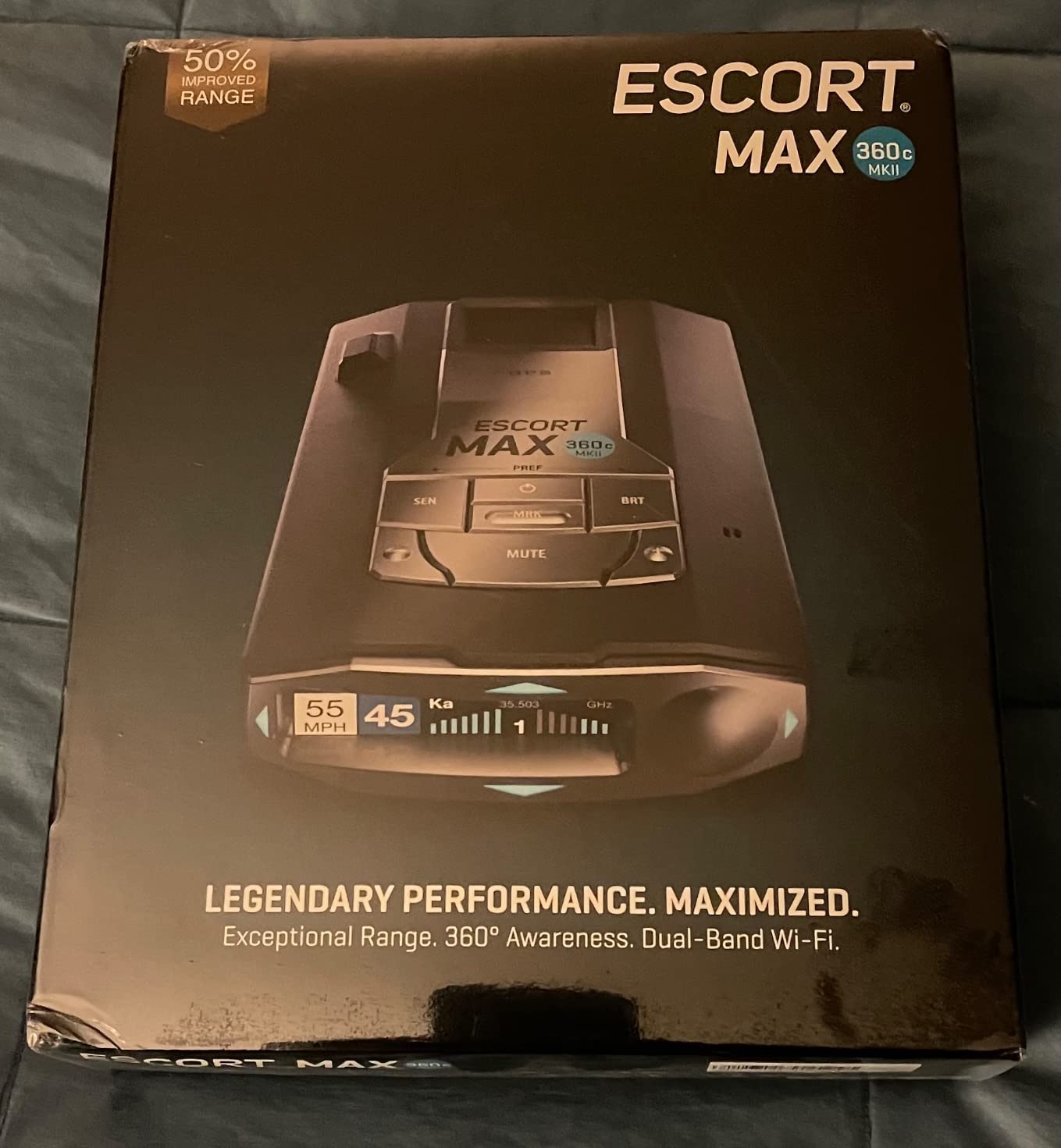
The MKII is the refresh that fixed the original MAX 360c’s biggest weakness. Dual antennas increase range and sensitivity by around 50 percent on the revamped M13 platform, and the Blackfin DSP processes signals immediately so alerts ramp up fast.
It detects threats from all four directions with directional arrows and displays multiple signals at once when several are present. On a highway with traffic in front of and behind you, that is the display you want.
Filtering reduces collision avoidance and blind spot monitoring false alerts noticeably compared with the original. Autolearn GPS intelligence blocks recurring automatic door signals after a few repeat trips.
Dual-band Wi-Fi allows over-the-air software updates and the Drive Smarter app, and shared alerts work with CarPlay and Android Auto. There is also a choice of alert tones instead of an annoying buzz, which sounds trivial until you have driven with the buzz.
Owners upgrading from the older MAX 360 report the problem solved. The body is noticeably larger than older Escort models such as the 9500IX, at 10.08 ounces and 5.15 inches long.
When it makes sense for a truck
If your truck has a modern head unit and good Wi-Fi, updating the camera database without unplugging anything from a laptop in a parking lot is a genuine convenience. The arrows plus multi-signal display suit loaded highway running.
The improved CAS and BSM filtering is the part that matters most around newer vehicles, which in a truck is the entire surrounding traffic.
What owners dislike
Wi-Fi updates take over an hour, so connecting it to a computer is much faster when you are in the cab. The Drive Smarter app is regarded as subpar next to Waze or Google Maps.
One owner reported a black screen after five months, already out of warranty. You also cannot remove the speed-limit readout without replacing it with a less useful voltage reading, and the map and POI coverage is less accurate than expected in some regions.
10. Valentine One V1 Gen 2 – Best Simple No-GPS Setup
- Superb long-range detection
- Almost completely silent during normal city driving
- Directional indicator shows front or rear
- Learns repeat false signals and stops reacting
- Compact lightweight housing with a simple interface
- Premium price and cheaper direct from the maker
- No built-in way to mute individual recurring spots
- No GPS so no camera database
- Settings and app take real effort to learn
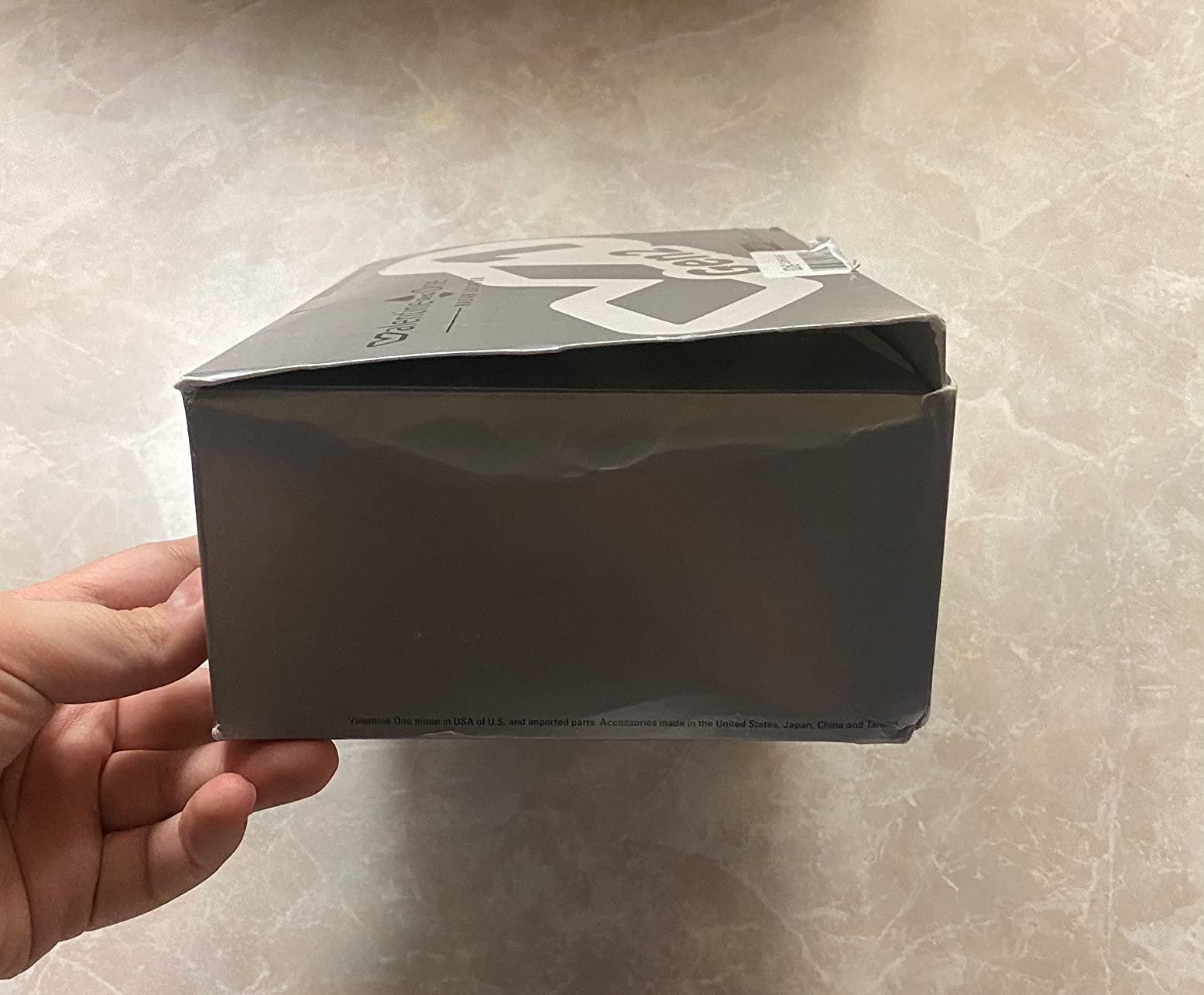
The V1 Gen 2 is the enthusiast answer to filtering, because it achieves quiet by not doing complicated things. Owners confirm the reputation: superb long-range detection alerting on radar more than a mile or two out, and genuinely silent during normal city driving so any alert is meaningful.
The directional indicator shows whether the threat is ahead or behind, and there is a rear radar antenna plus 360 degree protection against all types of laser. It also picks up super wideband Ka and Ku band.
It learns repeat false signals and stops reacting to them, which handles the fixed nuisances along a route without a GPS database.
The housing is small and light at 4.6 by 3.8 inches, which sits neatly on a truck windshield without the bulk some rivals bring. Bluetooth connects to the V1 app for configuration, though the interface stays gadget-free for anyone who prefers it.
That simplicity is the appeal for a driver tired of menus. Owners who came from feature-heavy units describe the straightforward approach as a relief.
Why drivers keep choosing it
Filtering by simplicity. Rather than a database and a menu system, it just learns the signals you drive past and shuts them out. On a fixed freight lane that works well.
Long-range detection is the other half. Enthusiasts who want maximum Ka range and good pop response regularly name this as their pick over cheaper alternatives.
What you give up
The price is high and lower direct from the manufacturer, and there is no built-in way to mute an individual recurring spot, so the same location can trigger on every trip.
No GPS means no camera database and no speed camera alerting at all, which removes a feature many truck drivers rely on for route planning. Ku band detection can also create false alerts in some areas, and the settings and app take real effort to learn.
11. Whistler CR93 – Best GPS With No Subscription
Whistler CR93 High Performance Laser Radar Detector: 360 Degree Protection, Bilingual Voice Alerts, and Internal GPS , Black
- Built-in GPS marks cameras and known speed trap locations
- Full X K Ka and laser coverage with POP mode
- FDSR and TFSR cut blind spot and door false alerts
- Bilingual English and Spanish voice alerts
- No subscription
- app or ongoing fees
- Small screen relative to modern competitors
- Lower brand awareness and review volume
- Menu navigation requires reading the manual
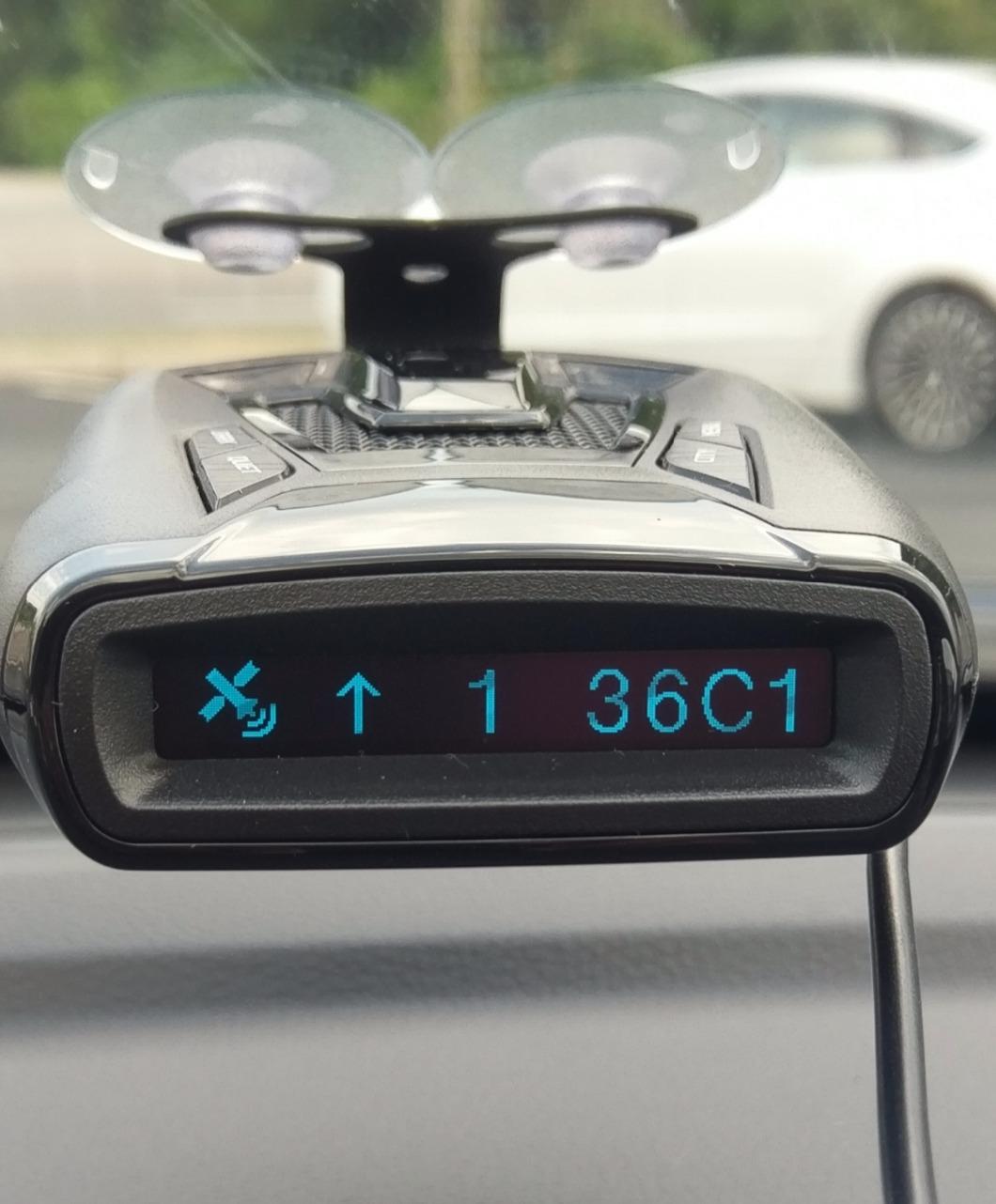
The CR93 is the answer for a driver who wants GPS camera awareness without handing over a phone number or paying a fee. Everything is built in, with no apps and no subscription of any kind, which is increasingly rare in this category.
The built-in GPS learns your route and automatically marks red light cameras, speed cameras and known speed trap locations, alerting you before you arrive even when no radar signal is present. On a truck running a repeated route, that is the feature that produces real route-planning value.
Long-range 360 degree total band protection covers X, K, Ka and laser with POP mode. FDSR and TFSR filtering suppress blind spot monitors, collision avoidance systems and automatic doors.
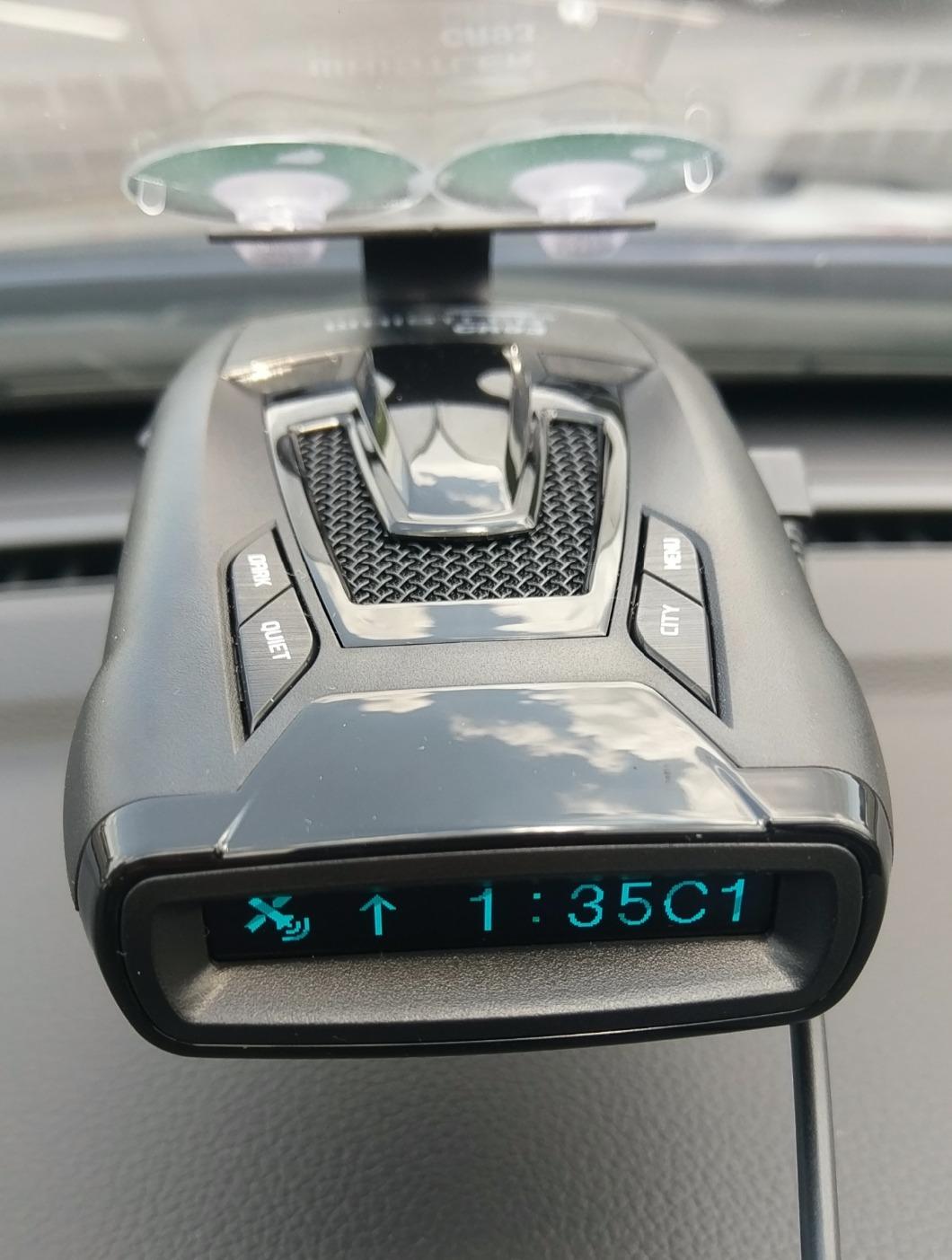
Bilingual English and Spanish voice alerts let you keep your eyes forward, which is worth more in a high cab where the display sits well below your sightline. GPS-assisted city mode reduces sensitivity automatically at lower speeds without manual adjustment.
Selectable tones let you match the alert sound to your preference, the OLED screen is high contrast, and the battery powered design gives long battery life.
What makes it right for a truck
No subscription means no account tied to your phone, which some commercial operators prefer for reasons that have nothing to do with radar. Nothing to activate, nothing to expire, nothing to manage.
The bilingual voice alerts are unusually useful in a mixed workforce, and the camera database gives advance notice of fixed enforcement that a radar-only unit will never give you.
What to know first
The screen is small relative to modern competitors at 4.93 inches wide overall, and menu navigation requires reading the manual rather than learning by pressing buttons.
Whistler brand awareness and review volume trail the Uniden and Escort lines, so there is less long-term owner data available. If you want a modern color display and richer menus, this is not that.
12. Escort iXc – Best Crowd-Sourced Alerts
Escort IXC Laser Radar Detector – Extended Range, Wifi Connected Car Compatible, Auto Learn Protection, Voice Alerts, Multi Color Display, Model:0100039-1
- Autolearn GPS learns your route and clears repeat alerts
- Extended range picks up police radar early on highway runs
- Crowd-sourced alerts flag cameras and live enforcement
- Voice alerts tailored to speed and location
- SmartCord and magnetic mount keep install tidy
- No directional arrows or front and rear separation
- Relies on the Escort Live app for its best features
- Older platform than current Escort models
The iXc is built around a simple idea, that other drivers see enforcement before you do. The Escort Live community shares over 100 million alerts a year, including red light and speed camera locations, speed limits, live traffic and police radar signals.
Underneath that, Autolearn GPS intelligence, IVT filtering and AutoSensitivity work together to eliminate false alerts by learning your route and varying sensitivity with speed. Extended range picks up police radar early on highway runs.
Voice alerts are tailored to speed and location, so the warning reflects what you are doing rather than just what the unit sees. On a long haul that is a meaningful difference in how usable the information is.
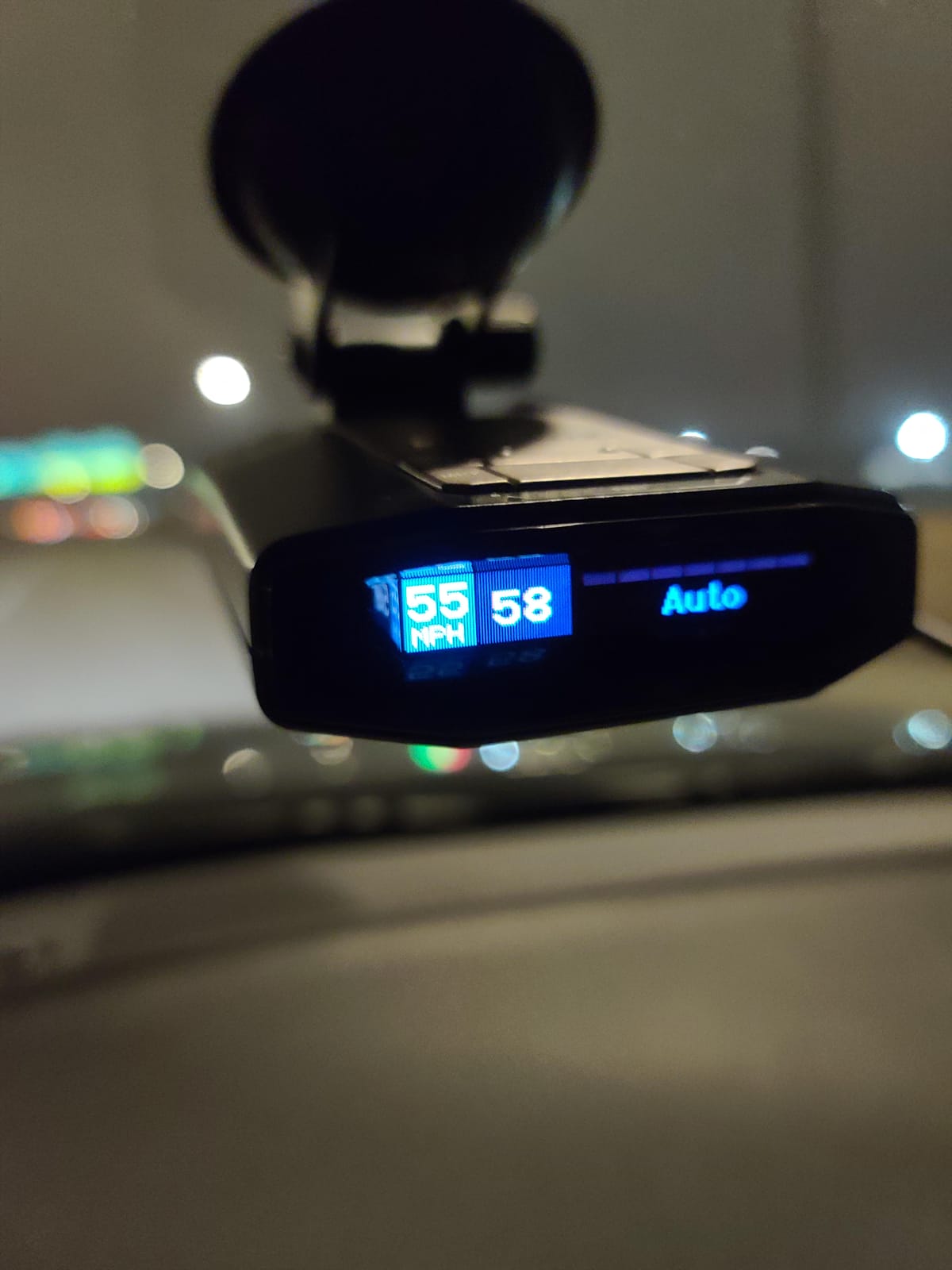
Everything is connected-car compatible through Wi-Fi, creating crowd-sourced alerts and a constantly updated database of real time user-generated reports. It pairs with the Escort Live app.
The SmartCord USB with AutoMute and the EZ MAG mounting bracket keep the installation tidy, and a travel case is included, which is useful for a truck that parks where you would rather it did not.
Where it earns a place
Crew and shared-route drivers. If other trucks on your lane are reporting what they see, that data reaches you before you get there, and the crowd alerts cover cameras the radar bands never will.
The AutoLearn plus IVT combination keeps repeat noise suppressed without a lot of menu work, and the AutoMute cord handles the volume for you.
What to consider
No directional arrows and no front or rear antenna separation, so a signal behind you reads the same as one ahead. It also relies on the Escort Live app for its best features, which means a phone and an account.
This is an older platform than the current Escort models, which shows in its lower sales rank and in the features it lacks compared with the dual-antenna units.
Powering and Mounting a Radar Detector in a Truck
This is where most truck-specific advice stops, and it is the part that decides whether a good detector stays mounted or ends up in the console. Every unit in this roundup is specified as 12 volt DC powered, and every truck runs two electrical systems depending on how heavy it is.
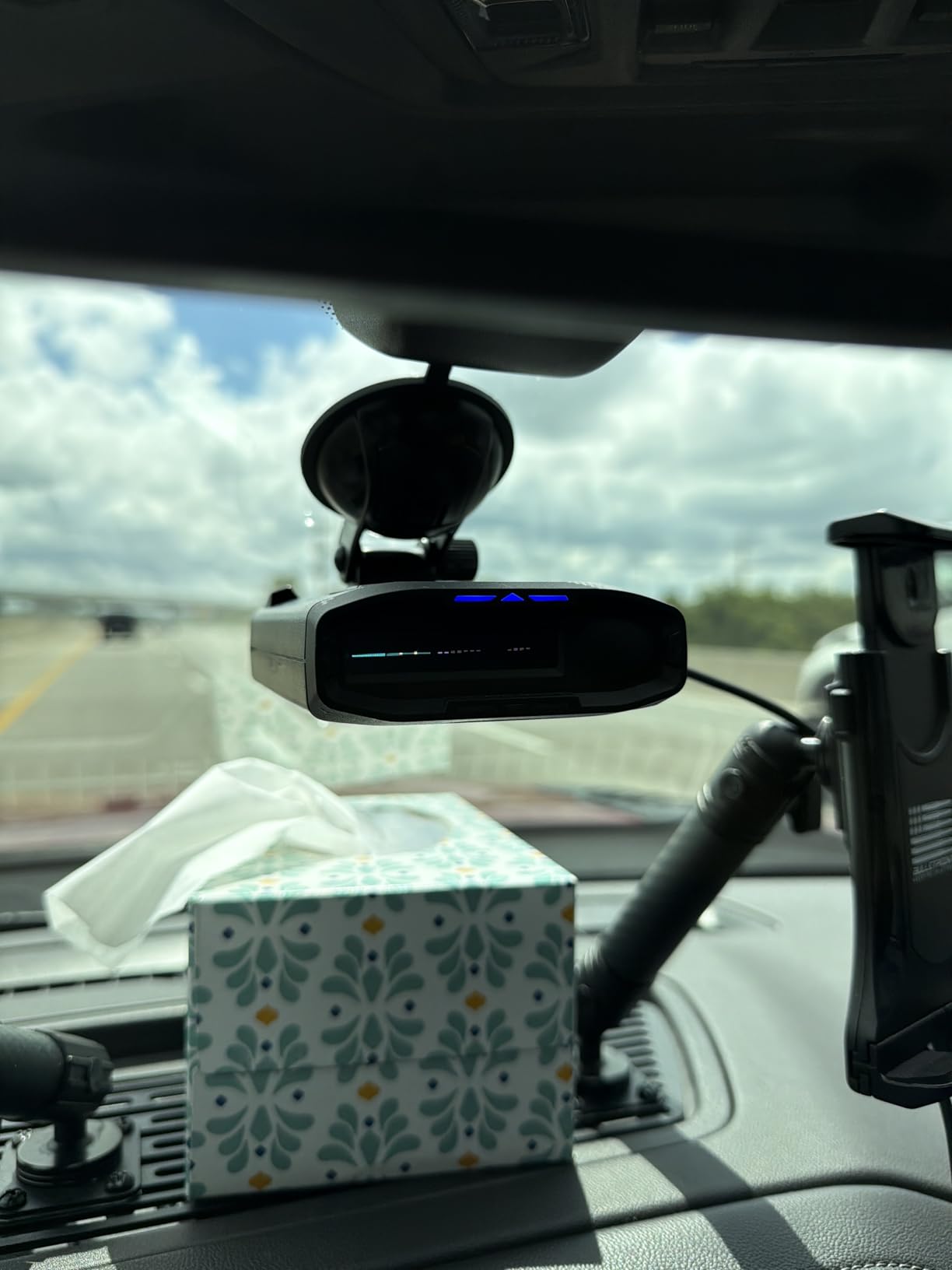
Light-duty pickups and most straight trucks run a 12 volt system straight off the battery, so the supplied cord plugs into an accessory socket or a cigarette lighter receptacle and works. Heavy trucks over 10000 lbs typically run a 24 volt system for the main body and accessories. Plugging a 12 volt detector cord into a 24 volt socket is the single most common truck-specific failure, and the fix is a step-down converter rated for 24 volts in with 12 volts out, with a fused draw.
Owners who run detectors in commercial equipment usually hardwire to an accessory circuit rather than relying on the socket, which stops the cord from swinging when you hit washboard and keeps the install clean across the headliner.
Cord length is the sleeper cab problem. The supplied cords run roughly six feet, which is fine in a pickup and short in a long-haul cab where the mount sits far forward and the socket is behind the seat or down in the console. Measure before you buy, and plan a route along the headliner or A-pillar trim so the cable never crosses your sightline.
Mounting matters as much as power. Truck windshields are taller, more curved and more often coated than sedan glass, and suction cups that hold on a flat pane can creep and let go on a raked one. Owners of the Uniden R3 and the Escort MAX 3 report the stock mounts losing grip specifically in trucks, while the Cobra RAD 350’s mount is regularly praised for holding on rough roads. If you want the comparison in a sedan context instead, our highway driving detector picks cover the fit and finish side of the same question.
Our advice is to treat the supplied mount as a starting point, keep the detector low on the glass or on the dash so it does not sit in the upper sightline, and re-seat the cups after a week of road vibration. If you drive rough routes regularly, a hardwired dash placement beats a suctioned windshield mount every time.
Does Truck Height Change Your Detection Range?
Yes, and the effect is smaller than most people expect in a pickup but worth understanding. Detection depends on how much of the radar signal reaches your antenna, and a radar gun projects a beam that spreads as it travels. A higher antenna can sit above the densest part of that beam, which is the off-axis problem.
Off-axis detection is the quiet killer. If your antenna is well above or to the side of the radar plane, you lose sensitivity and detection distance drops. A lifted truck or a tractor with a tall box trailer can put the detector in exactly that position relative to a patrol car on the road.
The practical response is placement rather than buying a bigger unit. Mount as low and as central as the windshield allows, because the centre of the glass puts you closest to the road surface ahead. Height is far less damaging than being off to one side, so avoid pillar mounts that push the unit out toward the A-pillar.
Off-axis detection is also why reactivity matters as much as headline range. A detector that ramps up immediately still gives you usable time when the signal is degraded, while one that scans slowly can report a late alert from the same geometry.
How to Choose a Radar Detector for Trucks
Band coverage first, and not the way the box describes it. You want full X, K and Ka band radar plus laser, and you want the filtering to be updateable rather than fixed at the factory, because the sources of false signal change every model year.
Filtering versus raw sensitivity is the real trade. A more sensitive detector hears the radar further out but also hears every collision avoidance system in a parking lot. Several drivers report that filtering out K-band collision avoidance can make a detector deaf to legitimate police radar, so buy one where you can adjust filtering per band rather than one that hard-codes the decision.
FMCW ticketing radar is the reason that trade-off matters. Heavy filtering can cause a detector to miss that signal entirely, which is the argument for keeping per-band sensitivity controls and not running everything at maximum filtering.
Directional arrows are the single biggest jump in usability for a truck. Two antennas and arrows tell you whether the threat is ahead, behind or beside you, which turns an alert into a decision. Single-antenna units can still work well, but you are guessing direction from signal behavior alone.
GPS is worth checking against how you drive. A database of red light and speed camera locations adds route-planning value that no radar signal ever will, particularly on a repeated freight lane. Look for free updates, and check whether the database covers the states you actually run. North America-only data is fine for domestic routes and useless if you cross into Canada or drive overseas.
Stealth and RDD matter where detectors are restricted. Advanced stealth technology reduces the chance a unit is flagged on the road, and on RDD-banned roads a stealth design is the only one that receives a signal at all. Check whether a model detects VG-2 and RDD before assuming it is covered.
Budget tiers without the numbers: the entry level buys a solid mount, tone-coded alerts and basic filtering, which is enough for local work. The middle tier is where GPS, automatic sensitivity and real filtering arrive. The premium tier buys dual antennas, faster processors and stealth, which only pays off if you run open highway regularly.
Finally, buy from a seller with real support. Authorized dealers provide manufacturer warranty service, and marketplace storefronts frequently do not, on a device whose entire value is trusting it will work in year three.
Frequently Asked Questions
Can cops tell if you have a radar detector?
Sometimes, yes. In Virginia and the District of Columbia, where detectors are banned outright, troopers use radar detector detectors that sweep for the signal electronically. Most units broadcast on startup, so a VG-2 style detector can flag them, and several models that do not transmit still fail to pick up a signal on RDD-banned roads. Stealth designs reduce this risk but do not make possession legal where it is banned.
Why can’t commercial vehicles have radar detectors?
Federal law prohibits radar detector use in commercial motor vehicles over 10000 lbs, which covers most Class 8 tractors and straight trucks operating on a CDL. Personal vehicles under that weight, including pickups towing a trailer, are treated separately. Drivers report devices being removed from a CMV even when disconnected and packed away, because a commercial vehicle search carries fewer protections.
What is the best radar detector for trucks?
The Cobra RAD 480i is our overall pick for trucks because it gives you front and rear detection in one compact 12V unit, with an updateable IVT filter that handles the collision avoidance noise that fills a truck’s surroundings. It also has the largest owner base of any model here, which means the reliability data is the deepest.
Do radar detectors work on trucks?
Yes, and the differences from a car are mostly practical. All of these units run on 12 volt DC, so they work directly in a light-duty pickup or straight truck, while trucks over 10000 lbs run a 24 volt system and need a step-down converter. Tall curved windshields also defeat the cheap supplied suction cups, which is the most common truck-specific complaint.
Is a radar detector worth it for a truck driver?
Most drivers who run one say the value is awareness rather than ticket avoidance. Trucks cross states where posted speed limits change without much warning, and knowing enforcement is active a couple of exits ahead changes how you drive. A veteran driver with decades behind the wheel told forum readers the devices are unnecessary, and that view is not wrong, so the honest case is better information rather than saved money.
The Verdict for Truck Drivers
The best radar detectors for trucks are not the ones with the longest spec sheet, they are the ones that stay quiet in traffic, hear behind you, and still hold onto your windshield after a week of road vibration. The Cobra RAD 480i takes the top slot for exactly those reasons, with front and rear detection, an updateable filter and the deepest owner base of any unit we evaluated.
Buy the Uniden R3 if raw highway range is your priority, the Uniden R7 if you want directional arrows, and the Radenso XP if false alerts are what drive you crazy. Towing heavy and running open highway? The Escort Redline 360c earns its cost. Driving a fleet route where other trucks share what they see? The Escort iXc does that job well.
Before you buy anything, sort out the legal question for your vehicle class, and confirm the mount and power path fit your cab. 2026 is a good year to stop reading spec sheets and start driving something you can trust. Our 2026 ranking will keep updating as new models land.