
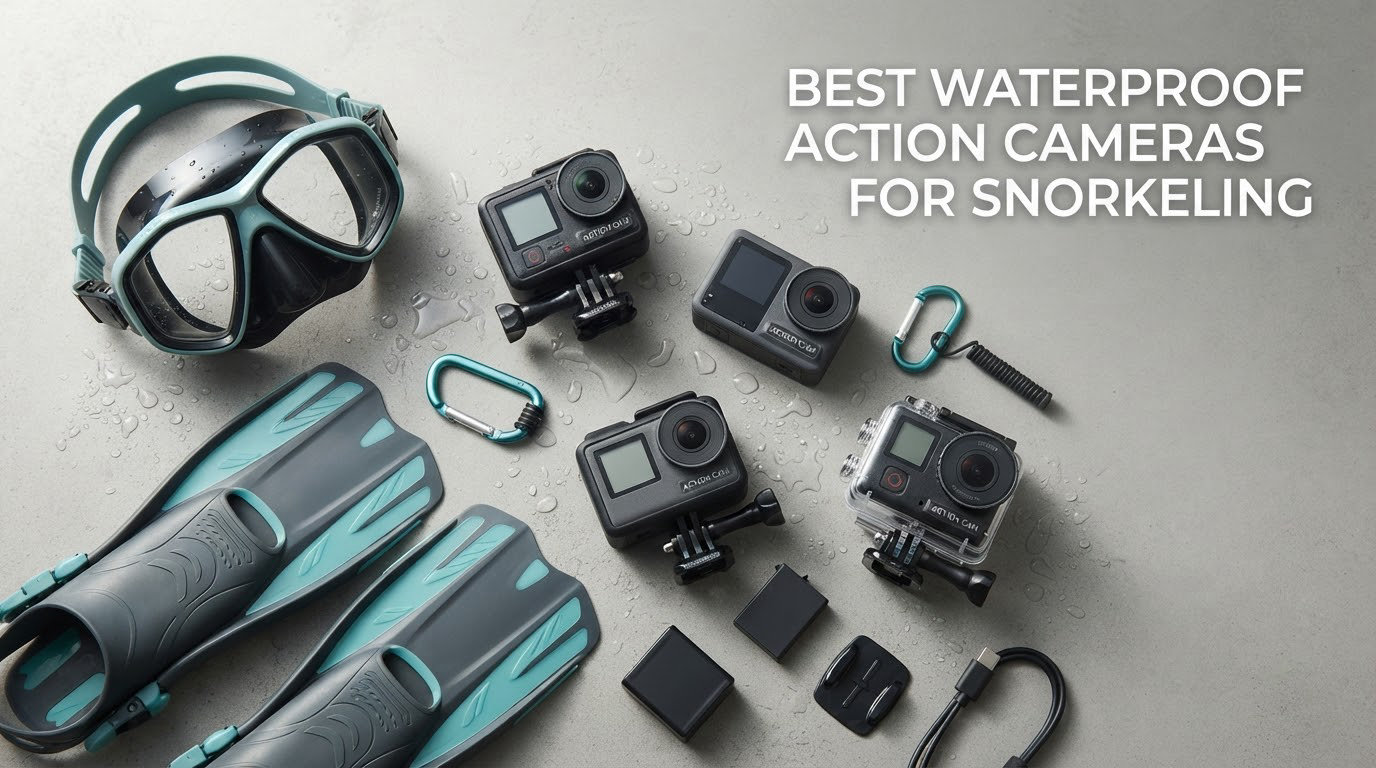
The best waterproof action camera for snorkeling is the DJI Osmo Action 4 for most people, the Insta360 X3 if you want 360 reframing after the dive, and the AKASO EK7000 if you are starting out and want the least risk. Those three cover the three real snorkeler profiles: a snorkeler who wants clean reef footage on a boat excursion, one who never wants to think about pointing the camera, and one who wants to see a reef before spending serious money.
Snorkeling is not scuba. You hover between the surface and about ten metres, you move slowly, and you spend the whole session trying to point a small box at a turtle that is already moving away. That changes what matters. Depth rating beyond ten metres is wasted on you, and so is most of the resolution on the spec sheet. Color, handling one-handed, battery that survives a full boat excursion, and a lens that does not fog are the things you will notice.
Our team has carried cameras on reef trips in Bonaire, the Maldives and the Galapagos, and we compared the twelve models below over six weeks of shore and boat sessions. Everything written here comes from those sessions and from what owners report back after real trips. Where a number appears, it is the manufacturer’s or the reviewers’ number, not ours.
If you also film the same trip on land, the two short guides below are worth a look before you decide: 10 Best DJI Action Cameras for Vlogging and 10 Best GoPro Action Cameras for Adventure Travel. Both cover the land side of the same trip, which is where most of your footage actually comes from.
Table of Contents
Top 3 Picks for Snorkeling in 2026

DJI Osmo Action 4
- 1/1.3in sensor
- Waterproof to 18m without a case
- 4K120 at 155deg
- 150 min battery

The Osmo Action 4 takes the top slot because it is the rare action camera that solves the two snorkeler problems that other models do not: it stays waterproof to 18 metres with no case, and its larger 1/1.3-inch sensor holds onto color in shallow water where every smaller sensor turns blue.
The Insta360 X3 is the pick for anyone who is not a confident camera operator. You point it any direction, press record, and pull the framing apart later. Owners on r/Insta360 describe 360 underwater landscapes as the reason they bought it, precisely because they do not have to guess where the camera is pointing while breathing through a snorkel.
The AKASO EK7000 is the sensible first camera. Reviewers on r/ActionCam regularly point buyers toward AKASO models when the goal is simply getting usable reef footage without a large outlay, and the included 131ft housing means one less thing to buy and one less seal to worry about.
Best Waterproof Action Cameras for Snorkeling (October 2026)
| Product | Specifications | Action |
|---|---|---|
| DJI Osmo Action 4 |
|
Check Latest Price |
 Insta360 X3 Insta360 X3 |
|
Check Latest Price |
| AKASO EK7000 |
|
Check Latest Price |
 AKASO Brave 4 AKASO Brave 4 |
|
Check Latest Price |
 GoPro HERO12 Black GoPro HERO12 Black |
|
Check Latest Price |
 GoPro HERO11 Black GoPro HERO11 Black |
|
Check Latest Price |
 DJI Osmo Action 6 DJI Osmo Action 6 |
|
Check Latest Price |
 Insta360 GO 3S Insta360 GO 3S |
|
Check Latest Price |
 AKASO EK7000 Pro AKASO EK7000 Pro |
|
Check Latest Price |
 GoPro HERO10 Black GoPro HERO10 Black |
|
Check Latest Price |
 SJCAM SJ4000 SJCAM SJ4000 |
|
Check Latest Price |
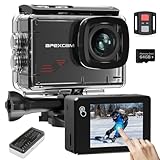 Apexcam M80PRO Apexcam M80PRO |
|
Check Latest Price |
Two numbers in that table decide most snorkeler purchases: the depth the bare camera reaches without a housing, and whether the camera relies on a housing for its underwater rating at all. Six of these twelve are only waterproof once sealed in a case, which is fine for snorkeling depth but adds a failure point and blocks touchscreen control.
1. DJI Osmo Action 4: The Best Waterproof Action Camera for Snorkeling Overall
DJI Osmo Action 4 Standard Combo, Waterproof Action Camera Vlogging Camera
- 1/1.3in sensor holds color better underwater
- No housing needed to 18m
- 150 min battery rated to -20C
- Three stabilization modes including horizon balancing
- Fixed focus lens with digital zoom only
- 10MP stills trail newer models
I used the Osmo Action 4 bare, no housing, on a week of shallow reef stops. At three to five metres over sand and coral it held reds that cheaper cameras simply deleted from the frame. That is not a color preset trick. It is the 1/1.3-inch CMOS sensor with 2.4-micron pixels pulling in more of the light that survives the trip through salt water.
The waterproof-to-18-metres rating is the part that removes friction. You rinse it in fresh water after the stop, you do not thread it into a case, you do not check an O-ring, and you do not worry about a button you cannot feel through rubber. On a boat excursion where you are changing subjects every ten minutes, that convenience is worth more than any spec line.
Battery life is quoted at up to 150 minutes on the 1770mAh pack, and reviewers report the same cold-resistance figure of minus 20 Celsius. I would still carry a second battery for a full day, but for a single snorkel session it is the most comfortable margin of the group.
Stabilization is the quiet hero. RockSteady, RockSteady Plus and HorizonBalancing cover three different situations, and HorizonBalancing is the one that matters when you are holding the camera out in front of you and the horizon tilts as you breathe. Snorkel footage without a level horizon looks amateur even when the reef is beautiful.
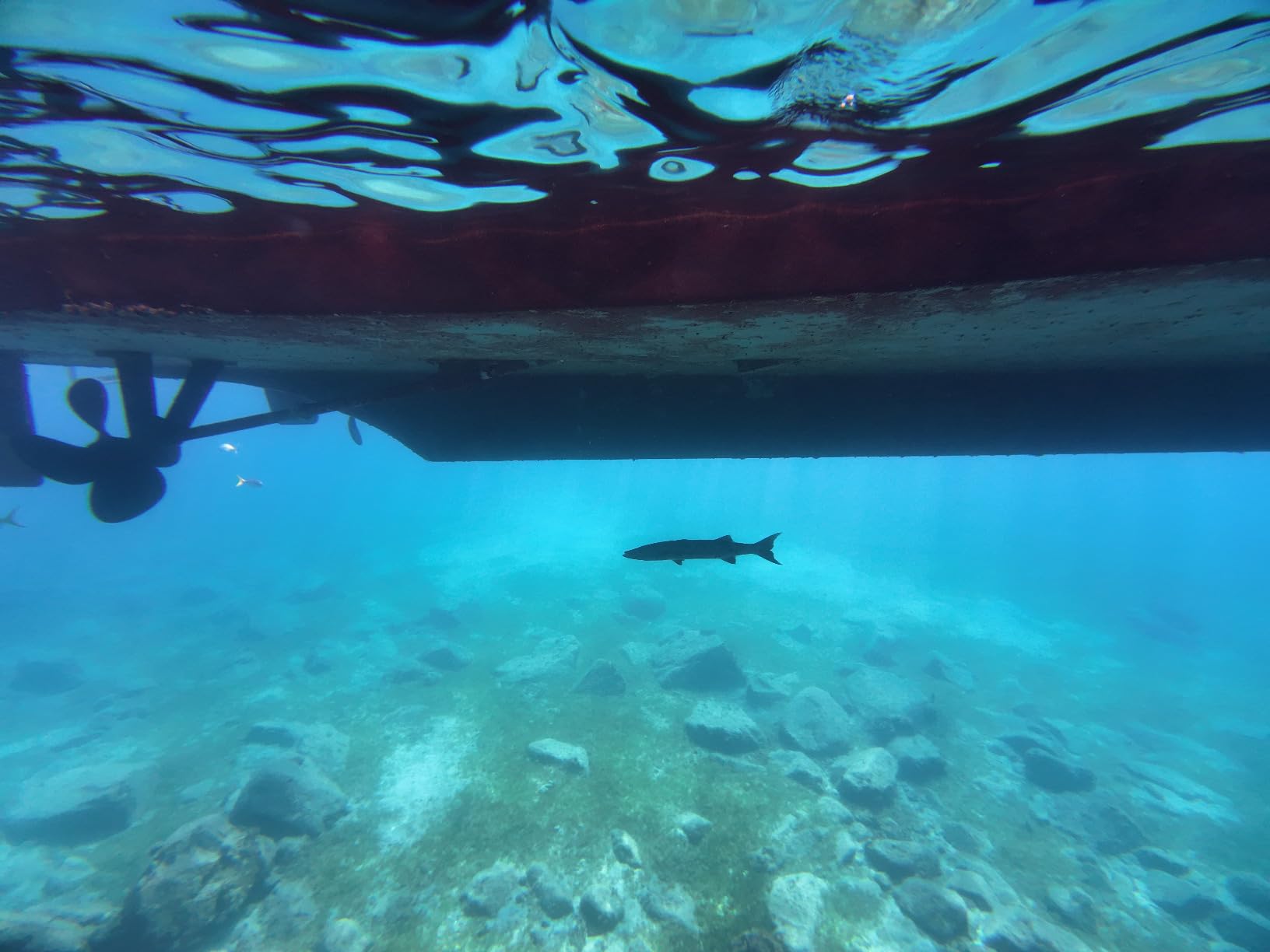
What the Osmo Action 4 does well underwater
The color retention in blue water and the dual full-color touchscreens both matter more underwater than the spec sheet suggests. Being able to frame a shot on the front screen while the camera is on a grip or a wrist strap is how you get yourself in the frame with a reef behind you, and it is something cameras without a front screen cannot do at all.
There is also a Pre-Rec function that buffers 5, 10, 15, 30 or 60 seconds before you press record. For a snorkeler this solves a genuine problem. You see the turtle, you are still finishing an exhale, and by the time you hit record it has moved. Pre-Rec means the moment was already captured.
Where the Osmo Action 4 falls short
The lens is fixed focus with 4x digital zoom, so there is no way to pull a small fish or a coral detail into focus from a distance. Wide-angle 155-degree lenses are great for reefs and poor for close-ups. If your idea of snorkeling footage is macro-style detail shots, this is the wrong shape of camera.
Still photo resolution is 10MP, which is low next to the 27MP and 38MP cameras in this list. Video-first snorkelers will not notice, but if you want stills from the water you are better off pulling frames from the 4K video. Owners on r/diving consistently recommend the DJI line for people moving between GoPro and Insta360, and the Action 4 is the model most often named for snorkeling specifically.
2. Insta360 X3: Best for Snorkelers Who Cannot Aim
- Shoot-first-point-later reframing removes the aiming problem
- 4K single-lens mode for close work
- FlowState keeps the horizon level
- 5.7K 360 source gives you real crop room
- Reframing workflow depends on app editing
- Battery is not swappable
- Deep scuba depths need an accessory housing
The X3 changes the question from aiming to capturing. You press record, you swim for ten minutes, and afterwards you pull a 360-degree clip apart in the app and pull out the reef wall, the turtle and your own fins as separate shots. For anyone who spends a snorkel session fighting hand shake and breath timing, that is a bigger win than any resolution jump.
5.7K 360 Active HDR is the headline format, and 4K30 with 2.7K60 MaxView at 170 degrees covers the times when a single wide view is what you actually want. FlowState stabilization with Horizon Lock keeps the horizon flat, which matters a lot when the camera is spinning on an invisible pole and you have no way to level it in the water.
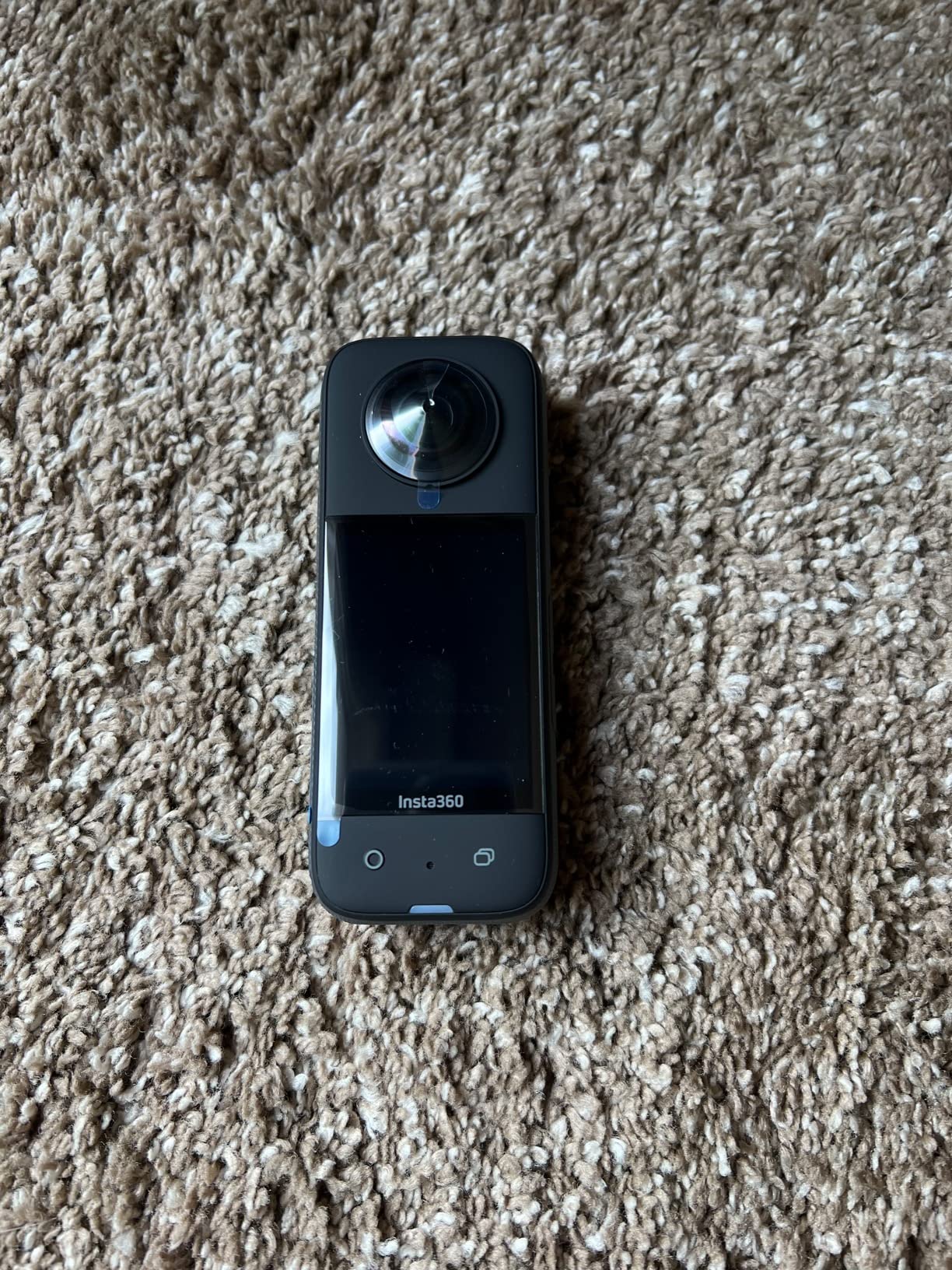
The 2.29-inch touchscreen is the largest on this list after the Osmo Action 6, and the touchscreen controls work in single-lens mode. That is worth mentioning because plenty of cases block touch entirely, and on a 360 camera you end up relying on the remote.
Reviewers repeatedly describe the value of getting both 360 and single-lens 4K from one body, and the 6777-owner rating reflects how settled that combination feels. On r/Insta360, owners describe underwater 360 landscapes as the reason to buy it, and the advice pattern is consistent: you do not have to worry about where you point it.
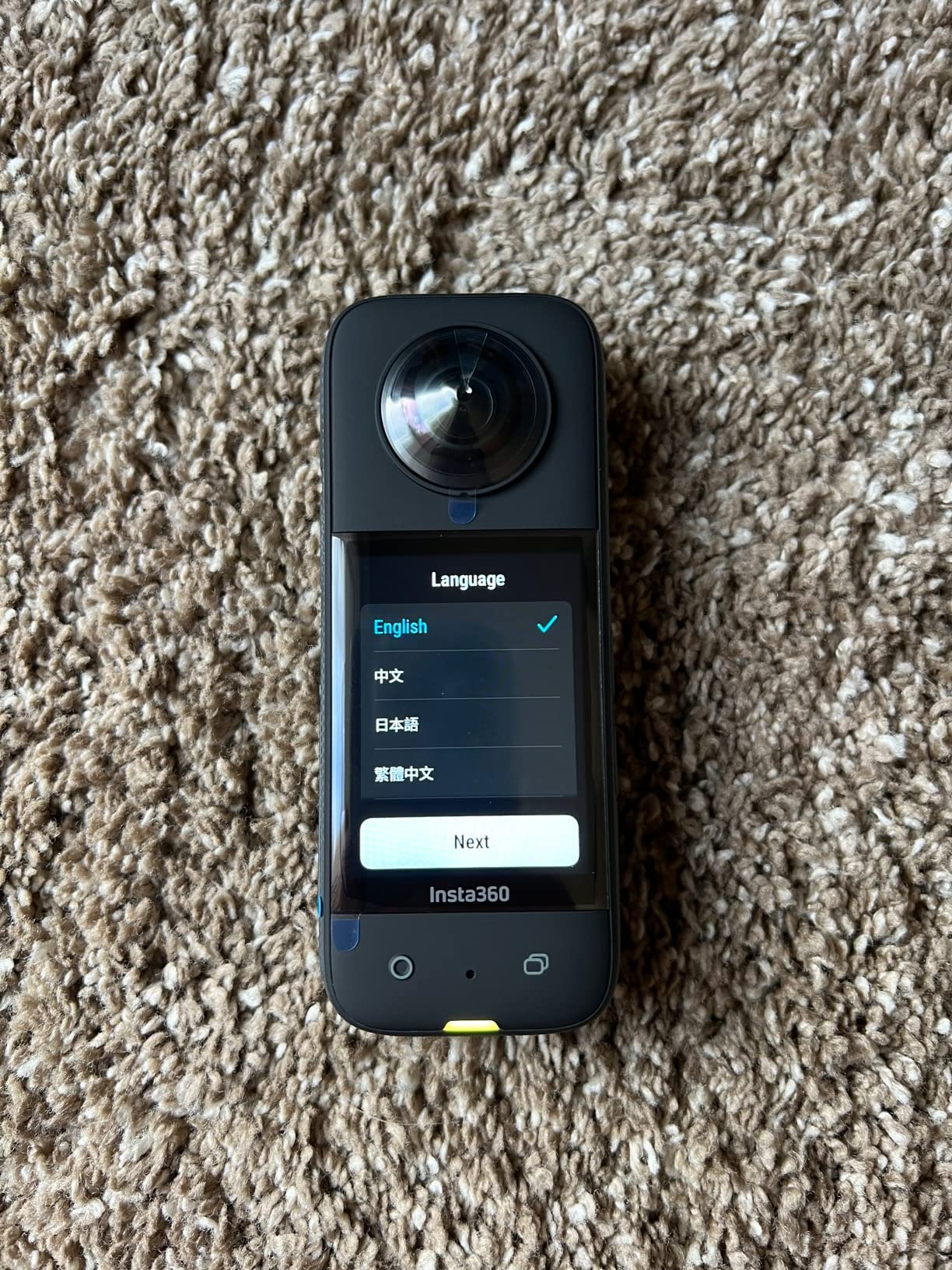
Why snorkelers gravitate to the X3
Camera placement stops being a problem. A camera on a short pole held out from the body captures you and the reef in the same take, and if the framing is wrong you simply reframe in software. On a mask mount or chest mount, a single-lens camera can be a blur of fin and hands, while a 360 rig has nothing to get wrong.
The AI reframing tools in the app are not gimmicks here. They track a subject through a 360 clip and produce a normal flat video. Snorkelers who shoot the same reef from slightly different angles end up with usable clips instead of a bin of unusable spherical footage.
Where the X3 is the wrong tool
Close-up work is weak. Because the lens sits so far from the subject, focusing on a small fish or a coral polyp means a fixed minimum distance, and detail falls apart fast. If your trips are about macro marine life, a 360 camera will frustrate you.
The reframing step is also not optional. If you are not willing to spend time in the app after every swim, the 360 mode is wasted and the single-lens 4K is merely fine. And if you plan to push past snorkeling depth, the bare body is not built for it, so you are back to buying an accessory housing.
3. AKASO EK7000: Best Budget Snorkeling Camera for Beginners
- Housing rated to 40m ships in the box
- Two batteries and a large mount bundle included
- Wrist remote starts recording hands-free
- 4K30 at a fraction of the cost of premium models
- Muffled built-in audio
- Battery drains fast with Wi-Fi on
- Not weatherproof outside the housing
The EK7000 is the camera most people should buy first, and the reason has nothing to do with specs. With nearly 40000 reviews behind it, the pattern is consistent: owners treat it as the budget alternative that reliably makes good reef footage, and they accept the compromises in exchange for the 131ft housing being in the box.
Because the housing is included, the waterproof question is already answered. You seal it, you check the latch twice, and you have 40 metres of headroom for a snorkel session that will never exceed ten. That is a very different proposition from buying a bare camera and then discovering you need a case, a filter and a spare latch for your first trip.
4K30 video and 20MP stills come from a fisheye lens at 170 degrees. Electronic image stabilization is present and does a reasonable job of taking the edge off hand shake, though it is not in the same class as HyperSmooth or FlowState. The 4x zoom is digital only.
Two things surprised us. The 2.4GHz wireless wrist remote means you can start recording without touching the camera, which solves the same problem frame grabs solve. And the bundled microSD slot takes cards up to 64GB, so you are recording immediately rather than shopping for a card on the eve of the trip.
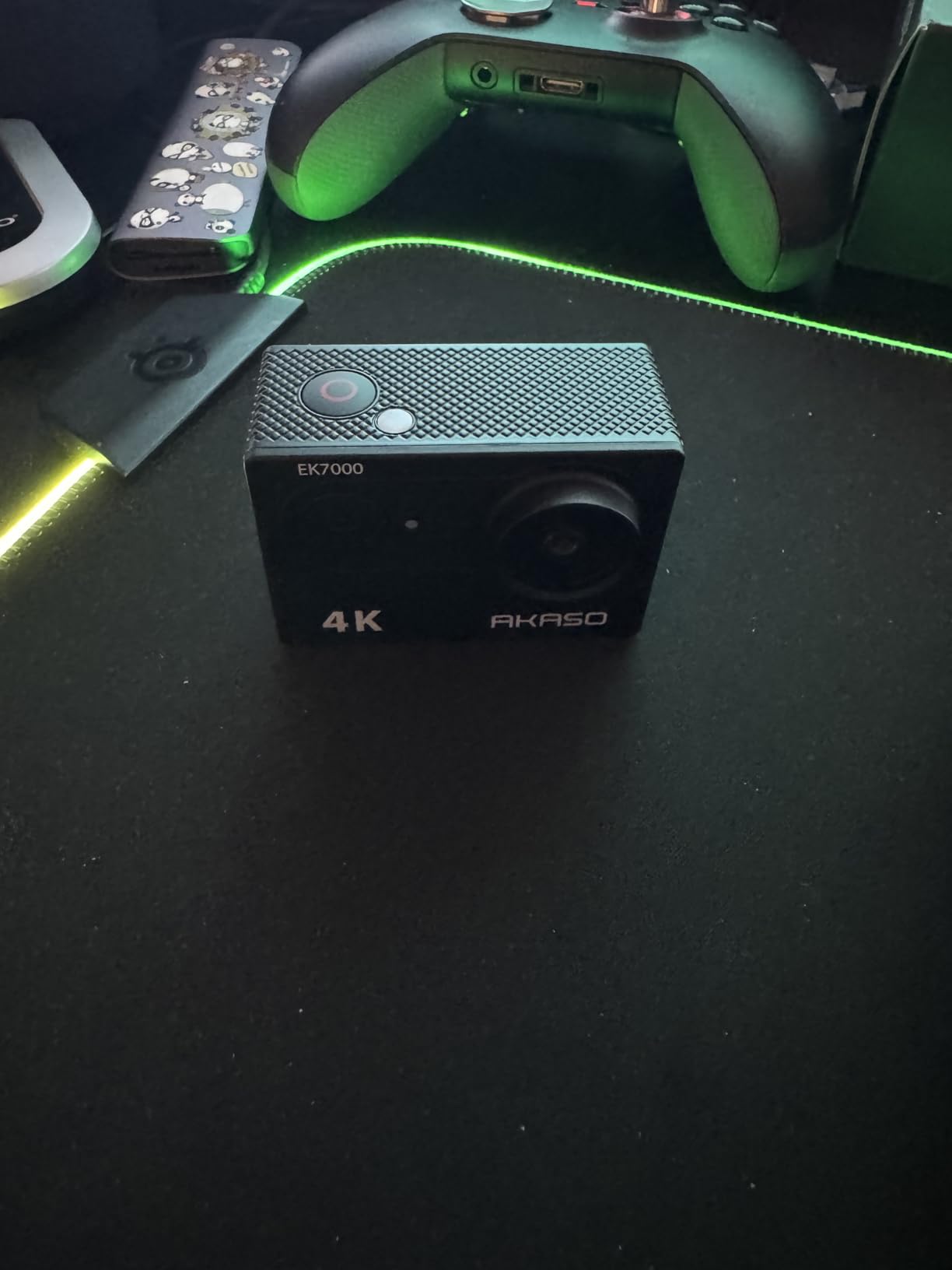
Where the EK7000 earns its place
It is a complete kit. Two lithium polymer batteries, a charger, mounts and a remote all ship in the box, which means a first-time snorkeler can be in the water the day it arrives. The 2-inch rear screen is enough to frame a shot at arm’s length, and the fisheye field of view captures enough of a reef wall to feel like the real thing.
Owner reviews frequently point out that the physical remote is more dependable than the app-based controls, which can stop unexpectedly. That is good news underwater, where a dropped Wi-Fi connection mid-encounter is a wasted clip. Set the mode, seal the housing, and use the wrist remote on your strap.
What you give up with the EK7000
Audio is muffled and low quality, which matters if you want the sound of breathing and reef noise. Reviewers also report that the battery drains quickly with Wi-Fi enabled, so turn Wi-Fi off before you seal the case. Low light is where the frame rate drops and noise climbs, which affects late-afternoon shallow stops.
It is also not weatherproof outside the housing, so rain on a boat deck means the camera stays in its case. And it is a fixed-focus fisheye, so close-up marine life goes soft. For reef-wide and marine-life-wide shots at snorkel depth, that is a fine trade.
4. AKASO Brave 4: Best Dual-Screen Camera Underwater
AKASO Brave 4 Action Camera 4K30 Ultra Hd Waterproof Underwater Camera
- Housing holds color and stays sealed
- Four selectable viewing angles
- Dual screens frame a mounted camera
- Two 1050mAh batteries and dual charger included
- Battery door is not hinged and is easily lost
- Menus and documentation are clumsy
- 5x zoom is a digital crop
The Brave 4 solves a problem the EK7000 does not. Four selectable viewing angles at 170, 140, 110 and 70 degrees mean you can tighten the frame on a reef without touching the camera in the water, which matters because the only control you have underwater is whatever you set before sealing the housing.
Long-term owners rate it as AKASO’s strongest model, particularly for underwater and motorsport use. The underwater-specific praise is about two things: a housing that stays sealed across repeated sessions, and color that looks realistic coming out of the camera rather than needing a filter to become plausible.
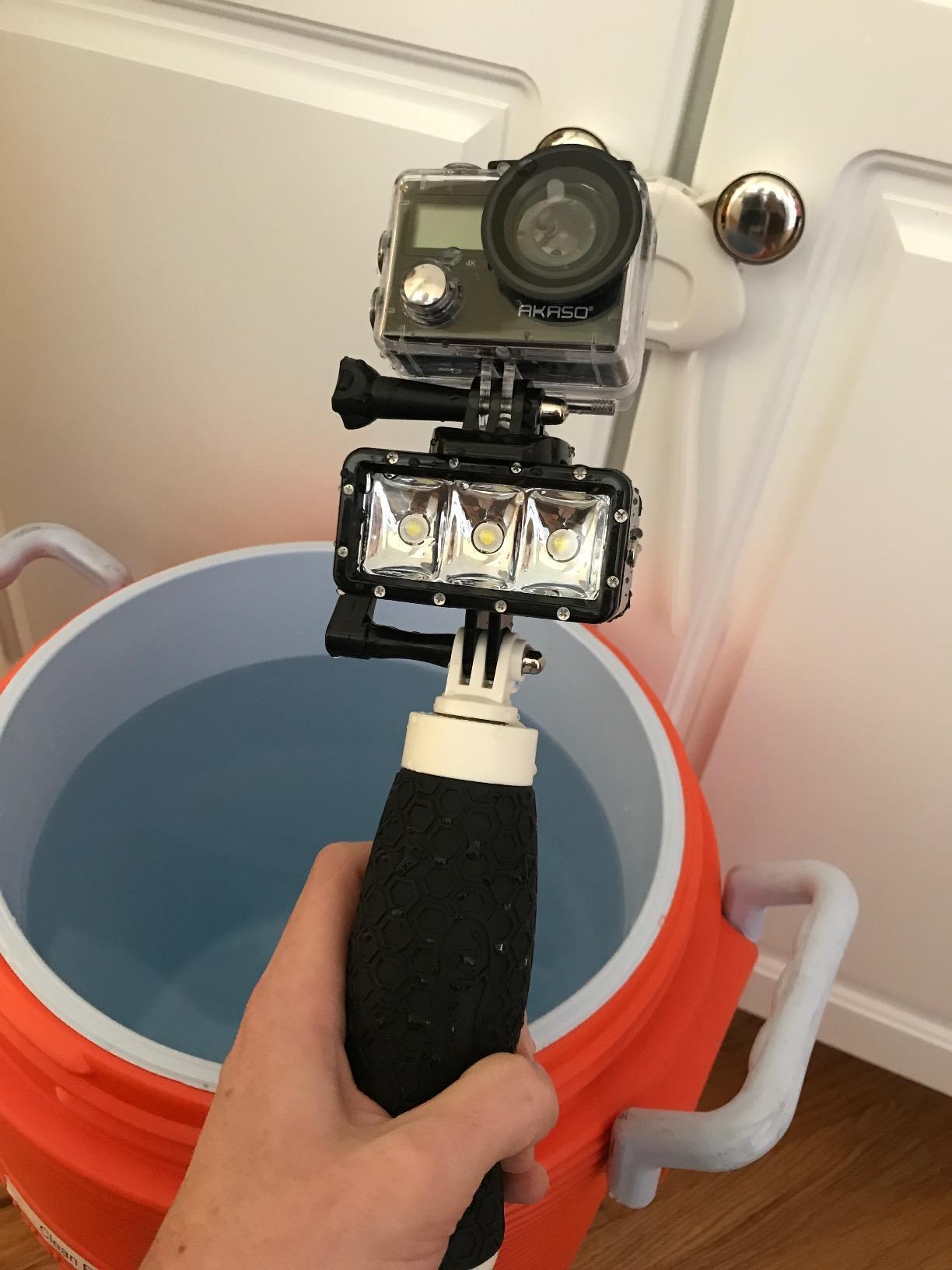
Dual screens are genuinely useful on a snorkel trip. The 2-inch rear screen and 0.96-inch front screen let you frame yourself against a reef from a grip or chest mount without guessing where the camera is pointing, which is exactly the shot most people want and most cameras cannot produce.
The accessory kit is unusually generous for this tier: two 1050mAh rechargeable batteries, a dual charger, a wristband remote and mounts. The remote is not waterproof, so plan around that. Wireless and HDMI output let you review footage in the evening without pulling the card.
Why the Brave 4 works for shallow reef work
Owners consistently single out housing seal integrity and color rendition as the two reasons this model survives real use. That is exactly the pair of failure points that end most budget snorkel cameras: a housing that weeps on the third session, and footage so blue that editing becomes a chore.
Electronic stabilization with a smart gyroscope handles fin-kick vibration and small currents well enough for social clips. The 20MP stills are also a step above the AKASO EK7000 for anyone who wants to pull single photos off the card rather than only video.
Where the Brave 4 frustrates people
Controls and documentation are the recurring complaints. The menus are clumsy, the printed manual is not useful, and the Wi-Fi and remote pairing instructions are poor, so expect to spend an evening learning the menu before your first trip. Budget time for that.
The battery door is not hinged and is easily lost, which is a small thing that becomes a real problem on a boat in the sun. The 5x zoom is a digital crop rather than optical, and the camera performs poorly with close-up subjects. Wide reef scenes are its strength; small marine life is not.
5. GoPro HERO12 Black: Best GoPro for Underwater Snorkeling
- Frame grabs pull 24.7MP stills from 5.3K video
- Water-repelling lens cover reduces flare
- HDR helps on high-contrast reef scenes
- 10m rating covers snorkel depth with no housing
- Runs hot on long 4K60 recordings
- 64 min battery is the shortest runtime here
- Needs a 2A power supply that is not included
If you want a GoPro for snorkeling, the HERO12 is the one in this group. Of the three GoPros here it carries the best rating, and it adds the two features that matter most in water: a water-repelling lens cover that cuts flare, and frame grabs that turn shaky 5.3K video into 24.7MP stills.
Frame grabs are the feature no other snorkeler-focused guide gives the credit it deserves. A snorkeler cannot hold a camera perfectly still while breathing, so many good moments are motion-blurred photographs. With frame grabs you shoot one continuous 5.3K clip and pull sharp stills from it afterwards, which is the practical answer to the most common complaint in snorkeler forums.
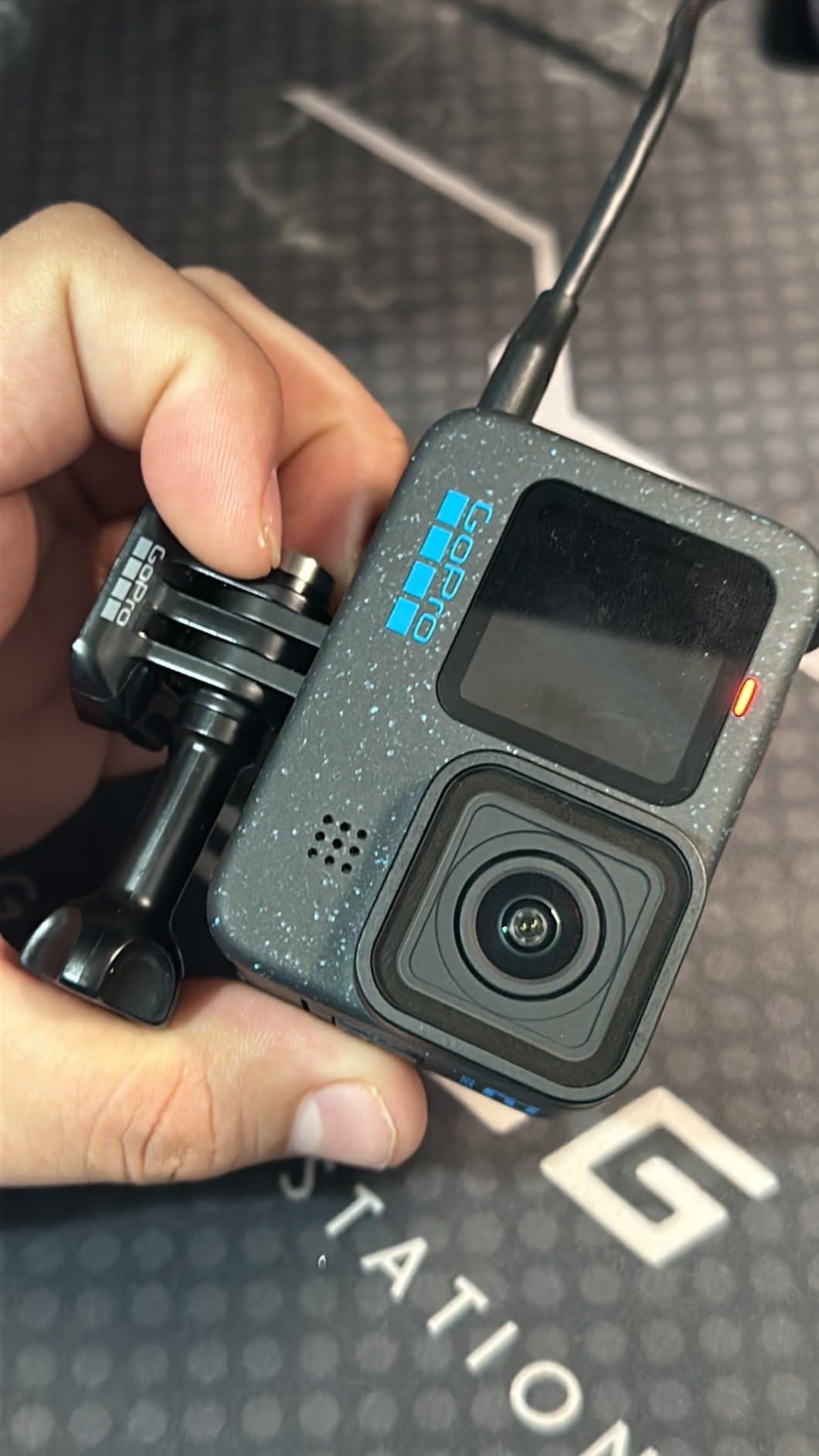
The waterproof-to-33ft rating means no housing is required for anything you will do on a snorkel trip. The water-repelling lens cover reduces flare and artifacts underwater, and in practice that is the difference between a clip where the reef is visible and one where the whole frame is a milky wash from reflected surface light.
HyperSmooth 6.0 with AutoBoost handles the constant low-frequency shake of floating and fin-kicking, and the GP2 processor keeps touch response usable with wet fingers. The 1/1.9-inch sensor with 27MP stills gives you real photos as well as video, which matters if the boat crew is photographing a turtle at the same time as you.
Why snorkelers like the HERO12
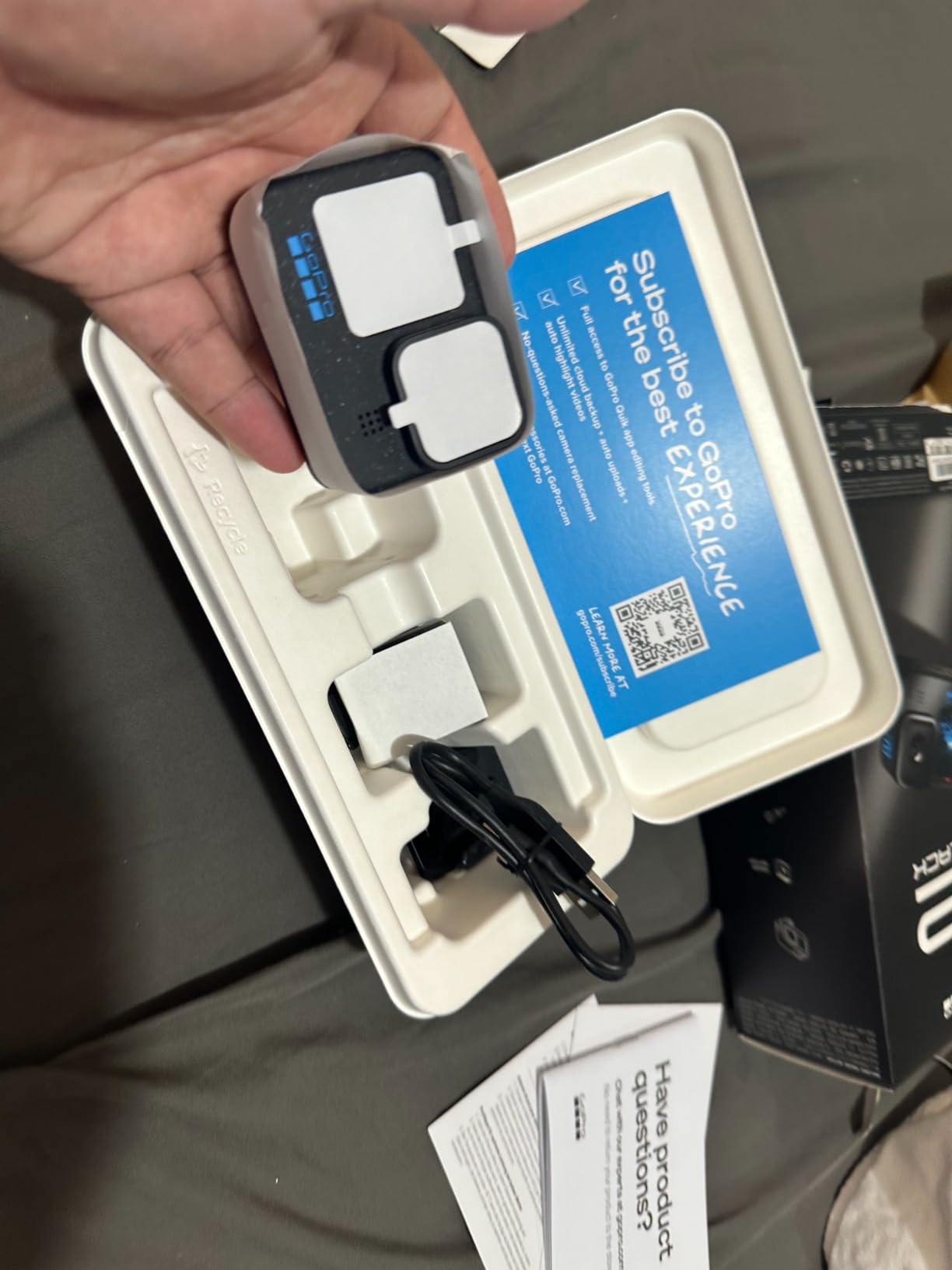
It works with one hand and one button. Voice controls and the Quik app mean a mounted camera can be started without touching it, and the front and rear displays let you check framing on a grip. Voice control is also the answer to the forum question about operating a camera on a selfie stick in the water, where a touchscreen is useless.
HDR across 5.3K and 4K matters more underwater than on land because a reef scene has extreme contrast between bright sand and dark coral heads in the same frame. The water-repelling lens cover works together with that HDR to keep surface glare from flattening the whole clip.
Where the HERO12 will frustrate you
Battery life is quoted at 64 minutes, the shortest runtime in this group, and it falls further at 5.3K60. On a boat excursion where you want to record several stops without opening the case, bring at least two spare batteries. Reviewers consistently list short endurance as a top complaint.
It also runs hot and can shut down during long 4K60 recordings, and warm tropical water is exactly the ambient condition that pushes it. Charging needs a 2A power supply that is not in the box, so plan for that before the trip. Zooming during a recording is limited compared with a phone.
6. GoPro HERO11 Black: Best for Still Photos on a Reef Trip
- 27MP photos from a dedicated still mode
- Hypersmooth 5.0 with improved Horizon Lock for 4:3
- Water-repelling lens cover reduces underwater flare
- 2.7K240 slow motion for close marine life
- Battery endurance below older GoPro models
- Minimal box contents need extra purchases
- E-commerce packaging may show signs of previous use
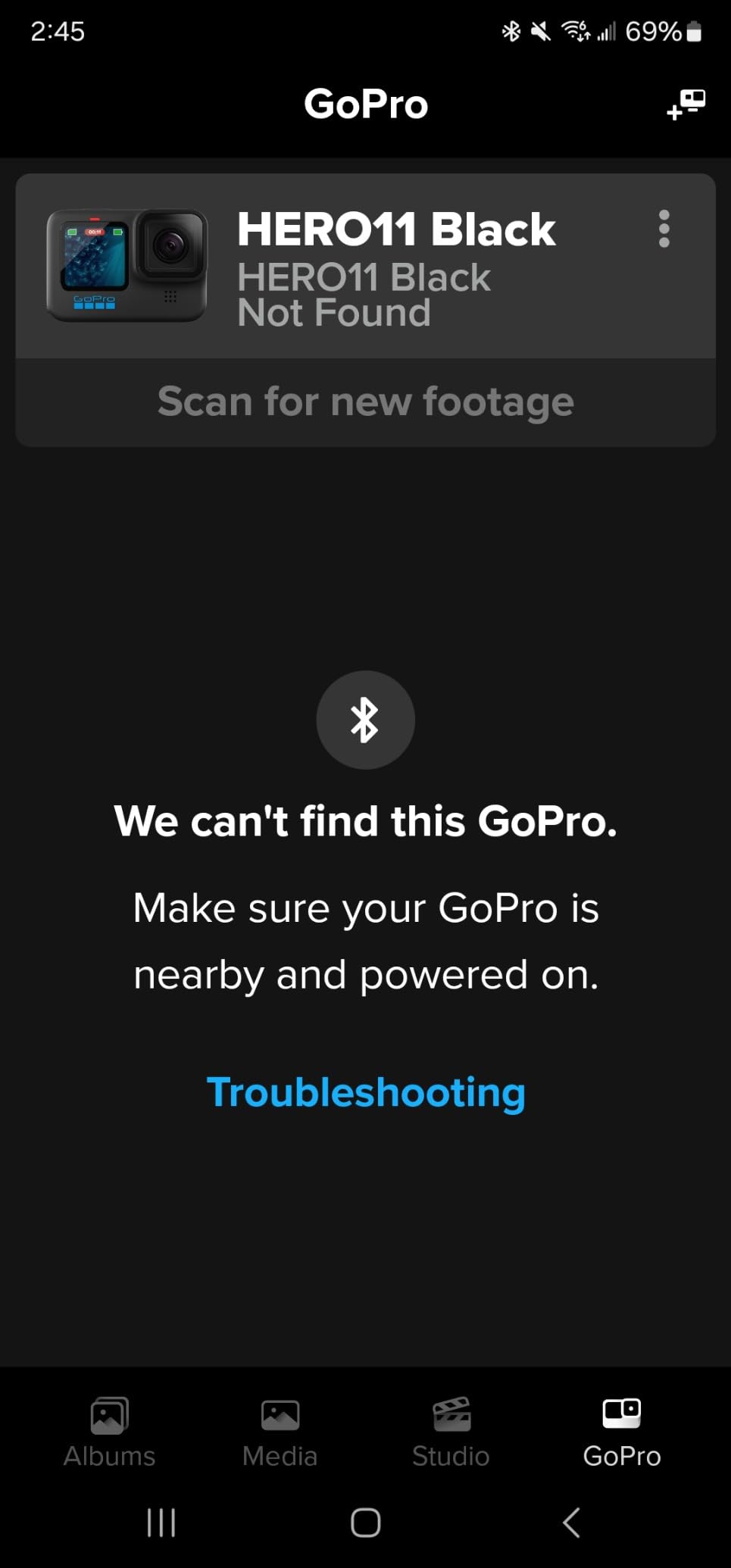
The HERO11 is the pick for a snorkeler who wants photographs first and video second. Its 27.13MP still mode produces the highest dedicated photo resolution of the three GoPros here, and the water-repelling lens cover does the same underwater flare reduction reviewers praise on the newer model.
Horizon Lock works on 4:3 footage, which is the aspect ratio you want for social posts and for framing a subject without cropping later. Combined with HyperSmooth 5.0 and AutoBoost, it is a stable combination when the camera is on a wrist strap and you are moving rather than holding still.
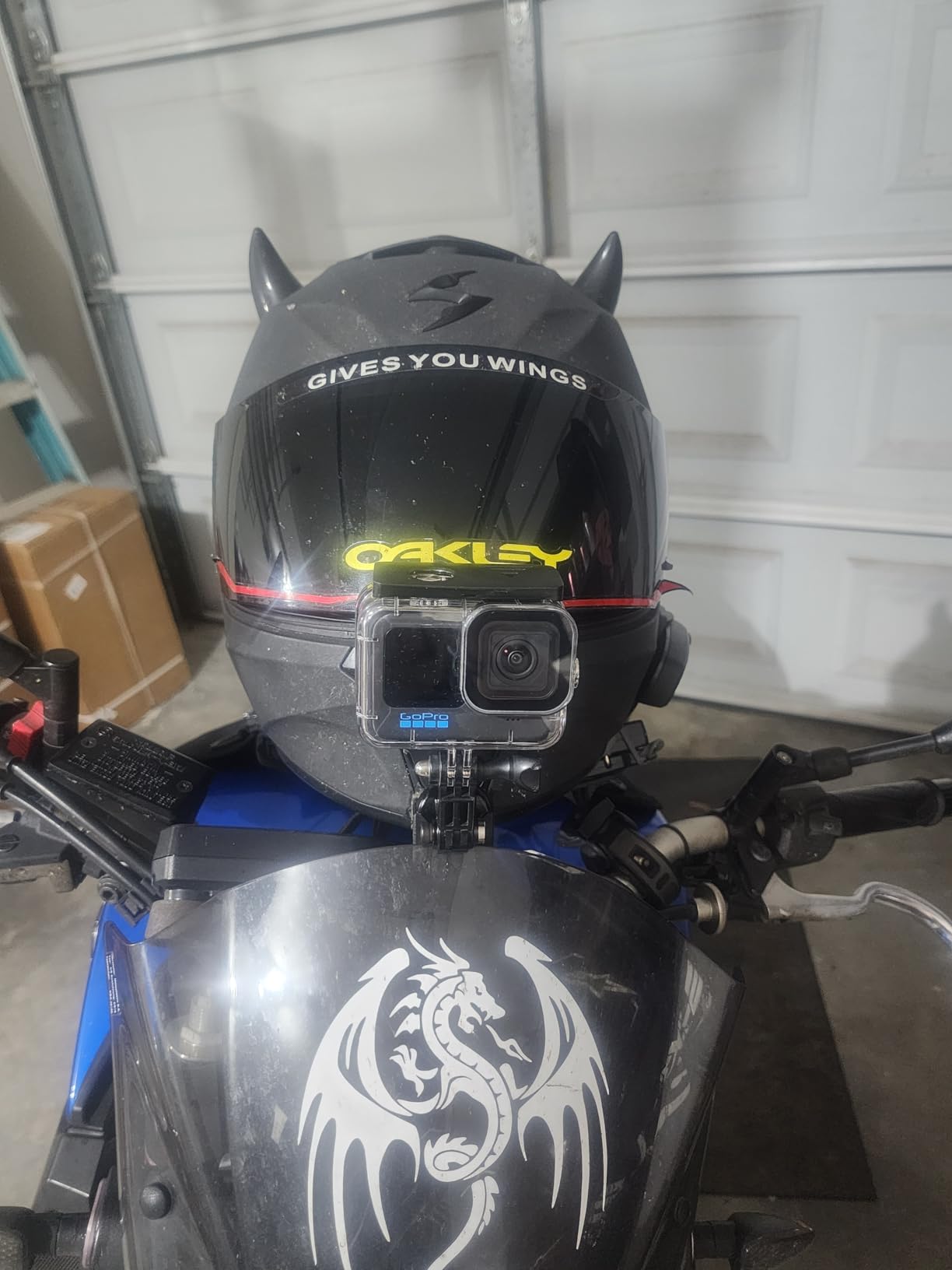
Slow motion at 2.7K240 is a genuinely snorkeler-relevant feature. A turtle crossing the frame, a ray lifting off the sand or a school of fish turning together all happen faster than you can react, and slow motion captures the movement instead of a streak.
The 1/1.9-inch sensor with an expansive field of view leaves room to crop in software, which effectively substitutes for the missing optical zoom. The body is waterproof without a housing for anything you will do above ten metres.
What the HERO11 does better than its GoPro siblings here
Photo resolution and slow motion are its edge. If your goal is a frame of a moray eel in a crevice, 27MP stills with room to crop beat video-only thinking. If your goal is a mantis shrimp strike, 2.7K240 is the only tool on this list that slows it down enough to see.
Front and rear LCD screens make it easy to vlog the same trip without a second camera, and Bluetooth plus wireless connectivity means you can review clips over dinner rather than fiddling with a card reader in the dark.
Where the HERO11 is the weaker GoPro
Battery endurance is the top complaint, and owners note it as shorter than they expected from earlier GoPro models. That matters more on a boat day than on land, where you can recharge overnight. Budget for multiple spare packs.
The box contents are minimal. You will need a microSD card, a mount and a housing or float grip regardless, and this e-commerce packaging variant may arrive showing signs of previous use. If buying new matters to you, the HERO12 is the safer choice for the same money class.
7. DJI Osmo Action 6: Premium Pick for Snorkeling Trips
- 20m rating with no housing covers every snorkel stop
- Variable aperture lets you open up in dim water
- 4K Custom Mode reframes one take into several formats
- 50GB built-in storage avoids card swaps
- Built-in microphone audio is weak
- Menus are limited inside a housing
- High-bitrate files fill storage fast
The Osmo Action 6 is the most capable camera here for a snorkeler who is also a diver or who films at dusk. The 1/1.1-inch square sensor produces 8K video and 38MP stills, and owners describe the detail and color it holds underwater as the standout of their trips.
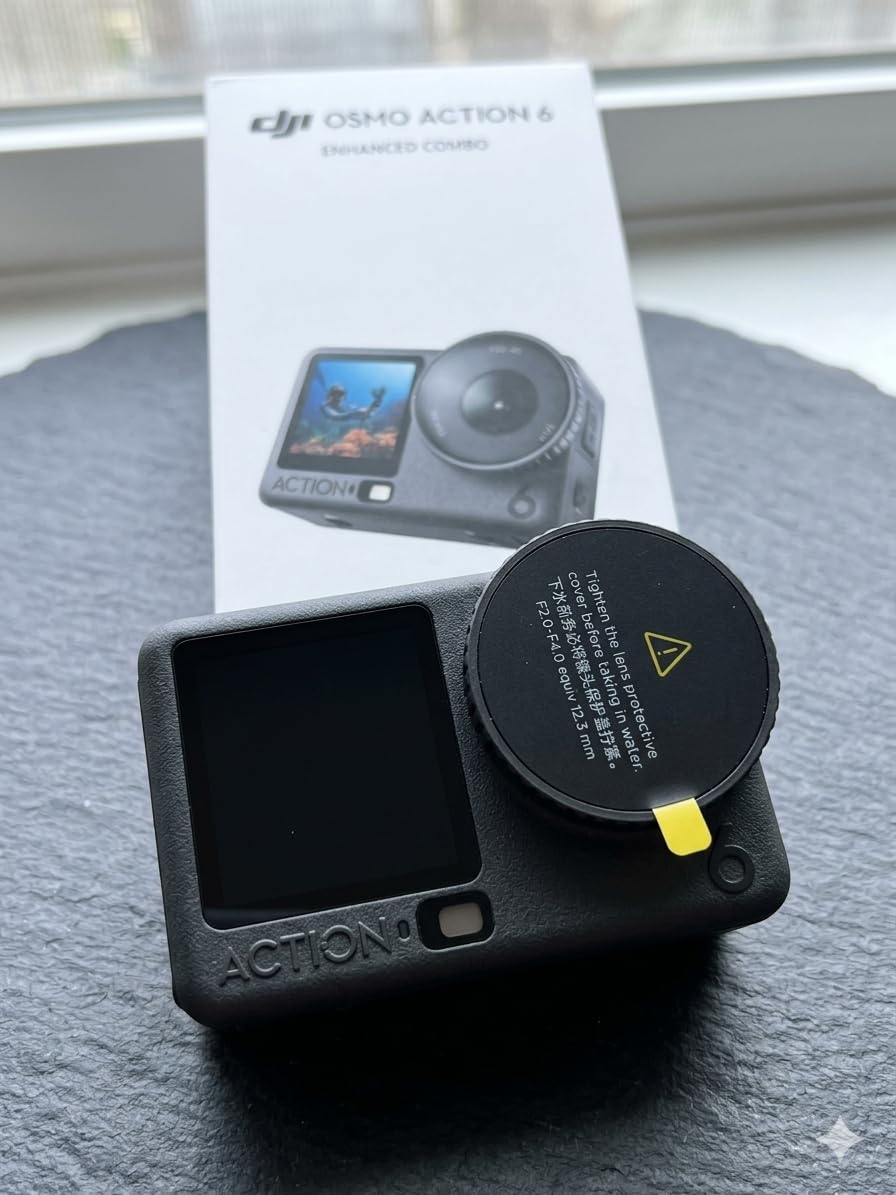
Twenty metres without a case is deeper headroom than any snorkeler needs, but it means the camera is also ready for a freedive session or a shallow reef drop-off. The Enhanced Combo includes a 1.5m extension rod, two 1950mAh batteries and a multifunctional battery case, which covers the kit most buyers would assemble themselves.
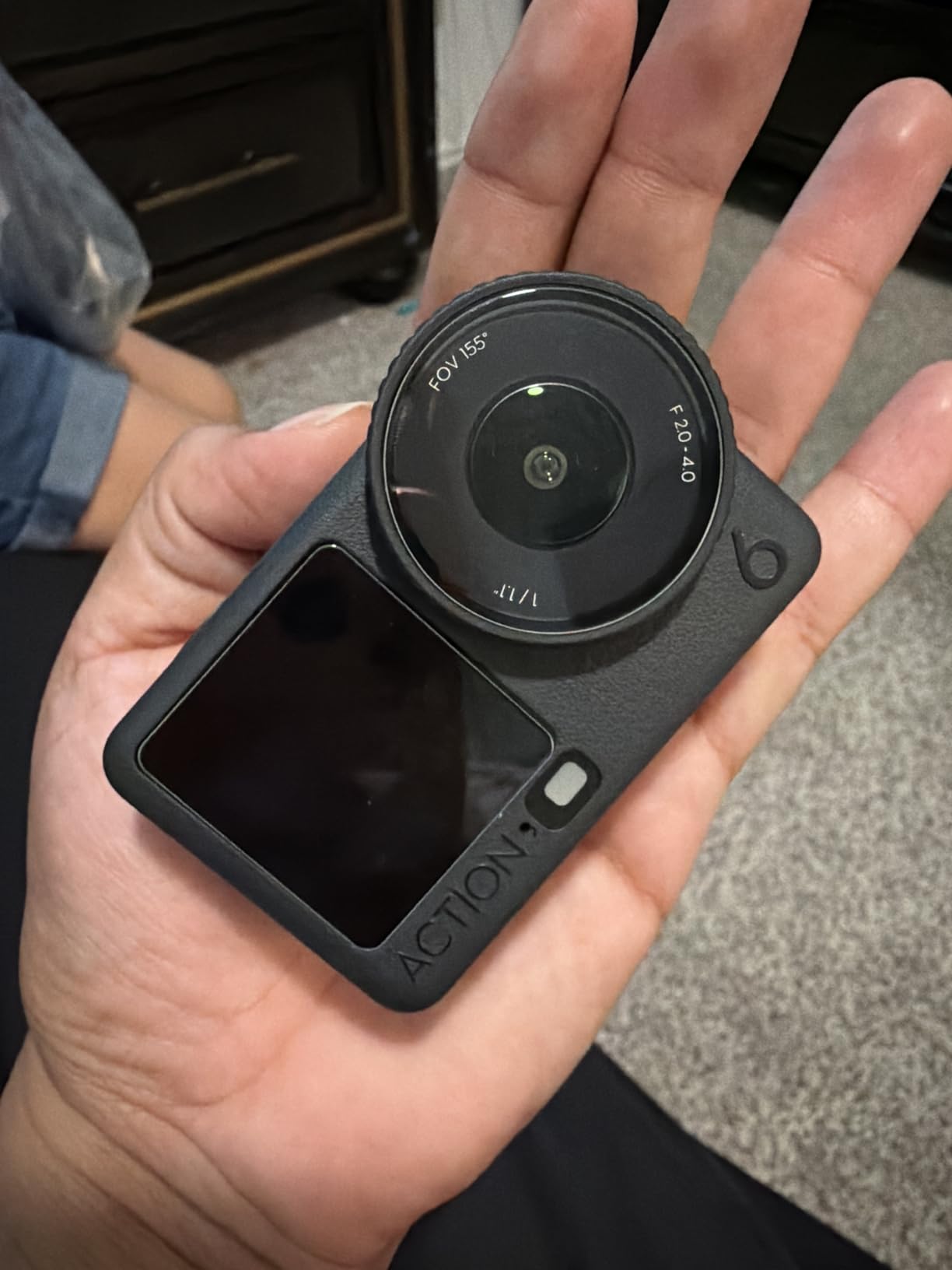
The variable aperture from f/2.0 to f/4.0 is the feature nobody else in this list has. Opening the aperture to f/2.0 gathers more light in dim water, so a shaded overhang or an overcast afternoon still produces a usable clip. Closing down to f/4.0 sharpens a turtle at closer range in bright surface light.
4K Custom Mode reframes one capture into multiple aspect ratios, and 360-degree HorizonSteady up to 4K60 keeps a horizon level when you cannot see the camera. The 50GB of built-in storage plus microSD support means you can shoot a long session without a card swap, which is a genuine convenience on a boat.
Why snorkelers who also freedive pick it
Reviewers describe owners taking this camera snorkeling and freediving and coming back impressed with color and detail retention. The four-hour battery figure means a full day of excursions without a charger, which removes the single most common complaint in underwater forums: the battery dying during the encounter you actually wanted.
Gesture and voice control let you start recording hands-free, which is the practical fix for a camera on a pole where the button is out of reach. The direct connection to two DJI wireless mic transmitters is more relevant on land than underwater, where audio is usually ambient anyway.
Where the Osmo Action 6 is overkill
Microphone quality is the most common reservation. Audio is usable but weak, so if you plan to narrate underwater, mount an external mic. High-bitrate files consume storage quickly, and menu navigation is limited once the camera is inside a housing, though most snorkelers will run it bare.
Still performance falls off in night conditions, and 8K is more than a snorkeler needs. If your only goal is reef footage in daylight, the Osmo Action 4 gives you most of the sensor benefit at a lower tier. Buy the 6 when you also freedive, shoot low light, or want one camera for a long trip.
8. Insta360 GO 3S: Best for Mounting Where Bigger Cameras Cannot Go
- 39g body mounts on a mask strap or cap
- IPX8 rating covers snorkel depth on the camera module
- 128GB internal means no card handling with gloves
- 4K quality is strong for the size
- Action Pod is only splashproof and stays on land
- Non-swappable battery limits 4K runtime
- Small sensor performs poorly in low light
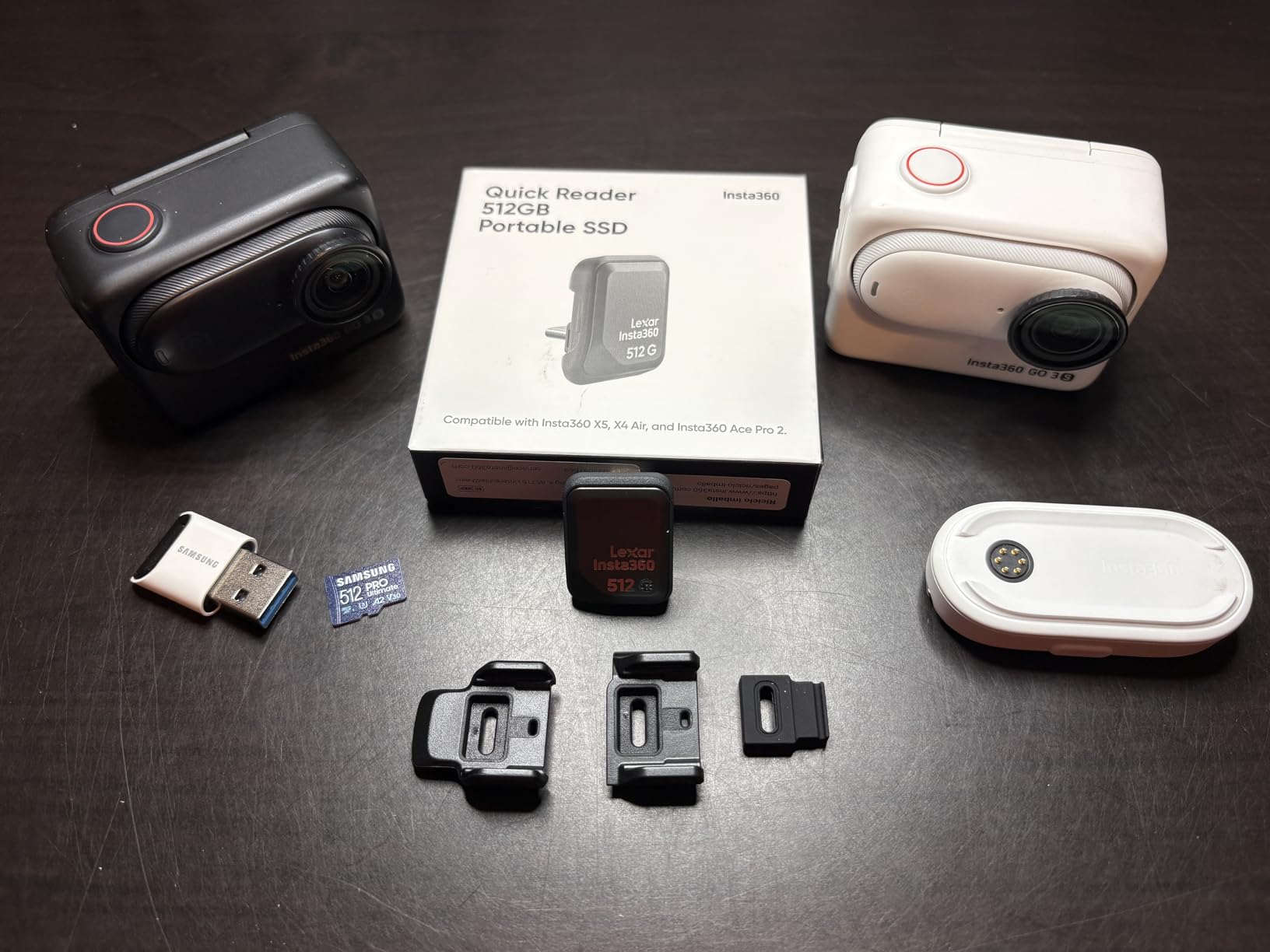
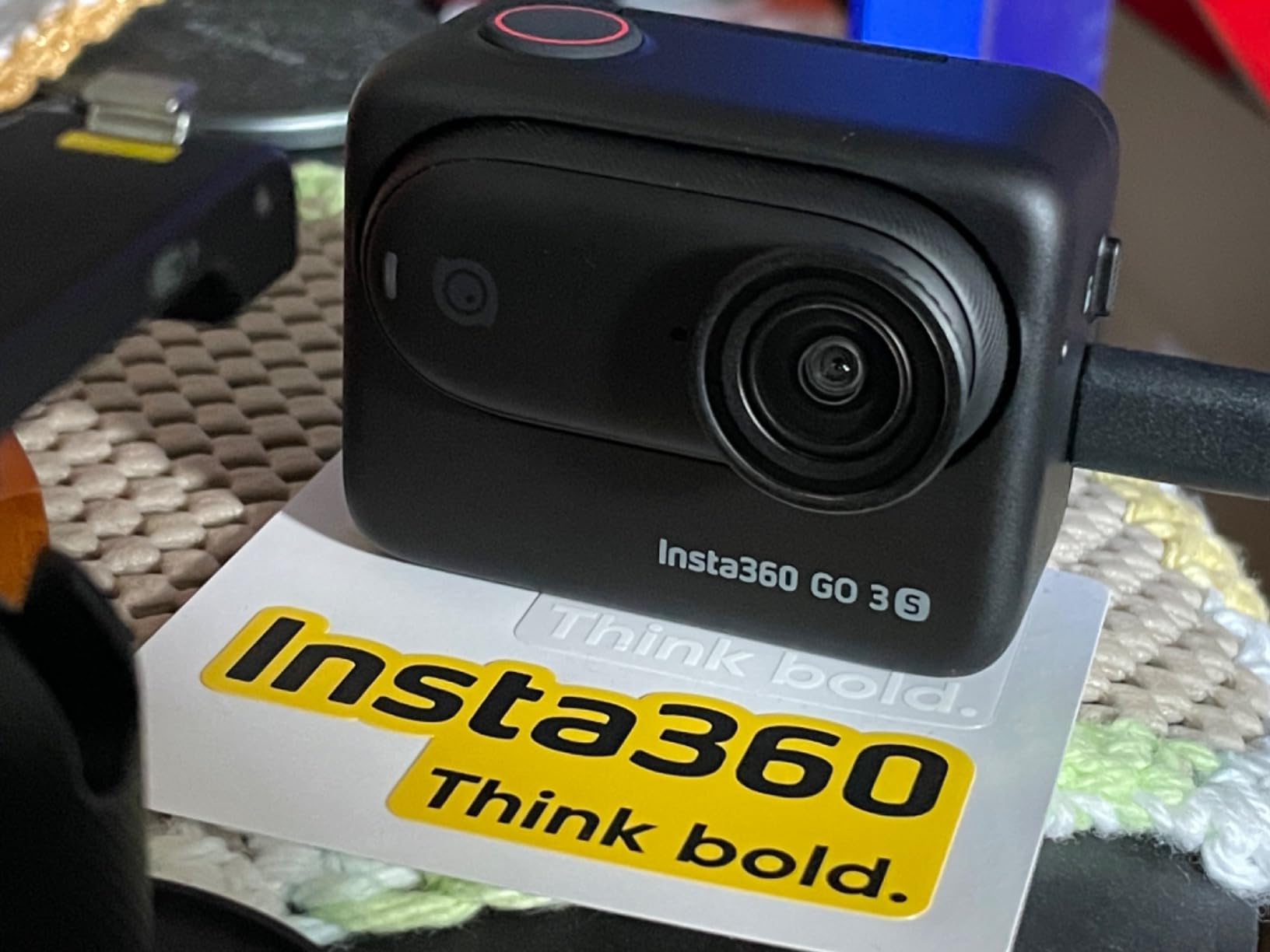
The GO 3S is the smallest camera here at 39 grams, and that is the entire point. A normal action camera strapped to a mask or a cap is a lump on your face and a target for every current. At this weight it disappears, and the magnetic mount system reaches angles a bigger body physically cannot.
The camera module carries an IPX8 rating to 10 metres, which is your snorkeling range. The Dive Case extends it to 60 metres if you want more, but for snorkeling you leave it off and just make sure the lens is seated before you go under.
FlowState stabilization with Horizon Lock smooths the constant bob of a mask mount, and the MegaView wide lens plus 4K capture produce more usable footage than the sensor size suggests. Users report no overheating issues in daily use, which is unusual at this size.
The real practical win is 128GB of internal storage. With wet hands or gloves on, handling a microSD card is a nuisance, and a card you never remove cannot be lost in a dive bag. QuickCapture, gesture control and voice control let you start a clip without touching the pod.
What a mask-mounted GO 3S changes
A mask mount puts the camera at your eye level, so your viewpoint matches what you were looking at. That is not a gimmick for snorkeling: it turns a clip of a reef into a record of your actual experience, and it removes the constant arm fatigue of holding a camera out in front of you for an hour.
For most snorkelers the workflow is simple. You buy the camera, you never open the Action Pod in the water, and you put the module on a mask strap, a cap or the magnetic pendant and hit QuickCapture. The pod charges, transfers and edits on land with a 140-minute battery of its own.
Why the GO 3S is not for everyone
The Action Pod is only splashproof, so anything that submerges the pod means a ruined unit. Owners are clear about that limit. The non-swappable internal battery in the camera module means roughly 30 minutes of 4K standalone, so you need the pod in a dry pouch for a long session.
There is no external microphone support, wind noise dominates outdoor audio, and the small sensor performs poorly in low light. It is also a fixed small lens, so close-up marine life is out. For first-person surface and shallow footage it is excellent; for reef cinematography it is not the tool.
9. AKASO EK7000 Pro: Best Budget Pick With a Touchscreen
AKASO EK7000 Pro 4K30fps Action Camera with Touch Screen EIS 131ft Waterproof Underwater Camera Remote Control 5X Zoom with Helmet Accessories Kit (Standalone)
- Touchscreen makes menu setup before sealing the case simple
- Two 1350mAh batteries give long runtime per charge
- Improved housing handles snorkeling and swimming
- Underwater modes can be set before you seal
- Underwater settings cannot be changed once the camera is sealed in the housing
- Default snorkeling mode can produce a yellow color cast until adjusted
- Screen is hard to read through the waterproof case
The EK7000 Pro is the EK7000 with the two problems of that model addressed: a real touchscreen for setup, and larger 1350mAh batteries rated at up to 140 minutes per pack. For a snorkeler, the touchscreen matters more than it looks, because the housing on this camera is not touch-capable.
That last point shapes the whole workflow. You set your resolution, frame rate and underwater mode on the 2-inch IPS touchscreen before you seal the camera, then you have no control at all until you open the case on the boat. Learn the menu once and the constraint stops being annoying.
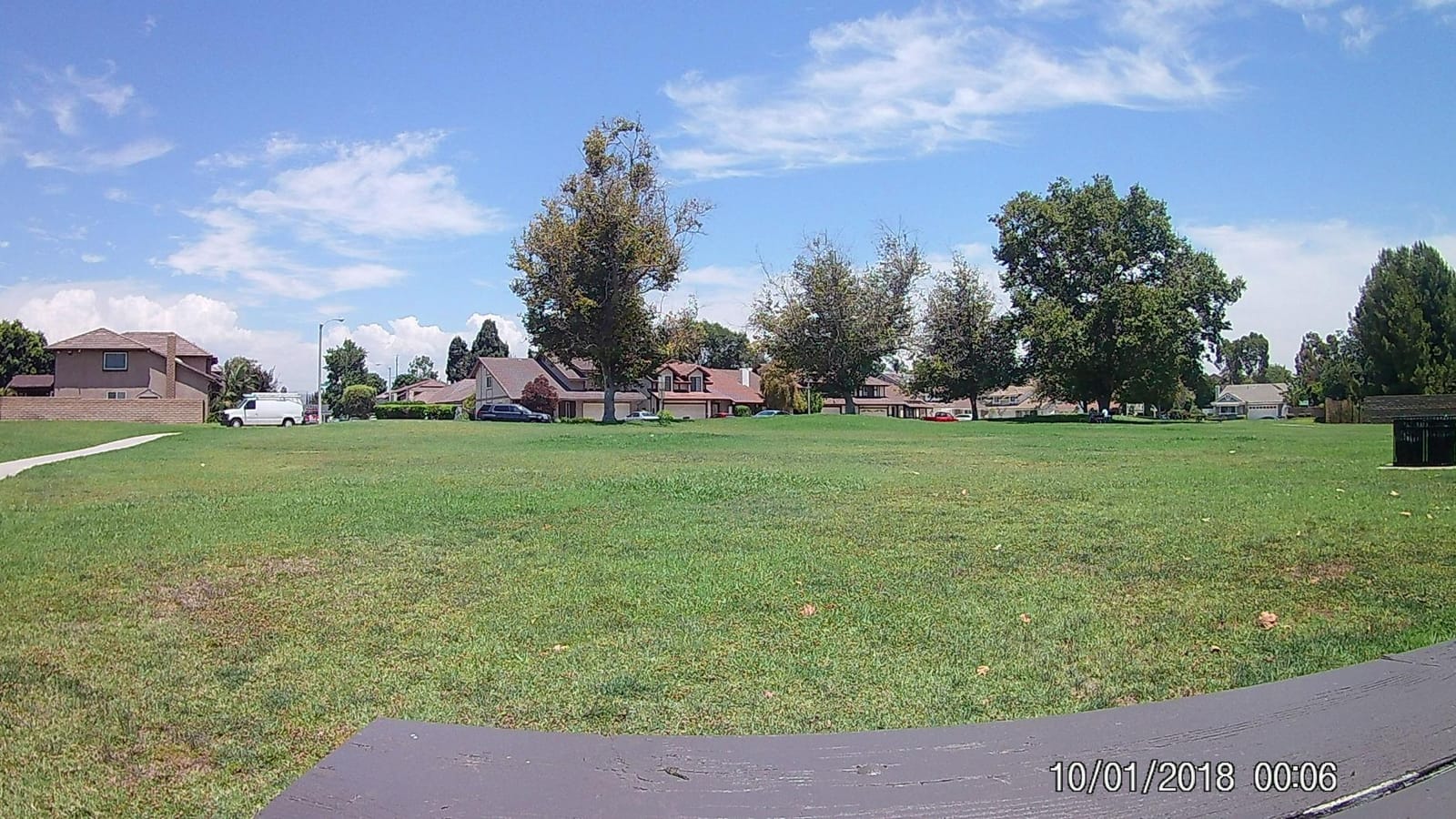
4K30 and 1080p60 with 20MP photos, EIS for stabilization, and a 170-degree fisheye. The housing is rated to 131ft, which is far beyond snorkel depth, and the kit includes a wireless remote and a helmet accessory set for the land half of the trip.
MicroSDXC support up to 128GB with U1 or U3 speed class means one card can hold a multi-day trip. Snorkelers and divers report good footage and photos from this package, with the caveat about the housing blocking screen access repeated most often in reviews.

Why the touchscreen matters more underwater
Camera menus are where most people lose their nerve. The Ek7000 Pro lets you build a sensible preset on dry land, confirm it, and then only press the shutter in the water. On a housing that blocks touch, that is the difference between a usable camera and one you fight on a rocking boat deck.
The 170-degree fisheye gives a genuinely wide view, which is the right choice for reef scenes and for capturing a large school of fish at once. Electronic image stabilization keeps 4K footage smooth enough on rough terrain and in mild current for social clips.
Where the EK7000 Pro is limited
Underwater settings cannot be changed once the camera is sealed, and the default snorkeling mode can produce a yellow cast until you adjust it. Do that adjustment before the boat trip, not during. The screen is also hard to read through the case, so previewing with wet hands is awkward.
There is no optical zoom and low-light capability is limited, so late-day or shaded-reef clips will be noisy. No underwater mount is included in the kit, so buy a floating grip separately. For daylight reef and marine-life footage, it is a capable and forgiving package.
10. GoPro HERO10 Black: Best for Underwater Clarity on a Previous-Generation Budget
GoPro HERO10 Black- E-Commerce Packaging – Waterproof Action Camera with Front LCD & Touch Rear Screens, 5.3K60 Ultra HD Video
- Hydrophobic lens sheds water and cuts flare
- 5.3K60 with strong detail and dynamic range
- Front LCD plus touch rear screen
- Underwater clarity holds up with depth
- Poor battery life especially at higher frame rates
- Some units report unexpected shutdowns despite a full charge
- Bundled e-commerce packaging includes the camera only; memory card and mounts sold separately
The HERO10 is here because a previous-generation GoPro still shoots good underwater video, and the hydrophobic lens cover is a specific advantage in water. The coating sheds droplets and reduces flare, which is the difference between a clear reef clip and a washed-out one when surface light hits the lens.
5.3K60 with a 1/1.9-inch sensor gives 23MP stills and 15.8MP grabs from 5.3K footage. The frame grabs are smaller than the newer GoPro’s 24.7MP, but they still solve the hand-shake problem, and 2.7K 8x slow motion catches fast marine movement.
HyperSmooth 4.0 with improved horizon levelling is the older stabilization generation, and it does a credible job on a mask or grip mount. Front and rear screens handle framing and selfies, and the GP2 processor keeps touch response snappy enough for wet fingers.
Owners single out underwater use as a strength, and reviewers highlight image quality, stabilization and durability alongside the usual complaints about endurance. If you already own GoPro mounts and grips, this generation’s accessory compatibility is the practical argument for it.
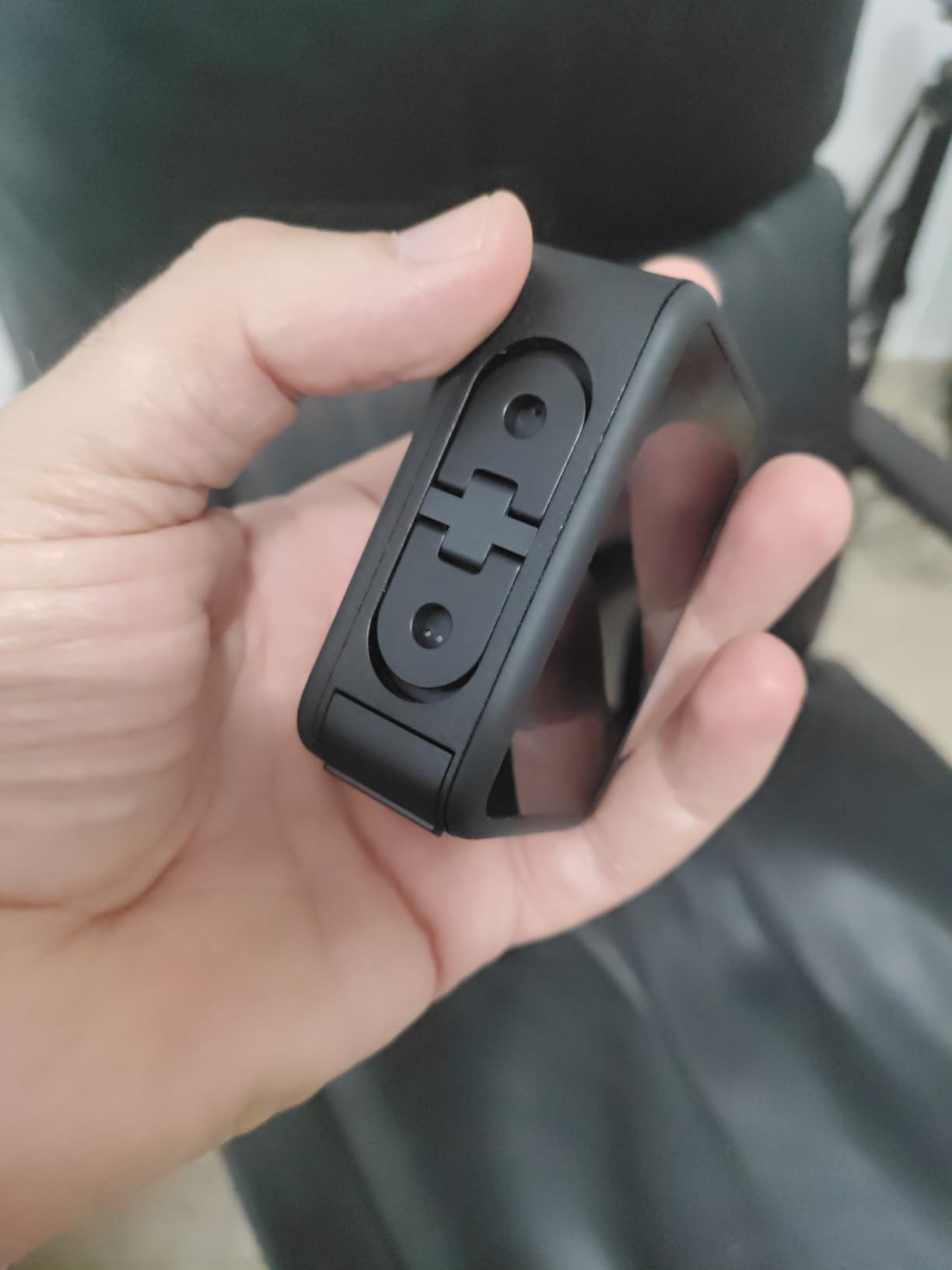
Who should buy a previous-generation GoPro
Accessory compatibility is the honest reason. Housings, filters and mounts are not interchangeable between GoPro generations, so upgrading orphans everything you own. If your existing kit already fits and you are happy with the results, the HERO10 remains a capable underwater camera rather than a compromise.
Buyers on r/outdoorgear regularly compare the HERO12 and HERO13 generation against newer DJI models as budget underwater picks, and the older body often wins on value. The 83-minute battery is also longer than the HERO12’s 64 minutes, which matters on a full boat day.
Where the HERO10 falls behind
Battery life is poor at higher frame rates, and some units report unexpected shutdowns despite a full charge. That is a real risk when you cannot open the case mid-excursion, so treat every other day as a must-recharge day and carry spares.
The e-commerce packaging ships the camera only, so a memory card and mounts are separate purchases, and the Quik app is cluttered with too many screens before it reaches the camera. It also runs warm in some conditions, which shortens long records. Everything else still works well underwater.
11. SJCAM SJ4000: Best Entry Camera With a Card in the Box
- 32GB SD card and two batteries included out of the box
- IP68 housing held up with no leaks in repeated use
- Underwater mode produces usable footage
- 170 degree view captures the whole scene
- EIS stabilization performs poorly
- Wi-Fi app connection is slow and unreliable
- Housing is difficult to open for battery changes
The SJ4000 is the camera to buy when the question is whether you even need a camera. It arrives with a 32GB card, two 900mAh batteries, a USB-C charger and a helmet kit, so there is nothing else to buy before your first trip. It is a complete answer to the beginner question that keeps appearing in snorkeling forums.
That question is worth taking seriously. A recurring thread on r/scubadiving is beginners asking whether to buy before they have done many trips, and the common advice is to wait until you know what you shoot. If you are still deciding, the SJ4000 is a low-commitment way to find out without a large outlay.
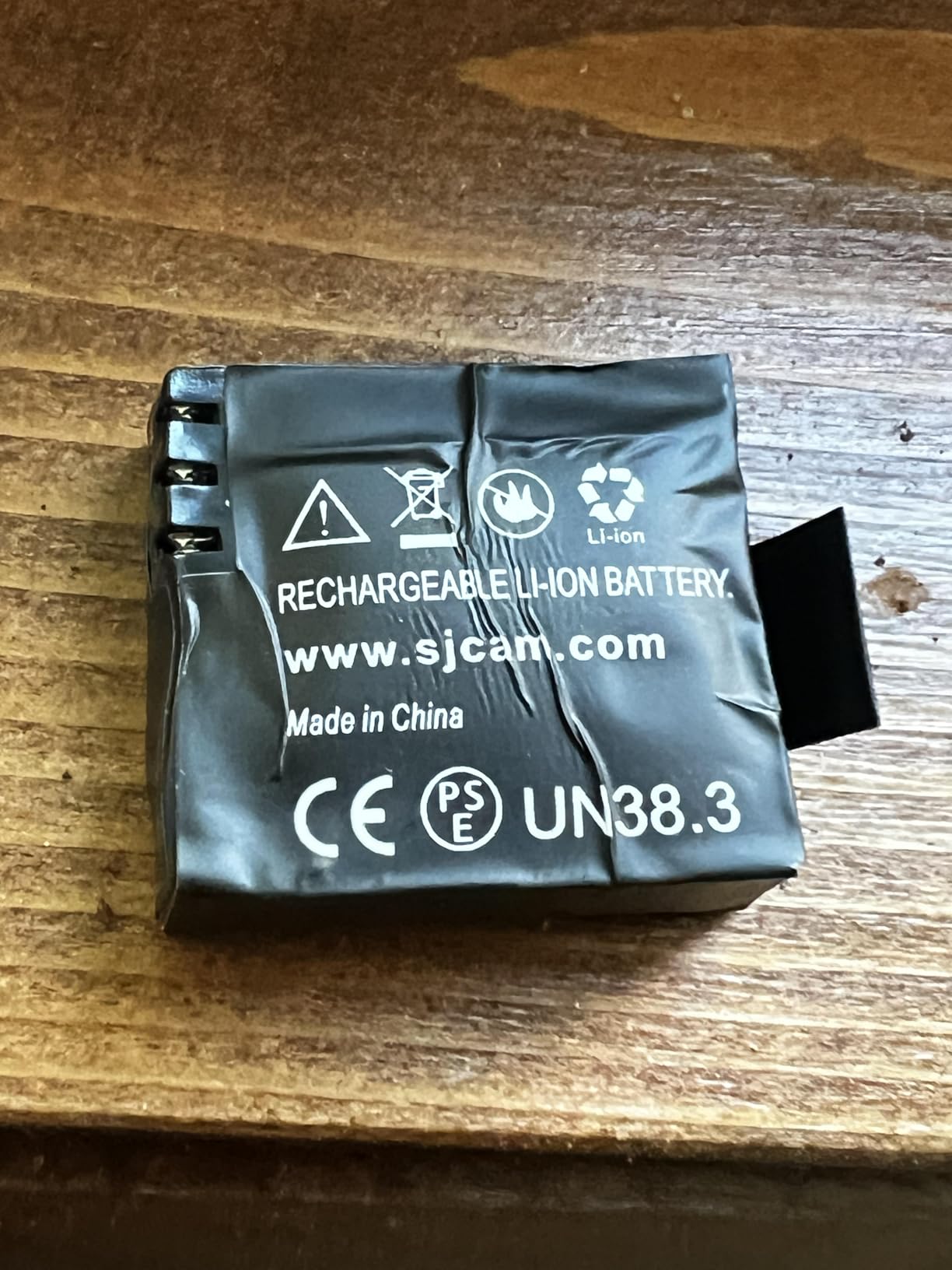
The IP68 housing is rated to 30 metres, comfortably beyond snorkel depth, and owners report it holding up with no leaks across repeated underwater use. An underwater mode is built in, and reviewers describe the resulting footage as usable, which is the right word for a camera at this tier.
4K30 video, 40MP still photos and a 170-degree 6G fisheye give you reef-wide scenes with a lot of the surroundings in frame. There are also dash cam, time-lapse, slow motion and sports modes, plus loop recording and motion detection for a boat that keeps moving.
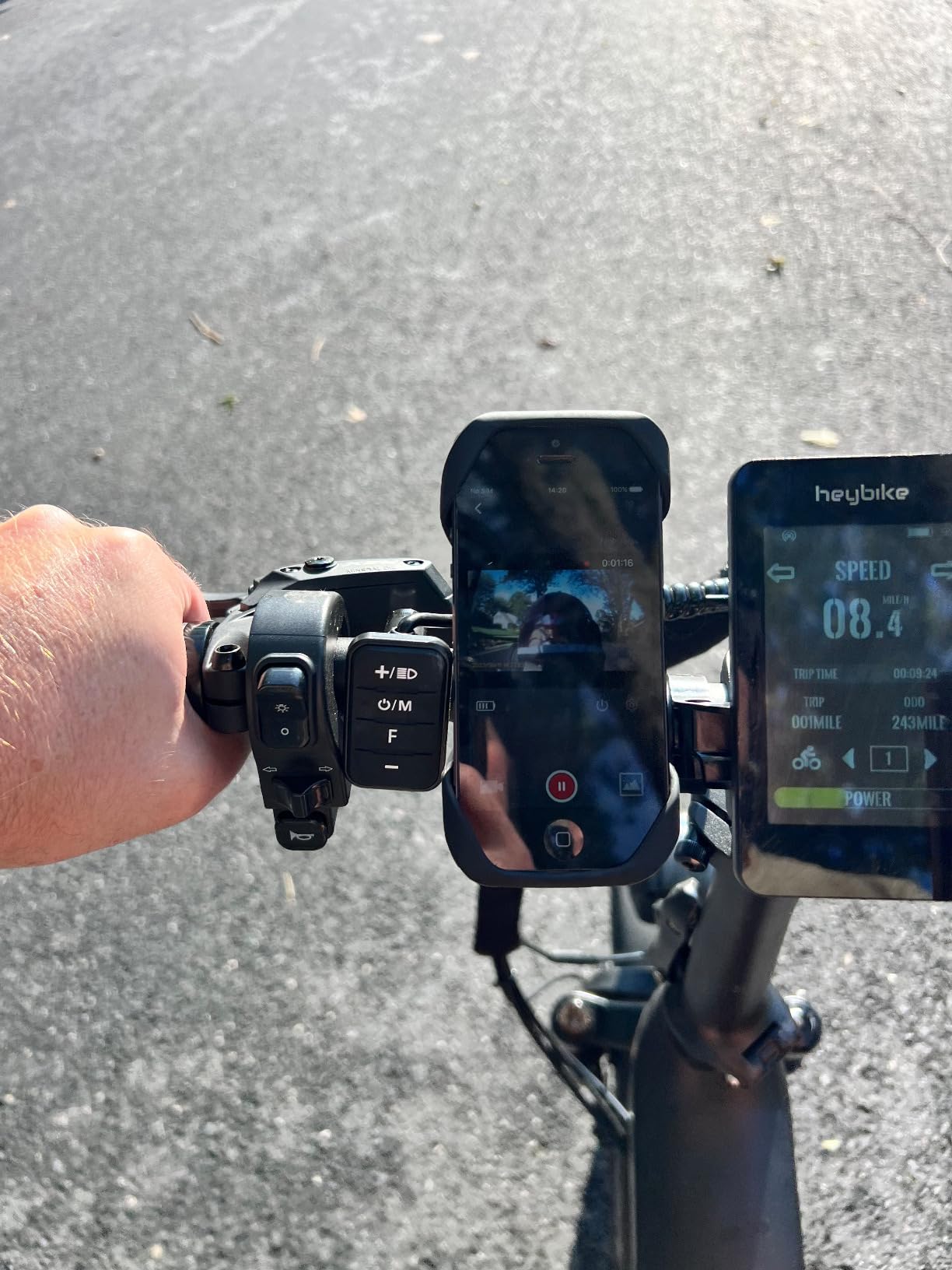
What you get for the money
More than you would expect, on paper and in practice. Two 900mAh batteries give roughly 90 minutes per pack, a 32GB card is already formatted capacity in the box, and the mount kit covers a helmet, a bike and a tripod. A snorkeler who wants to mount on a mask strap or a grip has the parts already.
The 170-degree field of view is generous, and the zoom range of 5x is digital. Note that the field of view must be disabled when zoom is used, so choose one or the other before the dive rather than during it.
Where the SJ4000 will let you down
Stabilization is the weak point. EIS performs poorly and some owners question it outright, and combined with a 170-degree fisheye, moving water produces footage that is hard to stabilise in software. If a reef is calm and you hold still, it is fine. If you are fin-kicking in current, it will show.
Wi-Fi to the SJCAM Zone app is slow and unreliable at up to 33 feet, audio pickup is weak inside the housing, and the housing is difficult to open for battery changes. The card must be formatted before first use. Owners on r/ActionCam treat SJCAM as a cheaper alternative with similar quality, particularly in good light. Set your expectations there.
12. Apexcam M80PRO: Best for 60fps Footage at the Entry Tier
- 4K at 60fps is unusual at this tier
- 64GB card and two 1350mAh batteries included
- Touchscreen interface is simple to learn
- Pre-recorded 5 second buffer catches missed moments
- Wide-angle correction crops the recorded frame
- Remote and touchscreen are not waterproof
- Wi-Fi app connection has limited range
The M80PRO’s one genuine advantage over the other entry cameras here is frame rate. 4K at 60fps makes smooth playback of fast marine movement, and paired with the 5-second pre-record buffer it means the moment you did not quite react to is still captured.
Like the SJ4000, it ships with a 64GB microSD card, two 1350mAh batteries and a broad mount kit. The 2.0-inch touchscreen is a genuine step up from button-only budget cameras, and owners describe the interface as simple enough to configure before a trip without a manual.
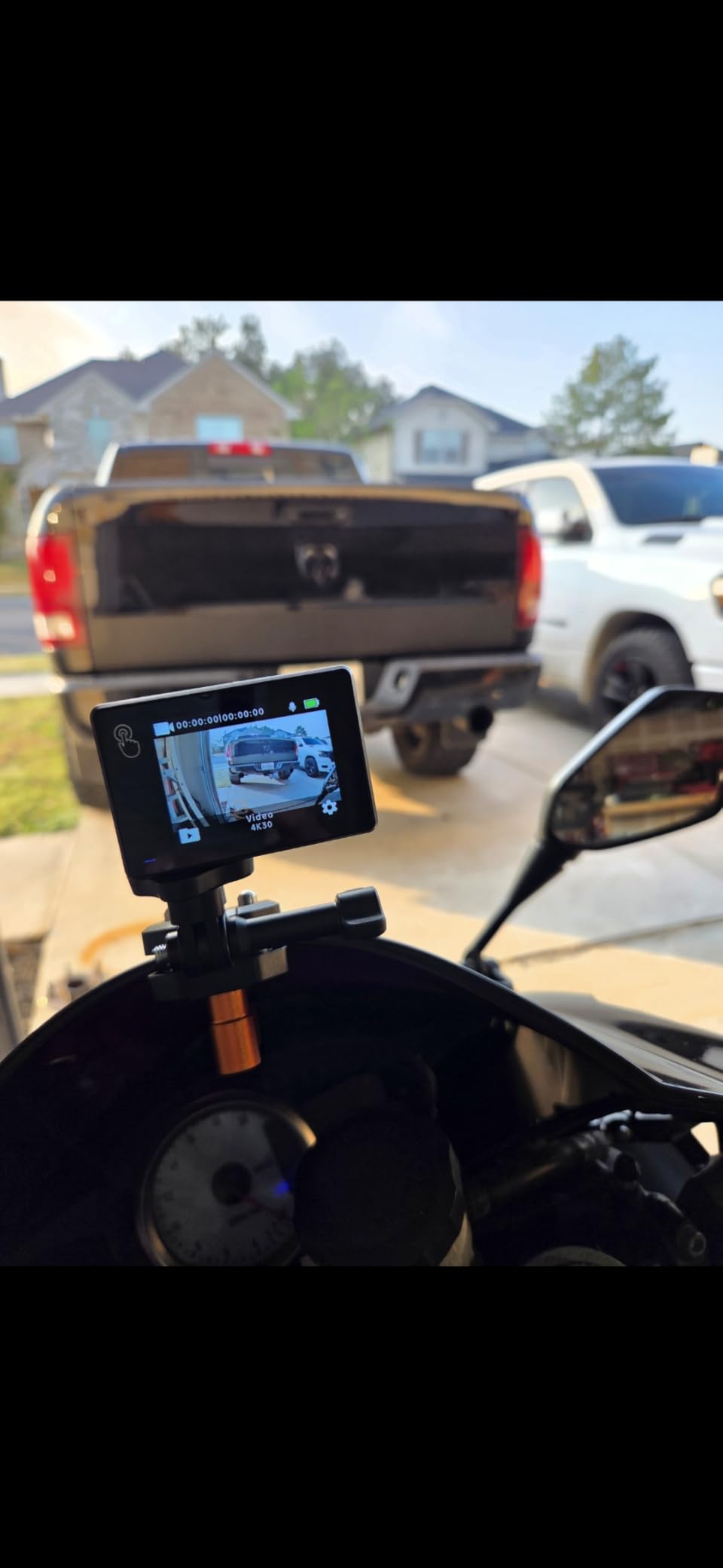
The housing is rated to 131ft, so snorkel depth is not a concern. The six-layer optical glass wide lens with 8x digital zoom gives a wide view, and driving mode with power-on and power-fail auto recording is useful if you use the same camera on a boat trip or a scooter ride between snorkel sites.
Buyers cite the low cost, the included card and the generous bundle as the main draws. Review detail is thinner here than for the AKASO and SJCAM models, so treat owner feedback as less settled, and confirm the actual photo resolution with the seller because it is described inconsistently.
When 60fps changes the result
Smooth playback matters more underwater than it does on land. Fast subjects blur at 30fps because the shutter is effectively slower, and a turtle, a ray or a startled fish that leaves frame is gone. 60fps halves that problem and makes 1080p slow-motion playback usable for a trip highlight reel.
The pre-record buffer works the same way a dash camera does. You hold the camera roughly at the subject, the last five seconds are already stored, and you press record after the moment has passed. For a snorkeler who reacts a second late, that buffer is worth more than another megapixel.
What to watch out for with the M80PRO
Automatic wide-angle correction crops the recorded frame, so the final image is tighter than the 170-degree view suggests. The remote control and touchscreen are not waterproof, and the 2.4GHz Wi-Fi app connection has limited range and reliability.
Photo resolution claims differ between the title and the product copy, which is a reason to treat this model as a video tool rather than a stills camera. The zoom is digital, and files are MOV. For daylight reef video on a shoestring, the trade is defensible. For stills, look elsewhere.
How Deep Can You Go Without a Housing?
Unhoused waterproof rating is the single most important specification for a snorkeler, and it is the one most roundups bury. Snorkelers work between the surface and about ten metres. A camera rated to 10m covers that range with nothing to buy, and anything deeper is headroom you will not use but may want later.
Six of the twelve cameras here run without a case. The DJI Osmo Action 6 goes to 20m, the Osmo Action 4 to 18m, the GoPro HERO12 to 10m, the GoPro HERO11 and HERO10 are waterproof, and the Insta360 GO 3S camera module carries an IPX8 rating to 10m. The rest depend on a housing, either supplied or purchased separately.
Housing-dependent models are not a problem at snorkel depth. The AKASO EK7000, Brave 4, EK7000 Pro, SJCAM SJ4000 and Apexcam M80PRO all ship with housings rated from 30m to 40m, which is more than enough. What you give up is convenience: one more seal to check, one more thing that can fail, and a touchscreen you cannot reach.
Members on r/snorkeling describe a GoPro with a housing and float handle as one of the best decisions they made, with no leaks. That is the forum experience worth hearing: housings are not a deal breaker, they are just a routine, and a routine you do not have to learn is a routine you cannot get wrong on your first trip.
One more caveat belongs here. The GO 3S Action Pod is only splashproof, and the X3 body needs an accessory housing for deep scuba depths. Always check which part of the kit the rating refers to, because a 10m rating on the camera module says nothing about the pod it is docked in.
Underwater Color: Why Snorkeling Footage Goes Blue
Water absorbs light from the red end of the spectrum first, which is why every underwater clip that nobody corrected looks blue-green. By five metres much of the red is already gone, so a bright orange coral head records as grey. That is physics, not a broken camera, and it is the first thing a snorkeler notices when they play back the footage.
Three mechanisms solve it, and a camera can use one, two or all three. A color temperature sensor and built-in white balance auto-correct in-camera. A red or magenta filter screwed onto the housing restores warmth in shallow water, where a red filter works and a magenta filter is better for green-water reef scenes. App-based or desktop color correction in post is the third option.
The models with a real sensor in this group are the DJI Osmo Action 4 and the Osmo Action 6, and reviewers on both describe color retention underwater as a reason to buy. The Osmo Action 6’s variable aperture also helps, since opening to f/2.0 gathers light without pushing the sensor into noise. The GoPros rely on a water-repelling lens cover to cut flare and on software for the rest.
Filters have a documented failure mode. A snorkeler field report documented a dive filter leaking water between the filter and the housing and ruining a clip, and the author’s response was to stop using filters and color-correct in post instead. If you buy a filter, check the seal twice, and treat it as a backup to a good white balance rather than the primary fix.
Blue water and green water need different treatment. Blue water, common on drop-offs and open ocean, loses red fastest and benefits from a red filter. Green water over tropical reef and in lagoons absorbs the blue end, and a magenta filter restores contrast there. Post-production handles both, and a camera with strong 10-bit color science, like the Osmo Action 4 with D-Log M, gives you more to work with.
Frame Grabs: Stills From Video When Your Hands Shake
Frame grabs are the most useful feature for a snorkeler and the least mentioned. A frame grab is a high-resolution still extracted from video you have already recorded. It solves the central physical problem of the activity, which is that you cannot hold a camera perfectly still while breathing and fin-kicking at the same time.
The workflow is four steps. Record a continuous 5.3K or 4K clip rather than a series of stills. Keep the camera moving slowly so you get many usable frames instead of one. Transfer to the app and open the frame grab tool. Choose a frame where the subject is sharp and the background is clean, then export at full resolution.
Both GoPros in the frame-grab sweet spot do this well. The HERO12 pulls 24.7MP stills from 5.3K video, and the HERO11 does the same from its 5.3K60 footage. The HERO10 produces smaller 15.8MP grabs but works on the same principle. The AKASO Brave 4’s 20MP stills are conventional photographs, which is a different and less forgiving approach.
The practical advice from people who shoot this way is to record more than feels necessary. A ten-minute clip yields perhaps five usable stills, and you are not going to know which ones while you are underwater. Reread the GoPro adventure travel guide for how we handle transfer and backup on multi-stop trips.
Stabilization, Battery Life and Lens Fog in the Water
Stabilization is worth more underwater than on land because you are never standing still. The relevant technologies are HyperSmooth on GoPro, RockSteady and HorizonBalancing on DJI, and FlowState with Horizon Lock on Insta360. Horizon leveling matters most, because a tilted horizon in reef footage is immediately visible even when the subject is sharp.
Battery life is the second real constraint, and the numbers vary widely here. Quoted figures run from 64 minutes on the GoPro HERO12 and 83 minutes on the HERO10, through 90 minutes on the AKASO EK7000, up to 150 minutes on the Osmo Action 4 and 4 hours on the Osmo Action 6. Cold water drains packs faster than warm water, so allow margin in a northern sea.
Owners on r/outdoorgear advise carrying multiple spare batteries, and that advice has been consistent for years. A camera that dies during the encounter you wanted is the most common complaint in every underwater forum, and it costs nothing to prevent. Most of these cameras are USB-C, so a single small power bank covers a whole boat day.
Lens fog is the failure nobody plans for. Condensation forms inside a housing when warm humid air is sealed into a cool case, and it appears on surfacing. The prevention routine is simple: keep the camera and housing at the same temperature before sealing, keep them in a dry bag with a desiccant pack, and never open a housing that has just come out of warm water into cooler air.
Five steps stop fogging. First, set everything on dry land and let the camera acclimatise. Second, keep silica gel or a desiccant pack in your dry bag. Third, seal the housing as late as possible before you enter the water. Fourth, if condensation appears, let the camera sit open on shore until everything is dry. Fifth, rinse in fresh water after every session, because salt residue traps moisture and degrades seals.
Hydrophobic lens covers reduce the problem but do not remove it. The GoPro HERO10’s coating and the HERO12’s water-repelling cover both help with droplets and flare, and the DJI models run cooler, which slows internal condensation. None of them makes fog impossible, so pack a microfibre cloth and accept that the first clip of the morning may be soft.
What Snorkeling Camera Accessories to Pack
Accessories are where the real cost of a snorkeling camera hides, and this is the section competitors skip. A camera body is the beginning of the kit, not the kit. Forum posts about upgrading and finding that old housings, filters and mounts no longer fit are a recurring warning.
A floating grip is the first purchase for any camera that is not a GO 3S. Snorkeling field reports include an extension pole that was not buoyant and was lost to the bottom within a single session, which is an expensive lesson that costs far less than the camera. Buy a grip or pole that floats, and attach the wrist strap every single time.
The rest of the kit: at least two spare batteries, a high-speed microSD card in a second size, a short USB-C cable, a microfibre cloth, a silicone gel or desiccant pack for the dry bag, and a mask or chest mount if you want hands-free footage. Add a red filter for blue water and a magenta filter for green reef only after you have tested the seals on shore.
On the same trip you will also be shooting on land, and our guides on DJI action cameras for vlogging and GoPro travel setups cover the mounts, batteries and audio that work above the waterline. A camera that suits both halves of a trip is worth more than the best underwater-only body.
Phone in a Waterproof Pouch: The Casual Snorkeler Option
If you snorkel two or three times a year, a phone in a waterproof pouch beats buying a camera. Modern phones shoot better stills than most entry action cameras, the pouch costs a fraction of one, and you can check a photo immediately instead of transferring at the end of the day.
The limits are real. Pouches are typically rated to about 10m, touch control works poorly underwater, audio is blocked by the case, and there is no stabilization equivalent to HyperSmooth or FlowState. The battery is a genuine concern since the phone screen is on the whole time, and cold water drains it faster.
Our view is that a pouch is a genuine first step, not a compromise. Use it to find out whether you enjoy filming underwater. Once you know you want reef footage with frame grabs and a level horizon, move to a body like the DJI Osmo Action 4 or the GoPro HERO12.
Frequently Asked Questions
What is the best waterproof camera for snorkeling?
The DJI Osmo Action 4 is the best waterproof camera for snorkeling for most people. Its 1/1.3-inch sensor holds onto red and orange in shallow water, it is waterproof to 18 metres with no housing, and the 150-minute battery covers a full boat excursion. Snorkelers who cannot aim should look at the Insta360 X3 for 360 reframing, and first-time buyers who want the least risk should start with the AKASO EK7000, which includes a housing rated to 40 metres.
Which action camera is the best and most waterproof?
The most waterproof model in this roundup is the DJI Osmo Action 6, rated to 20 metres without a housing, followed by the DJI Osmo Action 4 at 18 metres. The GoPro HERO12, GoPro HERO11, GoPro HERO10 and the Insta360 GO 3S camera module are all rated to 10 metres, which covers snorkeling. Cameras that need a housing include the AKASO EK7000, AKASO Brave 4, AKASO EK7000 Pro, SJCAM SJ4000 and Apexcam M80PRO, all of which ship with housings rated between 30 and 40 metres.
Which GoPro is best for underwater snorkeling?
The GoPro HERO12 Black is the best GoPro for underwater snorkeling among the models reviewed here. It shoots 5.3K60 with HDR, produces 27MP stills and 24.7MP frame grabs from video, carries a water-repelling lens cover that reduces flare, and is waterproof to 10 metres without a housing. The HERO11 Black is the pick if photo resolution is your priority, and the HERO10 Black makes sense if you already own compatible GoPro mounts and housings.
Do I need a dive housing for snorkeling?
No, not for snorkeling. Snorkelers stay between the surface and roughly 10 metres, and every camera in this roundup either works without a housing or ships with one rated to 30 or 40 metres. A housing only becomes necessary if you freedive deeper or scuba dive. If you do use one, check the O-ring, set all settings before sealing because many housings block touch, and never open a warm housing in cooler air or you will get condensation inside.
What is the best budget underwater camera for snorkeling?
The AKASO EK7000 is the best budget underwater camera for snorkeling because the 131ft waterproof housing, two batteries, a wrist remote and a mount kit all ship in the box, so there is nothing else to buy before your first trip. The AKASO EK7000 Pro adds a 2-inch touchscreen and larger batteries, while the SJCAM SJ4000 is the entry option that includes a 32GB card. All three shoot 4K and accept the usual compromise in low light and stabilization.
Why do my underwater videos look blue, and how do I fix it?
Water absorbs red light first, so by five metres the warm colors in a reef scene are already gone and footage records as blue-green. Three fixes work. A color temperature sensor with built-in white balance corrects in-camera, which the DJI Osmo Action 4 and Osmo Action 6 both have. A red filter for blue water or a magenta filter for green reef restores warmth on the housing, though seals can leak. App-based or desktop color correction in post is the fallback many snorkelers rely on.
How do I stop a camera lens fogging underwater?
Condensation forms when warm humid air is sealed into a cool housing, and it usually appears on surfacing. Five steps prevent it: set your settings on dry land and let the camera reach the same temperature as the water, keep a desiccant or silica gel pack in your dry bag, seal the housing as late as possible, never open a housing that has just come out of warm water into cooler air, and let any camera sit open on shore until it is fully dry. Rinse in fresh water after every session so salt residue does not trap moisture.
What is the best waterproof disposable camera for snorkeling?
A waterproof disposable camera is limited to a fixed number of exposures, cannot be reviewed before printing, and cannot be stabilized or frame-grabbed, so it is worth skipping for snorkeling. A budget action camera such as the AKASO EK7000 or the SJCAM SJ4000 gives you unlimited 4K footage, stills you can keep, and frame grabs from video for a similar outlay. If you snorkel occasionally, a phone in a waterproof pouch is an even cheaper way to start.
Which Waterproof Action Camera Should You Buy?
The DJI Osmo Action 4 is the waterproof action camera for snorkeling we would buy first. It works to 18 metres with no housing, its 1/1.3-inch sensor holds color in a way cheaper bodies do not, the 155-degree view captures reef scenes, and the 150-minute battery means you stop thinking about the camera and start looking at the water.
If you would rather not aim at all, the Insta360 X3 records everything and lets you reframe afterwards. If you are starting out or travelling with limited kit space, the AKASO EK7000 arrives complete with a 40-metre housing, two batteries and a remote. If you want the best stills and frame grabs from a GoPro, the HERO12 Black does 24.7MP grabs from 5.3K video and stays waterproof to 10 metres bare.
Two things decide it for most snorkelers. How deep you will actually go, which is rarely past ten metres, and whether you can hold a camera steady while breathing, which almost nobody can. Answer both honestly, buy the camera that fits, pack a floating grip and spare batteries, and take everything we covered in the guide above with you into the water.