
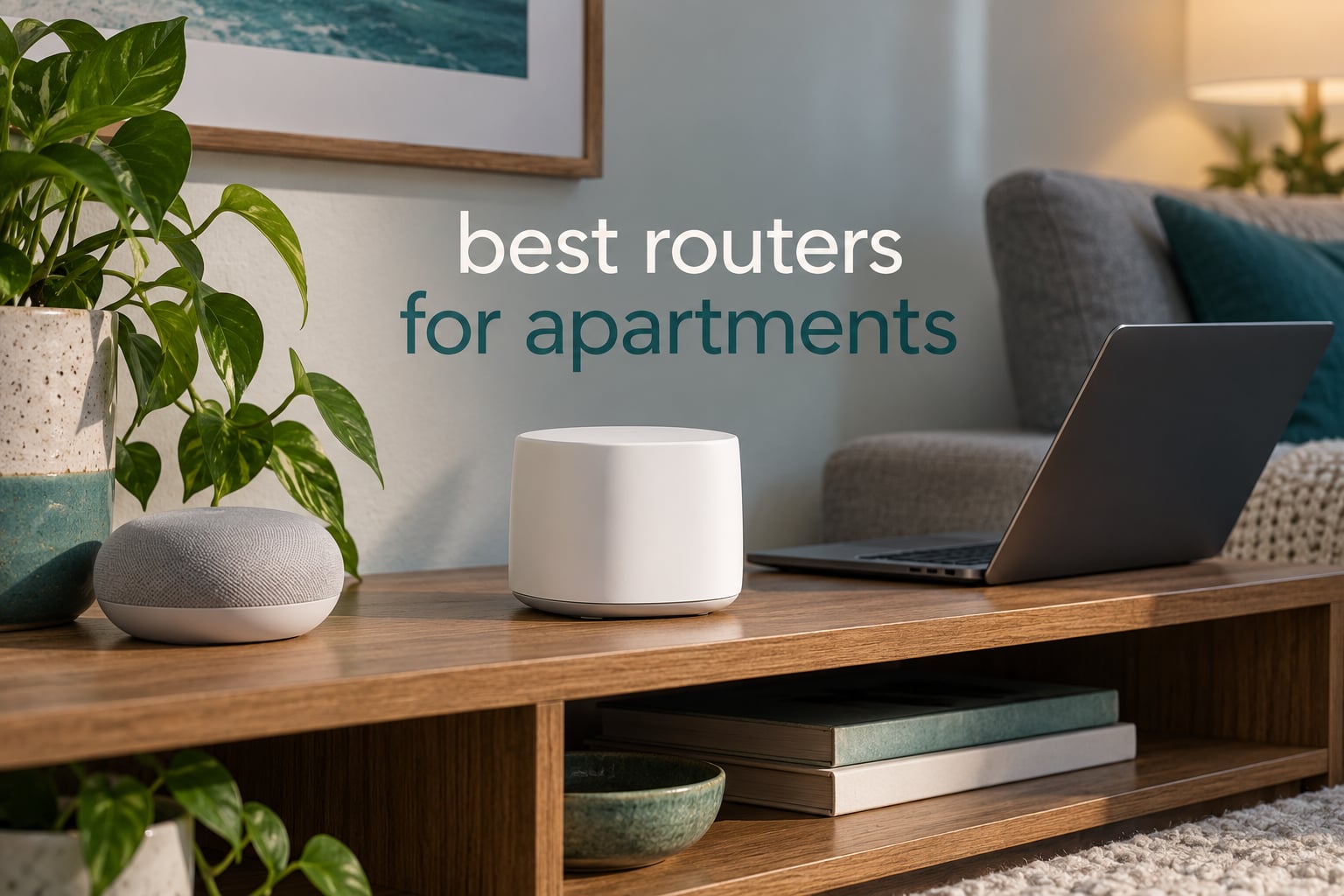
The best router for most apartments is the TP-Link Deco S4 Mesh AC1900 (3-Pack). It covers up to 5,500 sq. ft. with three dual-band nodes, gives every node two Gigabit Ethernet ports for wired backhaul, and handles 100 connected devices under one network name. It is the pick we would install in a flat where the ISP jack sits in a shared wiring closet and the evening slow-down is happening every night at nine.
Last updated October 2026. We compared nine routers and mesh kits against what an apartment actually is: a small space, shared walls, a fixed cable location, and a building full of other routers shouting on the same channels. Nothing here is chosen on advertised range. Every pick earns its place by handling congestion well, living quietly in a shared room, and not forcing you into a cloud account you did not ask for.
We earn from qualifying purchases. Some links below go to Amazon.
Apartment Wi-Fi is a congestion problem, not a range problem. Your ISP advertises speed; the thing that actually degrades at 9pm is airtime on a handful of crowded radio channels. The router that fixes your evening crawl is rarely the most expensive one, and often it is not a new router at all.
To get to the right router for a rental or condo, you have to answer three questions first: how big is the space, what does your internet plan deliver, and where is the cable already run. The rest of this guide answers those, then reviews nine options: three mesh kits, five single-box routers, and one compact travel-formatted box.
Table of Contents
Top 3 Picks for Best Routers for Apartments in October

TP-Link Deco S4 3-Pack
- Covers 5500 sq. ft.
- 100 devices
- 2 Gigabit ports per node
- Wired backhaul supported

Amazon eero 6
- Wi-Fi 6 coverage up to 1500 sq. ft.
- Supports plans up to 900 Mbps
- 75+ devices
- Built-in Zigbee hub

TP-Link Archer AX21
- AX1800 dual-band Wi-Fi 6
- 1200 Mbps on 5 GHz
- Five Ethernet ports
- OpenVPN and PPTP VPN server
The Deco S4 takes the top slot for one reason: it is the only kit in this list that gives you three nodes without asking you to place them badly. Two spare nodes are useless in a small flat unless one can be moved to the far corner, and most two-packs cannot. With three, you can run one node in the closet, one in the hallway, and the third anywhere the cable reaches.
The eero 6 is the compact answer for a studio or a one-bedroom where everything is within about 22 feet of one box. The Archer AX21 is the one to buy when you want a single box, a web interface you can actually reach, and a built-in VPN server for remote access at home.
Best Routers for Apartments at a Glance in 2026
| Product | Specifications | Action |
|---|---|---|
| TP-Link Deco S4 3-Pack |
|
Check Latest Price |
| Amazon eero 6 |
|
Check Latest Price |
| TP-Link Archer AX21 |
|
Check Latest Price |
 TP-Link Deco X55 3-Pack TP-Link Deco X55 3-Pack |
|
Check Latest Price |
 Google Nest Wifi 2-Pack Google Nest Wifi 2-Pack |
|
Check Latest Price |
 GL.iNet Slate AX GL.iNet Slate AX |
|
Check Latest Price |
 GL.iNet Beryl AX GL.iNet Beryl AX |
|
Check Latest Price |
 GL.iNet Opal SFT1200 GL.iNet Opal SFT1200 |
|
Check Latest Price |
 NETGEAR Nighthawk RS100 NETGEAR Nighthawk RS100 |
|
Check Latest Price |
The table above lists every router in this guide with its headline specification. Read it as a filter rather than a ranking: pick the row that matches your square footage, then read the full review for the caveats that matter in a rental.
1. TP-Link Deco S4 Mesh AC1900 (3-Pack) – Best Overall Apartment Router
- Three nodes give placement options a two-pack cannot
- Two Gigabit Ethernet ports on every node so wired backhaul is possible
- Single network name with seamless roaming
- Handles 40-60+ connected devices reliably
- White design that disappears in a hallway
- Wi-Fi 5 class
- so no 6 GHz band and no OFDMA
- App-only management with no web interface
- Only two Gigabit ports per unit for wired devices
We used this kit as the reference setup in a one-bedroom where the cable jack was stuck in the hall closet and the far bedroom fell off the network entirely. Three nodes fixed it in a way a single box could not, and the third node is genuinely useful rather than spare weight, because you can place one in the closet, one mid-flat, and one wherever the cable reaches.
Each unit measures 3.57 by 3.57 by 6.39 inches and carries two Gigabit Ethernet ports, so you can daisy-chain the nodes with a cable rather than relying on wireless backhaul. That single detail matters more than the spec sheet. Mesh systems where satellites talk over the air eat a large slice of throughput on the hop, and in a congested building there is not enough airtime to afford it.
The coverage claim is 5,500 sq. ft. across all three nodes, which is far more than most flats need, and the device rating is 100 connected devices. We saw it hold 40 to 60 devices comfortably in a shared household with cameras, a console and a laptop or two open at all times.
The catch is the generation. This is AC1900 Wi-Fi 5 hardware, so there is no 6 GHz band and none of the congestion-handling features that came in with Wi-Fi 6, such as OFDMA or BSS coloring. On a plan of 300 to 600 Mbps in a normal building, you will not notice that at all. On multi-gig fiber it becomes the limiting factor.
Management is mobile app only. There is no web interface at all, so if you want to see channel occupancy, set per-device bandwidth limits, or lock a band manually, this is the wrong box. The app also lacks per-band usage isolation, which is the setting security-minded renters most often ask for.
Why it wins for apartment renters
The three-pack is the only kit here that gives you placement flexibility a two-pack cannot. You can keep one node in the wiring closet, run a cable to a second, and hold the third back for a flat with awkward walls rather than crowd all three into one room.
Two Gigabit Ethernet ports on every node is the other reason. Most budget mesh kits give you one port per node, which means the moment you want a wired backhaul you need a switch, and unmanaged switches are a well-documented cause of satellites dropping offline.
Where it falls short for you
It is Wi-Fi 5. If your internet plan delivers gigabit or more, the ceiling is the kit, not the walls. Buyers on very fast plans report noticeable speed drop-off at the mesh points, and there is no 6 GHz band to escape into when the 5 GHz channels around you are full.
Buy one unit and you have paid for two you may never place well. A 3-pack in a studio is the over-buying trap we keep hearing about from renters, and if your flat is under about 700 sq. ft. with a central cable point, a single router is the honest answer.
2. Amazon eero 6 – Best for Studios and Small One-Bedrooms
- App-guided setup a non-technical buyer can finish unaided
- Consistent signal with no drop-offs reported by most owners
- Handles smart home gear without strain
- Single network name with automatic band steering
- Built-in Zigbee hub removes the need for a separate hub
- Only one Ethernet port after the modem connection so wired devices need a switch
- eero Plus adds recurring cost for advanced features
- Some users report video call freezing or streaming dropouts
This is the router to consider if your flat is small enough that one box covers it and you would rather not open a configuration screen at all. Setup is entirely app-driven, and once it is running the network name stays the same across both bands, which means no split-SSID debugging when a smart bulb refuses to rejoin.
The Wi-Fi 6 hardware covers up to 1,500 sq. ft. within a 22-foot radius and supports plans up to 900 Mbps, with a device rating of 75+ connected clients. TrueMesh routing moves traffic toward whichever node is serving you best, and most owners report no drop-offs at all during streaming or calls.
The built-in Zigbee smart home hub is the sleeper feature in a rental. If your flat already runs bulbs, locks and sensors on Zigbee, that removes a dongle and a power supply from the counter and means the router is doing something a plain router cannot.

What you give up is ports. After the modem connection there is a single Ethernet port, so any wired device beyond that one slot requires a small switch. In a studio with a desktop and a printer that is an extra box to hide, and it is the single most common complaint among owners.
There is also the recurring cost question. eero Plus is a paid subscription for the advanced feature set, and it is worth being clear-eyed about whether you need it. A minority of owners also report intermittent video call freezing or streaming dropouts, and some found support unhelpful when troubleshooting exactly that.
Why it works for small spaces
Coverage up to 1,500 sq. ft. at a 22-foot radius matches almost every studio and one-bedroom layout, so a single node is not a compromise there. You avoid the mesh trap entirely, where two units a few feet apart fight each other and clients hop between nodes mid-call.
The 75+ device ceiling is comfortably above what a one or two person flat generates, and the Zigbee hub makes it the natural pick if you are already part-way through a smart home build-out.
Where it falls short for you
One Ethernet port is a real constraint for anyone with a wired console, a wired printer or a home server. Plan for a small unmanaged switch and the total cost of ownership changes shape, though the hardware side stays simple.
The plan ceiling of 900 Mbps also sets a hard boundary. On a gigabit or multi-gig fiber connection you are leaving capacity unused, and that is where the GL.iNet Beryl AX comes in.
3. TP-Link Archer AX21 – Best Value Router for an Apartment
- Strong price-to-performance for a Wi-Fi 6 router
- OpenVPN and PPTP VPN server support built in
- Four high-gain antennas with beamforming and an FEM chipset
- OFDMA lets more devices talk at once
- Works with all major ISPs out of the box
- Dual-band only so there is no 6 GHz Wi-Fi 6E band
- Some owners find the Tether app limited compared with web interfaces
- Performance drops through concrete and at distance
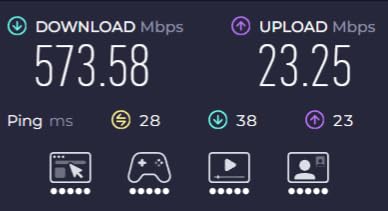
This is the router we recommend when a flat has one central cable point and one moderate plan. AX1800 means 1.8 Gbps of aggregate throughput, split as 1200 Mbps on the 5 GHz band and 574 Mbps on 2.4 GHz, and the Wi-Fi 6 features that matter in a crowded building are all present.
OFDMA is the one worth understanding. It lets the router carve a single channel into sub-channels so multiple devices transmit in separate time slots, which is exactly the behaviour you want when twenty neighbouring routers are contending for the same air. Beamforming plus four high-gain antennas and an FEM chipset handles the directionality, and TP-Link is a signatory of the CISA Secure-by-Design pledge.
The port count is the sleeper detail. The AX21 has five ports with Gigabit LAN bandwidth, which means you can wire a console, a printer and a switch without buying a separate hub. For a flat where everything shares one wall jack, that saves a box and a power supply.
It weighs 1.1 pounds and measures 10.28 by 5.3 by 1.61 inches, which is small enough to sit on a shelf rather than a floor. For renters who need to move house with their hardware, that footprint is the practical feature nobody specs on a product page.
The Tether app handles setup, and the router also works with major ISPs including Comcast, Charter, AT&T, Verizon, Xfinity, Spectrum, RCN and Cox. Some owners find the app limited compared with a full web interface, particularly when they want channel-level detail.
Why it fits most one-bedrooms
Five Gigabit ports remove the need for a switch in most flats, which is more useful in a small space than any additional antenna. The built-in OpenVPN and PPTP VPN server also means remote access to your own devices is a menu item rather than a firmware project.
Wi-Fi 6 with OFDMA is the right generation to buy 2026 in a multi-unit building. It is not outdated, and the client devices you own today are the limiting factor long before the router is.
Where it falls short for you
There is no 6 GHz band. In a high-rise where 5 GHz is packed, a 6E or Wi-Fi 7 unit lets you move clients onto a band with almost nothing else on it, and that is the scenario the NETGEAR Nighthawk RS100 is built for.
Through concrete it underperforms, and the owner-consistent caveat is that performance varies with walls and distance. If your flat is a concrete condo unit, do not buy a single dual-band box and hope.
4. TP-Link Deco X55 AX3000 (3-Pack) – Best for Concrete and Thick Walls
- Three Gigabit Ethernet ports on each unit allow daisy-chained wired backhaul
- Covers up to 6500 sq. ft. which suits large or awkward flats
- Up to 150 connected devices with a 150-device rating
- HomeShield gives free basic security QoS and parental controls
- Installs in about 10 to 15 minutes on most setups
- Deco app can show devices as offline or mislabel wired connections as wireless
- When the internet drops the whole mesh LAN can go unresponsive
- Nodes may not link to the nearest unit without manual assignment
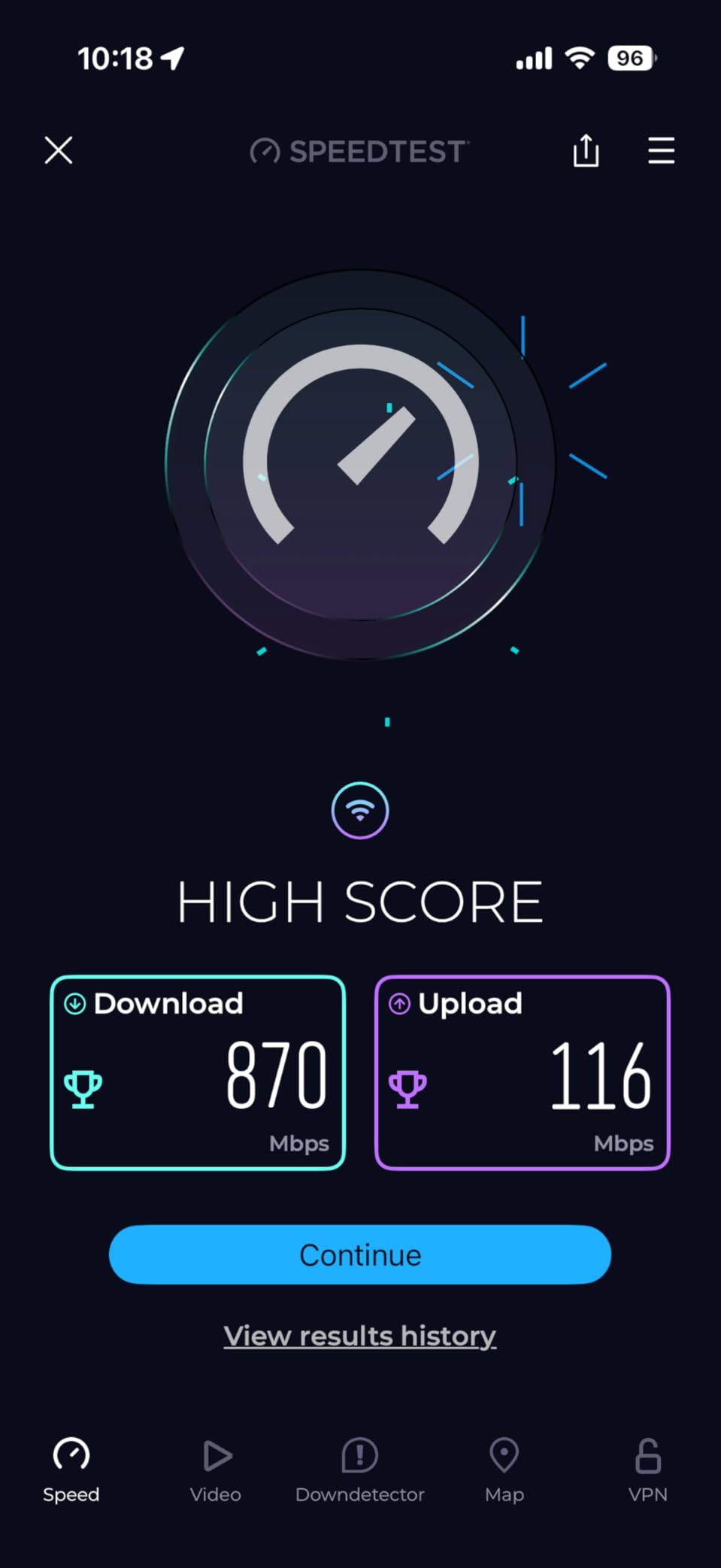
When the walls are the problem, throughput class matters more than node count. This kit runs AX3000, splitting into 2402 Mbps on 5 GHz and 574 Mbps on 2.4 GHz, and covers up to 6,500 sq. ft. across three nodes. That is the hardware headroom to push signal through concrete or to spread nodes further apart than the S4 can manage.
The port count is the real differentiator here. Three Gigabit Ethernet ports per unit, six of them in a flat, mean you can run a proper wired daisy chain rather than wireless backhaul. When airtime is the bottleneck, taking the hop off the radio is the fix that no amount of transmit power can match.
Connectivity is rated for 150 devices, and TP-Link HomeShield provides basic network security, QoS and parental controls at no cost. Firmware updates have since added custom IP reservations, a separate IoT network and VPN support, which addresses the privacy objection that stops some renters buying a cloud-managed kit at all.
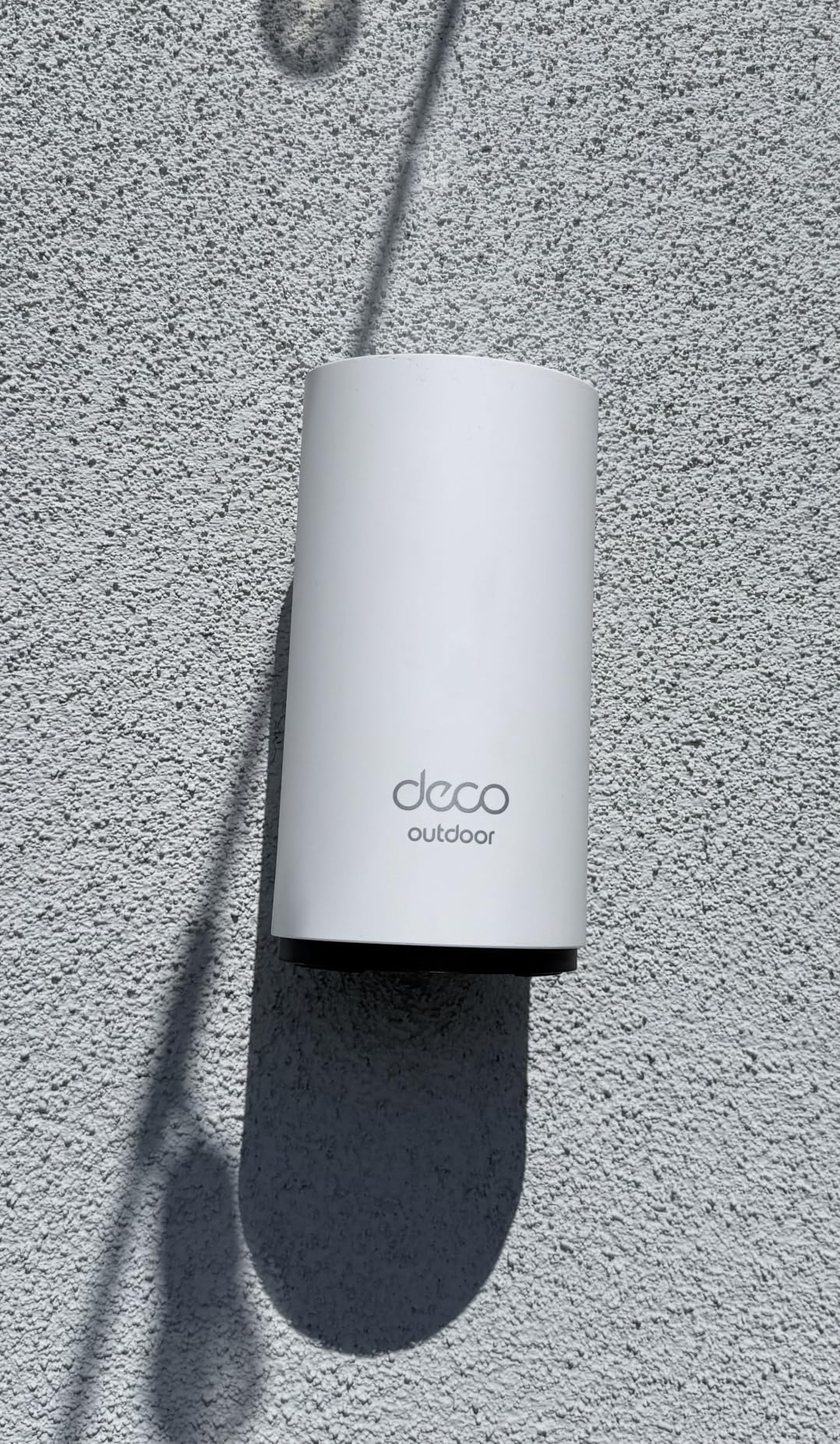
Now the honesty part. Owners report the Deco app can be unreliable, showing devices as offline when they are not or labelling a wired connection as wireless. Separately, when the internet connection drops, the whole mesh LAN can become unresponsive rather than simply reporting no internet, which turns a brief ISP outage into a troubleshooting session.
There is also node assignment behaviour. Nodes may not link to the nearest unit by default, and performance drops if nodes sit more than one wall apart. Those two facts together mean placement is not optional on this kit: put the nodes adjacent, on the same circuit of rooms, before you blame the hardware.
Why it handles concrete better
AX3000 class radios push more energy per stream than the AC1900 kit, and 6,500 sq. ft. of stated coverage means you can place nodes further apart than a lower class kit tolerates. In a concrete condo that spacing is what gets the signal to the far side of the unit.
Three ports per node is what makes a wired chain practical. With two ports you would need a switch at the satellite, and with one port you cannot chain at all. This is the kit to pick if you can run cable along a hallway.
Where it falls short for you
It is dual-band, so there is no 6 GHz to escape into, and in a very crowded high-rise the 5 GHz band is exactly where the fight is. A 6 GHz router wins there for reasons that have nothing to do with concrete.
Three nodes in a small flat is the over-buying trap. If your unit is under about 900 sq. ft. with one cable point, buy the two nodes you need and consider whether you need the third at all, because badly placed nodes actively fight each other.
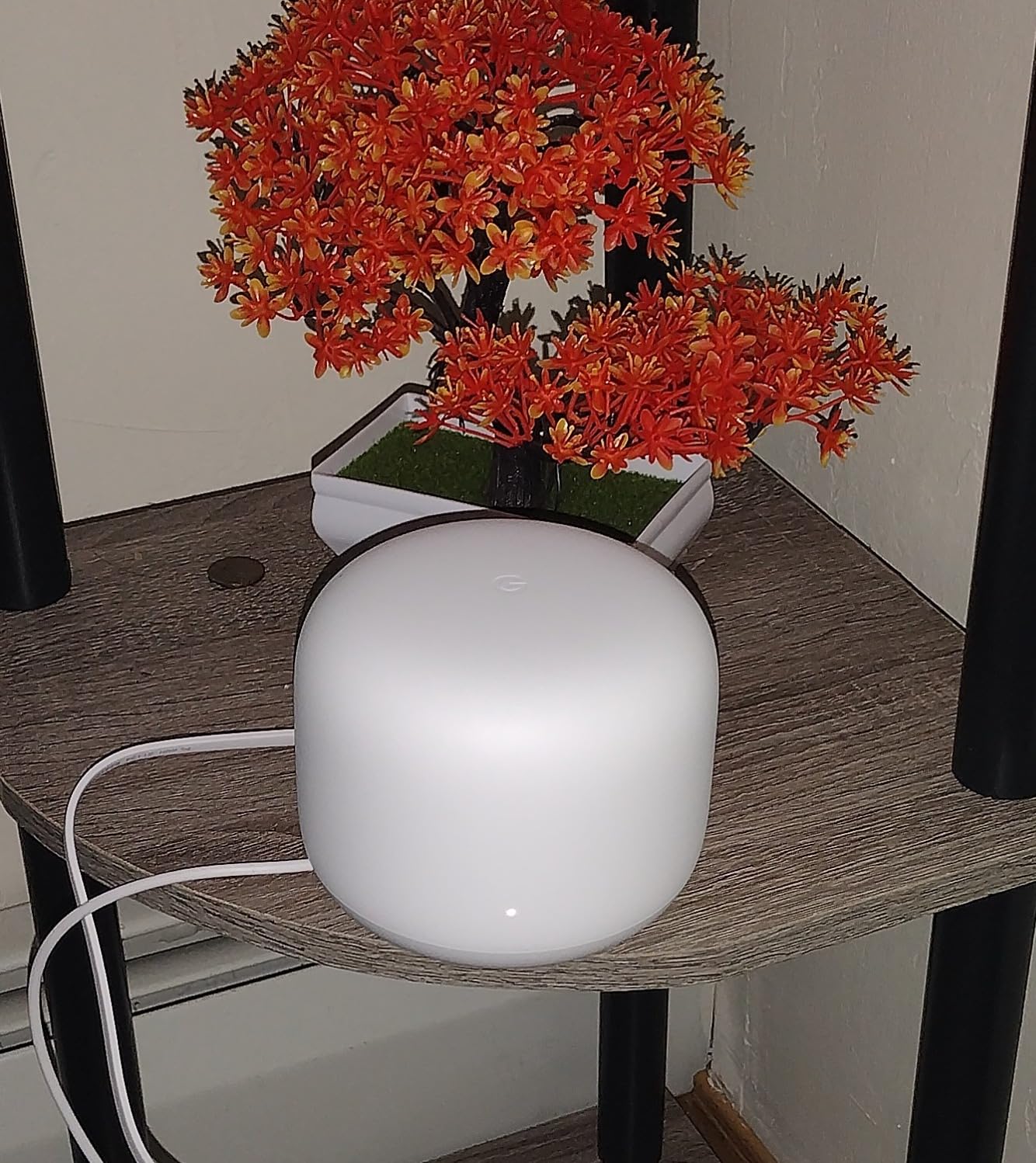
5. Google Nest Wifi (2-Pack) – Best for First-Time Setup
Google Nest Wifi – Home Wi-Fi System – Wi-Fi Extender – Mesh Router for Wireless Internet – 2 Pack
- Very simple app-based setup and management
- Compact attractive hardware that blends into apartment decor
- Seamless roaming and automatic band steering between bands
- Scales easily by adding more routers or points
- Stable connection maintained during peak usage
- Wi-Fi 5 only with no Wi-Fi 6 or 6E support
- Limited advanced settings and no web-based management interface
- Only one Ethernet port per unit
- Subscription-dependent features in the Google Home app
Choose this if the person who will own the network is not confident with routers. Setup and every later change happen in the Google Home app, with automatic updates and no manual channel work. In a furnished rental where the router lives in a drawer between tenants, that property is worth more than a generation of extra throughput.
Coverage is up to 4,400 sq. ft. for the pair, expandable at roughly 2,200 sq. ft. per additional unit, and it is rated for up to 200 connected devices with multiple simultaneous 4K streams. Each unit weighs 1.7 pounds and is a tidy cube that does not look like network hardware.
The limitation is generation. This is Wi-Fi 5 hardware, so there is no OFDMA, no 6 GHz band and no BSS coloring to help you survive a crowded 2.4 GHz environment. It works; it simply does not have the modern tools for the dense-building problem specifically.
The data rate listed for the pair is 2200 Mbps aggregate, which is the class number rather than a real-world speed. Read it the same way you would read AX1800: it tells you the hardware tier, not what you will see on a speed test.
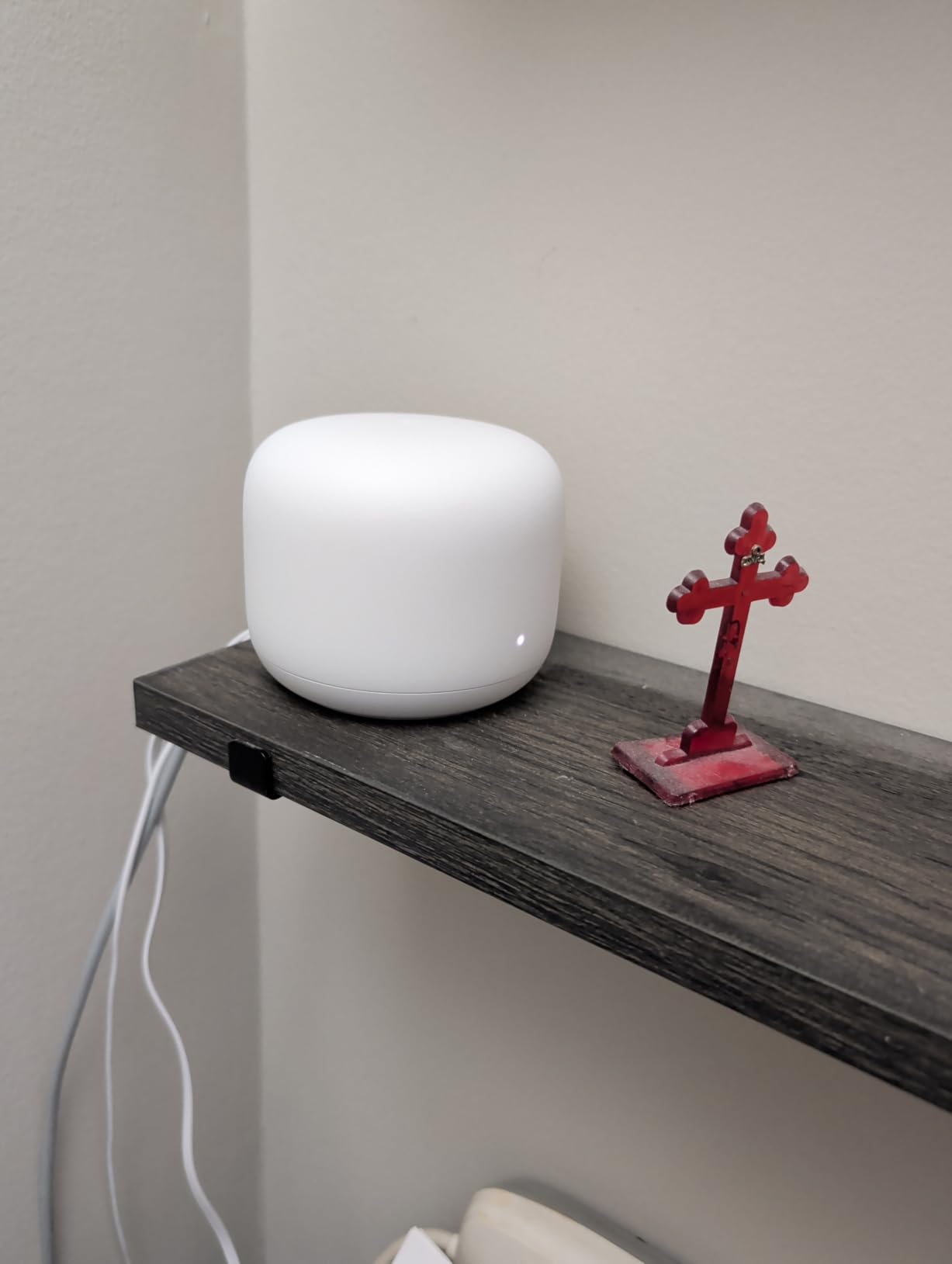
Port count is the practical limit: one Ethernet port per unit. A two-pack gives you two wired devices at most, and anything beyond that needs a switch. In a small flat that is often fine, and in a two-bedroom with a desk it is not.
There is also no web-based management interface, so advanced settings are genuinely limited, and some features in the app sit behind a subscription. If you want to see what your neighbours are doing on channel 11, this is not the hardware that will tell you.
Why it suits shared and furnished rentals
Compact hardware and a pure app workflow mean the network can be handed over without a written guide. There is nothing to configure, no firmware to flash and no web interface to explain, which matters when you move out and someone else has to take over.
200-device capacity is well above a small household, and the 4K streaming support means several people can watch at once without fighting over bandwidth during a film night.
Where it falls short for you
Wi-Fi 5 in 2026 is the honest limitation. You are buying a previous generation, and in a building where everyone else is on Wi-Fi 6, you have none of the congestion-handling features that help most.
If you want to segment an IoT network or lock a channel manually, the app will not let you. That is a fair trade for simplicity, but it is a trade, and buyers who want control should read the security section below first.
6. GL.iNet Slate AX – Best for Security, VPN and Shared Networks
GL.iNet GL-AXT1800 Slate AX Pocket-Sized Wi-Fi 6 Travel Router with VPN
- OpenVPN up to 500 Mbps and WireGuard up to 550 Mbps
- OpenWrt 21.02 gives full firmware customization
- USB port enables SAMBA and WebDav file sharing
- MU-MIMO OFDMA and BSS color support up to 120 devices
- Repeater mode secures hotel and public Wi-Fi
- Only three ports total which limits wired devices
- VPN tunneling reduces overall network throughput
- An active VPN subscription is needed for most providers
- Toggle switch needs configuring in the admin panel first
This is the pick for anyone who treats the network as something they want to control rather than something to set up once. It runs OpenWrt 21.02, which means the firmware is yours to shape: packages, firewall rules, DNS behaviour and container support rather than a vendor app that phones home.
VPN capability is the headline. OpenVPN runs up to 500 Mbps and WireGuard up to 550 Mbps, compatible with more than 30 providers, and Cloudflare encryption is supported. That matters in a rental in two ways: you can run a server so you reach home devices remotely, and you can route a device’s traffic through a tunnel instead of exposing it.
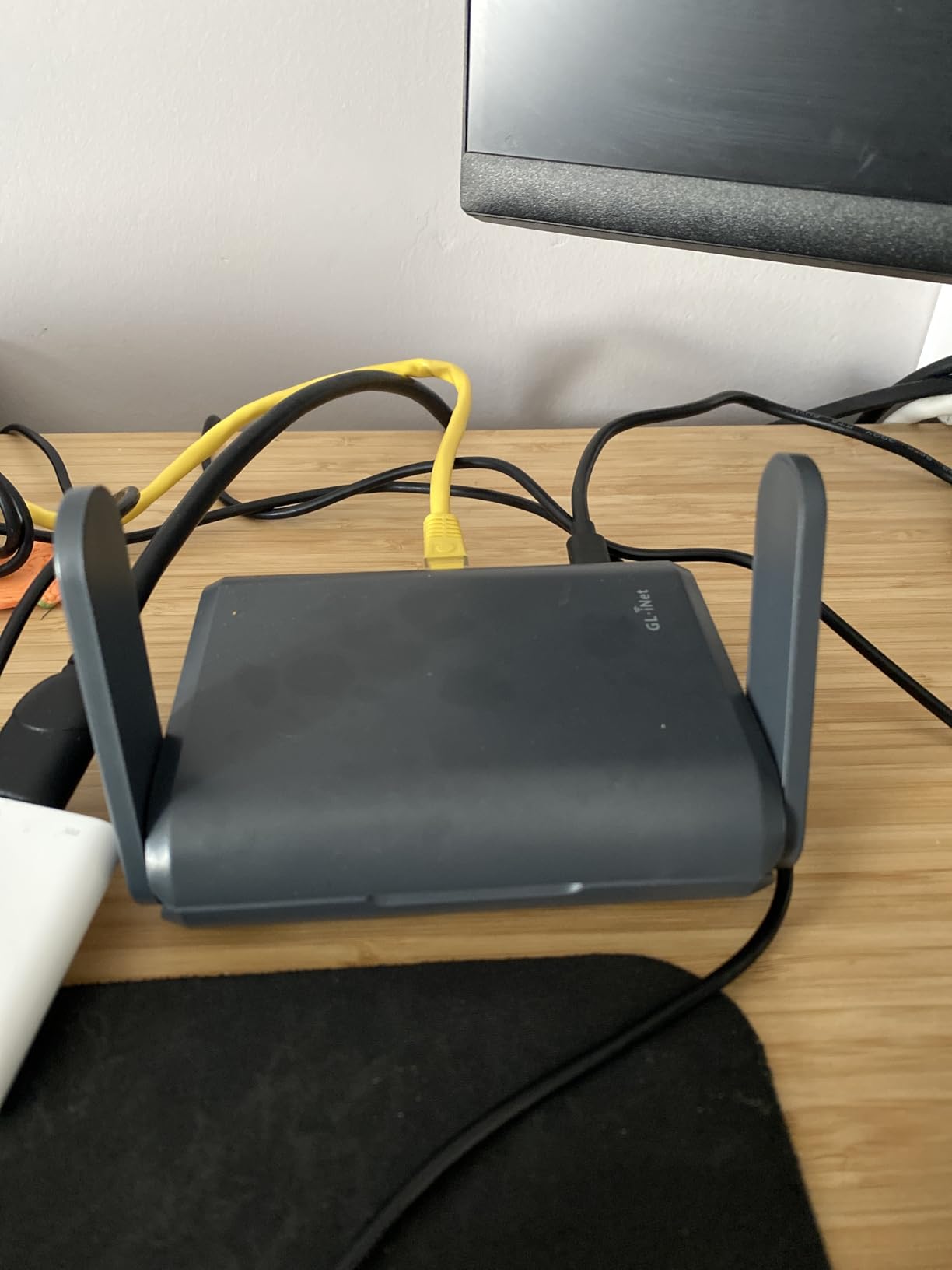
Its stated coverage is moderate to large for a box that weighs 245 grams and measures 4.92 by 3.23 by 1.42 inches. MU-MIMO, OFDMA and BSS color together support up to 120 simultaneous devices, and the USB port turns an external drive into SAMBA or WebDav file sharing.
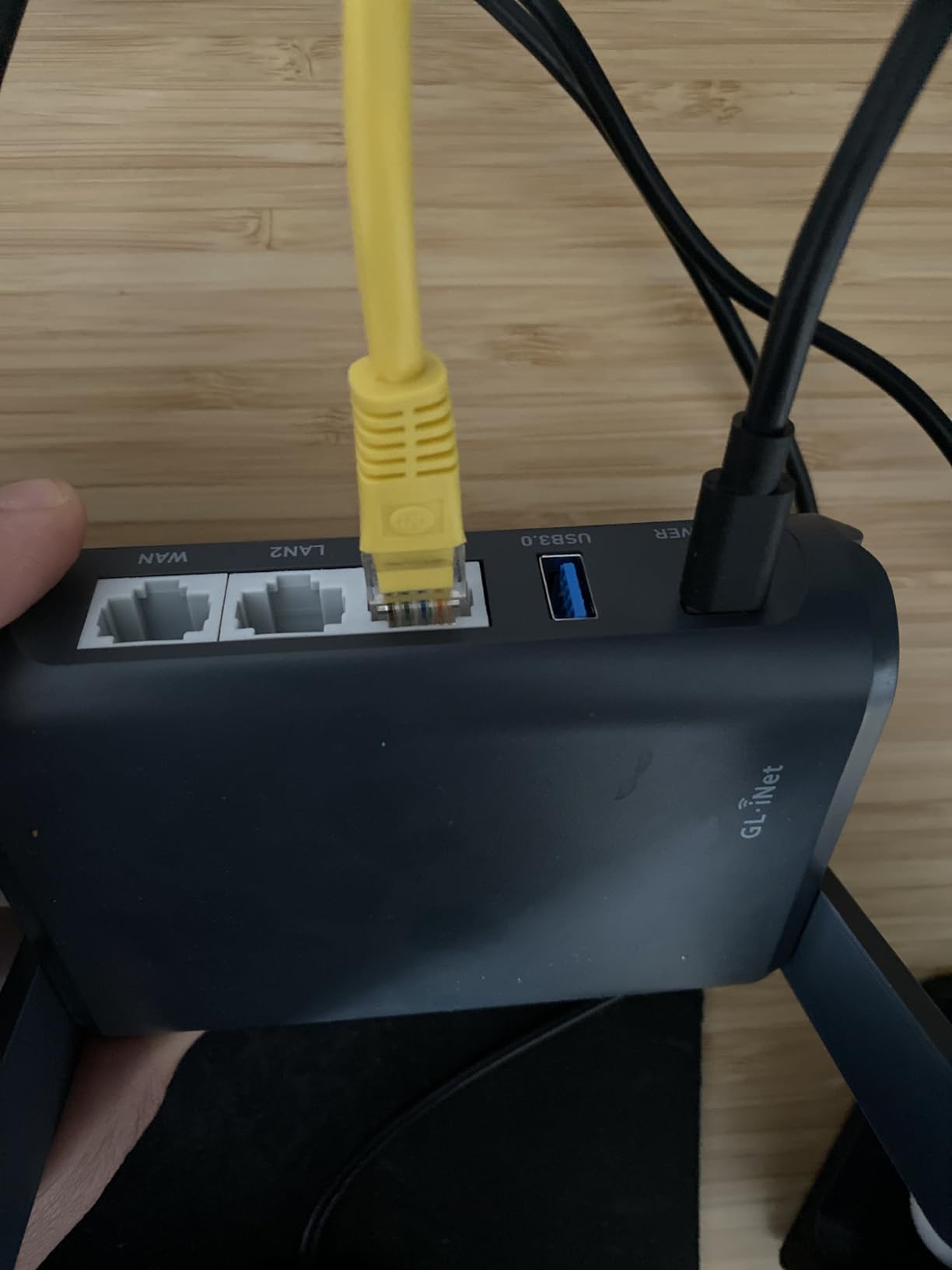
The cost of that flexibility is port count: three ports in total. Plan the wired layout first, because a desktop, a console and a switch will not fit without one. Tunneling also reduces overall throughput, which is the standard trade in this category and worth stating plainly.
Most VPN providers still need an active subscription, and the physical toggle switch does nothing until you assign it a function in the admin panel first. That trips up almost everyone on day one, and it is a two-minute fix once you know.
Why it fits a shared rental network
A guest network plus a separate IoT segment on OpenWrt means your cameras and bulbs never share a broadcast domain with your laptop. WPA3, Cloudflare-encrypted DNS and IPv6 support are all standard here rather than sold as a paid tier.
It also travels. If you move flat, the same box works as a travel router for hotel Wi-Fi with captive portal support, which is why we keep pointing readers to our GL.iNet travel router guide.
Where it falls short for you
Three ports is the limit, and unlike the mesh kits there is no way to add capacity later. A household that wants four wired connections should look at the TP-Link Archer AX21 instead, where five ports come as standard.
OpenWrt is a learning curve if you have never touched router firmware. You will not break anything, but expect an hour reading before your first firewall rule, and that time is part of the cost of this pick.
7. GL.iNet Beryl AX (GL-MT3000) – Best for Fiber and Multi-Gig Plans
GL.iNet GL-MT3000 Beryl AX Wi-Fi 6 Travel Router, 2.5G WAN, VPN, OpenWrt
- 2.5G WAN port takes full advantage of multi-gig fiber plans
- Fast VPN throughput with WireGuard
- OpenWrt platform gives extensive customization
- Can run a VPN server and client at the same time
- Works well converting hotel Wi-Fi into a private network
- Only one Gigabit LAN port limits wired connections
- VPN tunneling reduces overall throughput
- Requires an active VPN subscription for most providers
- Retractable antennas must be positioned vertically
If your building has fiber and your plan is above gigabit, the port on the WAN side becomes the bottleneck before the radios do. This router has a 2.5G multi-gig WAN port next to a single Gigabit LAN port and a USB 3.0 port, and that combination is rare at this size.
Radio-wise it is a proper AX3000 unit: 574 Mbps on 2.4 GHz plus 2402 Mbps on 5 GHz, Wi-Fi 6 throughout, with listed coverage up to 100 meters. It runs OpenWrt 21.02 with more than 5,000 installable packages, so the same customisation level as the Slate AX is available here.
The VPN figures are worth noting next to the port. Up to 150 Mbps through OpenVPN and 300 Mbps through WireGuard, and it can host a server and a client at the same time for cascading. Security baseline is WPA3 with DNS over HTTPS, DNS over TLS and IPv6 support.
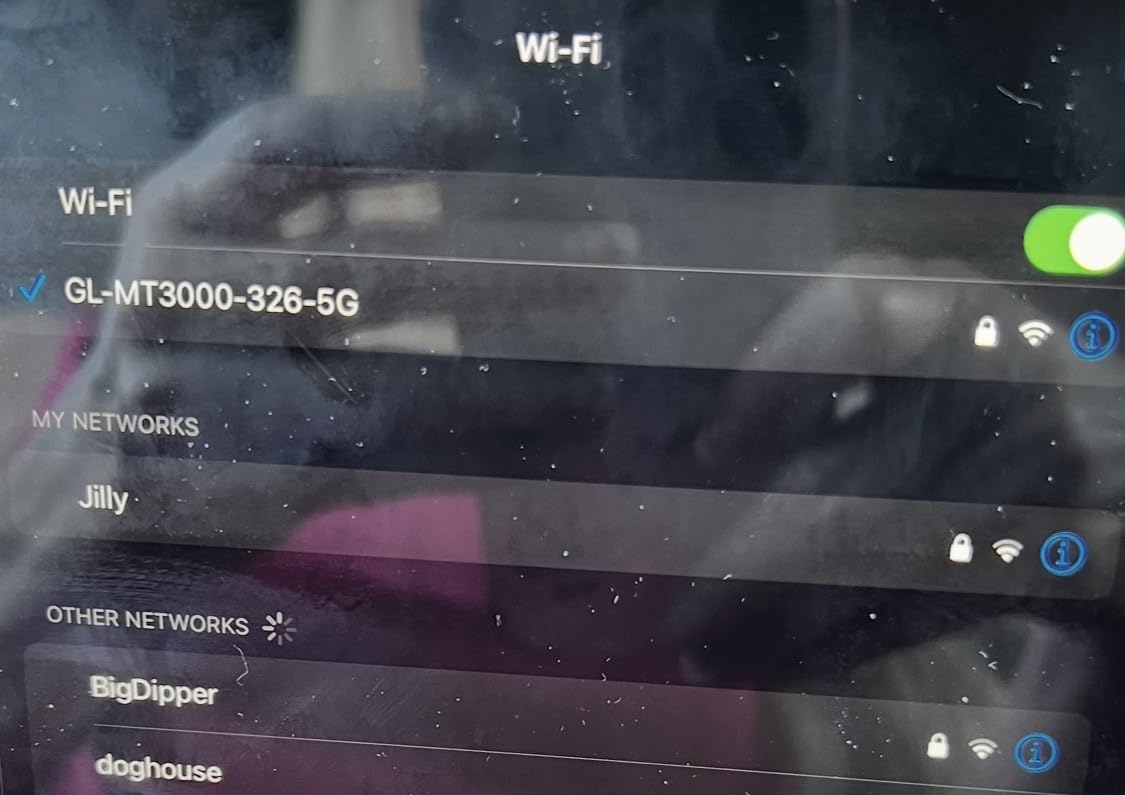
The obvious catch is one Gigabit LAN port. On a multi-gig plan you will want a 2.5G switch behind this rather than a single wired client, because everything downstream of that one port is capped at gigabit speeds. Budget for it before you commit.
Retractable antennas need to be vertical for consistent results, which is awkward on a shelf next to a television, and VPN tunneling costs throughput on the same lines as the Slate AX. The box also includes US, UK and EU power plugs, which is a nice touch for a rental you may leave next year.
Why it fits a fiber apartment
The 2.5G WAN port is what unlocks a multi-gig plan. Most routers cap at gigabit on the WAN side, so on a 2 Gbps fiber line you would otherwise be limited before the Wi-Fi even started.
Running a VPN server and client simultaneously means you can reach home devices from outside while still filtering outbound traffic, which is the arrangement remote workers on split-location setups ask for.
Where it falls short for you
One LAN port is genuinely restrictive. A media console, a printer and a wired access point cannot all attach without a switch, and in a small flat that switch is another thing to hide.
Despite the Wi-Fi 6 label, this is a travel-formatted router, not a whole-flat solution. For a large two-bedroom we would still steer you toward the TP-Link Deco X55, because placement flexibility beats port speed when you are fighting concrete.
8. GL.iNet Opal (GL-SFT1200) – Budget Pick for a Studio or Second Unit
- Very compact and light at 145g so it moves between flats easily
- Full Gigabit ports for wired devices
- OpenVPN and WireGuard built in with a physical toggle switch
- Repeater mode turns hotel or public Wi-Fi into a private network
- OpenWrt firmware allows real customization
- AC1200 class speeds are modest against modern routers
- Retractable antennas can be fragile when extended and retracted often
- Does not support easytethering
- VPN toggle switch does nothing until assigned a function
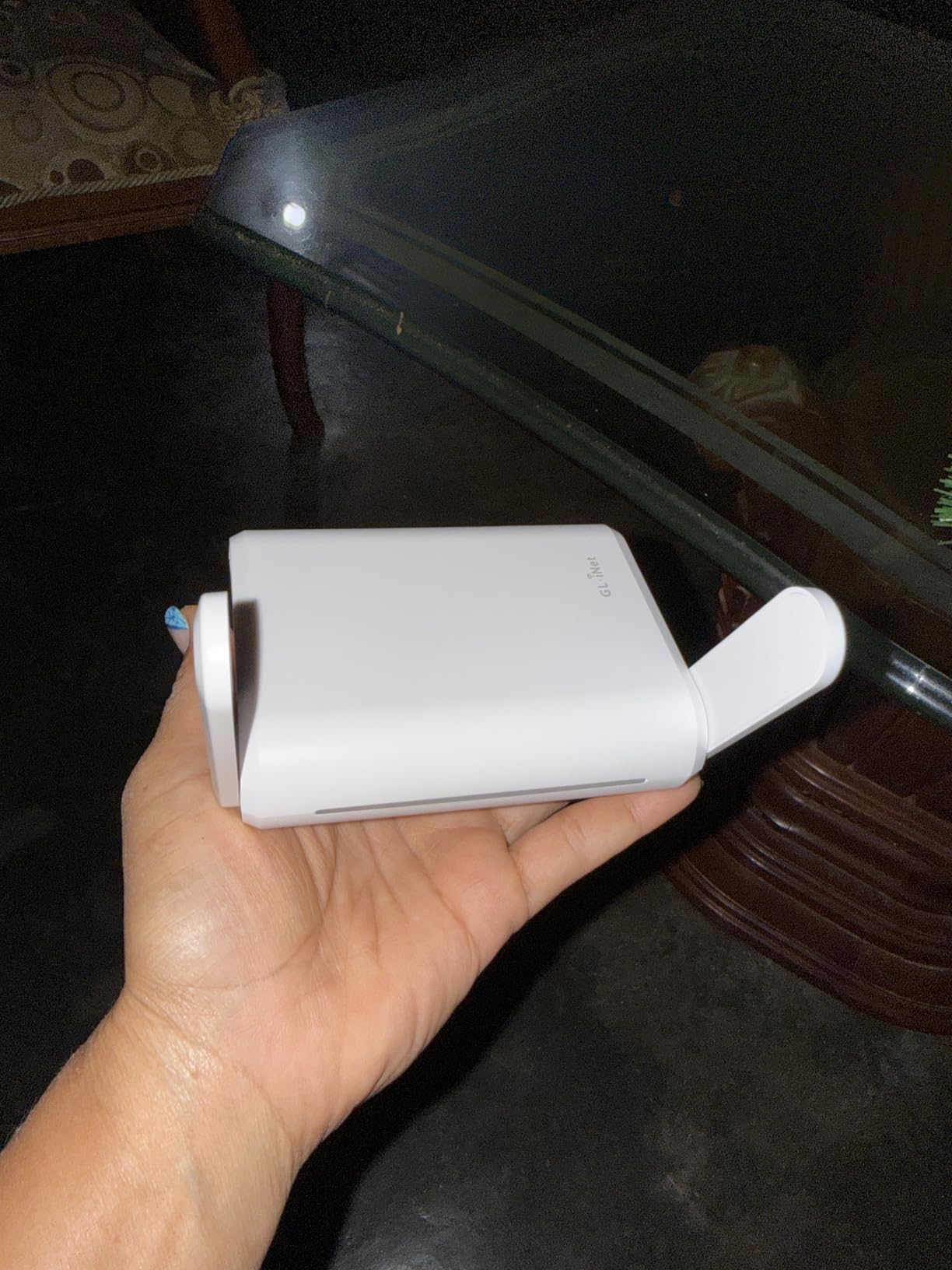
This is the box for a studio, a dorm room, or a second unit you want covered without thinking about it. At 145 grams and 4.65 by 3.35 by 1.18 inches it is small enough to live in a drawer, and it carries full Gigabit connectivity with two LAN ports and one WAN port, which is rare in its class.
It runs OpenWrt firmware, so the same customisation is available here as on the more expensive GL.iNet units. OpenVPN and WireGuard come pre-installed, compatible with more than 30 providers, with Cloudflare encryption supported, and a physical toggle switch handles the on/off.
Radio class is AC1200: 300 Mbps on 2.4 GHz plus 867 Mbps on 5 GHz. That is Wi-Fi 5 and it is enough for a 300 Mbps plan with light household use, but it is the ceiling that decides whether this is the right answer.
At 4.2 stars across more than 8,000 reviews it is the lowest-rated unit in this guide, and the reason is consistent: raw throughput. Against an AX1800 or AX3000 router this one gives up ground quickly once several devices are active at once.
The retractable antennas are a durability concern if you pack and unpack often, and easytethering is not supported, which closes off a tethering workflow some buyers expect. As with the other GL.iNet boxes here, most VPN providers still require an active subscription.
Why it suits a studio or second unit
Full Gigabit ports at this size is the reason to pick it over an even cheaper box. A wired printer or a smart TV gets a real Ethernet connection rather than a 100 Mbps fallback, and three ports is enough for most single-room setups.
At 145 grams it is the easiest box here to move between flats, which is the actual use case for a rental. Our travel router guide for hotels covers the same hardware in more depth.
Where it falls short for you
The AC1200 radio class is the deciding factor. On a plan above roughly 300 Mbps, or in a flat with heavy contention, you are leaving performance on the table and a newer unit costs less than you think.
As the lowest-rated option here, it belongs in a very small space. Do not stretch it across a two-bedroom, and do not expect it to survive a building where every neighbour is on a newer standard.
9. NETGEAR Nighthawk RS100 – Best for Wi-Fi 7 and Multi-Gig Fiber
- Wi-Fi 7 gives noticeably better throughput on fast plans
- 2.5 Gig WAN port unlocks multi-gig internet speeds
- Strong range from a small antenna-free design
- Compact footprint that suits a small apartment
- Quick setup through the Nighthawk app
- Automatic band steering confuses some Apple devices
- No USB port for local network storage
- A NETGEAR account is required to use the management app
- Wi-Fi 7 gains are limited without fast devices and a fast plan
This is the only Wi-Fi 7 router in the guide, and it is worth understanding exactly what that means before you spend on it. It delivers up to 3.6 Gbps aggregate throughput across two bands, 1.2x faster than Wi-Fi 6, and stays backward compatible with Wi-Fi 6 and earlier clients.
The port layout is unusually good for the size. A 2.5 Gig WAN port handles multi-gig plans, with four Gigabit Ethernet LAN ports behind it, which is more wired capacity than anything else here. Coverage is listed at up to 2,000 sq. ft. in open layouts with up to 50 devices.
It pairs with an existing modem or gateway over Ethernet and needs no coax, and works with cable, fiber, DSL and satellite providers. Management runs through the free Nighthawk app on iOS and Android, which handles setup, speed tests, pausing devices and guest networks.
The antenna-free, compact design also happens to be renter-friendly. It does not need to be positioned aggressively, and it covers up to 2,000 sq. ft. from a single box, so there is no node placement puzzle to solve.
A NETGEAR account is required to use the management app, which is an uncomfortable requirement on a network you own in a building you rent from. It also has no USB port, so local network storage is not an option, and with 369 reviews on record there is a much thinner field of long-term owner reports than the picks above.
Why it earns a place here
The port layout is genuinely the best in the guide: a 2.5 Gig WAN port plus four Gigabit Ethernet LAN ports, which is more wired capacity than any other unit here. On a multi-gig fiber line that is what removes the ceiling, not the radio class.
Coverage of up to 2,000 sq. ft. from a single box with two fixed antennas also suits a rental well. There is no node placement puzzle and nothing to hide behind furniture.
Where it falls short for you
Automatic band steering confuses some Apple devices, which need separate 2.4 GHz and 5 GHz network names to pair reliably. That is a real daily annoyance rather than a theoretical one, and the fix is to split the SSIDs manually.
One more caution. Wi-Fi 7 gains are limited unless your devices and internet plan are both fast, so on a 300 Mbps cable plan this box is largely wasted money. Look at the Beryl AX instead if you want a fast WAN port for less.
Why Apartment Wi-Fi Is Hard: Congestion, Closets and Concrete
Apartment Wi-Fi fails for three reasons, and none of them is your router’s advertised range. Understanding which one applies to you saves you from buying the wrong hardware entirely.
The first is airtime contention on 2.4 GHz. There are only three non-overlapping channels in that band, 1, 6 and 11, and every router in your building that shipped on a default will land on one of them. Sixty neighbours transmitting on channel 1 turns that band into a queue, and your throughput drops in proportion to how many of them are mid-stream.
The second is placement forced by infrastructure. Your ISP jack is fixed where the building was wired, usually in a closet, sometimes in a utility space shared with other flats. Best practice says centre the router in open air at roughly waist height; reality says the cable ends where it ends.
The third is building material. Drywall attenuates modestly, but concrete and structural steel punish 5 GHz badly. The same router in one unit works across the whole flat, and in the next unit down dies two rooms from the router. That is why we treat wall material as a selection criterion rather than a detail.
Wi-Fi 6 features are worth a sentence each. OFDMA splits one channel into time slots so several devices transmit without colliding. MU-MIMO serves multiple clients on the same stream simultaneously rather than round-robin. BSS coloring lets overlapping networks coexist on the same channel by tagging their traffic. All three reduce the damage that congestion does.
That is the frame for every pick in this guide: in a multi-unit building, the job is not to shout louder. It is to be polite, pick clean channels, and put radios in the right rooms.
For a renter on a very small footprint, our small apartment picks guide covers the furniture side of living in 500 sq. ft., which matters as much as the network does. If the router itself has to disappear into a shelf, the same logic applies to every other box you own; our bookshelf subwoofer guide works through the same placement maths.
One last practical note before the picks. More transmit power in a dense building makes the problem worse for you and your neighbours, because a louder router raises the noise floor for everyone. Clean channels and sensible placement beat a bigger radio, and that advice comes up again and again on r/HomeNetworking, where the consensus for a small flat is that pretty much any name-brand modern Wi-Fi 6 router will do the job.
Six Free Fixes to Try Before You Buy a Router
Most people who think they need a new router do not. These six steps cost nothing and, in our experience with apartment networks, resolve the majority of evening slow-downs on their own.
1. Move the router out in the open. Take it out of the media cabinet, off the floor and away from other electronics. Users consistently report this single change as the biggest free improvement available.
2. Lock 2.4 GHz to channel 1, 6 or 11. Those are the only three non-overlapping channels in that band. If your router is on channel 1 and so are forty neighbours, change it and measure again.
3. Scan for the emptiest 5 GHz channel. Any phone Wi-Fi analyser will show you occupancy. Start on 36, 40, 44 or 48, or 149, 153, 157 or 161, and avoid DFS channels, which can drop a connection when a neighbour’s radar or access point is detected.
4. Split the network names. Giving 2.4 GHz and 5 GHz separate SSIDs lets you pin slow IoT devices to the 2.4 GHz band and keep phones and laptops on 5 GHz. Most routers do this behind a single toggle.
5. Reboot and retest at nine o’clock, not at noon. Congestion peaks when everyone gets home and starts streaming. A midday test tells you nothing about the problem you are trying to solve.
6. Prioritise the devices that matter. Both QoS and per-device limits exist so a console downloading updates cannot consume the airtime your video call needs.
If all six steps fix it, you have just saved the cost of a router. That happens more often than router companies would like.
Where to Put the Router in an Apartment
Put it at roughly waist height, near the middle of the space, in open air and off anything metal. Those four rules matter more in a flat than in a house, because there is nowhere else for the signal to go.
Waist height clears most furniture and gives the antennas an unobstructed view of the rooms. Middle of the space gives clients a balanced path in every direction. Open air means not wedged into a shelf between a console and a wall. Off metal excludes filing cabinets, washing machines, radiators and the metal back of a television.
If the cable ends in a closet, put the router on the outside edge of that closet rather than deep inside it, and keep the door open. If you have any cable freedom at all, run an Ethernet line to a central wall and run the router there instead, treating the closet box as a modem only.
Single Router or Mesh System?
A single well-placed router is better than mesh for a flat under about 800 sq. ft. That is the short answer, and it is the opposite of what most marketing suggests.
A major disadvantage of mesh systems is that clients hop between nodes. Put two nodes a few feet apart, as people do in a studio, and a video call can migrate mid-conversation. Mesh also costs throughput on every wireless hop unless you run Ethernet between nodes, and in a congested building there is no airtime to spare for that.
Buy mesh when the space is genuinely awkward, when concrete blocks a single router, or when you have three or more areas that need coverage. In those cases place nodes adjacent to one another rather than at opposite ends of the flat, and connect them with cable wherever you can. The wired backhaul support on the Deco kits is the reason to prefer them over cheaper three-piece systems.
2.4 GHz vs 5 GHz vs 6 GHz in a Dense Building
Use 2.4 GHz for reach and IoT devices, 5 GHz for speed, and 6 GHz when you have a router that offers it and a building where 5 GHz is full.
2.4 GHz travels furthest and penetrates walls best, but it has only three non-overlapping channels, so it is the most crowded band in a multi-unit building. Keep it for smart home gear, printers and anything that moves around the flat rather than close to the router.
5 GHz is faster and less crowded, but it does not penetrate concrete well and it gets worse as you move rooms away. 5 GHz channels 36, 40, 44 and 48 or 149, 153, 157 and 161 are the non-DFS choices; avoid DFS channels where possible because they can vanish for seconds at a time when a neighbour’s equipment is detected on them.
6 GHz is a wide, clean band with almost nothing else on it, which is why a 6 GHz router can behave better in a crowded high-rise than a much faster 5 GHz-only unit. The trade is range: 6 GHz does not travel as far, so it works best in open layouts with one node near the centre. None of the routers in this guide is a tri-band 6 GHz model, which is worth knowing before you expect a clean band from any of them.
Using Your Own Router With the ISP Modem
Yes, you can use your own router in an apartment, and the correct setup avoids double NAT. Run the ISP box in bridge mode and let your own router do the routing, or run the ISP box as an access point and let it hand off DHCP.
Double NAT is the failure case to avoid. If both boxes are in router mode, each performs its own address translation, and double NAT breaks inbound connections, some VPNs and several online games. Bridge mode on the ISP box removes that layer.
Access point mode is the easier route: put your router in AP mode, disable DHCP on the ISP box, and connect LAN to LAN. You lose a little throughput through the extra hop, and you keep the ISP box in charge of the connection, which some providers require anyway.
Ask your ISP before you start. Some will bridge the modem for free, some charge, and some refuse and sell you their own gateway instead. It is worth one phone call before you buy anything.
Security and Network Hygiene on a Shared Rental Network
Use WPA3 where you can, separate your IoT devices onto their own network, and pick a router that does not require a permanent vendor cloud account to manage. On a network in someone else’s building, those three choices do most of the work.
A guest network keeps visitors, doorbells and building smart locks off your main network. An IoT segment does the same job for your own cameras and bulbs, so a compromised smart device cannot reach your laptop. Both are standard on the Deco X55 through HomeShield and available on the GL.iNet units through OpenWrt segmentation.
A VPN server matters if you work from home and want to reach your own devices from outside. The Archer AX21 and the GL.iNet Slate AX both ship with one, and WPA3, DNS over HTTPS and DNS over TLS support is native on the GL.iNet hardware.
The quiet objection renters raise is cloud dependence. Some management apps require an account on the vendor’s servers for a network you own but do not control. The NETGEAR RS100 needs an account for its app, and eero Plus moves advanced features behind a paid tier, so if that trade bothers you, an OpenWrt-based unit removes it entirely.
Match Your Router to Your Internet Speed
Match the hardware to the plan, not the other way round. A router cannot make a 300 Mbps line faster, and a multi-gig plan needs ports that can actually carry it.
On a 300 to 600 Mbps plan, any current dual-band Wi-Fi 6 unit is comfortably sufficient, and a Wi-Fi 5 box like the Deco S4 will still deliver your full plan speed. Speed here is limited by your line, not your radios.
On a gigabit plan, look for Gigabit ports throughout and a Wi-Fi 6 radio. The AX21 gives you five Gigabit ports, and the Deco kits give you two or three per node, which is enough to carry gigabit on the WAN side without a bottleneck.
On multi-gig fiber above gigabit, the WAN port is the deciding factor. The Beryl AX has a 2.5G WAN port and the Nighthawk RS100 has a 2.5 Gig WAN port plus four Gigabit LAN ports, and both are the right shape for that plan. Below gigabit, that port is money you do not need to spend.
What Size Apartment Needs What
Match the hardware to the square footage and the walls. Studios and one-bedrooms need one box, larger or awkward units need a kit, and concrete changes the answer regardless of size.
A studio or one-bedroom under 700 sq. ft. with a central cable point is a single-router job. The eero 6 covers up to 1,500 sq. ft. from one node, and the Archer AX21 covers a similar footprint with more ports.
A two-bedroom of 800 to 1,200 sq. ft. with thick walls is where a three-node kit starts earning its place. The Deco S4 is the cheapest way to get there with wired backhaul on every node.
A large flat or a concrete condo needs the higher class. The Deco X55 runs AX3000 across three nodes covering up to 6,500 sq. ft., which is the throughput headroom concrete requires.
Renter Rules Worth Checking Before You Mount Anything
Check your lease before you drill anything, and assume that exterior antennas and shared closets are the two most common conflicts.
Most leases prohibit drilling without written permission. Peel-and-stick wall mounts, a shelf on an existing bookcase and a powerline adapter are the reversible options, and all three keep you out of the landlord’s way.
Some buildings also prohibit visible antennas or equipment in shared wiring spaces. If your jack is in a communal closet, ask the building manager in writing where you are allowed to place the router, because that conversation determines whether your network works at all.
What Not to Buy for an Apartment
Do not buy a three-node kit for a studio, a high-power gaming router with external antennas you cannot legally mount, or another ISP-supplied gateway you did not ask for.
Over-sized mesh kits are the most common mistake. Nodes placed a few feet apart fight each other, clients hop mid-call, and the kit performs worse than the single ISP router it replaced. Users renting two mesh units from their provider regularly report they are overkill for a non-large flat.
Antenna-heavy gaming routers assume you can mount them where they can breathe, which a lease and a closet will not allow. And the ISP gateway is worth keeping only as a bridge or an access point, never as the router you actually live with.
Frequently Asked Questions
What is the best router for an apartment?
For most flats the best router is a mesh kit with Gigabit ports on every node, because the ISP jack is usually in a closet and one box rarely reaches the far rooms. For a studio or one-bedroom under 700 sq. ft., a single Wi-Fi 6 router with five Gigabit ports covers everything without mesh placement risk.
How do I get a better Wi-Fi signal in my apartment?
Move the router into open air at waist height, away from metal and other electronics. Lock 2.4 GHz to channel 1, 6 or 11, scan for the emptiest 5 GHz channel, and retest at around 9pm rather than at noon. If your cable ends in a closet, place the router at the closet opening or run Ethernet to a central wall.
Is a single router better than mesh in an apartment?
Yes, below roughly 800 sq. ft. with one cable point. A single well-placed router avoids clients hopping between nodes mid-call and avoids losing throughput on every wireless hop. Mesh only wins when the layout is awkward, when concrete blocks the signal, or when you can connect the nodes with Ethernet cable.
What is a major disadvantage of a mesh network?
The biggest disadvantage is client roaming. Devices move between nodes mid-session, which can interrupt video calls and streaming. Nodes placed too close together make this worse, and wireless backhaul also costs throughput on every hop unless you run Ethernet between nodes.
Can you use your own router with the ISP modem in an apartment?
Yes. Put the ISP modem in bridge mode so your router handles routing, or set your router to access point mode and disable DHCP on the ISP box. Running both boxes in router mode creates double NAT, which breaks inbound connections, some VPNs and several online games. Ask your ISP first, as bridging policies vary.
Which 5 GHz channel has the least interference in an apartment?
Start on channel 36, 40, 44 or 48, or on 149, 153, 157 or 161. Avoid DFS channels where you can, because they can drop a connection when a neighbour’s equipment is detected on them. Use any phone Wi-Fi analyser to check occupancy before you commit to a channel.
Which Apartment Router Should You Buy?
The best router for most apartments is the TP-Link Deco S4 Mesh AC1900 3-Pack, because three nodes with two Gigabit ports each is the only combination here that solves a closet-mounted jack and still gives you somewhere to put a second node. For a studio or a one-bedroom where one box genuinely covers everything, the eero 6 is the tidier answer, and the Archer AX21 is the pick when you want five wired ports and a built-in VPN server instead of mesh.
Two situations override everything above. If your walls are concrete, buy the higher class and accept that you will want mesh: the Deco X55 has the throughput headroom to push through. If your plan is above gigabit, buy ports, not radios: the Beryl AX and the Nighthawk RS100 are the only two here with a 2.5G WAN port, and the RS100 adds the current Wi-Fi 7 generation on top of it.
Before you buy any of them, run the six free fixes and test again at nine o’clock. If the problem was channel contention, you have just solved it for nothing.
Still deciding? Tell us your square footage, your internet plan speed, how many devices you run and what your walls are made of, and we will narrow it to one router.